
Under Sod 4-2-5 is blended into the top 4 to 6 inches of soil before the sod goes down. It is not a starter you sprinkle on top.
Application rate: one 25-pound bag per pallet of sod (500 square feet), which is 50 pounds per 1,000 square feet, blended into the top 4 to 6 inches. Follow the soil test and local rules; this rate supplies 1.0 pound of phosphate (P2O5) per 1,000 square feet, so count it toward the report rather than adding it on top of a separate phosphorus allowance.
On Friday, August 28, 2026, our crew put 8,000 square feet of fresh-cut Kentucky bluegrass mix down on a Westport backyard in one working day: surprise rock and construction fill hauled off at 9 a.m., roughly 80 yards of screened topsoil spread and raked through the afternoon, first rows on the ground before 4 p.m., and the last rows laid under work lights at 8:30 p.m. The crew returned with a fresh cutting and laid the final strip on Wednesday, September 2. The whole job is documented hour by hour, with drone footage.
That job is the reason this page exists. It is one Westport lawn, but it hit nearly every condition that makes installing sod here different: construction subgrade full of fill, a separate pool contractor still working beside the lawn, a grade that had to shed water away from new walls, a tight window, and a need for a straight answer about what was under the dirt.
This guide covers beach-road and gated-drive access, shoreline sand, inland till, wetlands and grading rules, Aquarion watering, pool and construction sequencing, timing, quote comparisons, and the quantities behind a real job. For grass selection by exposure and property type, read the Best Sod for Westport guide. If you are ready to discuss a property, see sod installation in Westport or call (203) 806-4086.
The Westport Map: What Each Part of Town Does to a Sod Job
Westport is not one soil or one access plan. A shoreline association road, a compact village lot, and a wooded inland property can require completely different staging, grass selection, grading, and watering.
| Area | Access | Ground | Exposure | Install consequence |
|---|---|---|---|---|
| Compo Beach, Owenoke, Compo Mill Cove | Association roads, tight turns, summer traffic | Sand over sand | Salt, full sun, wind | Forklift from entrance; amended base; salt-tolerant varieties |
| Saugatuck Shores and village | Narrow lots, short setbacks | Sand toward water; mixed fill inland | River and Sound exposure | Pallets in yard, not road; check Waterway Protection Line |
| Old Mill, Sherwood Mill Pond | Shared drives, low lots | Sandy loam over sand | Tidal pond, salt and wind | Grade toward existing drainage, never toward pond |
| Greens Farms, Beachside Avenue | Gated, long estate drives | Clay loam; mature roots | Sound side salt; inland canopy | Variety zoning; protect walls and trees; large-property variance |
| Coleytown | Long wooded drives | Till, rock, ledge, clay pockets | Partial sun under canopy | Rock and root removal; deeper-rooting fescues |
| Old Hill, historic center | Compact lots, little staging | Amended soil over till | Mature street trees | One mixed-light blend; hand-finished edges |
| Long Lots, Cross Highway, North Avenue | Rural drives, acreage | Till, ledge, wet pockets | Open sun and wooded edges | Large projects; check wetlands near brooks |
Compo Beach, Owenoke, and Compo Mill Cove
Association roads bring tight turns, low branches, and summer beach traffic, so the delivery truck may stop at the entrance while the forklift carries every pallet in. The ground is sand over sand. It drains quickly and holds little water, so screened topsoil or compost belongs in the top layer, salt-tolerant varieties lead, and establishment watering is a daily responsibility.
Saugatuck Shores, Harbor Road, and Saugatuck Village
Short setbacks, narrow lots, and shared streets mean pallets should land in the yard, never in the road. Soil is sandy toward the water and mixed fill closer to the river and station. The Waterway Protection Line runs along the Saugatuck River, so check it before grading.
Old Mill and Sherwood Mill Pond
Tidal-pond frontage and shared drives often sit over sandy loam and sand. On low lots, finish grade must move water toward the drainage the property already has, never toward the pond. Salt and wind make the variety decision similar to the Compo side.
Greens Farms and Beachside Avenue
Gated estate drives, long approaches, hedges, and stone walls shape forklift access. Clay loam holds more water, while oak and beech roots compete under canopy. Large lawns often benefit from variety zoning and, on lots of two acres or more, review of Aquarion's Large Property Variance.
Coleytown
Long wooded drives usually have room to stage a topsoil truck, but the ground can hold glacial till, rock, ledge, and clay pockets. Rock and root removal comes before topsoil. Deeper-rooting tall fescue varieties fit the tree line, and the darkest areas need a canopy assessment before anyone promises turf there.
Old Hill and the Historic Center
These compact lots often have mature street trees, amended garden soil over till, and little staging room. A single blend that handles mixed light can beat zoning on a small lot. Bed, wall, and walkway edges are hand work.
Long Lots, Cross Highway, and North Avenue Toward the Weston Line
Rural drives and acreage make truck access easier, while till, ledge, and wet pockets near brooks complicate the ground. Open areas and wooded edges can need different varieties. Any grading near a brook starts with a look at the wetlands review areas.
For variety-by-variety detail, read Best Sod for Westport, CT and the coastal lawn guide. For inland estate planning, see the New Canaan sod guide; for the county's strictest rule set, see the Greenwich sod guide.
What a Westport Sod Install Actually Looks Like: The 8,000 Sq Ft Job, Hour by Hour
Most companies show the finished lawn. We documented this one from rutted subgrade to the last strip because the middle is where jobs succeed or fail.
Thursday Night: The Site Before

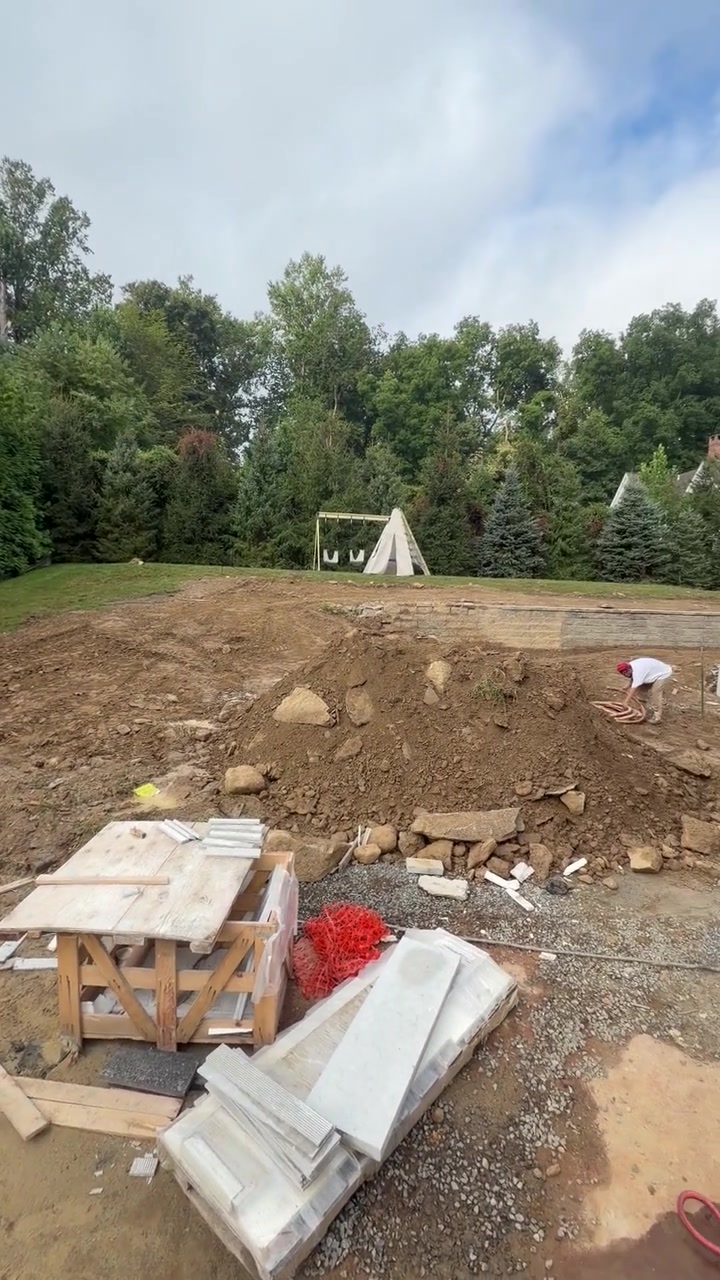
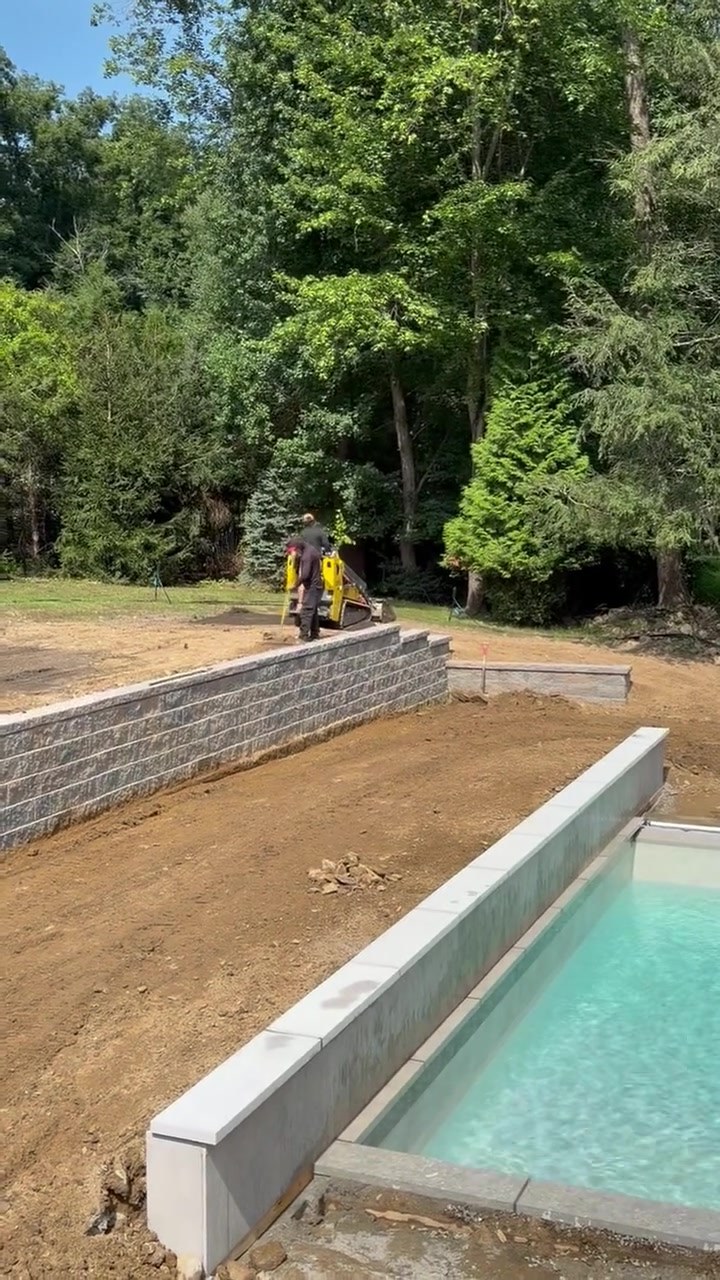
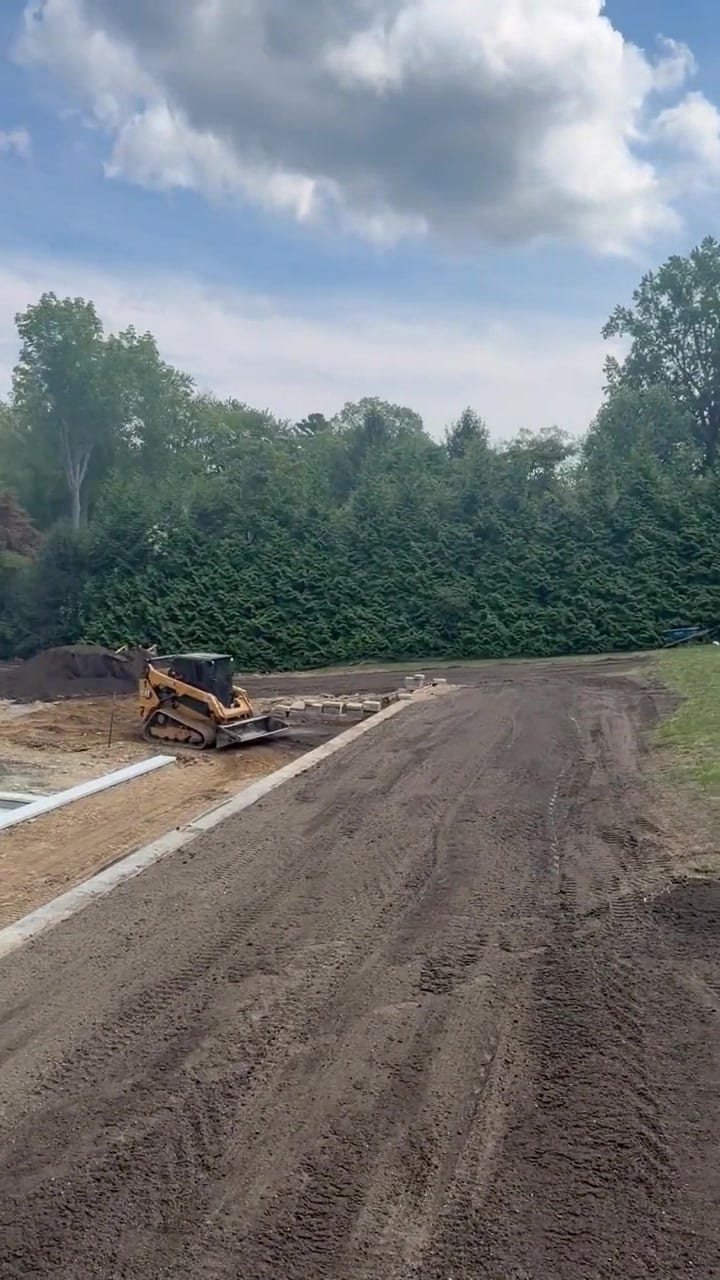
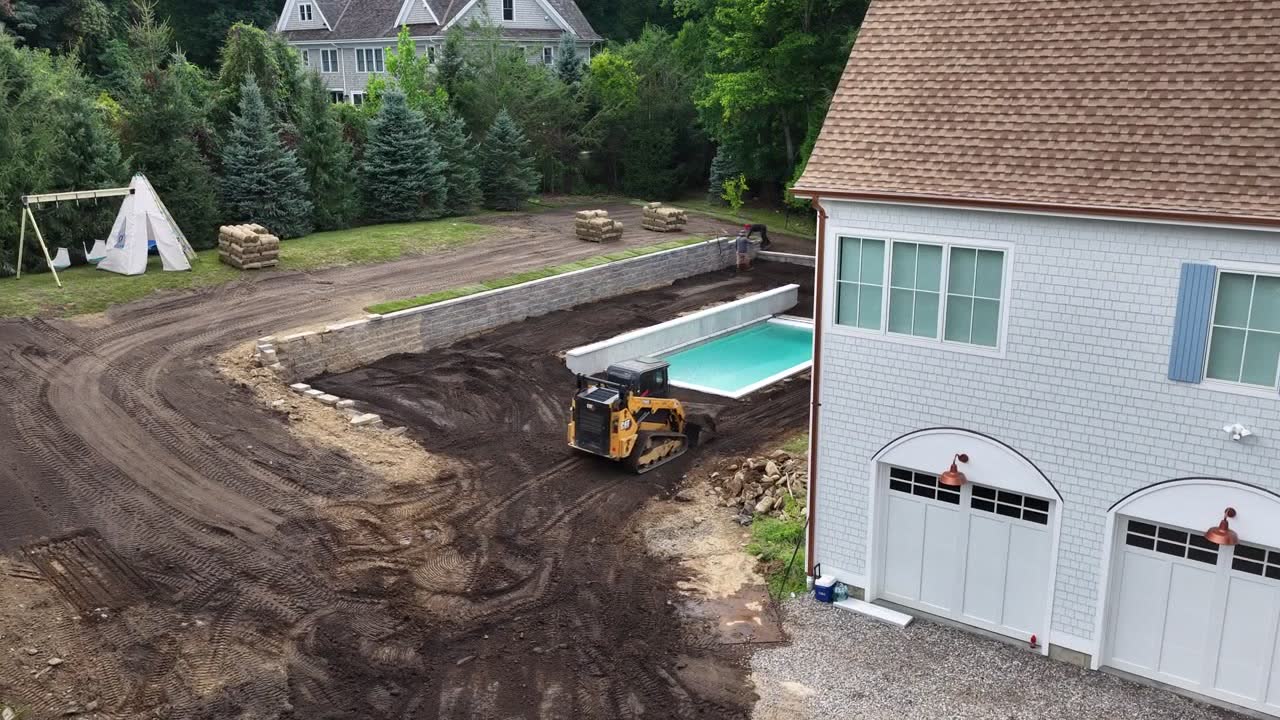
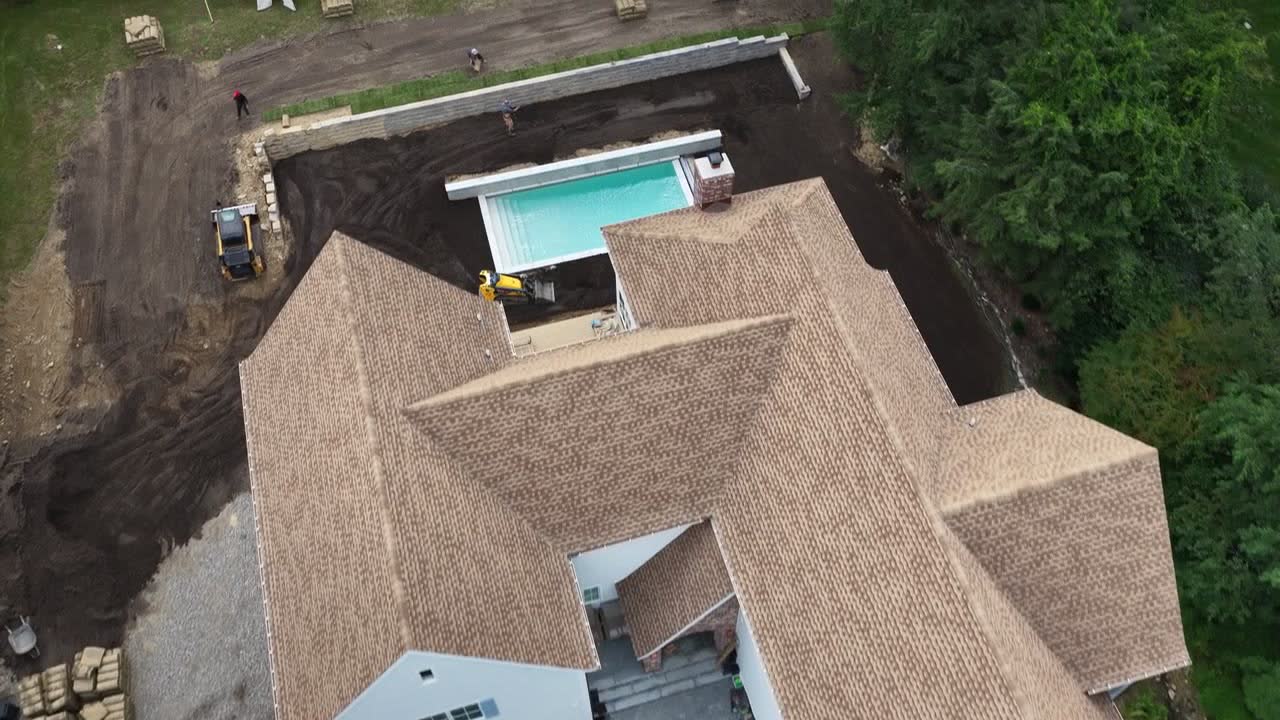
A new pool behind orange fencing, retaining walls, and roughly 8,000 square feet of bare subgrade had spent the summer as a construction zone. The pool was the pool contractor's project. CT Sod's scope was the lawn.
9 A.M.: More Rock Than Planned
Rock and buried construction fill could not remain beneath the finish grade, so it came out first. What sits below the top three inches often decides a post-construction job.
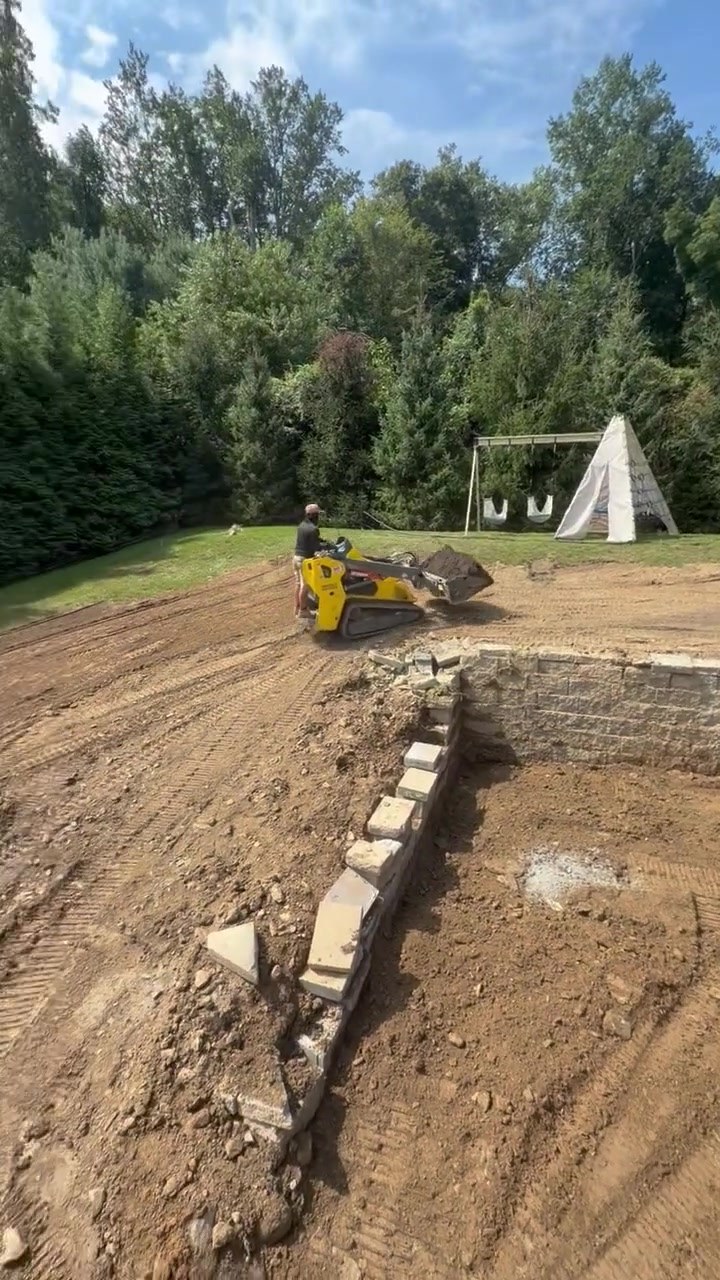
Late Morning: Machine Work Around the Walls
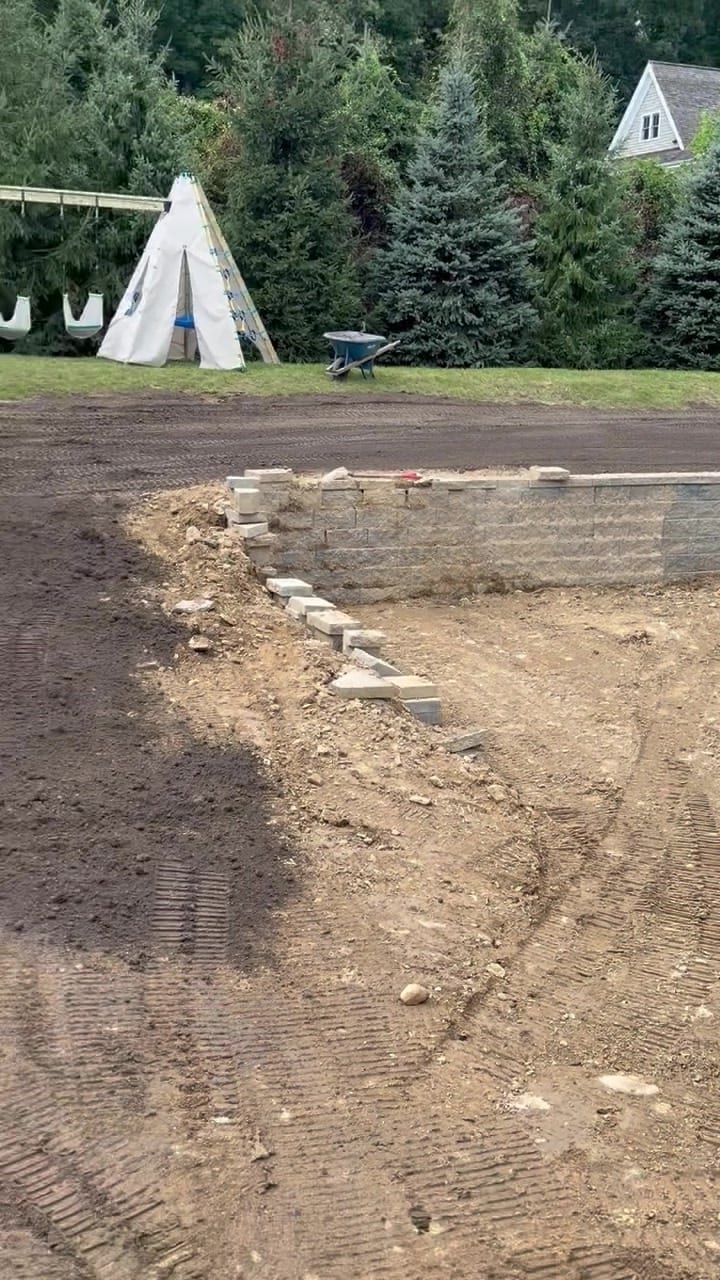
The excavator worked around new walls while fill cleanup continued. The grade had to shed toward the property's drainage, not the pool or foundation.
1:42 P.M.: Topsoil Takes Shape

Screened topsoil covered the upper lawn and was tracked into a working grade. Eighty yards across 8,000 square feet averages a little over three inches, with more in low areas and less where the grade was already right.
2:12 P.M.: Hand-Raking the Grade

Hand work tightened transitions around walls and prepared the base for close seams.
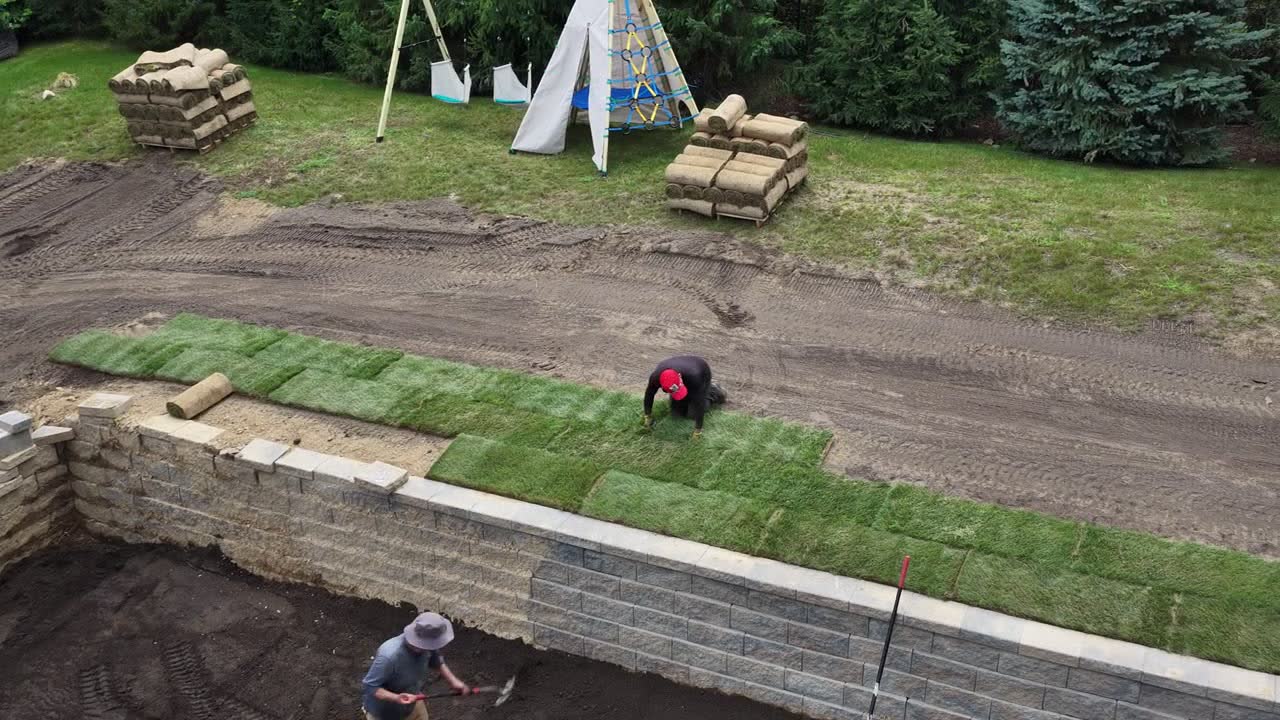
5:10 P.M. Through Dark: Sod Goes Down
Rows spread from the edges as the pallets emptied. The main cutting was down by 8:30 p.m.; a small area remained because the prepared grade ran beyond the original cutting.
Wednesday, September 2: Final Strip Complete
The crew returned with a fresh cutting and laid the last strip, completing the prepared lawn. Read the complete chronological job log.
Every Clip From August 28
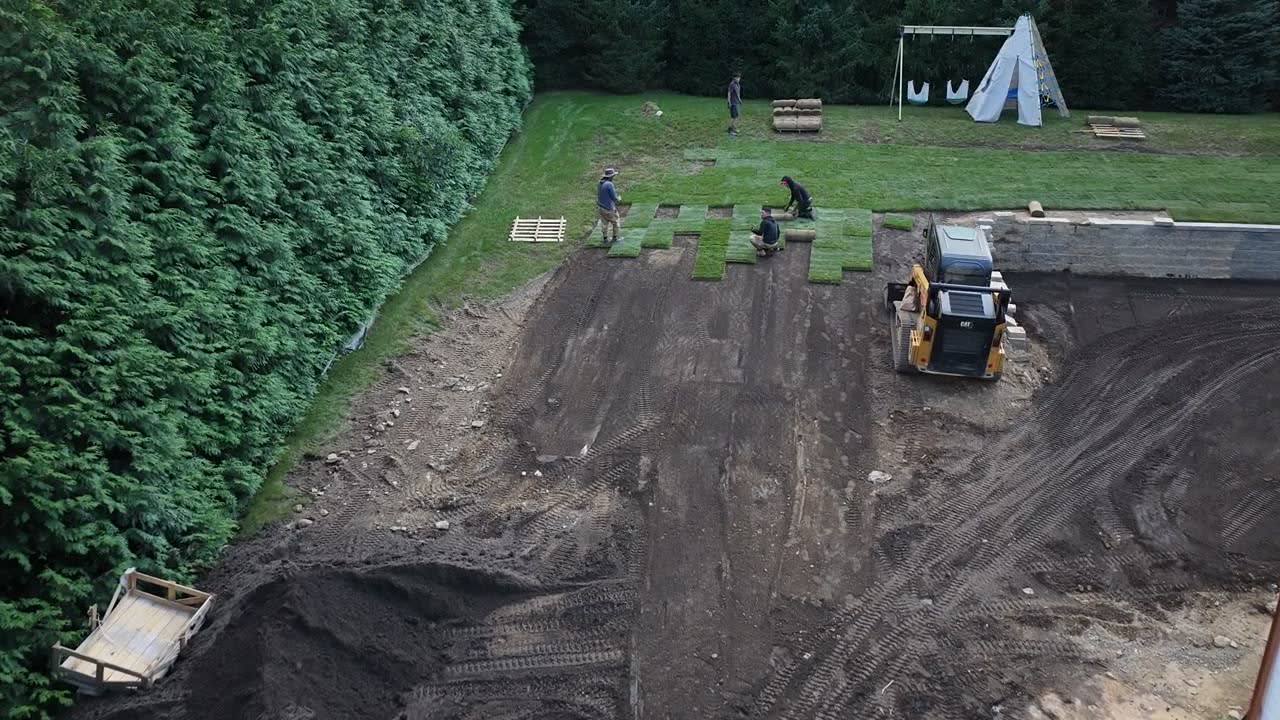
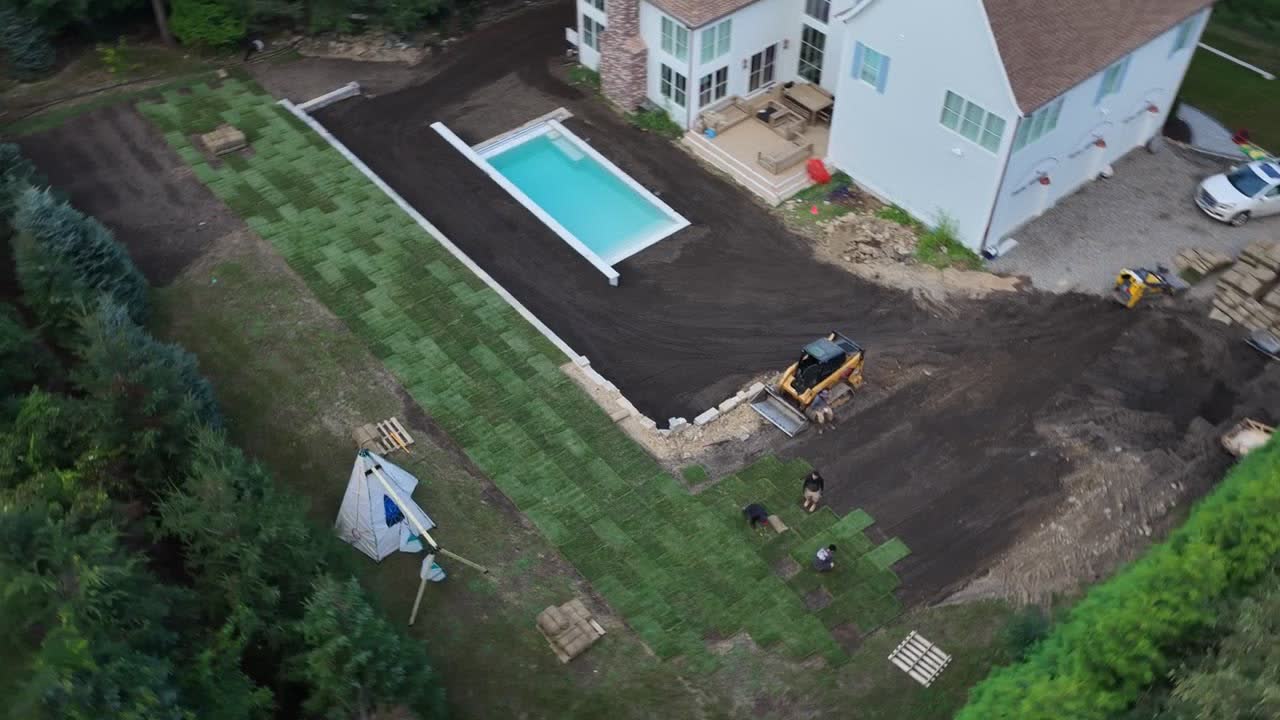
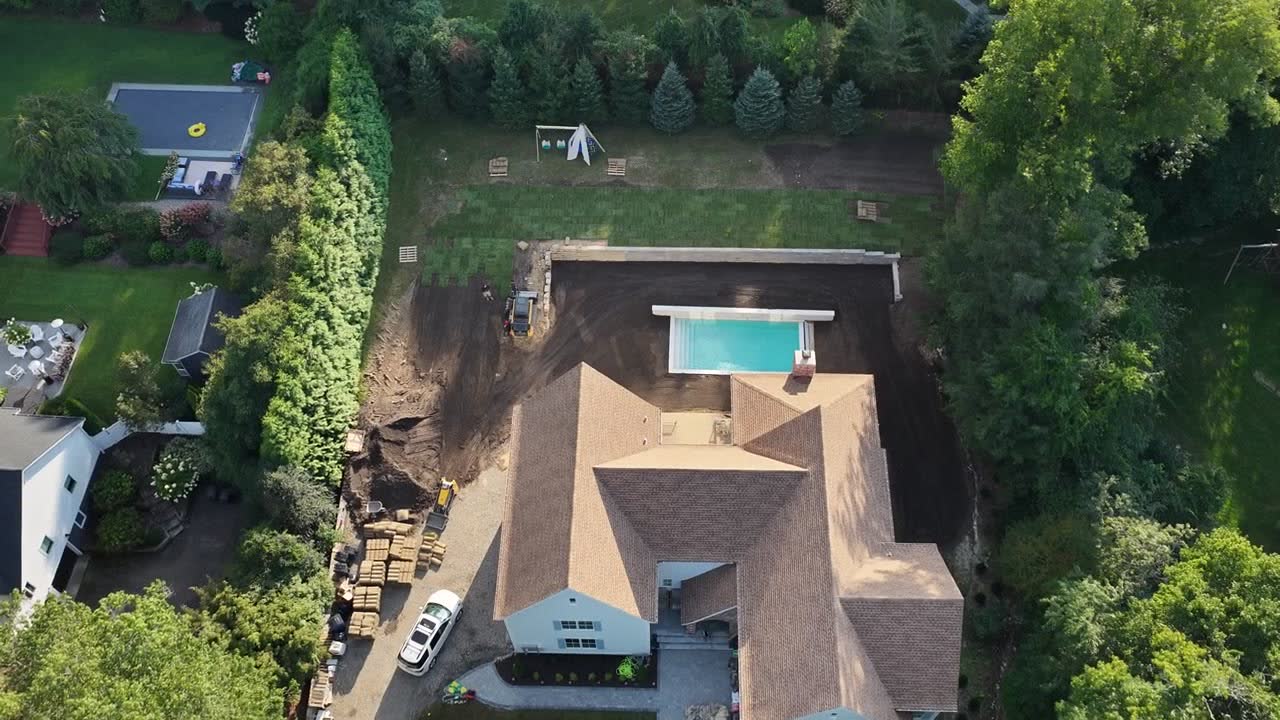
The same crews handle sod installation in Westport, and if your landscaper is preparing the base, Westport sod delivery follows the same fresh-cut standard.
Sod After the Pool: How to Sequence a Westport Backyard
A large share of Westport lawns wrap around a new or active pool project. The ideal order is pool shell, plumbing, and electrical; patio, coping, retaining walls, and compacted backfill; pressure-tested irrigation at finish grade; rough drainage grade; removal of rock and debris; screened topsoil and finish grade; then same-day fresh-cut sod.
Real schedules slip. On the documented job, the separate pool contractor still had work ahead. CT Sod installed the lawn and later completed its remaining strip. That one-off rescue arrangement does not make the pool CT Sod's scope.
Where the wetlands regulations apply, a swimming pool sits 35 feet back and its filtration unit 25 feet back, measured from the wetland boundary or top of bank, whichever is greater. Protect any equipment route with plywood or mats. Do not stockpile stone or pallets on new sod. Mark later fence, cover, and utility trench lines before grading so sod can be lifted and relaid instead of cut. The customer reviews page includes more firsthand accounts of crews restoring lawns around new pools.
Sod After a Teardown or New Build
Expect construction fill, compacted subgrade, uncertain topsoil depth, drainage changes, and buried utilities. Gravel, broken concrete, brick, and unsuitable subsoil must come out or remain well below the root zone. Compacted ground should be mechanically loosened before screened topsoil goes on.
Three to four inches of screened topsoil over loosened subgrade is a practical target. New foundations, walls, and patios change drainage; finish grade must move water away from the house before sod is laid. Call 811 before grading, verify irrigation heads at finish grade, and use a soil test to decide whether amendments are actually needed.
Related guides: best topsoil for sod in Connecticut, site prep, why sod cannot be laid over existing grass, and amending sandy soil with compost.
The Westport Rules That Touch a Lawn Job
Rules vary by activity and lot. Confirm a project-specific interpretation with the named town department before work begins.
Inland wetlands and watercourses: Westport's setback table
In Westport, the limit of fill, cut, grading, and other alteration must sit at least 20 feet from any wetland or watercourse, measured from the wetland boundary or the top of bank, whichever is greater, and any clearing, grubbing, filling, grading, or excavating inside the review area setbacks is a regulated activity requiring a permit from the Conservation Commission, under Sections 3.18 and 7.3 of the Wetlands and Watercourses Regulations of the Town of Westport.
Westport does not use one upland review distance. Section 7.3 sets a review area setback for each kind of work, and Section 3.18 makes clearing, grubbing, filling, grading, paving, excavating, constructing, depositing or removing material, and discharging stormwater inside those setbacks regulated activities. The Commission may also rule that anything changing the rate or quality of stormwater reaching a regulated area, or any activity anywhere on a lot likely to affect a wetland, is regulated. Every distance is measured horizontally from the wetland or watercourse boundary or the top of the bank, whichever is greater.
| Activity | Review area setback |
|---|---|
| Limit of fill, cut, grading, and other alteration | 20 feet |
| Verified repair of an existing septic system | 25 feet |
| Fences and pool filtration units | 25 feet |
| Outbuildings without a bathroom; decks; patios; walls with or without footings; dumpsters and trash compactors | 30 feet |
| Parking lots and the shoulder of a driveway edge | 30 feet |
| Swimming pools and tennis courts | 35 feet |
| New or expanded subsurface sewage disposal systems | 50 feet |
| Single-family residence on an individual lot, substantially improved residence, outbuilding with a bathroom, additions to any of these; air-conditioning units and power generators | 50 feet |
| Non-residential structures; two or more single-family residences on one lot; two-family and multi-family residences and their additions; their air-conditioning units and generators | 75 feet |
| Commercial structures and industrial uses and their additions | 75 feet |
| Any of the above where the wetland or watercourse is in an Aquifer Protection Overlay Zone or has steep slopes of 25 percent or greater, vernal pools, or endangered species | Up to 100 feet may be required |
Four more lines from the regulations decide what a lawn job is. "Deposit" includes fill, grade, dump, place, discharge, or emit, so grading is a regulated activity in or affecting a wetland. Watercourses include intermittent streams with a defined channel and bank and artificial ponds, and wetlands include filled, graded, or excavated ground that stays saturated, so a wet corner that was filled years ago can still be regulated. The as-of-right uses for a residential property of two acres or less with a house include maintenance of existing structures and landscaping, including leaf removal, but not removal or deposition of significant material into a wetland or watercourse, and that exemption applies only when verified in writing by the Commission or the Conservation Director; on lots over two acres it does not apply automatically. A property owner who believes a project is not regulated can ask for a Declaratory Ruling in writing with a plan, which Conservation Department staff may grant for minimal-impact work outside a wetland, with notice published within ten days.
Applications are filed with the Conservation Department at least 34 days before the regular meeting at which they will be heard, with twelve copies and the fee set by Town Code Section 46-1E. Violations carry fines of up to $1,000 per day per offense, each day a separate offense, plus cease-and-desist and corrective orders, and the Commission can require a performance bond to fix a violation before it issues a Certificate of Conservation Compliance.
What it means for sod: Re-sodding an existing lawn at the existing grade is landscaping maintenance on most Westport lots. Spreading topsoil, cutting or filling grade, or stripping ground within 20 feet of a wetland, a brook, an intermittent stream, or a pond, including a man-made one, is a regulated activity, and a pool is 35 feet, a patio or wall 30, and a driveway edge 30. On a lot with steep slopes down to water, assume 100 feet until the department says otherwise. We check the wetlands map at the site walk, and the written scope says which side of the line the job is on.
Sources: Wetlands and Watercourses Regulations of the Town of Westport, Sections 3.6, 3.18, 3.27, 3.28, 4.1(d), 7.3, 7.4, 9.1, 9.3, 15.4, 16.1, and 17.4; Westport Conservation Department FAQ; R.C.S.A. 22a-39-2; and R.C.S.A. 22a-39-3.1(d).
Waterway Protection Line Ordinance
Westport draws protection lines along named waterways at the 25-year-storm flood elevation plus horizontal clearance. Regulated activity between those lines needs a permit. Riverfront and brook-adjacent properties should check the WPLO map before relying only on wetlands setbacks.
Source: Westport Code of Ordinances, Chapter 30, Section 30-81 and following.
Excavation, Fill, and Grading
Westport zoning rules limit excavation and fill. Grade changes near lot lines, steeper manufactured slopes, and larger regrading projects can require Town Engineer or Planning and Zoning review. Do not treat a lawn regrade as automatically exempt; confirm the current Section 32-8 thresholds for the actual scope.
The Coastal Boundary
Westport is a coastal municipality under Connecticut's Coastal Management Act. Properties inside the coastal boundary shown on the town zoning map, including the Compo, Saugatuck, Old Mill, and Sasco waterfronts, can require Coastal Site Plan Review for non-exempt work; much of that same ground is also in a FEMA flood zone with separate fill rules. Laying sod on an existing lawn is not a coastal-site-plan trigger, but regrading and fill on a waterfront lot can be. Confirm the scope with Planning and Zoning before work begins.
Source: Westport Zoning Regulations, Section 31-10, Coastal Area Regulations; CGS Section 22a-94 (coastal boundary).
Aquarion Watering Rules
Westport is subject to Aquarion's twice-weekly irrigation schedule from April 1 through October 31. New Planting Variances allow a limited establishment period during the spring and fall application windows, while hand-held hoses, soaker hoses, and drip watering remain exempt. Apply when booking rather than after the sod is down.
Connecticut Fertilizer Law
Connecticut restricts phosphorus on established turf but permits it for establishing or repairing a lawn with sod or seed, subject to the law's conditions. The winter blackout runs December 1 through March 15, and fertilizer stays 20 feet from water unless an applicable method changes that buffer. See the Connecticut phosphorus fertilizer law guide.
Crew Hours: The Construction Noise Ordinance
Westport prohibits construction or repair noise from 8 p.m. to 7 a.m. on weekdays and from 8 p.m. to 9 a.m. on Saturdays, Sundays, and legal holidays, except for emergencies. Sunday work is legal after 9 a.m. On the August 28 job, the crew completed the final rows under work lights and wrapped at 8:30 p.m., inside that window. Source: Westport Code of Ordinances, Chapter 42, Section 42-22.
Leaf Blowers
Westport prohibits handheld and backpack gas-powered leaf blowers from May 15 through October 15 on properties under 20 acres. Outside that season, gas blowers may run weekdays from 8 a.m. to 6 p.m. and Saturdays from 9 a.m. to 3 p.m., never Sundays or state and federal holidays. Electric and battery blowers are permitted year-round. The restriction affects fall cleanup around a new lawn, not sod installation itself.
Nine Towns, Nine Rulebooks
Same crews, same sod, three towns; the calendar and permit set change at the town line.
Access: Beach Association Roads, Gated Drives, and Why We Bring a Forklift
A delivery of 8,000 square feet is sixteen standard pallets. Compo Beach, Owenoke, Compo Mill Cove, Saugatuck Shores, and Harbor Road can bring narrow lanes, low branches, tight turns, association rules, and seasonal traffic. A standard delivery truck may have to stop at an entrance.
The all-terrain forklift rides on the delivery truck and carries pallets to the work area across suitable sand, grass, or gravel. It avoids dragging material over finished hardscape, decking, or aprons. On gated estate drives, pallets can go through the gate and around the house instead of being carried roll by roll.
When calling, describe gate width, overhead clearance, association delivery hours, seasonal restrictions, and topsoil-truck staging. Access can decide whether work fits in one day.
When to Install Sod in Westport
September and October are the strongest window: warm soil, cool nights, lower weed pressure, and the fall variance application period. See why September is one of the best months for sod in Fairfield County and fall sod installation in New England.
April through early June also establishes well, but pool and construction sequencing can be less predictable and the spring variance window closes June 15. July and August can work with irrigation and committed hand-watering on off days, but Aquarion does not accept New Planting Variance applications in those months. Late-season sod can go down while the ground remains workable; read how late sod can be laid in Connecticut and sod versus seed for a Connecticut fall renovation.
Watering a New Westport Lawn on a Twice-a-Week Schedule
Water the installation immediately. Sandy shoreline soil dries faster than inland till and loam, so lift a corner and check the soil rather than relying only on a clock.
| Days after install | Shoreline sandy lots | Inland lots | Schedule method |
|---|---|---|---|
| Day 1 | Soak promptly until soil below is wet | Same | Designated-day sprinkler, or exempt hose and soaker methods |
| Days 2 to 7 | Morning and mid-afternoon checks; keep damp, not muddy | Daily; twice in high heat if needed | Variance watering within approved hours, or exempt methods off days |
| Days 8 to 14 | Usually daily; use the tug test | Usually every other day | Same schedule rules |
| Days 15 to 21 | Deeper, less frequent watering | Twice-weekly deep watering | Regular schedule often covers it |
| Weeks 4 and 5 | Deep and infrequent | Same | Variance remains limited; extension may be available |
| Week 6 onward | Regular schedule | Regular schedule | Follow current Aquarion schedule |
A hose-end sprinkler counts as irrigation; a hand-held hose, drip line, or soaker hose is treated differently. Apply for a variance when booking. First mow only when sod is firmly rooted, often 14 to 21 days, with the mower high. For the general routine, use the new sod care guide.
Sizing a Westport Sod Project
Size The Work
Westport Sod Planner
Estimate sod, pallets, screened topsoil, truckloads, access, and watering logistics.
Planning output
Enter the lawn area to see your project quantities and logistics.
These are planning figures. Every install is quoted per project after a site walk; the sod calculator and Connecticut sod installation cost guide cover the money side.
How to Read a Sod Quote in Westport
Three quotes can describe three different jobs. A written scope should state measured square footage and waste, source and cut date, named variety, removal and haul-off, screened topsoil quantity and depth, finish grading and drainage, pallet access, permit responsibility, watering instructions, and any return visit.
| Line item | What it should say | Why it matters |
|---|---|---|
| Square footage | Measured, with waste stated | Prevents a short lawn |
| Sod and cut date | Named source or region; fresh cutting | Aged pallets struggle on fast-draining sand |
| Variety | Named variety or blend by zone | Exposure and canopy differ across town |
| Removal | Old turf, rock, fill, debris, and destination | Post-construction ground hides surprises |
| Topsoil | Screened yards and installed depth | Quantity changes the base |
| Grading | Drainage direction and compliance | Walls and lot lines constrain the finish |
| Access | How pallets reach the lawn | Truck and forklift roles must be clear |
| Permits | Who checks wetlands, WPLO, and grading | Responsibility should be written |
| Watering | Matched to current schedule and variance | Establishment starts immediately |
| Return visit | Timing and purpose | Rooting and repairs are different visits |
Install-only scopes should clearly say the property owner or landscaper supplies the prepared base. Full-service scopes should identify removal, haul-off, topsoil, grade, and installation.
Why Westport Owners Use a Sod-Only Crew
Sod-focused crews repeat the same work: protect fresh rolls, tighten seams, cut transitions, and coordinate the grade and delivery clock. That repetition helped 8,000 square feet go down during the compressed Westport day, 11,000 square feet at Greenwich Central Middle School, and a 7,000 square foot New Canaan installation.
Westport owners can choose install-only, with another landscaper preparing the base, or full service covering strip-out, haul-off, screened topsoil, finish grade, and sod. Both begin with a written scope.
Step 1: mix one bag of Under Sod 4-2-5 per pallet into 4–6 inches of soil beneath new sod. Step 2: apply Over Sod 8-0-6 at one bag per four pallets 30 days later,.
Compare the full sod installation process, then browse sod installation in Connecticut by county and town.
Ready For A Finished Lawn?
Need it installed?
Sod-only crews, up to 30,000 sq ft a day across the Northeast.
Frequently Asked Questions
How long does sod installation take in Westport?+
Can you install sod on Compo Beach or Saugatuck Shores where a truck cannot get in?+
Do I need a permit to install sod in Westport?+
How do I water new sod under Aquarion's twice-a-week rule?+
When is the best time of year to install sod in Westport?+
Can I install sod in Westport in July or August?+
Should I install the lawn before or after the pool is finished?+
What is under a new-construction lawn in Westport?+
Are there grading rules for a lawn in Westport?+
What sod is best for Westport?+
Can you install sod around a pool that is still under construction?+
Does CT Sod handle the topsoil and grading, or just the sod?+
How much topsoil does a Westport lawn need?+
Can crews work on Sundays in Westport?+
Can I just have sod delivered to Westport if I have my own crew?+
Keep Reading

Greenwich, CT Sod Guide: Rules, Access & an 11,000 Sq Ft Job

The Shelton, CT Sod Guide: The Lawn After a Pool Build, Shelton's First Year on Aquarion's Watering Schedule, and What 17,000 Sq Ft From the Air Taught Us

The New Canaan, CT Sod Guide: Estate-Scale Installs, Ridge Soil, Wells and Septic, Wetlands Rules, and What Three Real Jobs Taught Us
