
Under Sod 4-2-5 is blended into the top 4 to 6 inches of soil before the sod goes down. It is not a starter you sprinkle on top.
Application rate: one 25-pound bag per pallet of sod (500 square feet), which is 50 pounds per 1,000 square feet, blended into the top 4 to 6 inches. Follow the soil test and local rules; this rate supplies 1.0 pound of phosphate (P2O5) per 1,000 square feet, so count it toward the report rather than adding it on top of a separate phosphorus allowance.
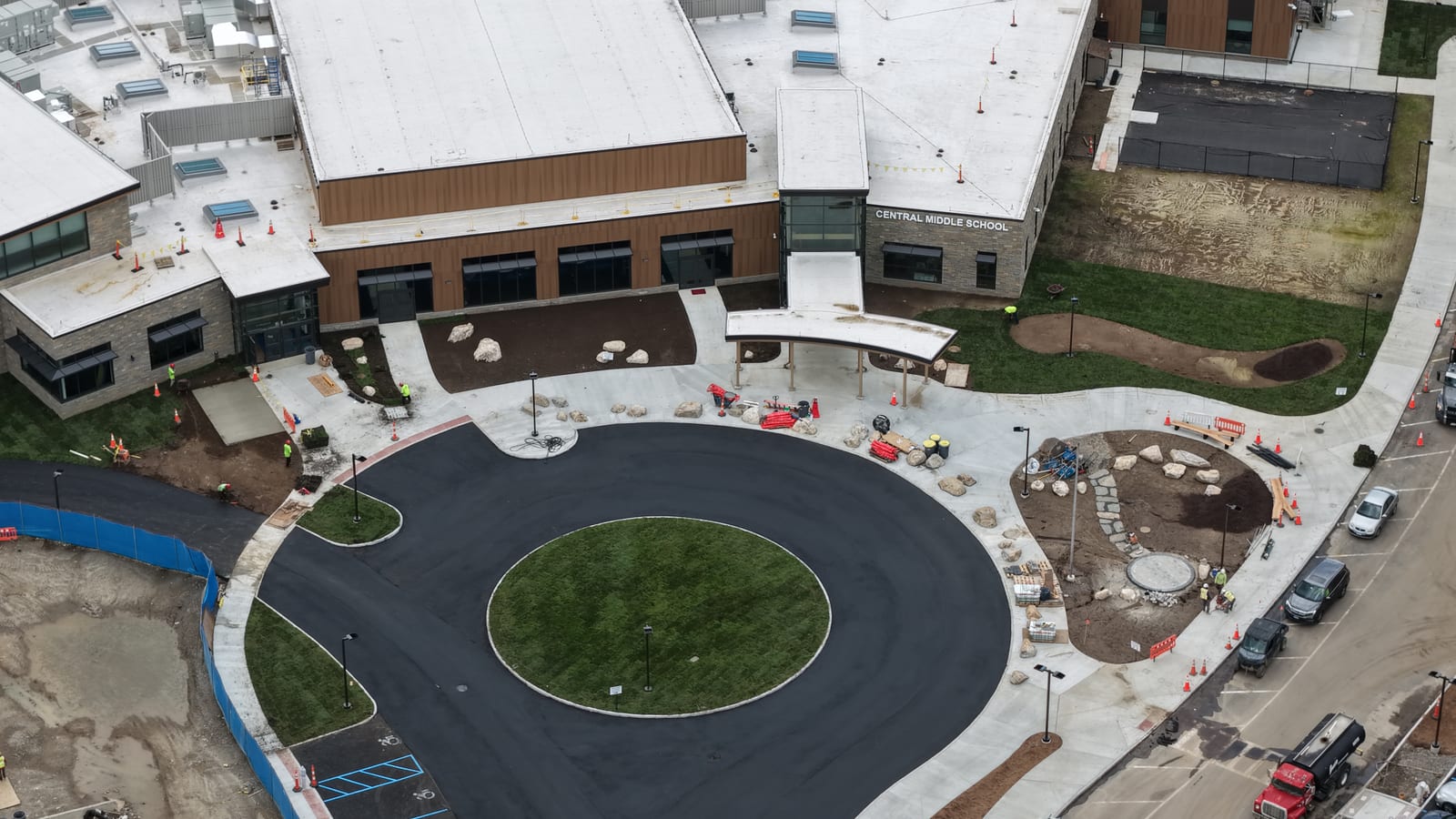
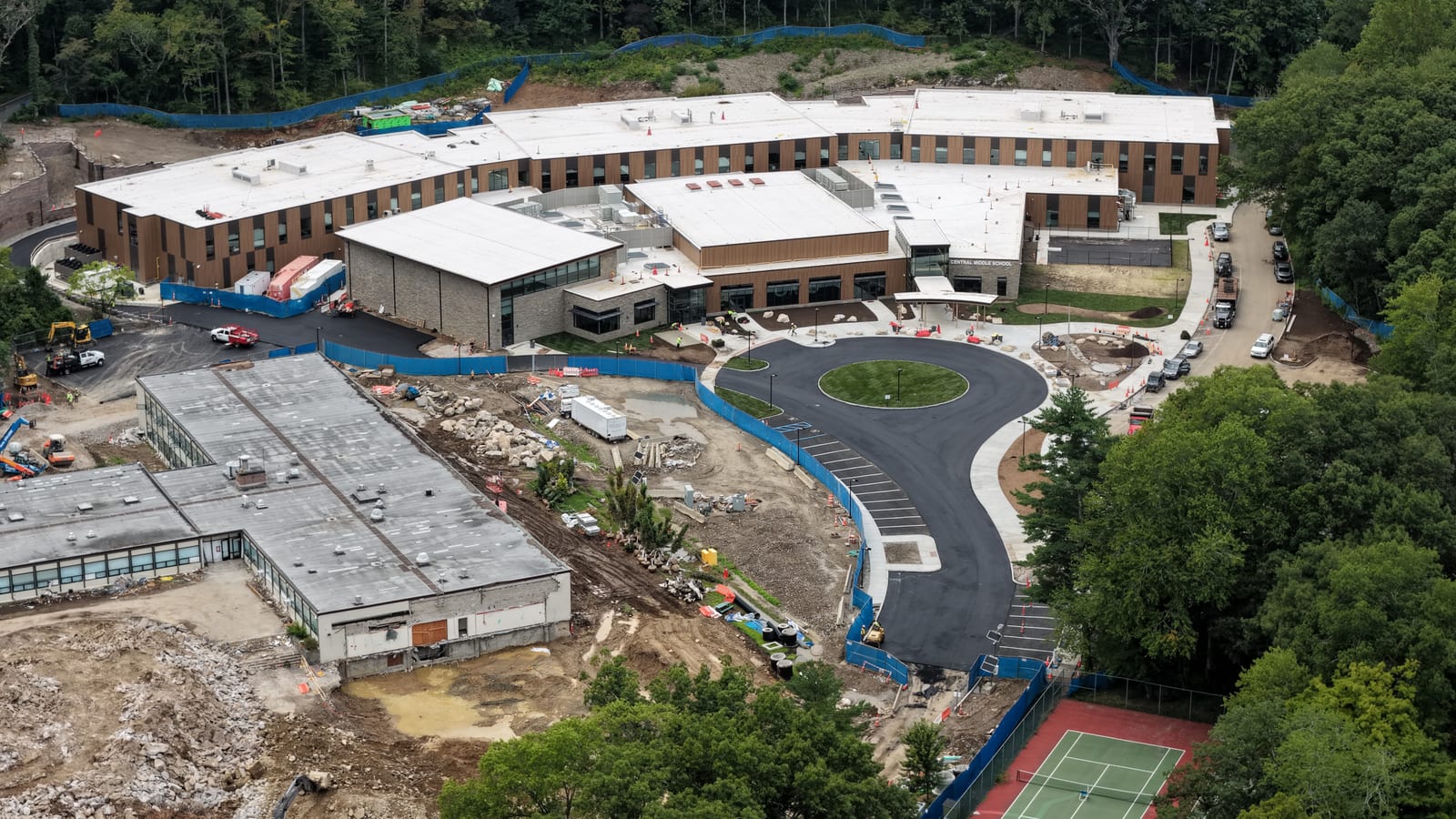
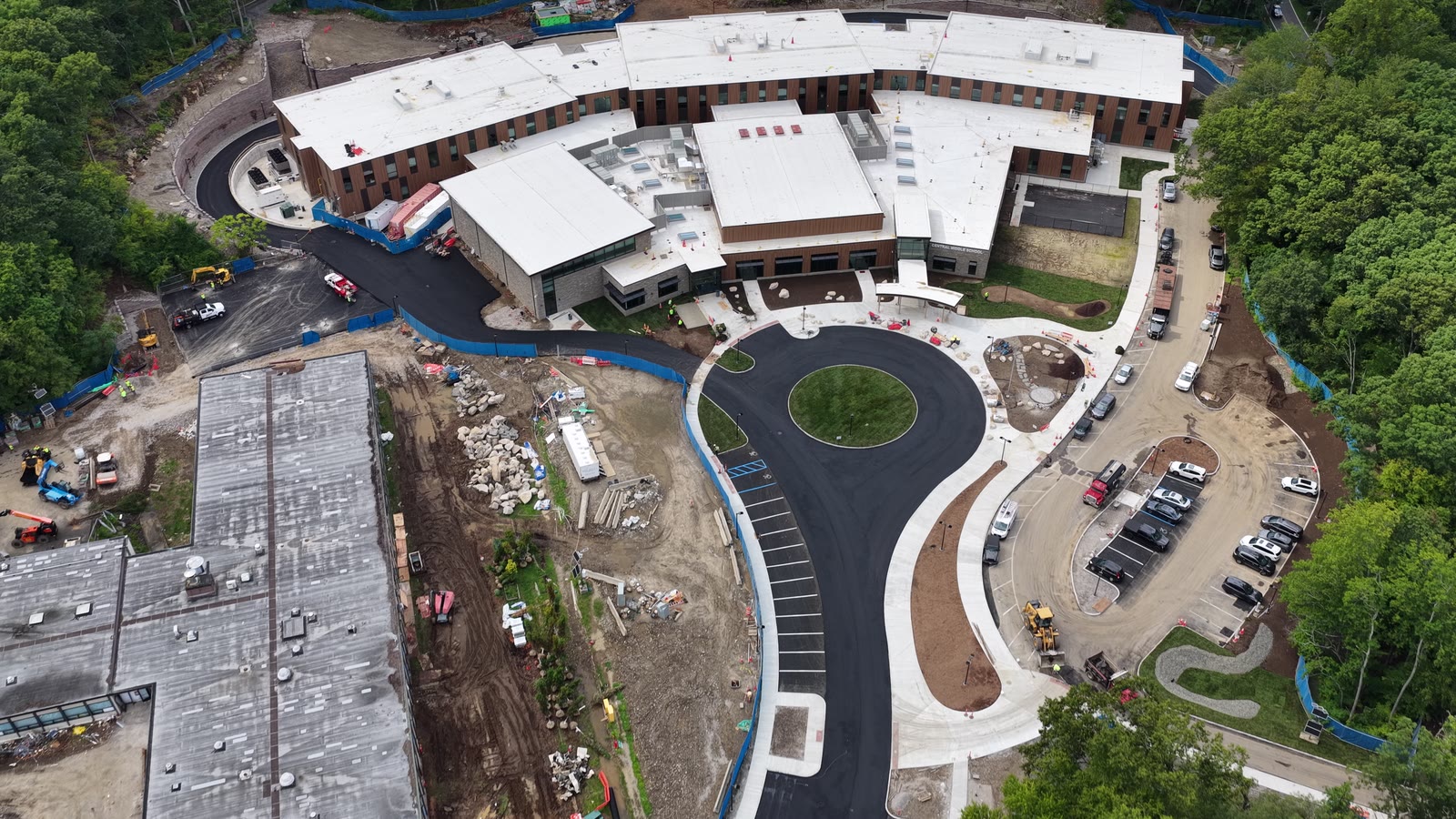
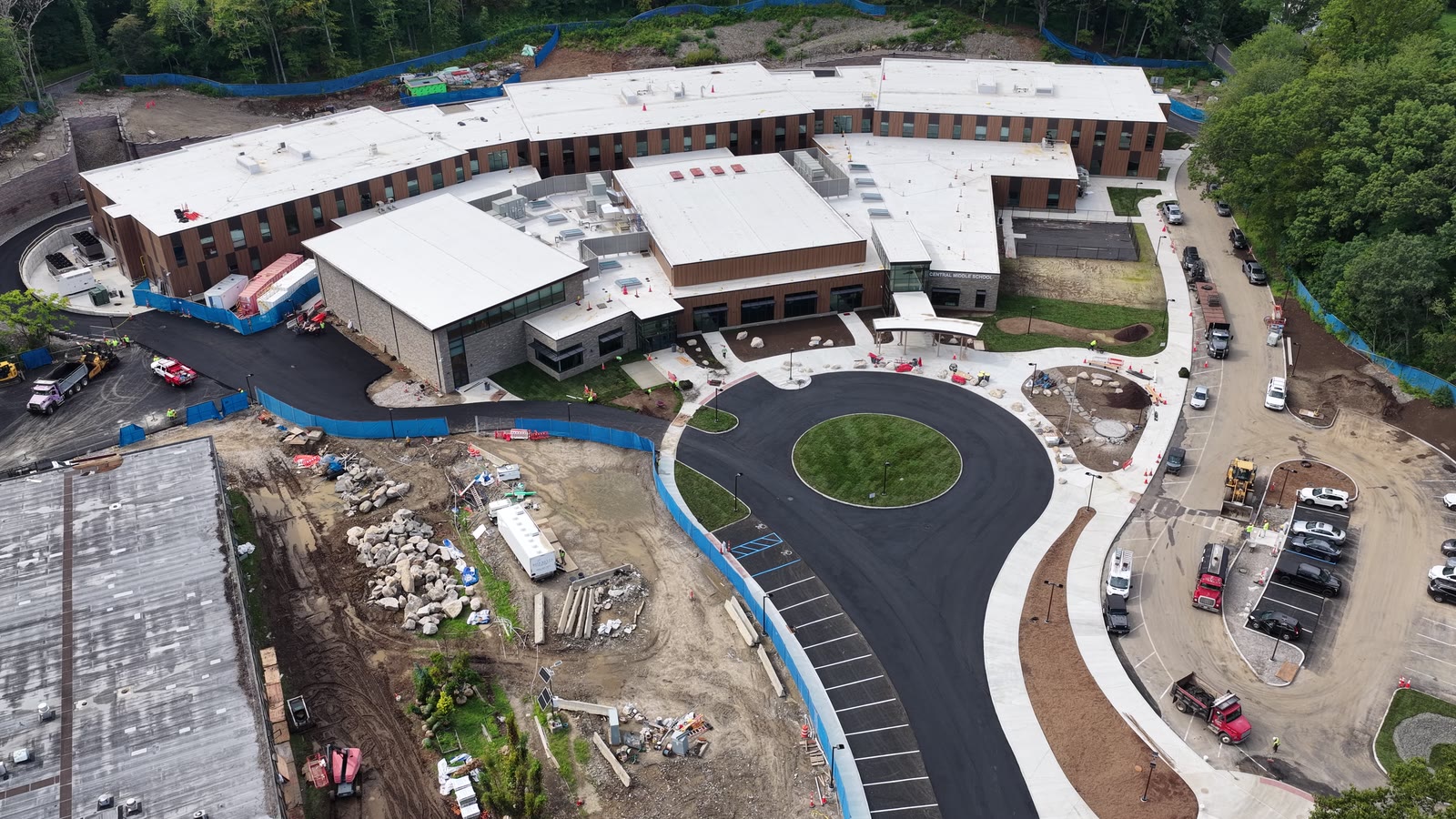
On Tuesday, August 18, 2026, Turner Construction, the general contractor on Greenwich's new Central Middle School, called us about 11,000 square feet of lawn that had to be down before the school's ribbon cutting the following Monday. Turner Construction called CT Sod directly through this website. On Friday morning the entrance circle, building frontage, and curved walks were open soil. By late Friday afternoon CT Sod's entire sod scope was installed and watered. The project landscaper's separate hydroseed scope remained distinct from our work. Three days passed from first call to finished lawn, with seventeen verified drone clips documenting the job.
Greenwich is not one landscape. North of the Merritt are four-acre lots on glacial till and heavy clay, long stone-pillar drives, reservoir watershed, wells, and septic. South of the Post Road are Belle Haven's gatehouse, village yards in Old Greenwich and Riverside on sand and salt air, older compacted blocks in Cos Cob, and close neighbors in Byram. The variety, base, access plan, and town review all change with the address.
Sod installation in Greenwich, CT, in one box
As of September 2026, here is what installing sod in Greenwich, CT involves.
- Two ground conditions: backcountry estates on glacial till and clay north of the Merritt; village and waterfront lots on sand and salt air along the Sound.
- Best windows: September through October, then April through early June.
- Watering: Aquarion uses a twice-weekly sprinkler schedule; hand-held, soaker, and drip methods are exempt. See the authoritative Greenwich watering rule.
- Wetlands: grading or filling near a wetland can enter a 100-foot review area, widened in the watershed. See the authoritative distances.
- Crew hours: machine work follows Greenwich's weekday and Saturday windows. See the no-Sunday rule.
- Cleanup: Greenwich has seasonal gas-blower limits. See the authoritative dates.
- Access: gatehouses, estate associations, long drives, and tight village blocks are handled with an all-terrain forklift.
- Proof: Turner Construction called CT Sod directly for 11,000 square feet at Central Middle School; Tuesday call, Friday finish, Monday ribbon cutting.
- Sod: farm-cut material, with Kentucky bluegrass in irrigated open areas, tall fescue on unirrigated acreage, and salt-tolerant fescues and blends on the shoreline.
The Greenwich Map: Two Towns Divided by a Parkway
The Merritt Parkway is the practical line. North of it, Greenwich is estate zoning on glacial-till loam over heavy clay, threaded by reservoirs and watershed. South of it, Mid-Country runs to sandy loam over weathered bedrock beneath mature oaks, while shoreline enclaves sit on sand with salt in the air. Village blocks add small lots, close neighbors, and decades of compaction.
| Area | Lot scale and access | Soil and drainage | Water, rules, and canopy | Install implication |
|---|---|---|---|---|
| Backcountry | Four-acre estates, long drives, Conyers Farm gate | Glacial till over heavy clay | Watershed, wells, septic, sun and woods | Tall fescue on unirrigated acreage; bluegrass near the house; locate septic |
| Mid-Country | One- and two-acre lots, walls and hedges | Sandy loam over bedrock | Aquarion, irrigation, mature oak shade | Zone bluegrass in sun and a fescue blend under trees |
| Belle Haven and Field Point | Gated peninsula and managed access | Sandy, salt-influenced | Coastal wind and salt spray | Salt-tolerant tall fescue or RTF; amend the top layer |
| Old Greenwich and Riverside | Village lots, sidewalks, family yards | Sand and low flood-zone lots | Salt air and exposed edges | RTF for dog yards; protect edges and confirm fill review |
| Cos Cob | Older blocks and harbor frontage | Compacted mixed fill | Close neighbors and coastal boundary | Loosen subgrade before topsoil; schedule inside town hours |
| Byram, Glenville, Pemberwick, Chickahominy | Small lots and tight staging | Compacted mixed fill | Close neighbors and mixed light | Pallets in driveway; hand prep; one adaptable blend |
Backcountry: Round Hill, North Street, Lake Avenue, Stanwich, and Conyers Farm
Best sod for Backcountry Greenwich, CT: tall fescue on unirrigated acreage and Kentucky bluegrass with irrigation, because water demand and clay drainage decide the zone.
The estate corridor north of the Merritt sits on glacial-till loam over heavy clay. Drainage-first grading and a loosened subgrade matter here. Reservoir watershed expands the wetlands review area, and wells and septic bring well yield and leach-field location into the plan before trucks arrive. Conyers Farm and estate associations also require gate and delivery coordination.
Mid-Country: Round Hill Road South, Lake Avenue, Clapboard Ridge, Zaccheus Mead, and the Club Blocks
Best sod for Mid-Country Greenwich, CT: a bluegrass-fescue blend under the oaks and Kentucky bluegrass in the sun, because mature canopy divides light across the lawn.
These one- and two-acre properties have sandy loam over weathered bedrock, established drives, hedges, and stone walls. The soil drains well but dries quickly. Any area below four hours of direct midsummer sun deserves a canopy assessment, and pallet routes stay off finished Belgian block and bluestone.
Belle Haven and Field Point
Best sod for Belle Haven, Greenwich, CT: salt-tolerant tall fescue or RTF, because sand, salt spray, and wind dry the root zone.
Gatehouse coordination happens before the truck rolls. Compost or screened topsoil worked into the sandy top layer gives water somewhere to stay, while close establishment checks focus on exposed edges.
Old Greenwich and Riverside
Best sod for Old Greenwich and Riverside, Greenwich, CT: RTF for dog yards and salt-tolerant fescue elsewhere, because traffic and salt air stress village lawns.
Half-acre village lots bring sidewalks, driveways, and limited staging. Low areas can sit in mapped flood zones, where regrading and fill need Planning and Zoning review. Pallets normally stage in the driveway for a compact install.
Cos Cob
Best sod for Cos Cob, Greenwich, CT: a bluegrass-fescue blend over a loosened subgrade, because older blocks often hold compacted mixed fill.
Harbor frontage adds the coastal boundary. On inland blocks, correcting compaction before topsoil matters more than adding water after installation. Close neighbors also make the town's work windows part of the production plan.
Byram, Glenville, Pemberwick, and Chickahominy
Best sod for Byram and Glenville, Greenwich, CT: one blend for mixed light, because these compact yards are too small for elaborate variety zoning.
Pallets go in driveways and preparation is often hand work. The Byram River, older fill, close fences, and narrow routes all need to be identified before delivery.
For the regional variety overview, use the Westchester, Greenwich, and Fairfield County sod guide. This town series also includes the Westport sod guide and the New Canaan sod guide.
11,000 Square Feet in Three Days: Central Middle School, Hour by Hour
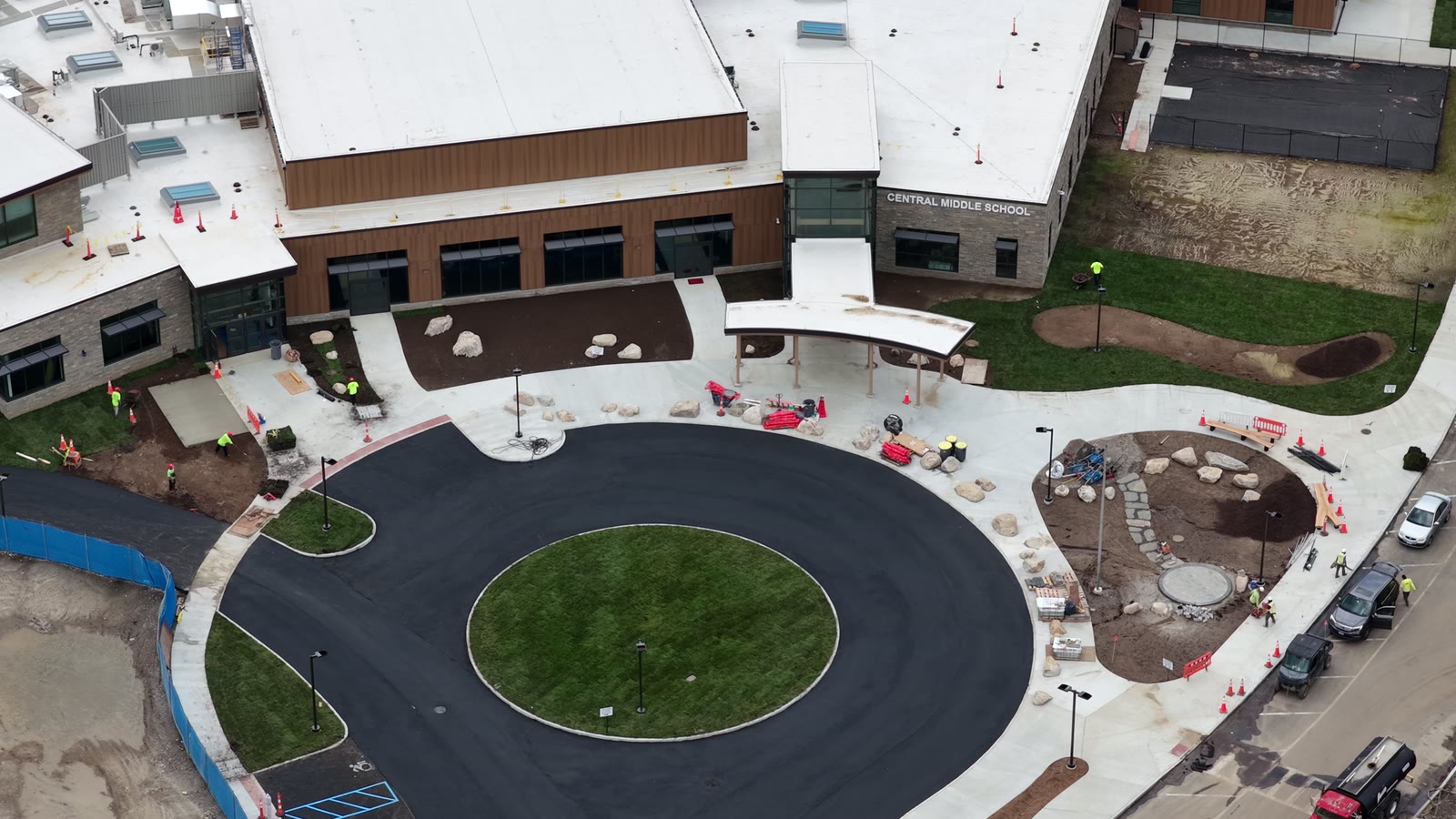
Turner Construction is the general contractor for the new Greenwich Central Middle School. Turner contacted CT Sod on Tuesday, August 18, 2026 and brought us in for a deadline-critical 11,000-square-foot sod scope at the entrance, main circle, building frontage, and curved walks. We rearranged the schedule, coordinated fresh cutting, and mobilized Friday.
Before mobilization: an active construction site

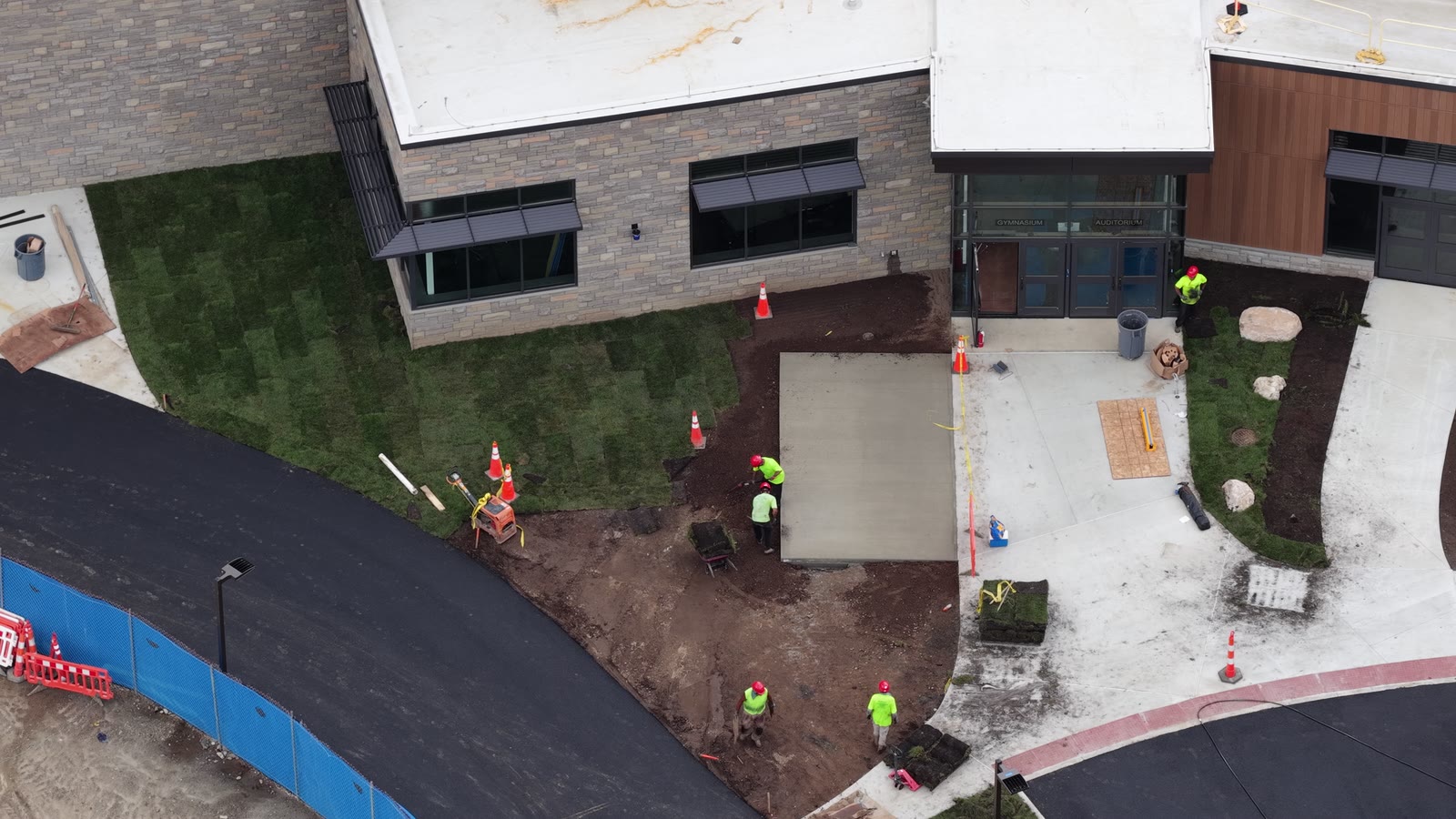
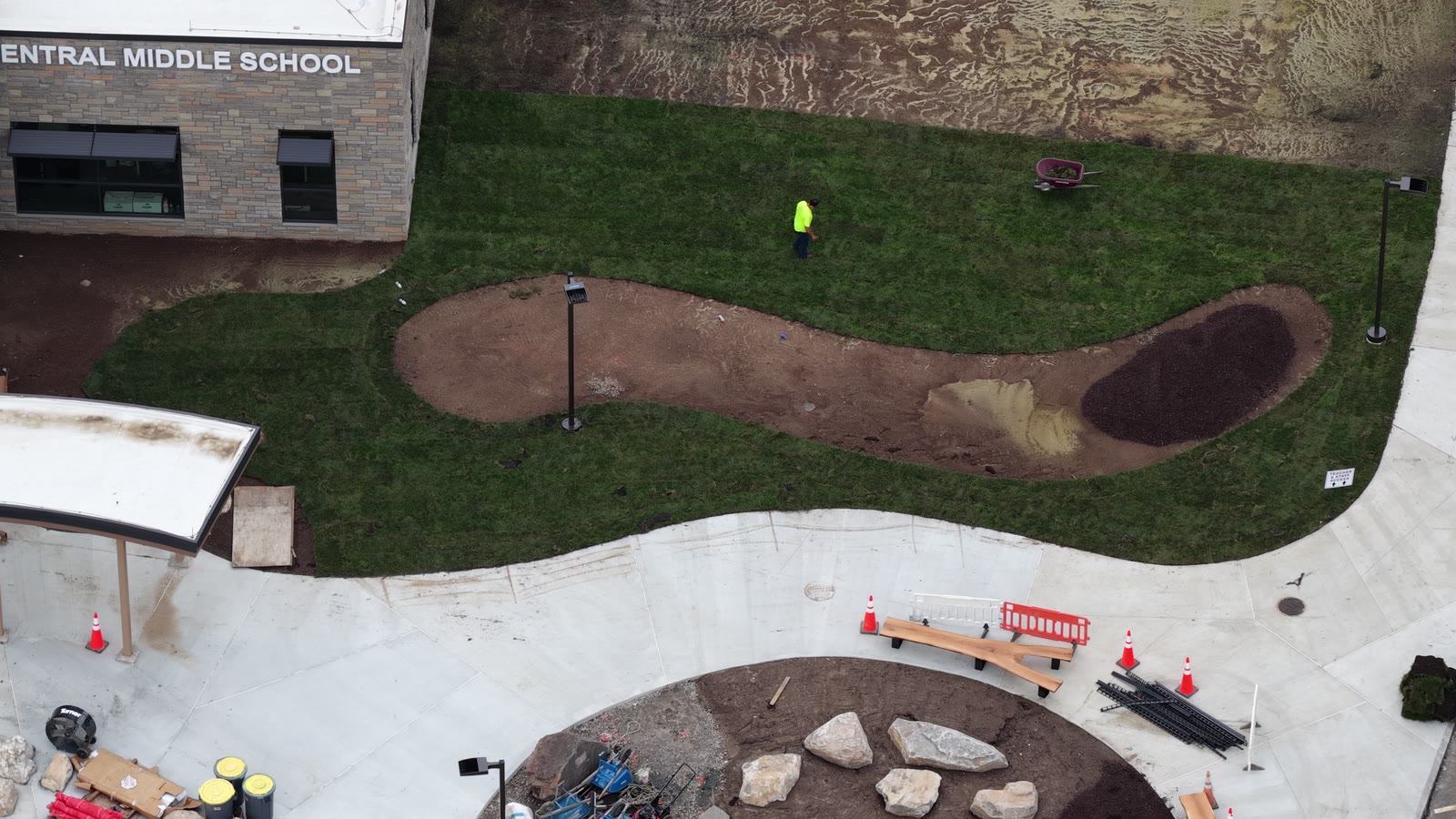
New walks, building frontage, and future lawn areas sat inside a larger active project. Farm cut, trucks, forklifts, and installers had to arrive only when CT Sod's designated zones were ready.
Friday morning: prepared soil, no sod yet
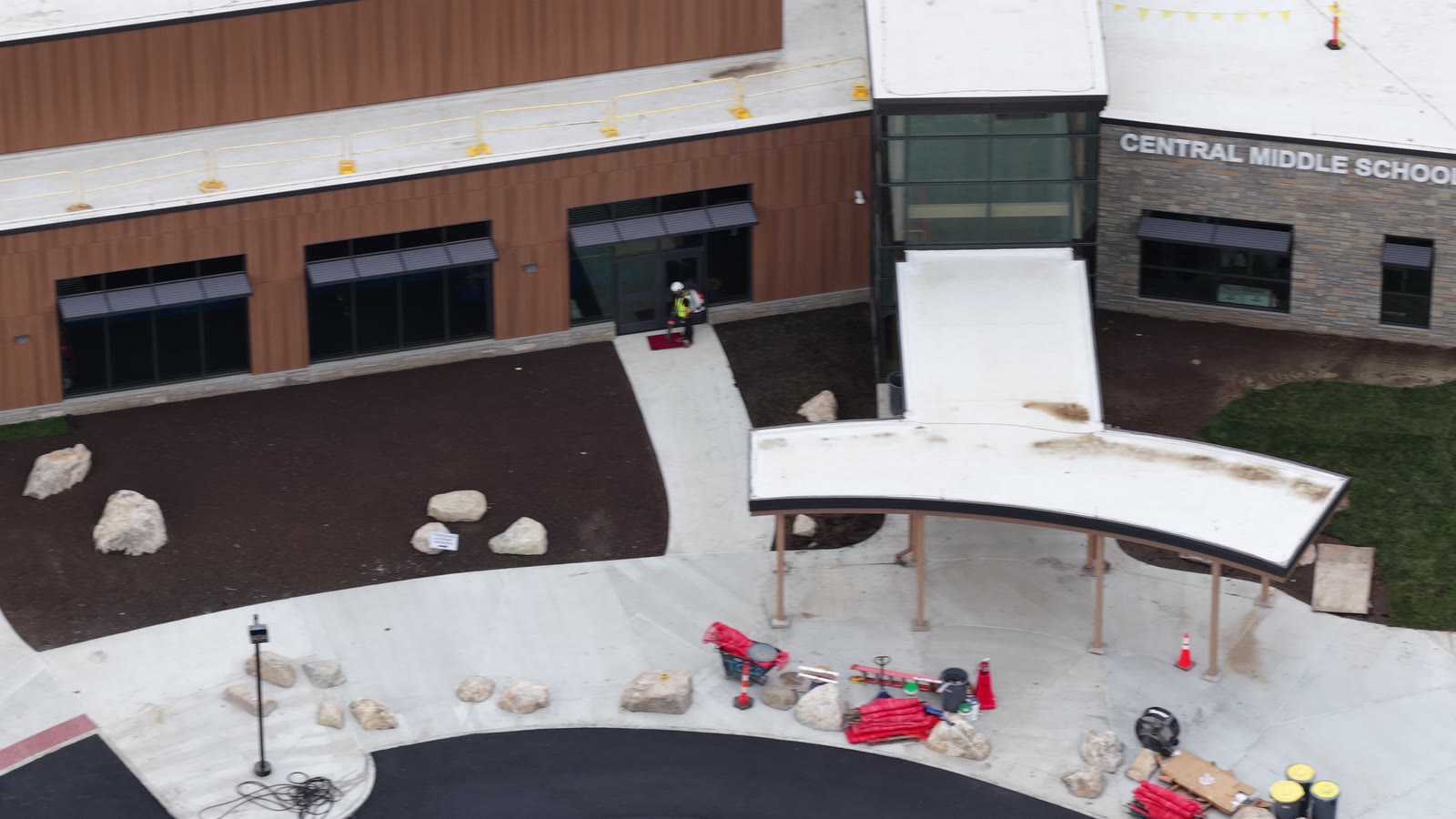
The entrance circle, curved walks, and school frontage were open soil. The Monday deadline had not moved.
Friday midday: fresh pallets on an active site

Pallets were staged by zone so rolls did not have to cross the campus while other trades continued their separate work.
Friday afternoon: the entrance circle turns green
The circle turned green first. Installation moved along the frontage and curved walks while watering began on complete zones.
Friday late afternoon: CT Sod's finished school lawn
CT Sod completed and watered its 11,000-square-foot sod scope. Open-soil areas elsewhere on campus belonged to the project landscaper's separate hydroseed scope; CT Sod did not perform that hydroseeding.

“In Greenwich the grade is set by the clay, the calendar is set by the ordinance, and the sod is the last thing in.”
“Nobody runs a machine on a Sunday in Greenwich. Plan the week so you never need to.”
“The school was 11,000 square feet in one day because the plan was three days old before the first pallet moved.”
— CT Sod crew, Greenwich, August 2026
Three lessons transfer to residential work. Sod produces a usable surface on installation day, while hydroseed fits areas that have establishment time. Speed at scale comes from coordinating harvest, delivery sequence, staging, access, installer count, and watering as one operation. The same crews and seam standards move from a school entrance to a Belle Haven backyard.
Every clip from the school
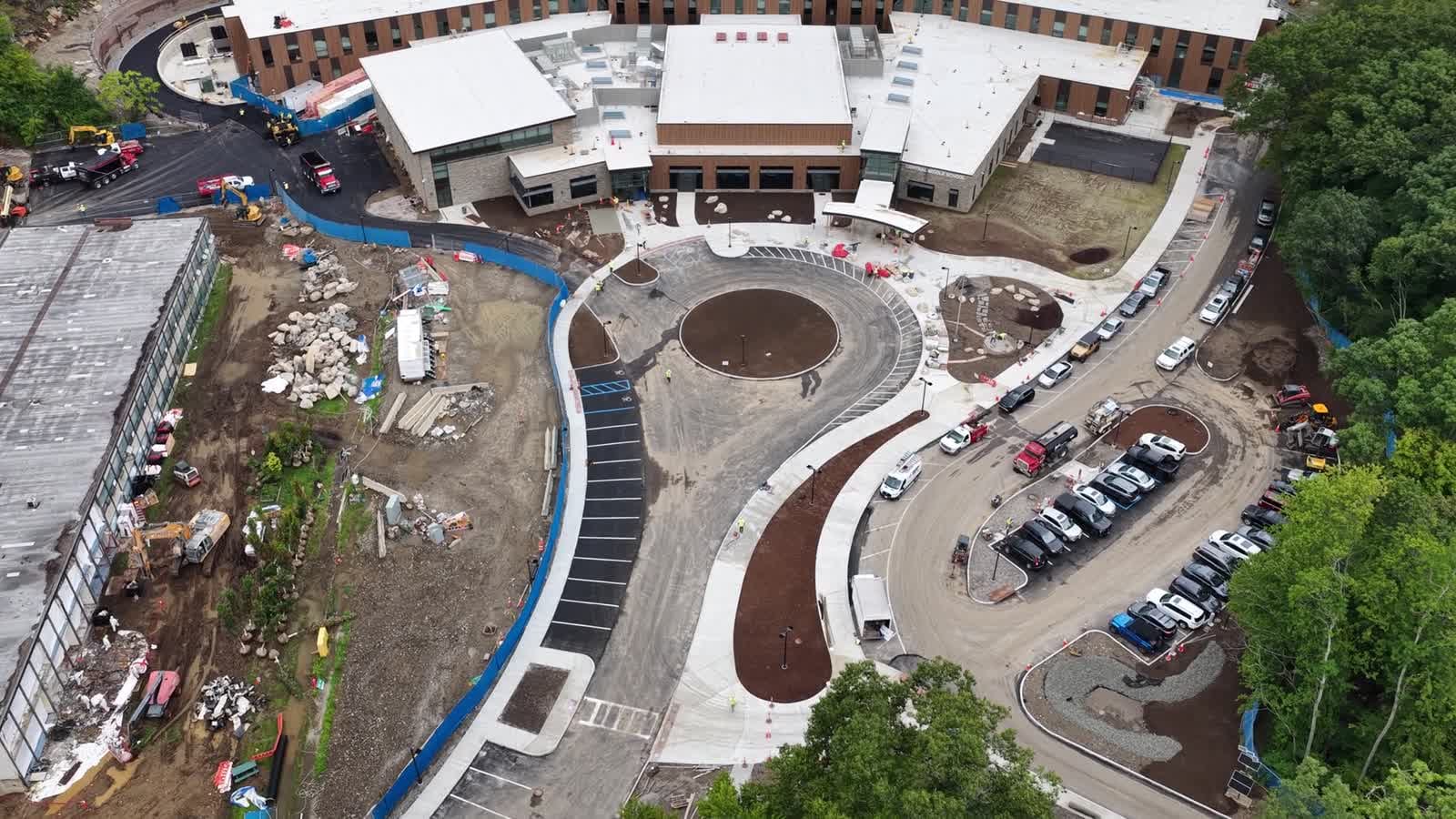
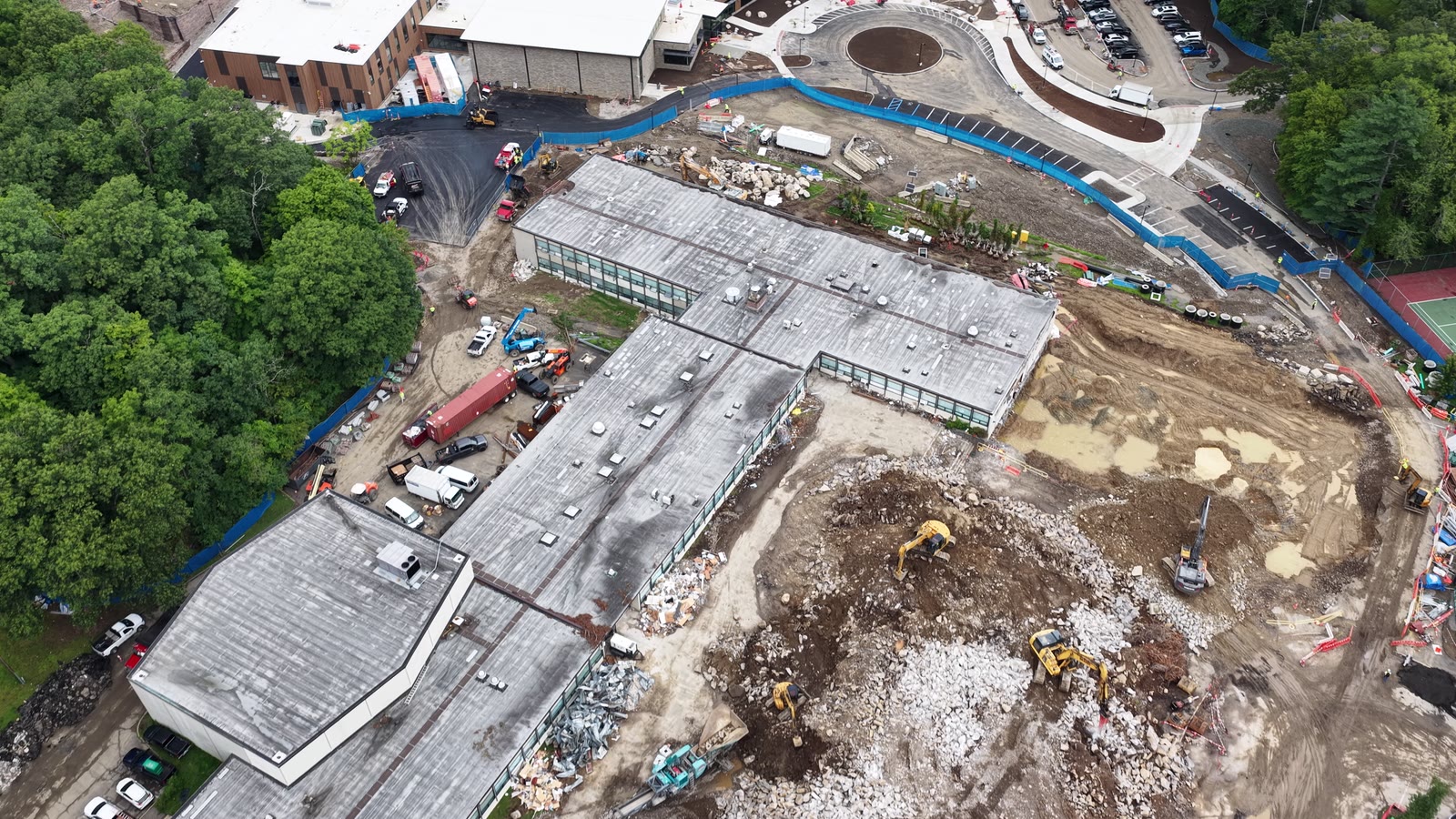
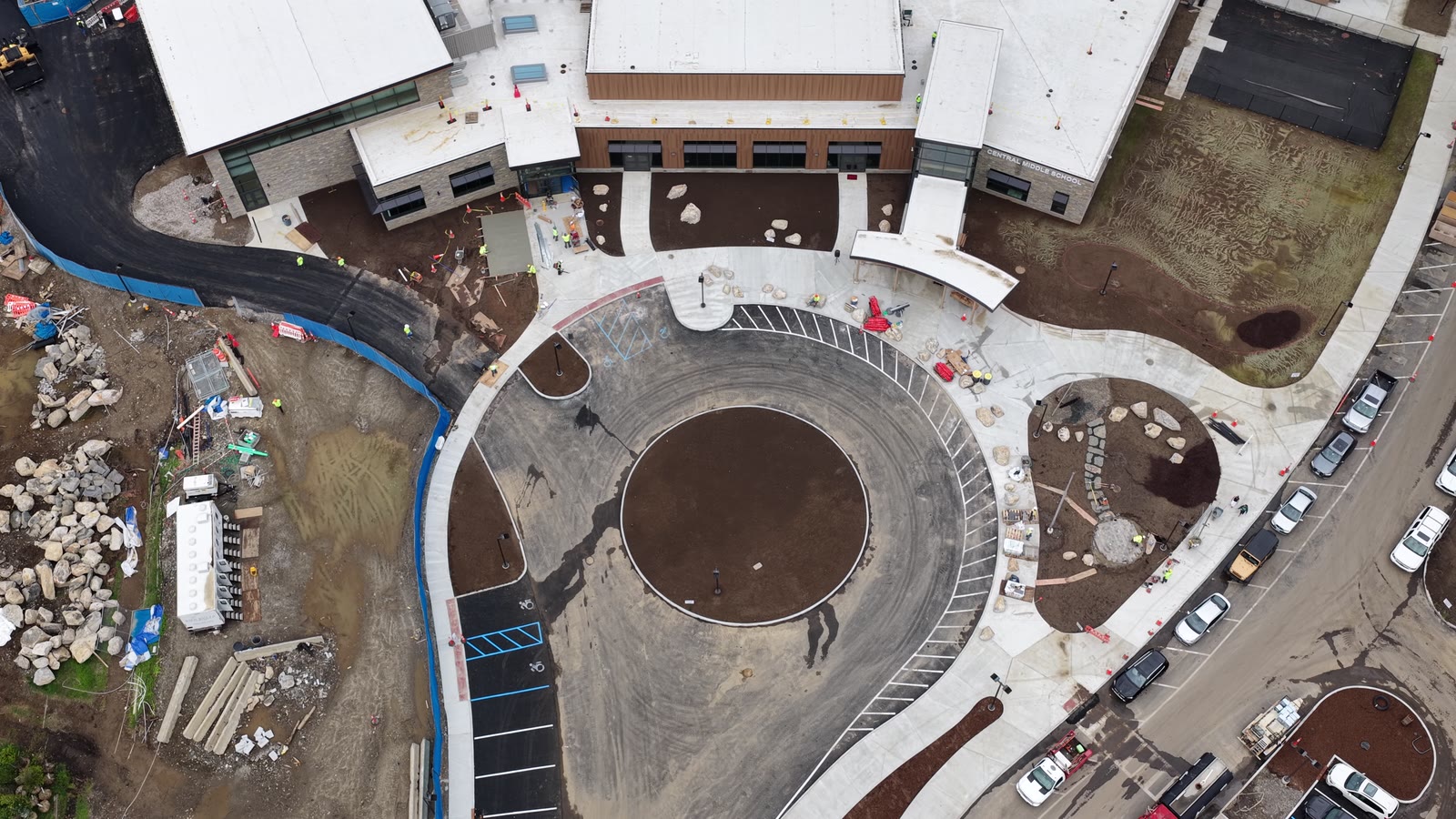
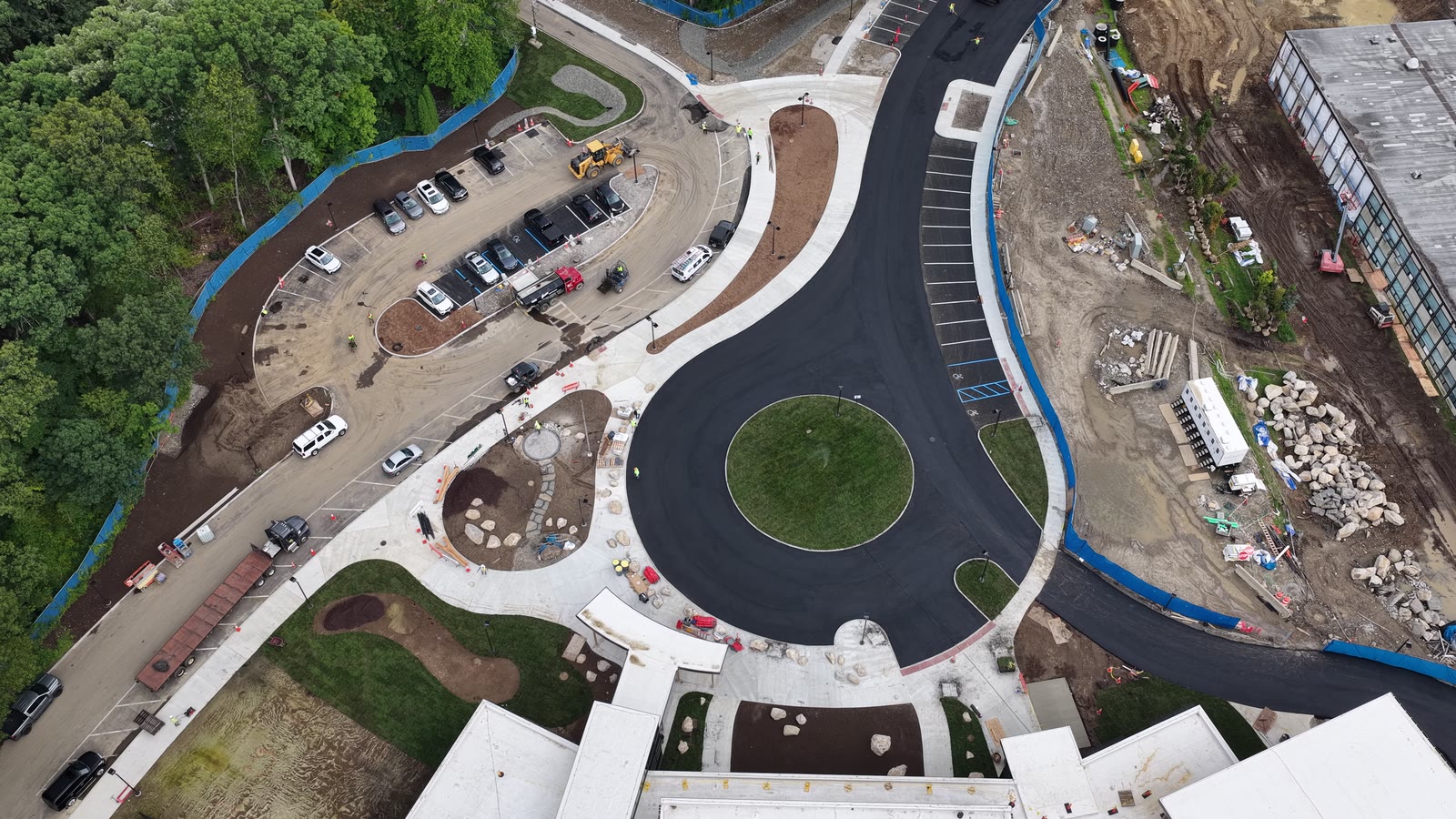
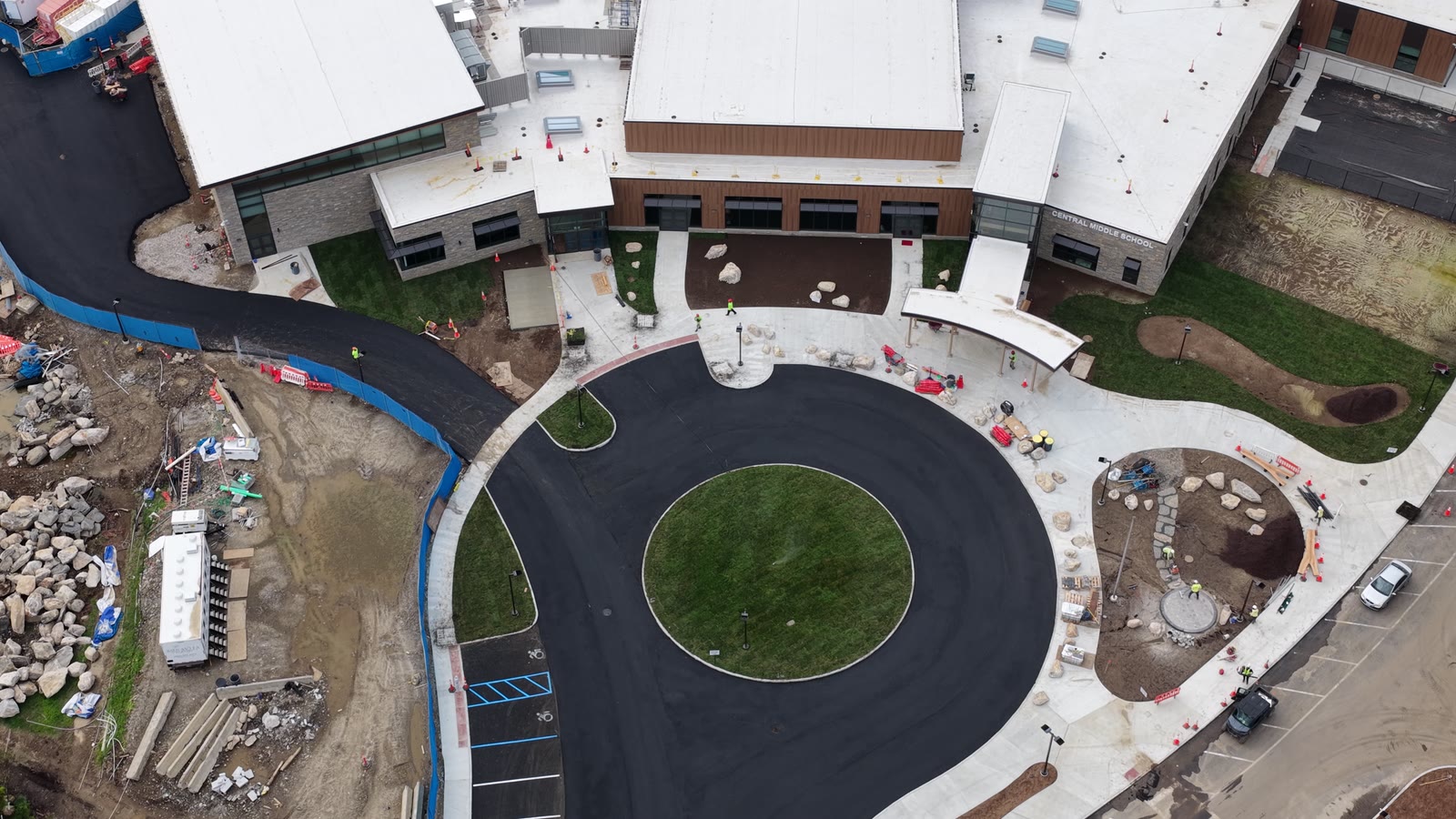
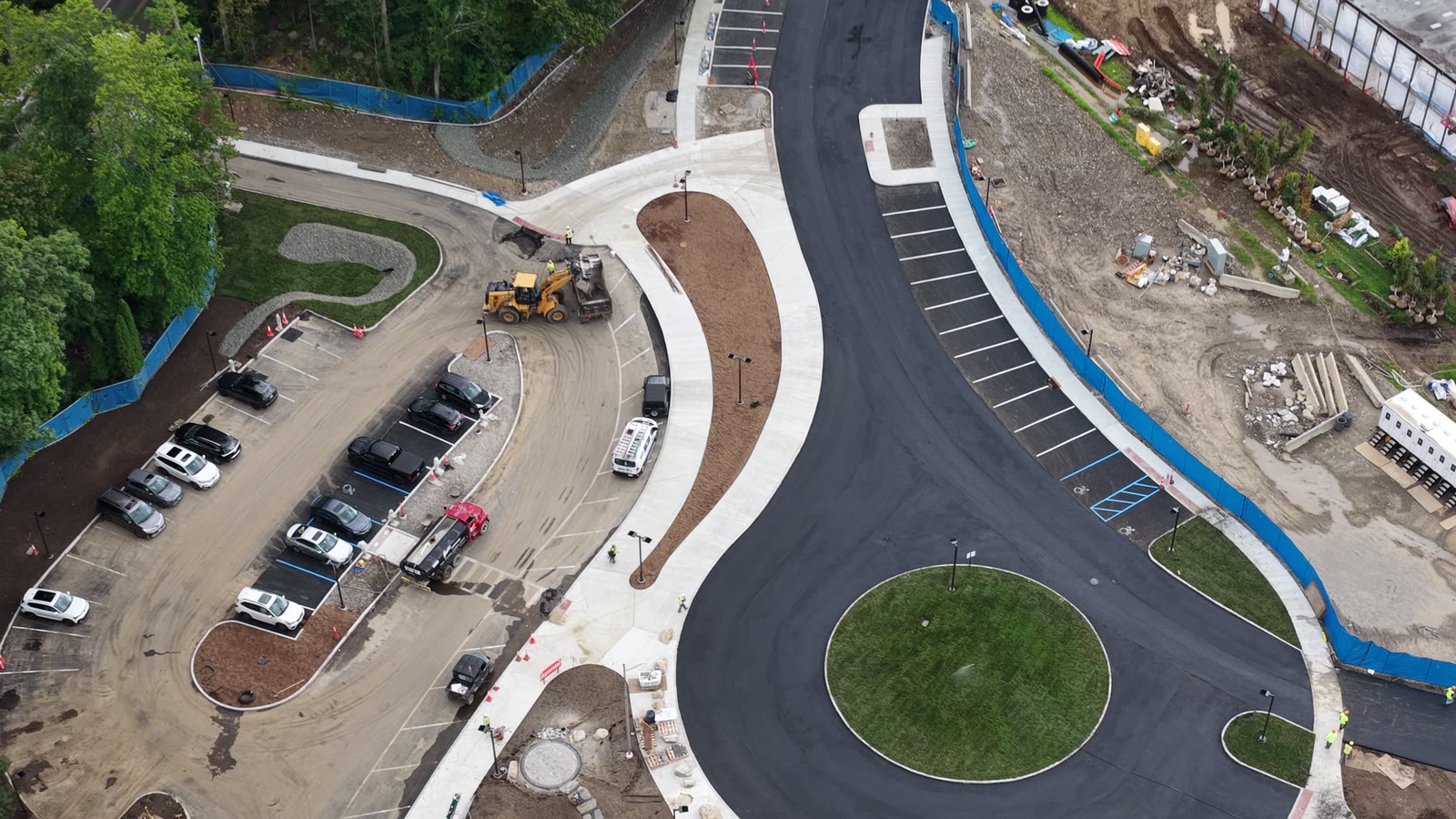

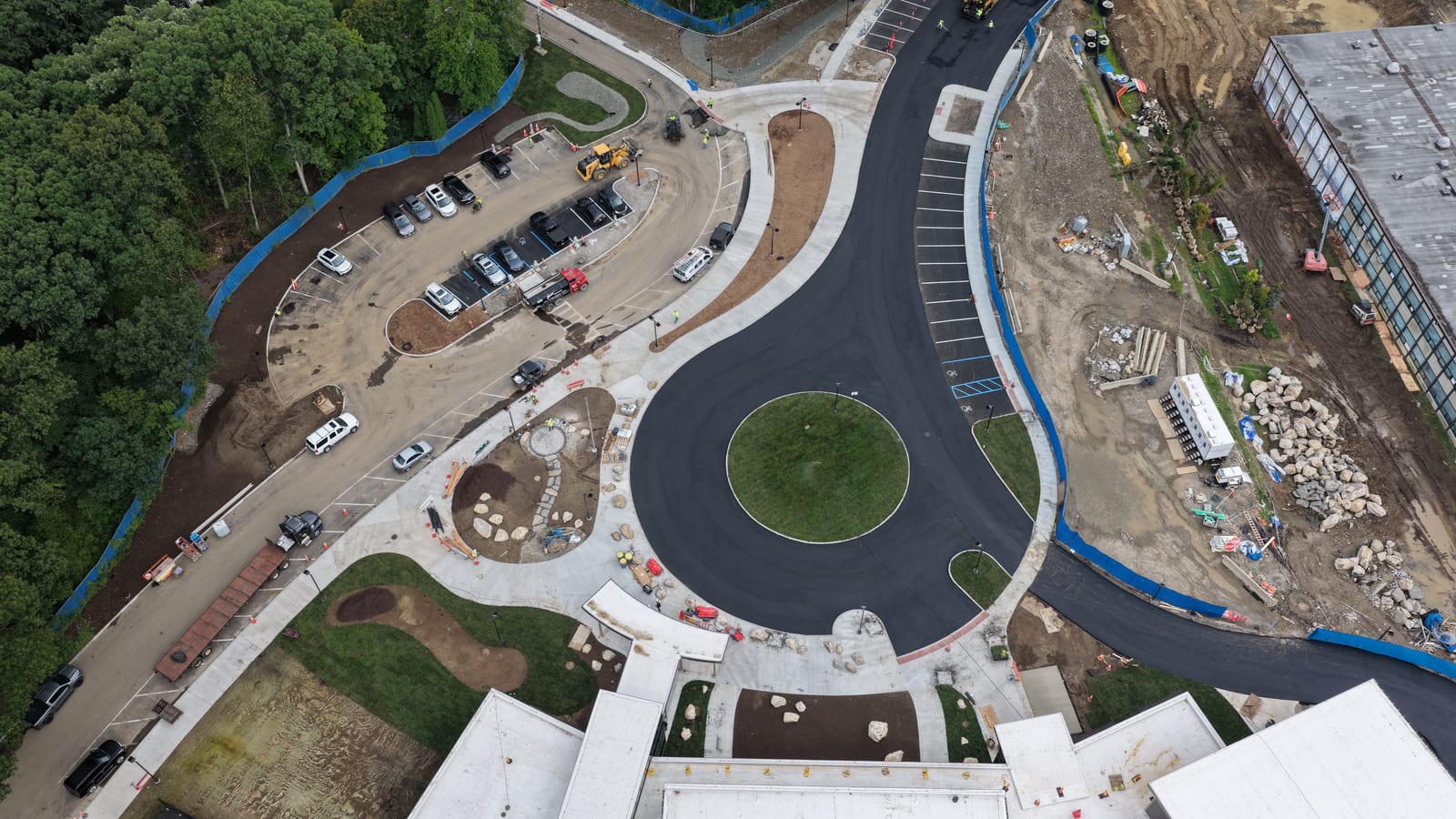
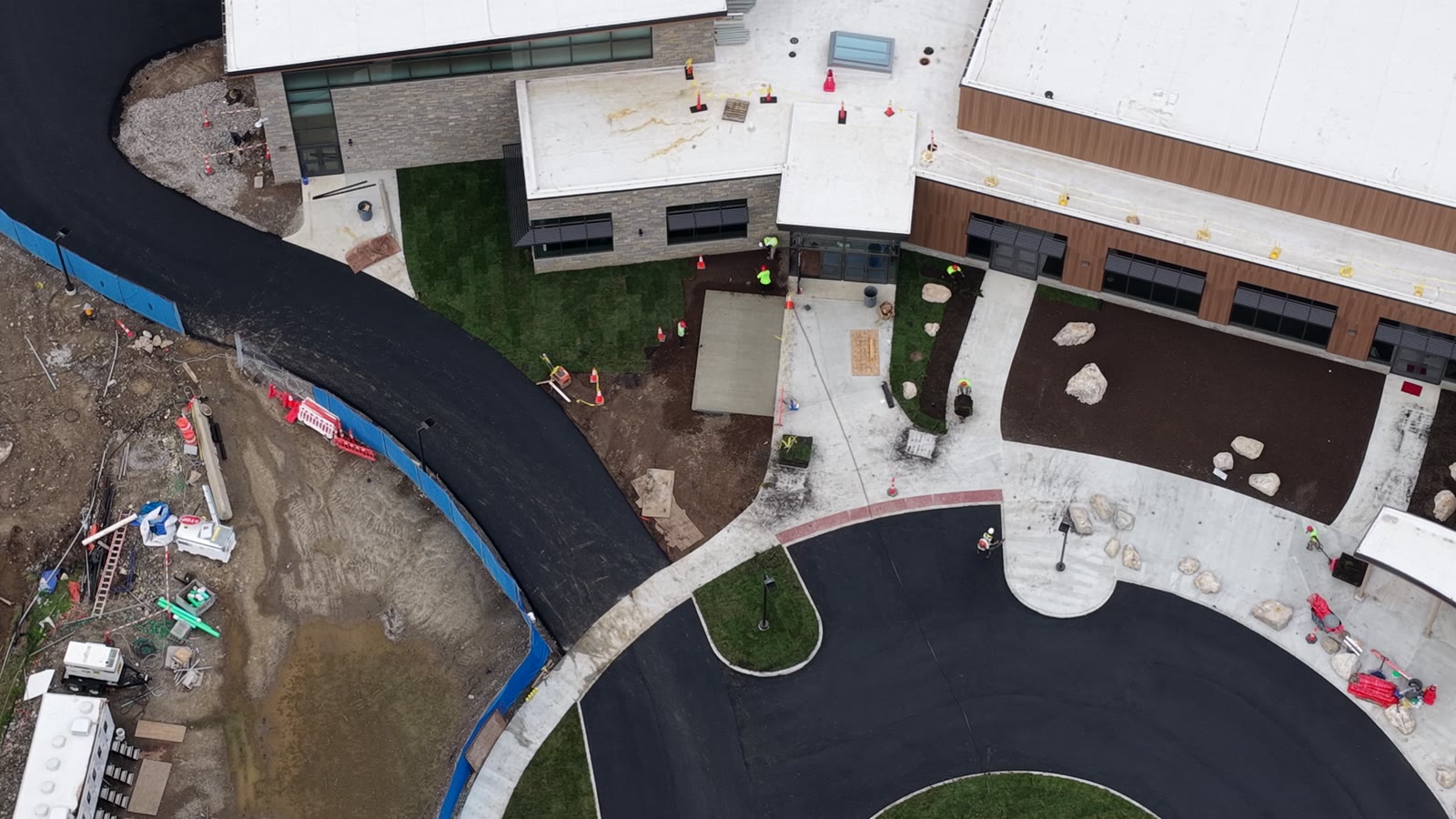
The same crews handle every sod installation in Greenwich; when a landscaper handles prep, Greenwich sod delivery follows the same fresh-cut standard.
Greenwich Lot Math: Three Lawns, Three Different Jobs
Planning uses 500 square feet per pallet, three to four inches of screened topsoil, and tri-axle loads of about 20 yards. In Greenwich, a delivered 20-yard tri-axle load of screened topsoil is roughly $1,000.
| Planning line | Old Greenwich yard, 3,000 sq ft | Mid-Country lawn, 8,000 sq ft | Backcountry frontage, 20,000 sq ft |
|---|---|---|---|
| Pallets | 6 to 7 | 16 to 17 | 40 to 42 |
| Topsoil at 3 inches | 28 yards | 74 yards | 185 yards |
| Topsoil at 4 inches | 37 yards | 99 yards | 247 yards |
| Tri-axle loads | 2 | 4 to 5 | 10 to 13 |
| Spreading | Part of install day | One spreading day | One to two days, two machines |
| Installation | One day | One long day | Two to three days |
| Daily establishment water | About 470 gallons | About 1,250 gallons | About 3,100 gallons |
| Main variable | Salt air and traffic | Oak shade and irrigation zones | Clay drainage, well, septic, watershed line |
Four inches can make sense on clay and sand for opposite reasons: clay needs a workable root layer, while sand needs water-holding capacity. For estate arithmetic from a documented 17,000-square-foot project, use the New Canaan sod guide.
The Greenwich Rules That Touch a Lawn Job
Greenwich has multiple rules that affect grading, topsoil, watering, fertilizer, machines, and cleanup. Confirm project-specific requirements with the named town department.
Inland wetlands: 100 feet, and 150 in the watershed
Greenwich's Wetlands Department says proposed digging, construction, landscaping, or other alteration of the ground or vegetation must go to Inland Wetlands Agency staff for an initial review when wetlands, watercourses, or drainage systems may be nearby. Start with the town's Permit-Need Questionnaire, also called the Green Sheet, and check the IWWA Application Index by Street for prior applications on the property. The Green Sheet lists the IWWA office at Town Hall, 101 Field Point Road; the department lists weekday counter hours from 8 a.m. to 1 p.m.
Sections 4.1 and 4.2(c) of the town's Inland Wetlands and Watercourses Regulations, consistent with Connecticut General Statutes § 22a-40, allow maintenance of existing residential landscaping as of right but exclude removing or depositing material in a wetland or watercourse. Section 4.1 also lets the agency decide in writing whether a proposed operation is permitted, non-regulated, or requires a permit.
In Greenwich, the upland review area is 100 feet from a wetland or watercourse and 150 feet where it is in the public drinking-water-supply watershed, according to the town's Inland Wetlands and Watercourses Agency.
Inside that area, clearing vegetation, excavation, filling, grading, and structures can require an IWWA permit. The agency says landscaping is the residential activity most often performed in violation and notes that a seasonally wet maintained lawn can still be a regulatory wetland. Laying sod on an unchanged existing lawn is a different question; ask staff rather than assume.
Crew hours: Chapter 6B and no Sundays
Greenwich Chapter 6B permits construction activity from 7 a.m. to 6 p.m. weekdays and 9 a.m. to 5 p.m. Saturdays, with no construction equipment on Sundays or legal holidays, according to the town's Noise Ordinance.
Construction includes land clearing, grading, excavating, filling, and paving. The ordinance sets a warning for a first offense, a $100 penalty for a second, and $249 for each later offense, with each day separate. Greenwich jobs are planned to finish inside the window rather than relying on an evening or Sunday recovery period.
Leaf blowers: the summer ban
Greenwich Chapter 6B bans gasoline-powered leaf blowers in residential zones from 6 p.m. the Friday before Memorial Day through September 30, except that the ban ends the day after Labor Day on properties of two acres or more, according to the town's Noise Ordinance Education page.
All blowers also follow town operating hours, commercial gas blowers are prohibited on Sundays in residential zones, and quarter-acre-or-smaller parcels may have only one blower operating at a time. Electric and battery blowers remain available within permitted hours.
Watering: Aquarion and Greenwich Conservation
In Greenwich, Aquarion places automatic and hose-end sprinklers on two designated days per week from April 1 through October 31, Greenwich Conservation does not issue a July or August variance for ordinary lawn replacement without a building permit, and the Conservation Commission handles private-well variance questions, according to Aquarion's irrigation program and Greenwich Conservation.
Greenwich Conservation states that July and August irrigation variances are not issued for ordinary lawn replacement without a building permit; exceptions are limited to permitted construction where stabilization or a certificate of occupancy requires cover, according to the town's Irrigation Variances page. That page also directs private-well properties to the Greenwich Conservation Commission for variances. Aquarion's New Planting Variance is available in spring and fall application windows, and the Large Property Variance addresses lots of two acres or more.
Grading, fill, and the coastal boundary
Greenwich Planning and Zoning and drainage review can apply when regrading or fill changes where water goes. Belle Haven, Old Greenwich, Riverside, Byram Shore, and Cos Cob harbor areas include coastal-boundary and mapped-flood-zone properties. Laying sod alone is not the same as leveling a yard, filling around a pool, or redirecting drainage. The site walk and written scope should identify the distinction; no unverified numeric Greenwich grading threshold is stated here.
Fertilizer: Connecticut's statewide law
Connecticut restricts phosphorus fertilizer on established turf but provides a new-lawn exception subject to the law. The winter blackout runs December 1 through March 15, and application stays 20 feet from water unless an applicable method changes that buffer. See the Connecticut phosphorus fertilizer law guide and Connecticut lawn rules by town.
Sources
- Greenwich IWWA residential FAQ
- Greenwich IWWA permit FAQ
- Greenwich Noise Ordinance
- Noise Ordinance Education
- Greenwich Irrigation Variances
- Aquarion Connecticut irrigation
Nine Towns, Nine Rulebooks
Same crews, same sod, three towns; the calendar and permit set change at the town line.
Wells and Septic in the Backcountry
A quarter inch of water over 20,000 square feet is roughly 3,100 gallons. A household well is not automatically sized for that establishment demand. We ask for well yield and irrigation zones, stagger zones, water after overnight recovery, and recommend a fall installation when yield is marginal.
The septic field and reserve area are often under the best lawn. We locate them from records or the as-built, keep loaded trucks and track equipment off them, stage soil elsewhere, and limit cover over the field to what turf establishment requires. The New Canaan sod guide covers the same well-yield and septic planning in depth.
Access: Gatehouses, Stone Pillars, Village Blocks, and an Active Construction Site
Conyers Farm and Belle Haven have controlled entries; estate associations can have delivery rules; village lots can have no staging room. We request gate details, association rules, truck staging, overhead clearance, and route width when booking.
Every Greenwich delivery includes an all-terrain forklift. It carries pallets past gates and along suitable drives without crossing finished hardscape. On large properties we inspect turning radius, branches, culverts, aprons, and septic location. On village blocks, pallets stage in the driveway and trucks arrive in sequence. At the school, the same planning became zone staging beside an active building while other trades kept working.
Sod Is the Last Trade In: Sequencing a Greenwich Estate Lawn
The reliable order is pool, sport court, hardscape, and walls; utility trenching; septic marking; tested irrigation at finish grade; drainage and rough grading; removal of rock and unsuitable fill; screened topsoil and finish grade; then farm-cut sod. Tell us every other trade's date so sections still needed for access can be laid last.
Protect any route across finished sod with mats or plywood. Do not stockpile pavers, stone, or pallets on the new lawn. Mark fence and pool-cover trench lines before grading so sod can be lifted and relaid. Set irrigation heads at finish grade, not below the new topsoil.
When to Install Sod in Greenwich
September and October combine warm soil, cool nights, steadier rain, and the fall variance period. Greenwich's watering rules and cleanup rules still belong in the schedule. Read why September works in Fairfield County and fall sod installation in New England.
April through early June also establishes well. Coordinate other estate trades and apply for the spring variance when booking.
July and August can work with irrigation and committed hand-watering, but Greenwich's summer restriction changes the plan. Read the single authoritative variance statement.
Late season remains possible while the ground is workable. See how late sod can be laid in Connecticut and sod versus seed for fall.
Watering a Greenwich Lawn: Two Days a Week, Salt Air, or a Well
| Stage | Shoreline sand and salt | Backcountry clay and Mid-Country loam | Aquarion lots | Well lots |
|---|---|---|---|---|
| Day 1 | Soak promptly; check exposed edges | Wet the soil beneath every zone | Use a permitted method | Run zones in sequence |
| Days 2 to 7 | Check edges twice daily | Daily on loam; avoid standing water on clay | Use an approved variance or exempt methods off days | Early after overnight recovery |
| Days 8 to 14 | Usually daily; use tug test | Usually every other day | Same schedule framework | Keep zones staggered |
| Days 15 to 21 | Deeper, less frequent | Twice-weekly deep watering | Regular schedule often covers it | Twice weekly, early |
| Weeks 4 and 5 | Deep and infrequent | Same | Watch variance duration | Train roots deeper |
| Week 6 onward | Watch edges in dry spells | Regular deep cycle | Follow current schedule | Match demand to yield |
Lift a corner and inspect the soil rather than relying only on a clock. First mow when the sod resists a tug and the soil is firm, often 14 to 21 days, with the mower high. For legal watering methods, use the authoritative Greenwich rule; for general care, use the new sod care guide.
Sizing a Greenwich Sod Project
Size The Work
Greenwich Sod Planner
Estimate sod, soil, fill, truckloads, work days, access, and establishment water.
Planning output
Enter the lawn area to see project quantities and logistics.
Planning figures only. Every install is scoped after a site walk; the sod calculator and Connecticut installation cost guide cover separate budgeting questions.
How to Read a Greenwich Sod Quote
Three written scopes can describe three different jobs. Five lines decide most Greenwich work.
| Line | What it should say | Why it matters in Greenwich |
|---|---|---|
| Fill and topsoil | Separate screened-fill yards from topsoil yards and depth | Elevation and root-zone material do different jobs |
| Wetlands and coastal | Who checks review areas and the coastal boundary | Landscaping and fill can require review |
| Schedule | Prep and machine days inside town windows | The ordinance controls production time |
| Watering | Named method, variance route, and well plan | Establishment begins immediately |
| Access | Gate, association, staging, and pallet route | Controlled entries require advance coordination |
Install-only means the property owner or landscaper supplies the prepared base while CT Sod delivers and lays. Full service identifies strip-out, haul-off, fill, topsoil, grading, and installation under one scope. The reviews page includes Kenneth Savio's verified Greenwich delivery account and other customer experiences.
Why Greenwich Owners, Their Landscapers, and Their Contractors Use a Sod-Only Crew
CT Sod is a sod delivery and installation company based in Milford, Connecticut, with crews that install in every Greenwich neighborhood; the phone is (203) 806-4086.
Sod-focused crews repeat the same work: protect fresh rolls, build close seams, cut transitions, and coordinate delivery with the grade. Turner Construction called CT Sod directly for the school. A New Canaan builder used the crew against a paving deadline, and a Westport homeowner used it while a separate pool contractor continued nearby.
Choose install-only when a landscaper prepares the base, or full service for removal, haul-off, screened fill, screened topsoil, grading, and installation. Read the complete Central Middle School project, explore commercial sod installation, or plan sod installation in Fairfield County.
Step 1: mix one bag of Under Sod 4-2-5 per pallet into 4–6 inches of soil beneath new sod. Step 2: apply Over Sod 8-0-6 at one bag per four pallets 30 days later,.
“I’ve had sod deliveries from CT Sod to properties I have in both Greenwich and Milford. Each sod delivery has been high quality bluegrass sod, and both my neighbors and landscaper admired the quality. Kayla in the office even texts you the exact time it will come the night before. I couldn’t be more impressed with the service and product I received from CT Sod. You will not be disappointed with this sod company.”
— Kenneth Savio, Greenwich, CT, Google Review
Compare the full sod installation process, then browse sod installation in Connecticut by county and town.
Ready For A Finished Lawn?
Need it installed?
Sod-only crews, up to 30,000 sq ft a day across the Northeast.
Frequently Asked Questions
Which sod company did Turner Construction bring in for Greenwich Central Middle School?+
How long does a sod installation take in Greenwich?+
Do I need a wetlands permit to install sod in Greenwich?+
Can crews work on Sundays in Greenwich?+
How do I water new sod under Aquarion's twice-a-week rule in Greenwich?+
Can I install sod in Greenwich in July or August?+
My house is on a well. Does the watering schedule apply?+
When can my landscaper use a gas leaf blower on the new lawn?+
What sod is best for Greenwich?+
How much topsoil does a Greenwich lawn need?+
Can a truck get to my lawn behind the gate?+
Should the lawn go in before or after the pool, patio, and driveway?+
Do you work with my builder or landscape architect?+
What is under a rebuild lot in Greenwich?+
Can I just have sod delivered to Greenwich for my own crew?+
Keep Reading

11,000 Sq Ft Greenwich Central Middle School Sod Installation Complete

The New Canaan, CT Sod Guide: Estate-Scale Installs, Ridge Soil, Wells and Septic, Wetlands Rules, and What Three Real Jobs Taught Us
