
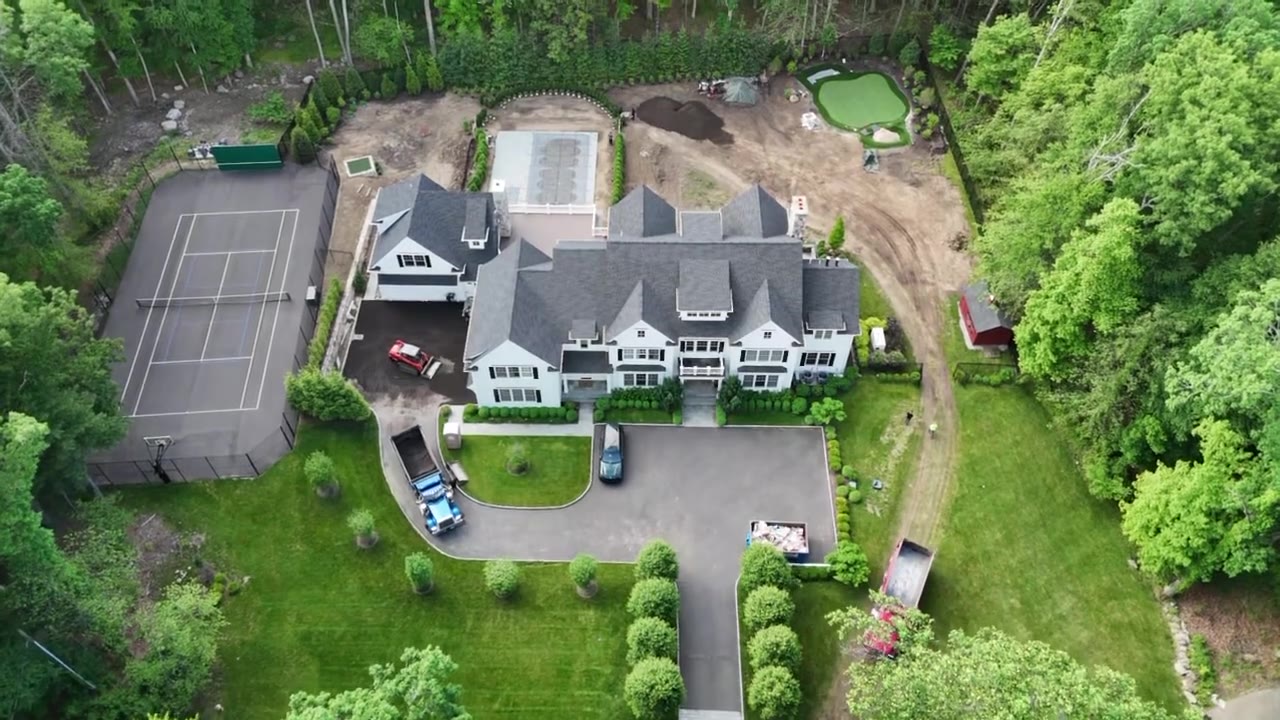
In the spring of 2026 our crews regraded the lawns of a New Canaan estate around the pool, the putting green, the tennis court, and the outbuildings, spread 220 yards of screened topsoil in a single day from eleven tri-axle loads, hand-raked the finish grade, and came back to lay 17,000 square feet of Kentucky bluegrass once the other trades were off the property and the heat wave broke. In August a builder called with a 7,000 square foot lawn that had to be down before the driveway was paved on Thursday, with a propane tank operation holding the access road on Tuesday; it took 54 yards of screened fill, 140 yards of screened topsoil, a laser level, and five working days. A week earlier, a schedule mix-up left a New Canaan commercial property with pallets on the ground, no installers, and a party that afternoon; our crew laid 4,500 square feet in steady rain and the guests never knew. All three are documented on this site with photos and drone footage, and all three are linked below.
This page is what those jobs and the ones before them taught us about putting sod down in New Canaan. It is a town of ridges and valleys, of two-acre and four-acre lots behind stone-pillar gates, of thin soil over ledge on the high ground and wetlands in nearly every low spot. North of the Merritt most of those lots are on private wells and septic, which changes both the watering plan and where a truck is allowed to drive. The wetlands rule is stricter than most people assume, and the lawn is almost never the only thing being built, so sequencing sod around pools, paving, sport courts, propane, and irrigation is half the job. The short version is in the box below. The whole thing follows.
The New Canaan Map: Ridges, Valleys, and Two-Acre Lots
New Canaan sits on a set of north-south ridges with rivers in the folds between them: the Silvermine on the east, the Fivemile and the Noroton through the middle, the Mill River and the reservoirs on the Stamford side. That geography decides more about a sod job than the street address does. Ridge-top lots have thin soil over ledge and drain fast. Valley lots have depth, clay, and wetlands within reach of the lawn. North of the Merritt the zoning runs to two and four acres, the town's own plan describes those lots as relying on wells for water, and public sewer reaches only the southern part of town and the Town Center; everything else is septic. That turns a backyard into a project measured in truckloads, gallons, and where the leach field is. Below is how we read a New Canaan address before the site walk, first as a summary, then section by section.
| Area | Lot scale and access | Soil and drainage | Water, sewer, and canopy | Install implication |
|---|---|---|---|---|
| Oenoke Ridge, Smith Ridge, Ponus Ridge | Two- and four-acre estates, long private drives, stone-pillar gates | Thin till over ledge on the crowns; deeper on the shoulders | Mostly wells and septic; big canopy on the edges, open sun near the house; wetlands in the swales below | Truckload-scale topsoil; ledge dictates grade; well yield and leach field location before trucks roll; Kentucky bluegrass in the open, RTF or blend under trees |
| Silvermine and the Norwalk line | One- to two-acre lots on the river valley | Deeper soils, clay pockets, river-bottom wet spots | Silvermine River and brooks; heavy canopy; wells and septic common | Wetlands review area is the first check; drainage-first grading; deeper-rooting fescues; the 7,000 square foot job below is on this side of town |
| Weed Street, Frogtown, West Road, Wahackme | One- to two-acre, established estates and rebuilds | Mixed; decades of amended soil over till | Mature specimen trees; irrigation throughout; mixed Aquarion and wells | Rebuild lots carry construction fill; variety zoning around specimen trees |
| Talmadge Hill and south of the Merritt | Half-acre to one-acre, compact lots, tighter streets | Till with rock; small yards prepped by hand | Aquarion water; sewer in the southern part; street trees; close neighbors | One-day installs; single blend beats zoning; Aquarion schedule and noise hours matter most |
| Canoe Hill, Carter Street, Valley Road, Laurel Road | Two- to four-acre, wooded, rural drives | Till and ledge, wet pockets, brooks | Wells and septic; reservoir watershed on the west side; deep canopy | 100-foot review area where water drains to supply; canopy assessment before promising a lawn |
| West School and the village edge | Half- to one-acre, older homes, sidewalks | Amended garden soil over till | Aquarion water and sewer; street trees | Compact, precise jobs; pallets in the driveway, not the street |
The Ridges: Oenoke, Smith, and Ponus
The estate corridor. Lots run two to four acres behind stone-pillar gates at the end of long private drives, and the lawns are measured in truckloads: the 17,000 square foot job below took 11 tri-axle loads of topsoil because the ridge crowns carry only inches of soil over ledge. Grade is dictated by rock, not by preference, so the finish grade follows the ledge and topsoil fills the difference. Most of these lots are on wells and septic, which means well yield and leach field location are part of the plan before the first truck. Kentucky bluegrass belongs in the open sun near the house with irrigation; RTF or a bluegrass-fescue blend goes under the oak and beech edges. Lots on Aquarion water here qualify for the Large Property Variance.
Silvermine and the Norwalk Line
The river valley on the east side. Soils are deeper, clay pockets hold water, and the Silvermine River and its brooks put the 50-foot wetlands review area within reach of many lawns. Drainage-first grading and deeper-rooting tall fescue varieties do better here than a bluegrass carpet, and the wetlands map is the first thing we check. The 7,000 square foot builder job in the next section is on this side of town: 54 yards of fill to correct the elevations before a single yard of topsoil went down.
Weed Street, Frogtown, West Road, and Wahackme
Established estates and a steady run of teardown rebuilds. The old lots carry decades of amended soil and mature specimen trees that decide where the sun is. The rebuilds carry construction fill, compaction, and a grade that changed when the new foundation went in. Variety zoning around the trees, and a hard look at what is under the first three inches on any lot that just had a machine on it.
Talmadge Hill and South of the Merritt
Compact half-acre to one-acre lots on Aquarion water, closer neighbors, tighter streets. Small yards prepped by hand, pallets staged in the driveway, one-day installs, and a single blend that handles mixed light instead of zoning a lawn too small to zone. Aquarion's two-day schedule and New Canaan's noise hours matter most here because the property line is close.
Canoe Hill, Carter Street, Valley Road, and Laurel Road
Wooded two- to four-acre lots on rural drives, brooks and wet pockets in the low ground, deep canopy, wells and septic. On the west side water drains toward public supply, which is where New Canaan's review area widens from 50 feet to 100. Canopy assessment comes before any promise of a lawn under the trees; fine fescue on the naturalized edges, premium varieties near the house.
West School and the Village Edge
Older homes on half- to one-acre lots with sidewalks, street trees, town water and sewer. Precise, compact jobs where the edges along beds and walks are hand work and the forklift puts pallets in the driveway, not on the street.
For variety selection across Fairfield County, see sod installation in Fairfield County. For the coastal side of the county, the Westport sod guide is the companion to this one.
Three New Canaan Jobs, Three Different Problems
Every New Canaan job on this site was documented while it happened, because the middle of a job is where the decisions get made. Three of them cover the three situations we see most in this town: an estate lawn that has to wait its turn behind other trades, a builder's deadline, and a same-day rescue.
Job 1: The 17,000 Square Foot Estate, Prep to Finish
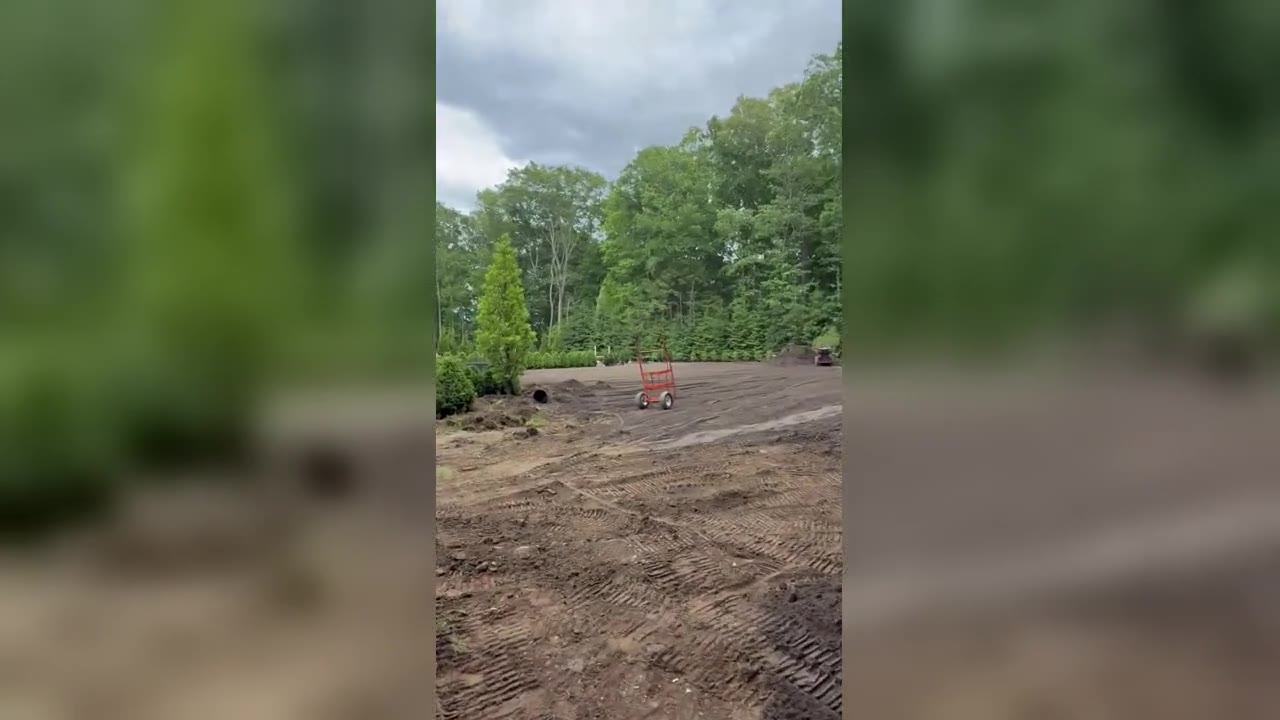
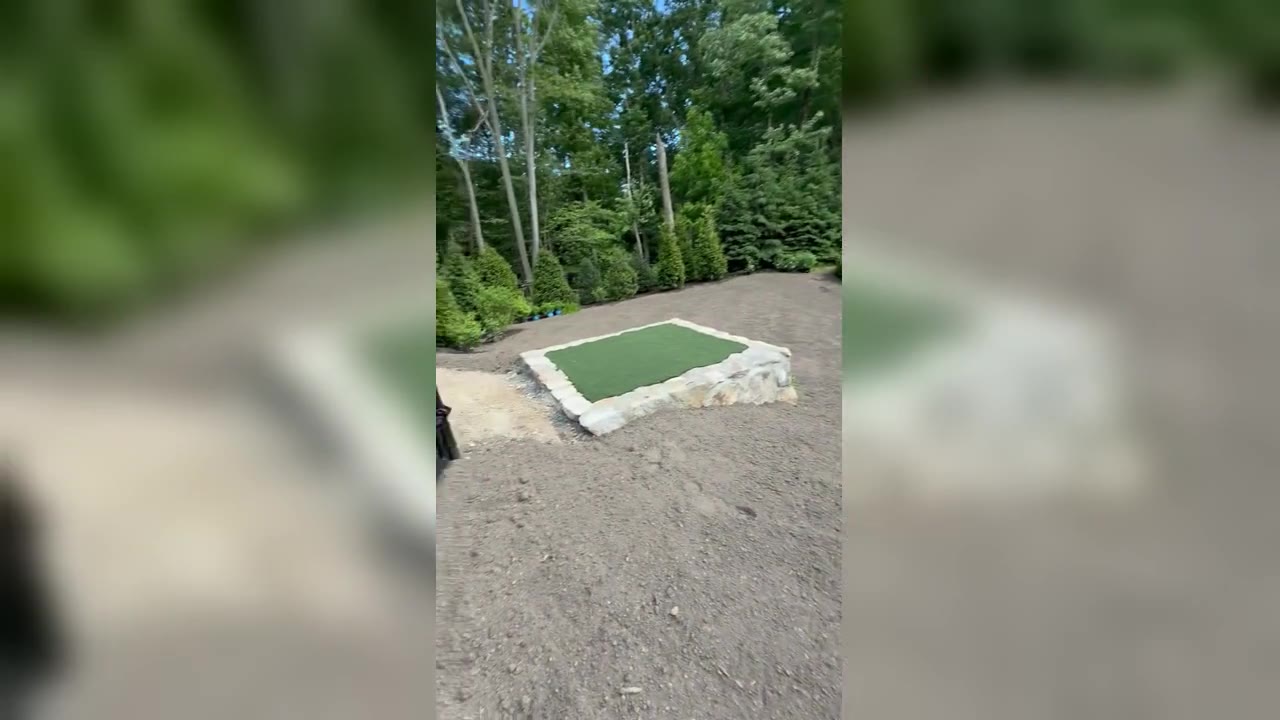
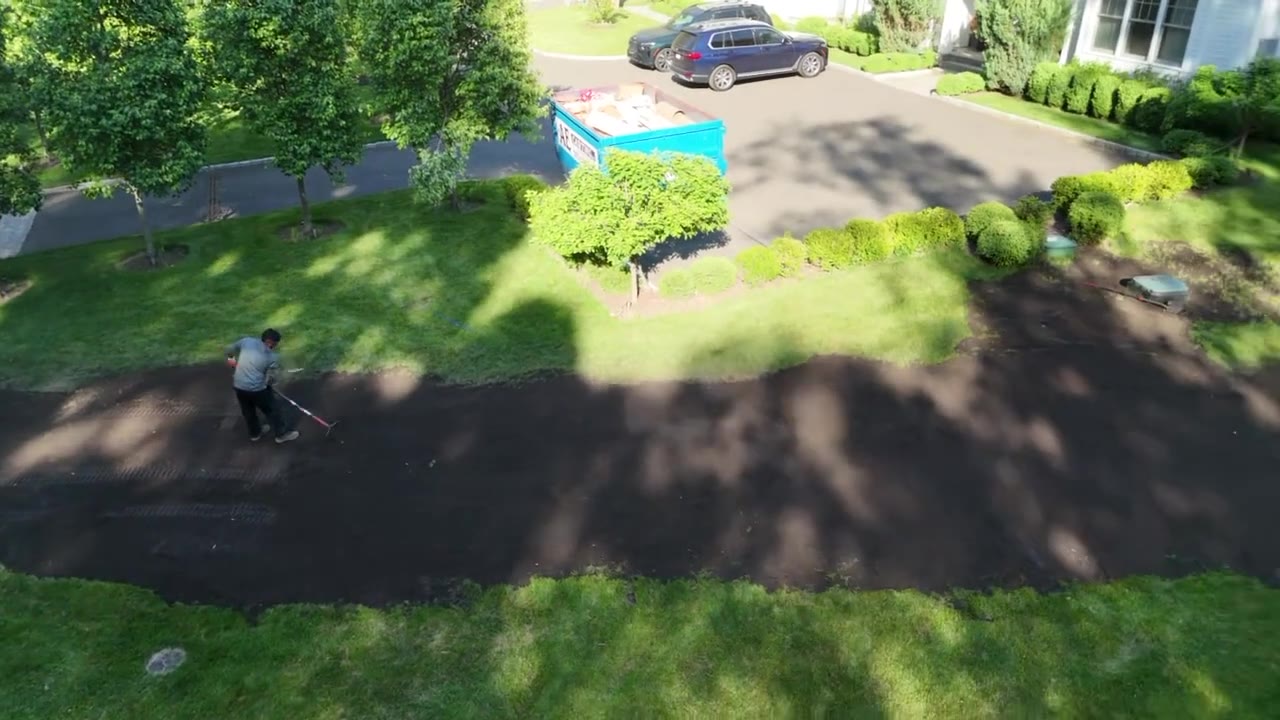
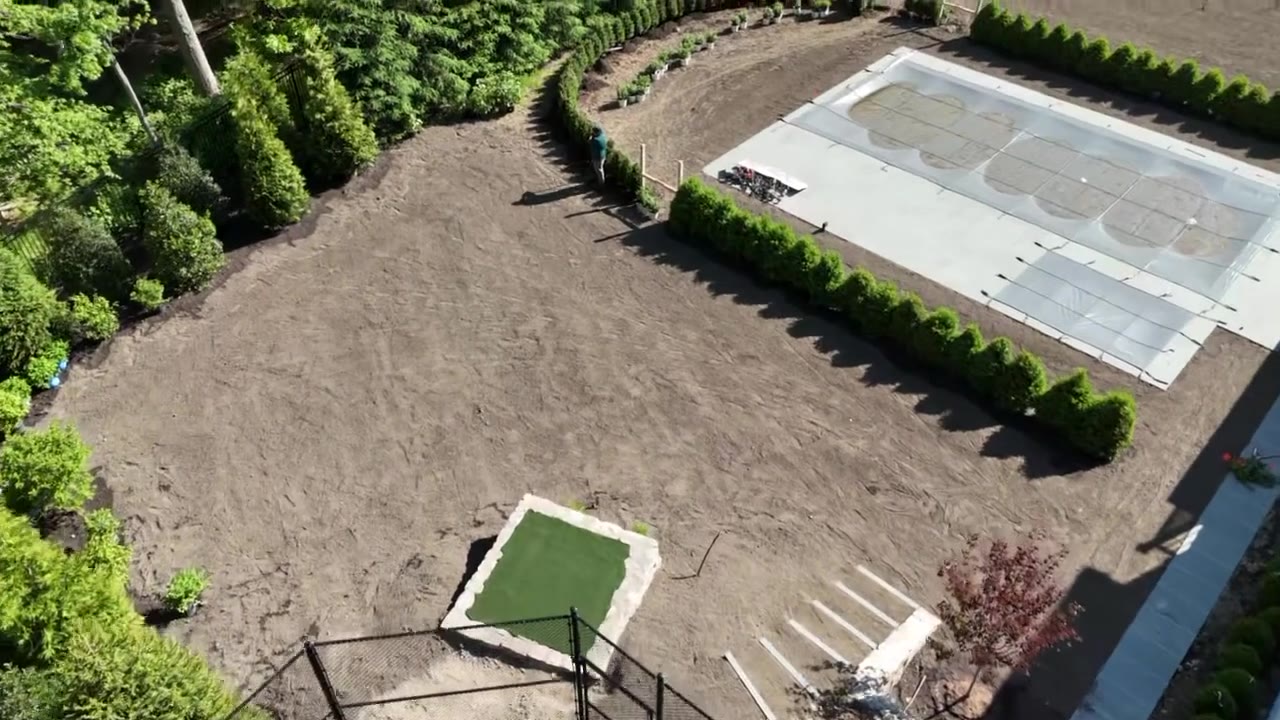
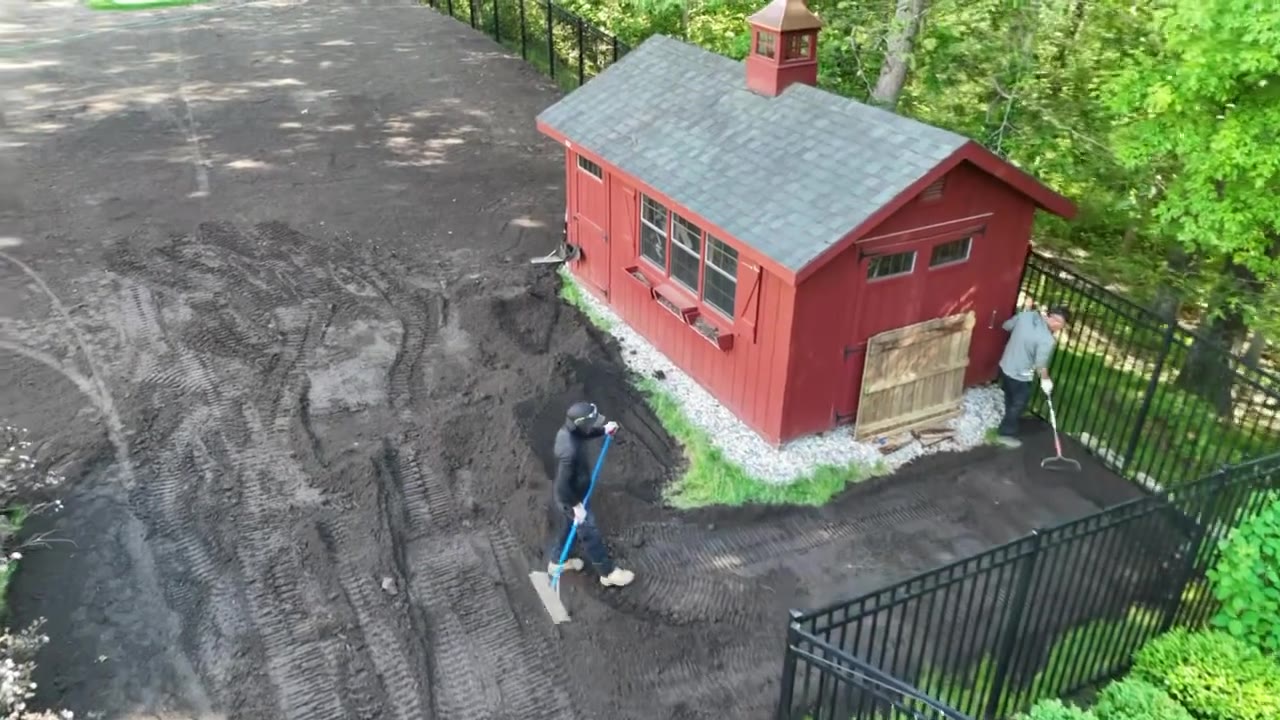
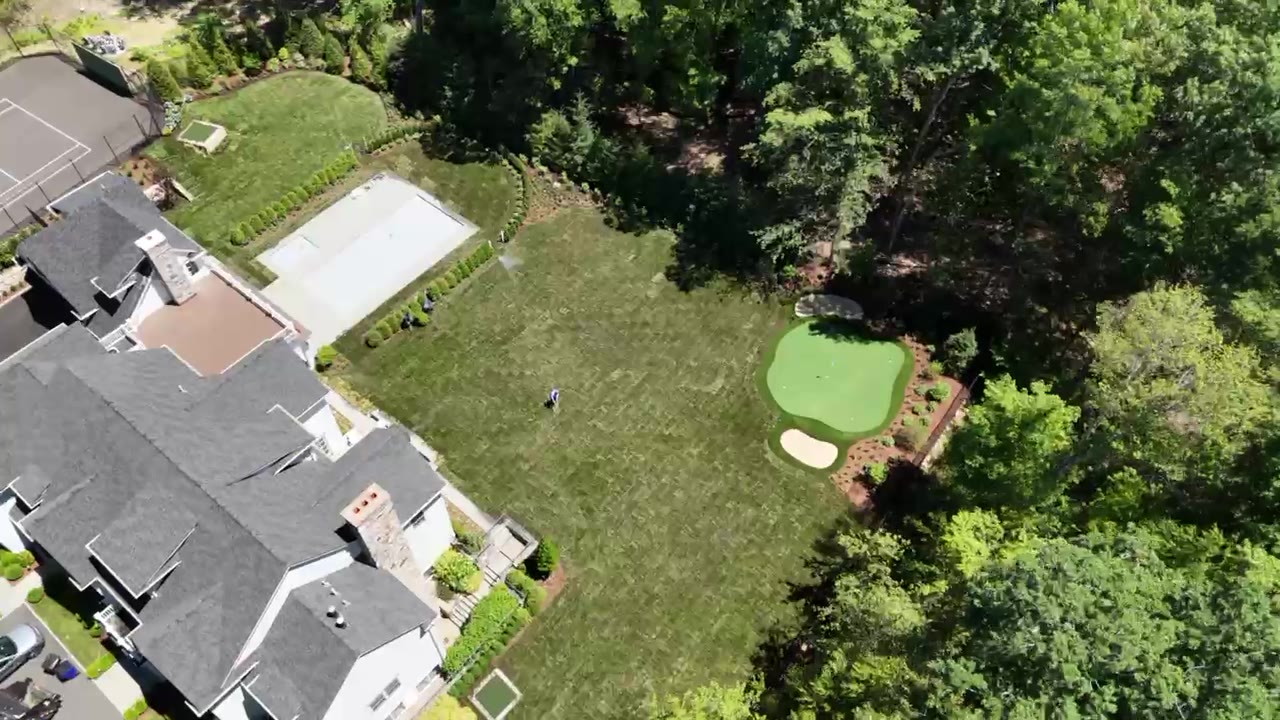
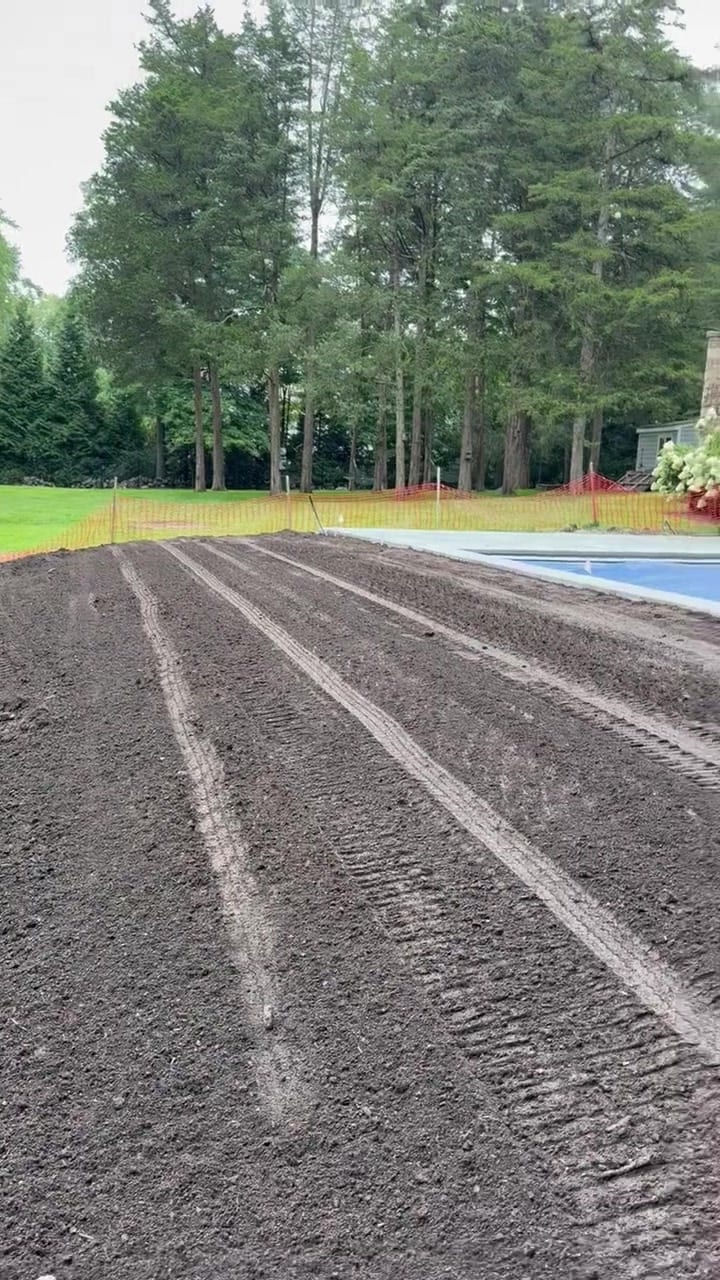
On May 28 the drone went up over regraded lawn zones wrapping a pool, a putting green, and a tennis court, with dump trucks staged for topsoil. Two machines spread 220 yards that day. A stand-on track loader graded the back lawn; the crew hand-raked the final grade around the pool and the green so nothing would telegraph through new sod. Then the site waited: the other trades finished their work, a heat wave came and went, and on June 16 the sod went down. The finished flyover shows green from the pool deck to the hedge rows.
Two lessons. First, 220 yards over 17,000 square feet is a little over four inches of topsoil on average, and on a ridge lot that is not generous; it is the difference between a lawn and a photograph of one. Second, on an estate the sod is the last trade in, and it should be. Laying it before the pool company, the electrician, and the irrigation crew are gone means relaying it. We prepped, we left, we came back.


See the 17,000 square foot prep and the 17,000 square foot installation.
Job 2: 7,000 Square Feet Against a Paving Deadline, Day by Day
Maywood Construction called with a project whose landscape schedule could no longer meet the timeline. The fixed date was Thursday, August 27: the new driveway was being paved, and once it was, no truck was crossing it. On Tuesday a separate propane tank operation would hold the access road, clearing Wednesday. We took the full scope, site prep, grading, and installation across roughly 7,000 square feet, and opened the site Saturday morning. The plan used two materials differently: screened fill for the deeper elevation changes, then three inches of screened topsoil over every surface that would receive sod.
Friday, August 21 — The Site Before

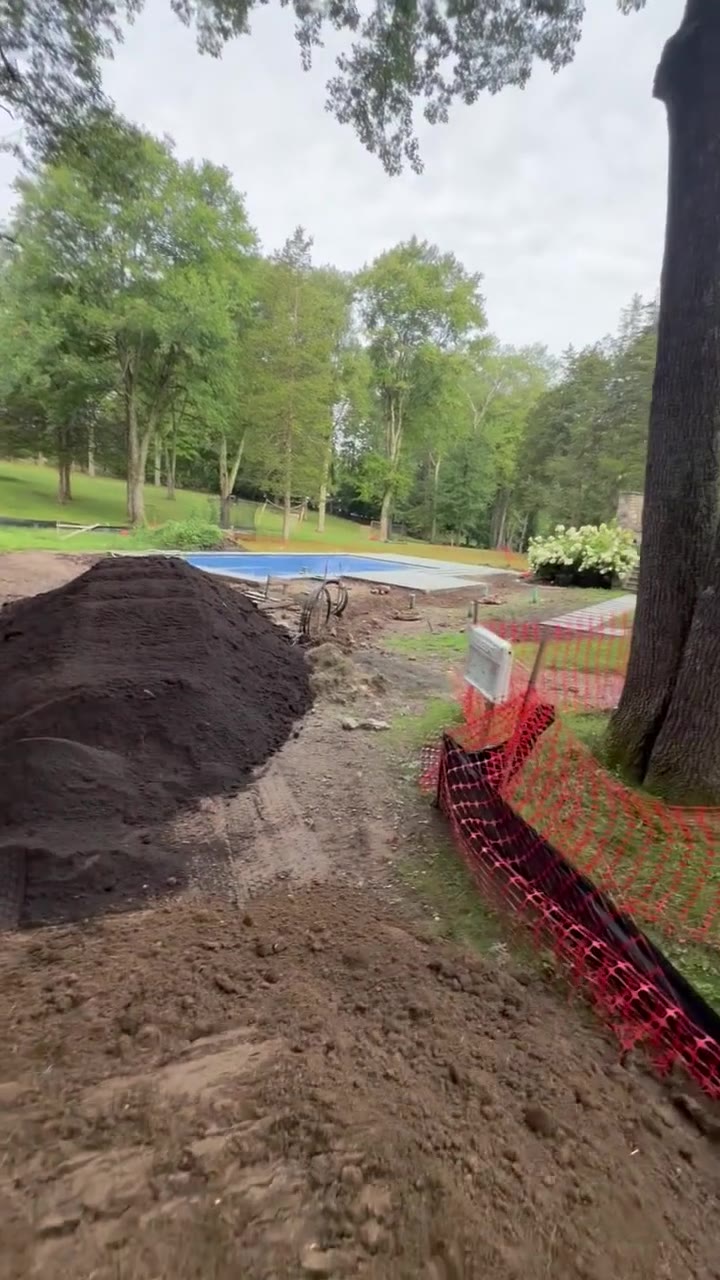
Established lawn sat in the foreground, with rough project area around the house and pool beyond, exposed stone and disturbed soil where the lawn would go, and a steep gravel access road that every truck would have to use before Tuesday.
Saturday, 8 A.M. — Fill and Topsoil on Site

Tri-axle loads of screened fill and screened topsoil were staged beside the covered pool by 8 a.m. Fill went into the deeper elevation changes first, then three inches of topsoil across everything that gets sod. The opening delivery was planned at 36 yards of fill and 120 of topsoil.
Saturday, 2:30 P.M. — Spreading and Prep
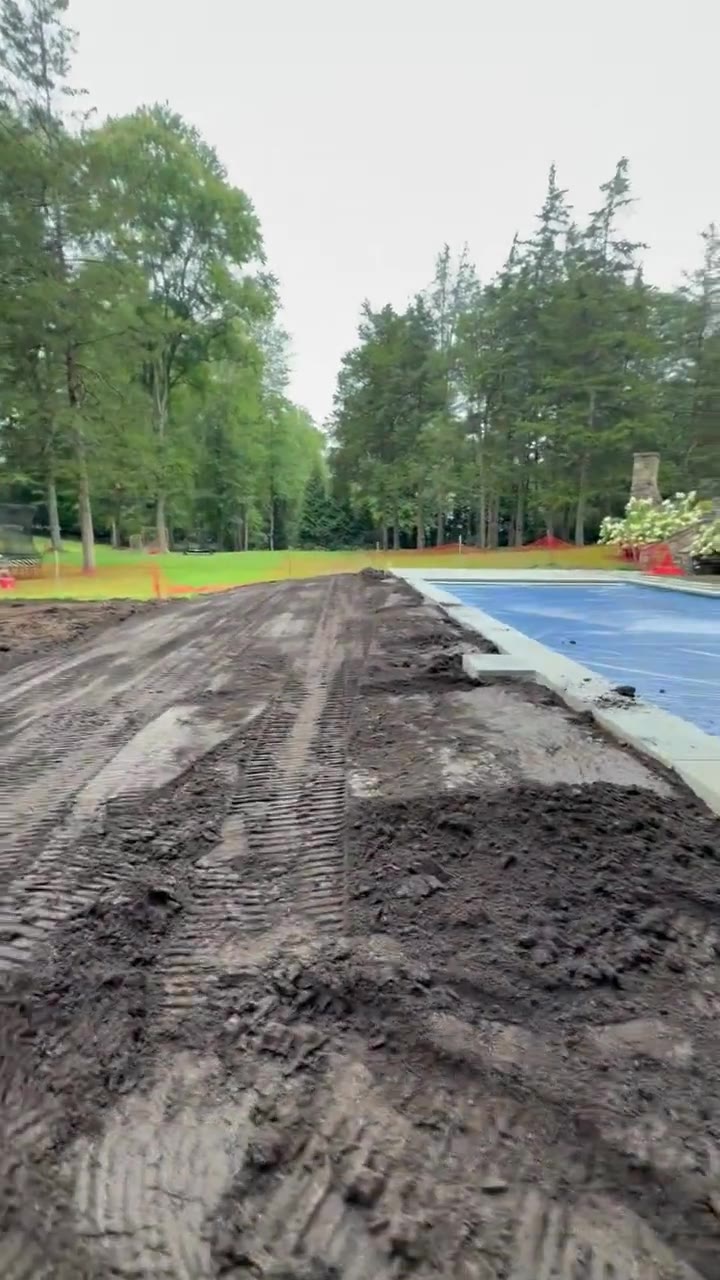
The track loader moved from staging to spreading along the pool-side lawn.
Saturday, 5 P.M. — Six Loads Spread
Six loads down, crew off for the evening, laser-level finish grading scheduled for Monday.
Monday, 10 A.M. — Finish Grading

Deeper elevation work continued along the silt-fence line while the surfaces that would receive sod moved toward finish grade. The family's trampoline and basketball area stayed fenced off at the edge of the work zone; on a lived-in lot, the work zone has edges.
Tuesday, 4:25 P.M. — Prep Complete
Fill built up, topsoil dressed, the whole surface graded and raked out, the new grade feathered into the existing lawn along the stone wall. Then the propane crew took the road.
Thursday, 5:25 P.M. — Sod Down

Two days after finish grade, fresh sod covered the main back lawn out to the established lawn at the tree line and up the rise beside the pool, and the pavers had their driveway. Final count: 54 yards of fill and 140 yards of topsoil. The finished grade took more of both than Saturday's plan.

Three lessons. Fill and topsoil are two different materials for two different jobs, and a quote that lists one number for soil has not looked at the elevations. The finished grade almost always takes more than the plan; carry the contingency in yards, not hope. And the trades that are not yours still run your schedule: the propane crew and the paving crew were constraints, not scope, so material was staged before the road closed and the sod went down before the asphalt. On a New Canaan rebuild the lawn crew that can read the other trades' calendar is the one that makes the date.
Read the 7,000 square foot New Canaan project log.
Job 3: 4,500 Square Feet in the Rain, Before the Party
A schedule mix-up left a multi-building New Canaan commercial property with fresh pallets on site, no installers, and an event that afternoon. Our crew laid 4,500 square feet of Kentucky bluegrass in steady rain, at no extra charge, tight to the new bluestone courtyard, and the grounds were ready before the guests. Rain is miserable for a crew and close to ideal for sod: every roll goes down on moist soil and starts knitting in immediately. The next-day photo in sun is the one people share.


See the 4,500 square foot commercial installation laid in heavy rain.
Also in New Canaan: Sod After a Pool Build
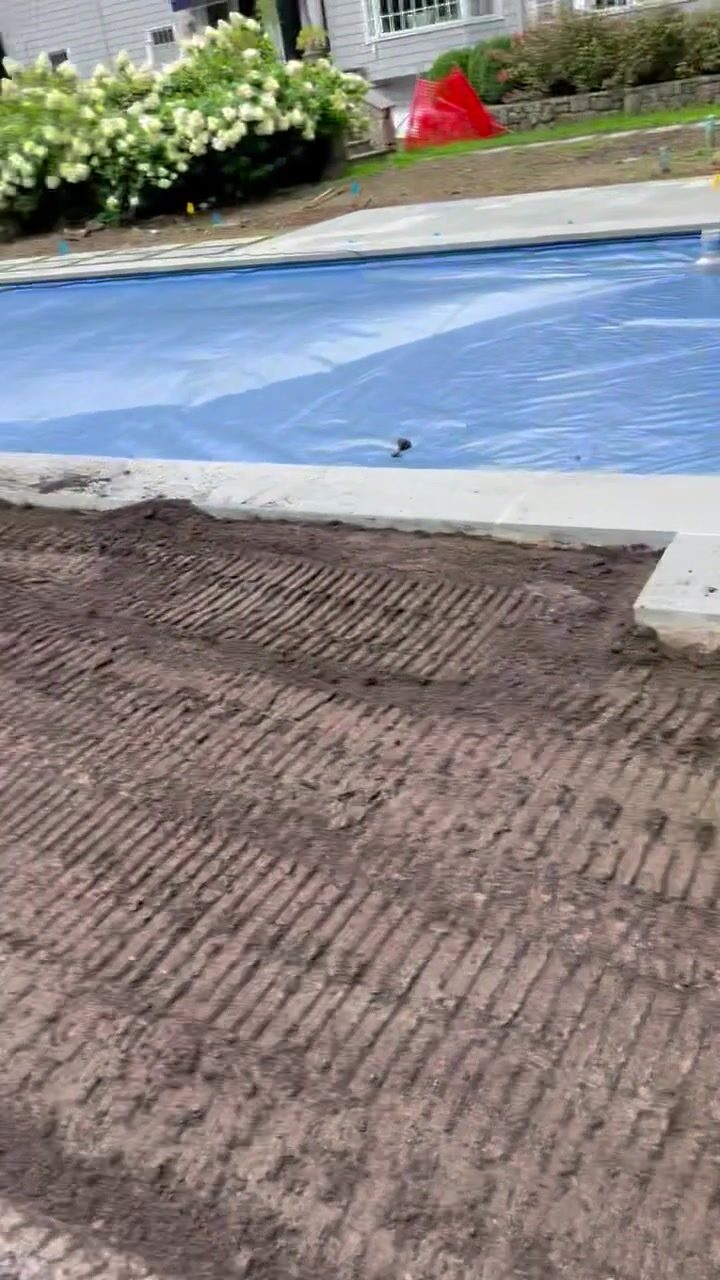
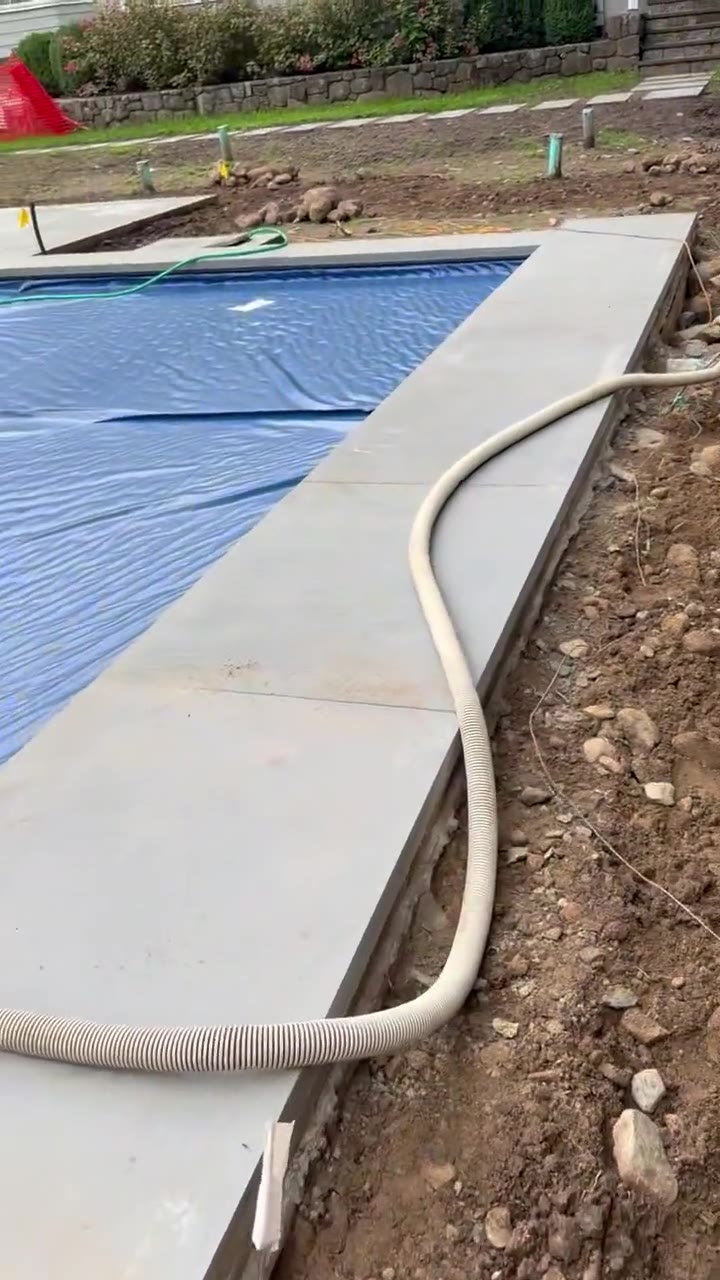
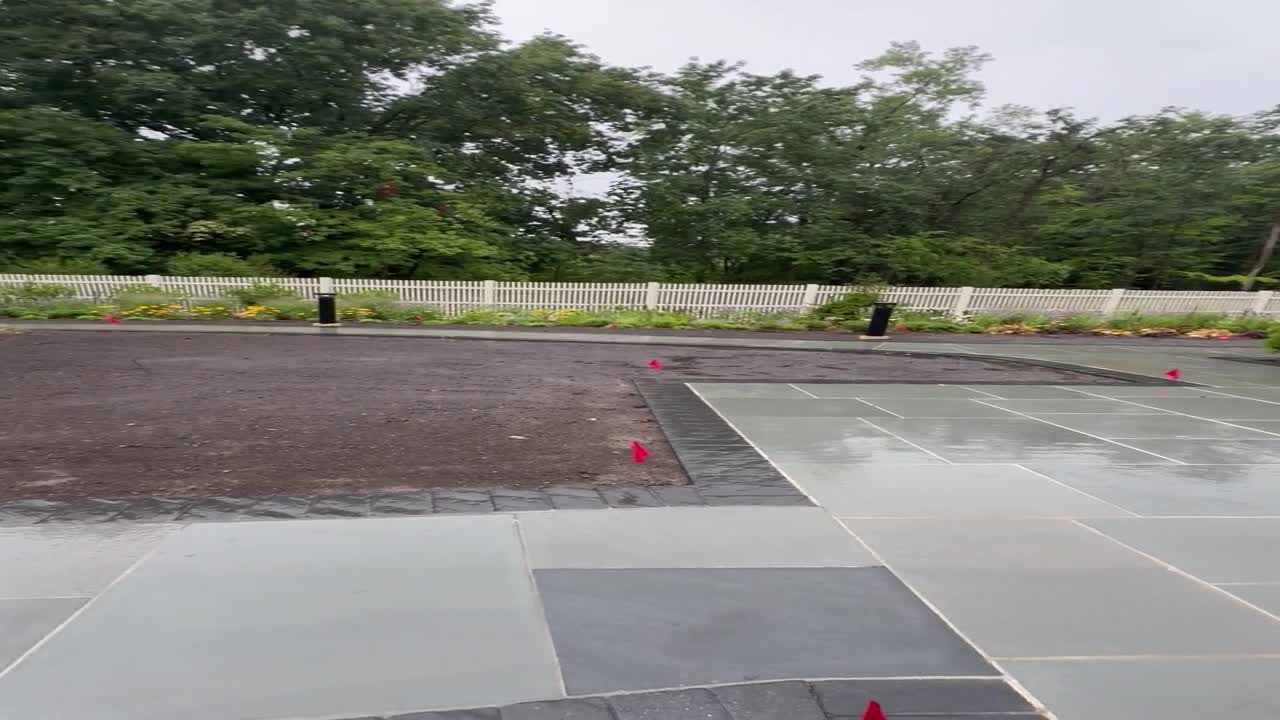
After a pool build left a yard torn up, we reworked the topsoil to a clean finished grade pitched to shed water away from the new coping, hand-graded the narrow side-yard run, and laid farm-cut sod the day the pallets arrived. The straight-down drone frame of the first columns of sod along the garden edge is the clearest picture on this site of how a pool lawn is sequenced.

See sod prep and installation around a pool in New Canaan.
Every New Canaan Clip
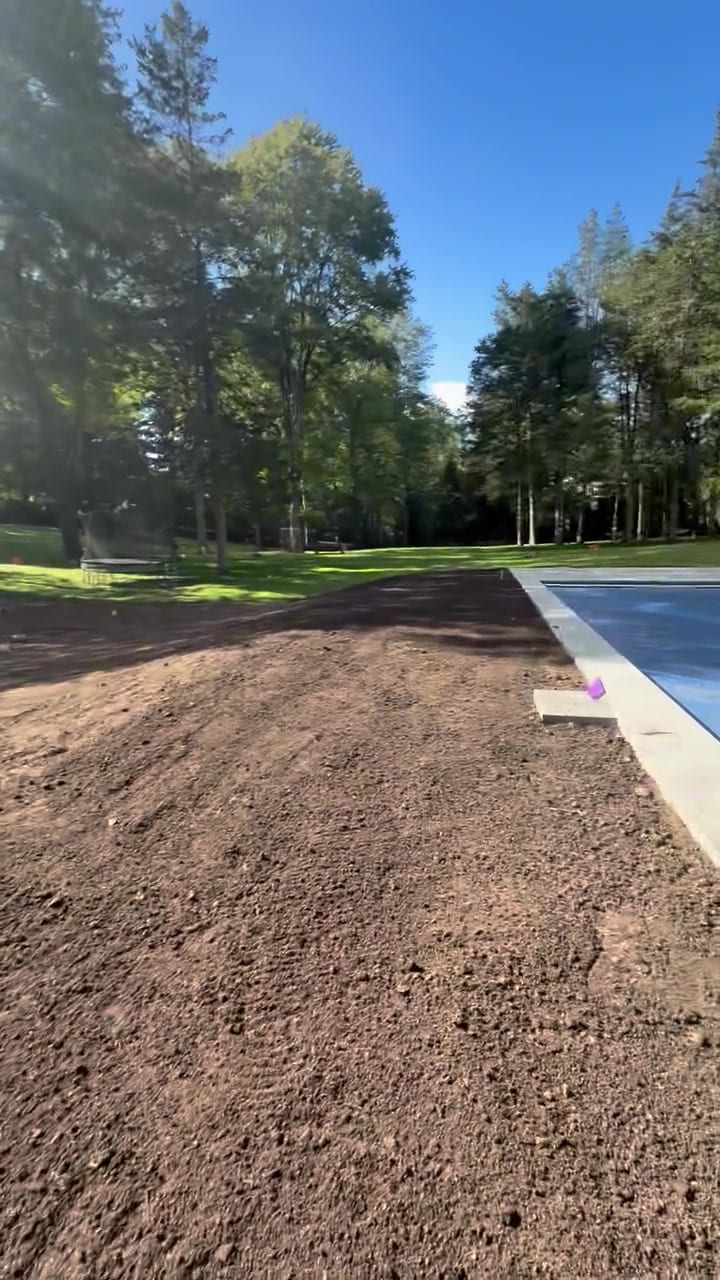
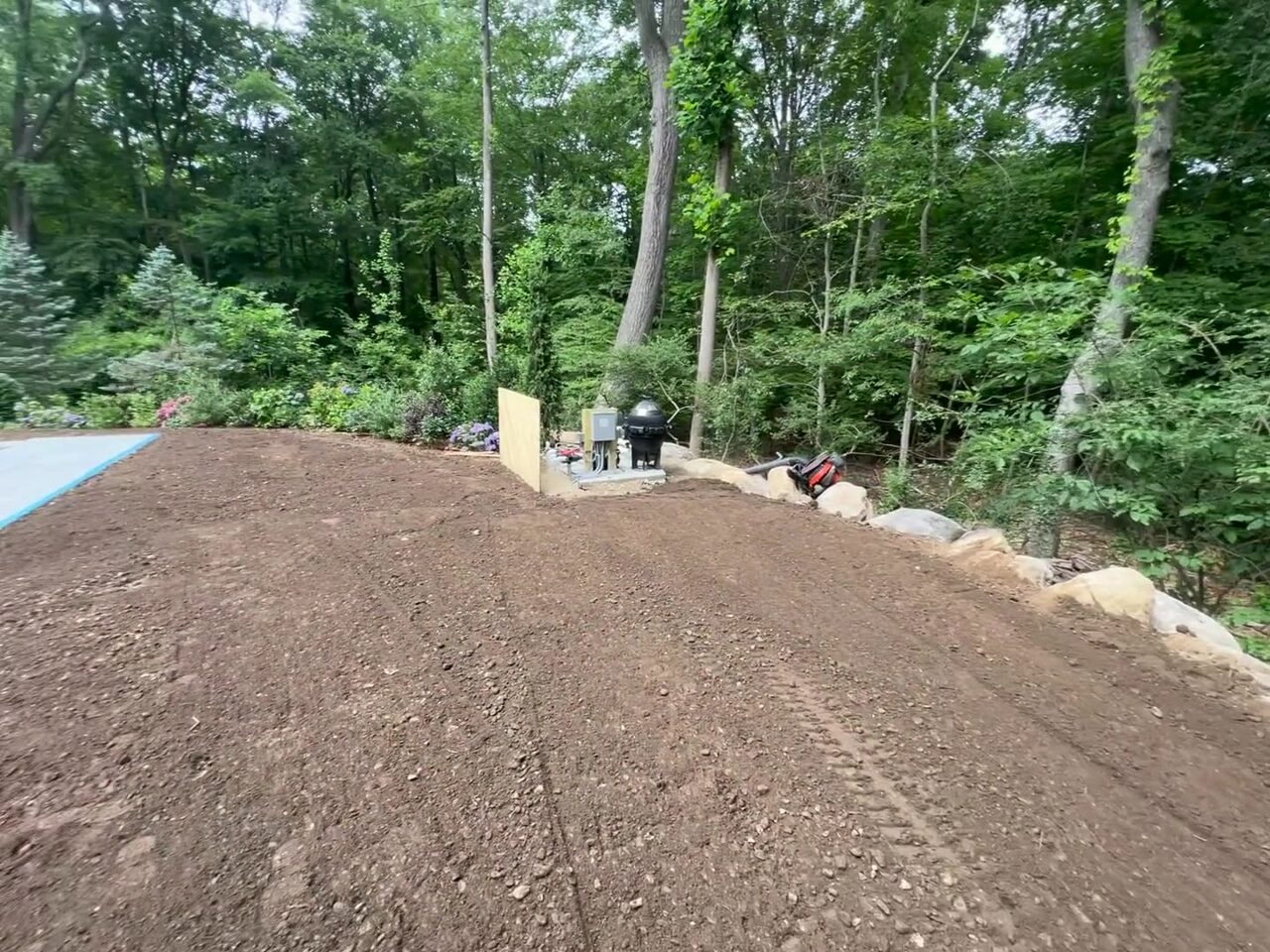
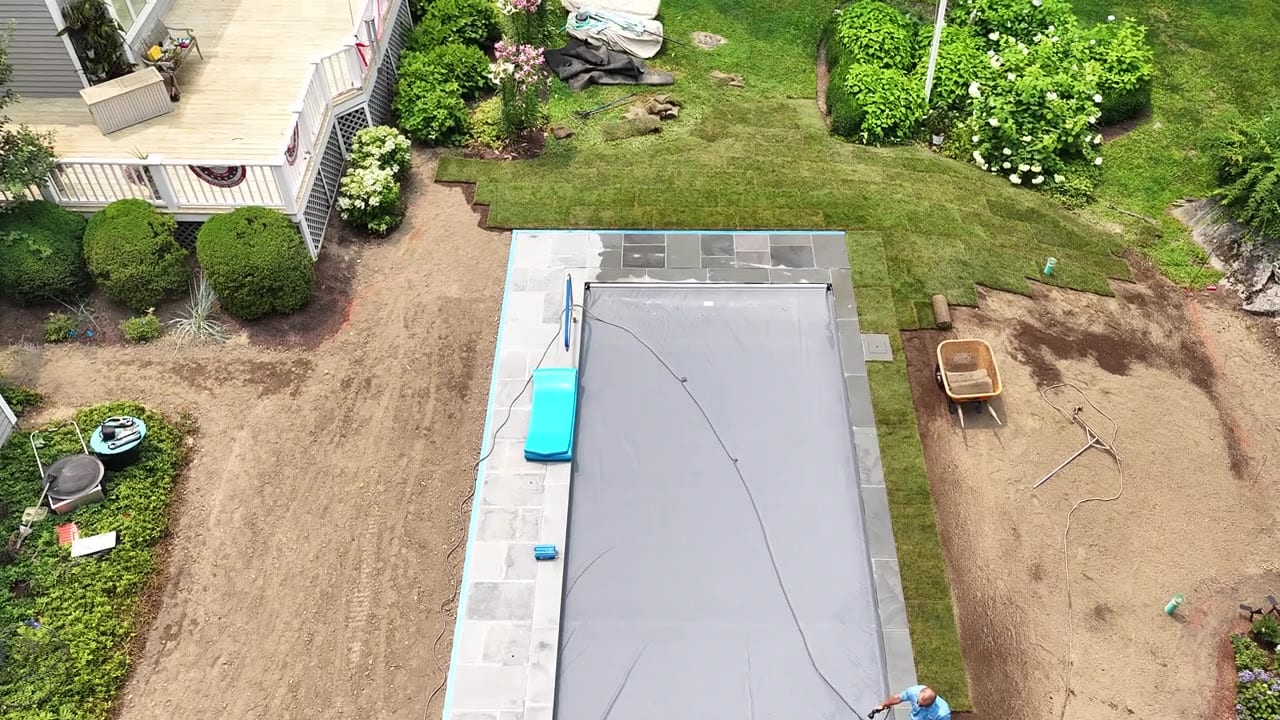
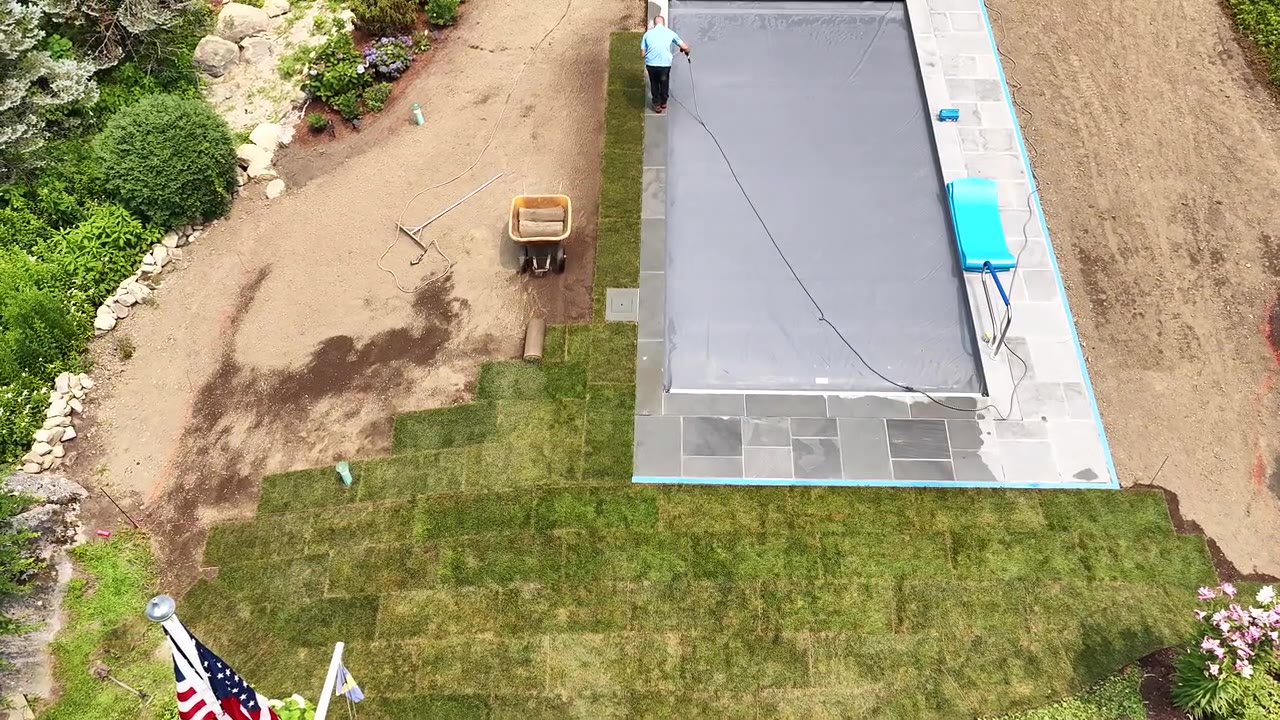
The same crews handle every sod installation in New Canaan; if your landscaper is handling prep, New Canaan sod delivery runs on the same fresh-cut standard.
Estate Math: What Two New Canaan Lawns Actually Took
New Canaan lawns are big enough that the arithmetic changes how the job is run. Here are the two documented jobs in numbers, side by side, and what each number means for a lot like yours.
| Item | 17,000 sq ft estate | 7,000 sq ft builder job | Why it matters in New Canaan |
|---|---|---|---|
| Screened fill | Included in regrade | 54 yards | Fill corrects elevations; topsoil grows grass. Two materials, two line items |
| Screened topsoil | 220 yards, a little over 4 inches average | 140 yards, 3 inches over every sod area | Ridge lots have inches of soil over ledge; the topsoil is the lawn |
| Trucking | 11 tri-axle loads, about 20 yards each | About 10 loads of fill and topsoil combined | A long private drive has to take that many loaded trucks; we walk it first |
| Spreading | Two machines, one day | Track loader, Saturday, six loads by 5 p.m. | Spreading is its own day on anything over about 60 yards |
| Finish grade | Hand-raked around the pool and green | Laser level Monday and Tuesday | Machines get close; rakes and a laser keep ridges out of the sod |
| Sod | 17,000 sq ft, 34 pallets | 7,000 sq ft, 14 pallets | Pallets spotted across the site so no roll is carried far |
| Install timing | After the trades were done and the heat broke | Two days after finish grade, before Thursday's paving | Sod is the last trade in |
| Watering | Twice-weekly schedule or a well; Large Property Variance on 2-plus acres | Same question | Two days a week, or a well's yield, has to carry establishment |
Two numbers to take from this table. Four inches, which is what a ridge lawn needs under it to hold water between waterings, and the difference between the Saturday plan and the Thursday count on the builder job: 36 yards of fill became 54, 120 yards of topsoil became 140. Finished grades take more than plans.
Wells and Septic: The Part of New Canaan the Watering Schedule Does Not Cover
New Canaan's own Plan of Conservation and Development says it plainly: the northern part of town relies on wells, and public sewer serves the southern part and the Town Center. That is the estate corridor. On those lots Aquarion's twice-a-week schedule does not apply, and two other things do.
The Well Has a Yield, and a New Lawn Drinks
Planning numbers, not engineering: one inch of water over 1,000 square feet is about 623 gallons. So one inch on a 7,000 square foot lawn is roughly 4,400 gallons, and on 17,000 square feet roughly 10,600. New sod wants something like a quarter inch a day for the first two weeks, more on a ridge lot with thin soil in heat, which puts a 7,000 square foot lawn near 1,100 gallons a day and a 17,000 square foot lawn near 2,600, on top of the house. A well and pump that comfortably serve a household are not automatically sized for that, and an irrigation system that runs every zone at once will show you the bottom of the pressure tank.
What we do about it: ask for the well yield and the irrigation zone map at the site walk; stagger zones so no two run together; water in the early morning when the well has recovered overnight; on estates, talk to the irrigation contractor about storage before the install, not after. If the well is marginal, a fall install is the answer, because September rain does most of the work.
The Septic System Is Under the Lawn
On a septic lot the leach field and its reserve area are usually under the best part of the lawn. Three rules apply before the first tri-axle arrives:
1. Locate the field and the reserve area from the Health Department's records or the as-built, and mark them. We do not drive loaded trucks or the track loader across a leach field, and we stage topsoil piles off it. 2. Keep fill over the field to a minimum. A few inches of topsoil to establish grass is normal; burying a field under a regrade is not, and the Health Department's guidance governs what is allowed. On the 7,000 square foot job the deep fill went where the elevations needed it, not across the whole lot. 3. Keep the pool away from it. New Canaan's health code sets a 25-foot minimum between any part of a septic system and an in-ground pool, and pool backwash cannot go to the septic system or to a watercourse.
Grass is the right cover for a leach field, and sod establishes it faster than seed. The point is not to avoid the field; it is to know where it is before anything heavy rolls onto the property.
Source: Town of New Canaan Plan of Conservation and Development, utility infrastructure section; Town Code Chapter 29, Health and Sanitation.
Sod Is the Last Trade In: Sequencing an Estate Lawn
On a New Canaan project the lawn is rarely the only thing being built. Pools, sport courts, patios, generators, propane, irrigation, paving, and fencing all cross the ground the sod will cover. Both documented estate jobs were won on sequencing, not on grass.
The Order That Works
1. Pool, sport court, hardscape, and walls complete, backfill settled. 2. Utilities trenched: gas, propane, generator, electric, well and water lines. 3. Septic field and reserve located and marked; nothing heavy crosses them. 4. Irrigation lines run and pressure-tested, heads set to finish grade. 5. Driveway base in; paving scheduled after sod, or with a protected route. 6. Rough grade cut to shed water away from the house and hardscape; screened fill for the elevation changes. 7. Rock, ledge spoils, construction fill, and debris off the property. 8. Screened topsoil spread and finish-graded, its own day on estates. 9. Sod, cut that morning, laid the same day.
When the Order Breaks
It usually does. On the 7,000 square foot job the paving date was fixed and the propane crew held the road on Tuesday; material was staged before the road closed and the sod went down before the asphalt. On the 17,000 square foot estate we prepped, left, and came back after the trades and the heat. Tell us the other trades' dates and we build the install around them, laying the sections the trades still have to cross last.
What to Protect
Mats or plywood on any equipment route across finished sod. No stockpiled stone, pavers, or pallets on the new lawn. Trench lines for fence or pool-cover crews marked before we grade so sod can be lifted and relaid instead of cut. Irrigation heads at finish grade, not buried under four inches of new topsoil. And on a lived-in lot, a fence around the part of the yard the family is still using, the way the trampoline and basketball court stayed fenced on the builder job.
The New Canaan Rules That Touch a Lawn Job
These are the rules that actually apply to grading, topsoil, sod, watering, fertilizer, and crew hours in New Canaan, with where each comes from. Confirm anything that affects your specific lot with the department named.
Inland Wetlands: The 50-Foot Rule, and the 100-Foot Rule
New Canaan's Inland Wetlands and Watercourses Regulations set the upland review area at 50 feet from any wetland or watercourse. Where the wetland or watercourse is within a public drinking water supply watershed, the review area is 100 feet. Clearing, grubbing, filling, grading, excavating, depositing or removing material, and discharging stormwater inside the review area are regulated activities that require a permit from the Inland Wetlands Commission. New Canaan enforces this: the town ordinance sets a fine of $1,000 per citation for activities in the wetlands or watercourses and $500 per citation for activities in the regulated area, and property owners have been cited for using an excavator to grade and spread fill next to field-designated wetlands.
Source: Town of New Canaan Inland Wetlands and Watercourses Regulations; New Canaan Inland Wetlands Department FAQ; Town Code Chapter 33A.
What it means for sod: New Canaan has water in almost every low spot. If a brook, pond, or mapped wetland is within 50 feet of where topsoil will be spread or grade will change, the Inland Wetlands office is involved before we grade. If your lot drains toward public supply, plan on 100 feet. Laying sod on an existing lawn with no grading or fill is a different question; ask the department rather than assume.
Grading, Fill, and the Drainage Certification Policy
New Canaan requires adherence to its Drainage Certification Policy before development of any lot or any construction that increases impervious surfaces, including gravel, by 500 square feet or more in the half-acre zone or smaller, or by 1,000 square feet or more in the one-acre zone or larger, or for any excavation or other activity that could affect drainage, as determined by the Town Engineer or the permit-reviewing department. That last clause is the one a regrade runs into. A re-sod that keeps the existing grade adds no impervious area and does not change drainage. A leveled backyard, 54 yards of fill correcting elevations, or a lawn that now sheds toward a neighbor can. We flag it on the site walk, and the written scope says which side of the line the job is on.
Source: Town of New Canaan Department of Public Works, Stormwater Management, Drainage Certification Policy.
Watering: Aquarion's Schedule and the Two Variances
For the part of New Canaan on Aquarion water, the mandatory sprinkler irrigation schedule runs April 1 through October 31 and limits automatic and hose-end sprinklers to two designated days per week. Drip, soaker hoses, and hand-held watering are exempt every day.
Two variances matter. The New Planting Variance allows a newly installed lawn to be watered on any day for five weeks, before 10 a.m. or after 6 p.m., with one two-week extension; applications are accepted April 1 through June 15 and September 1 through October 31, and not in July or August. The Large Property Variance is for properties of 2 acres or more whose systems cannot cover the property inside two days. Apply for either when you book the install, not after. Well lots are outside the schedule; see the wells and septic section above.
Source: Aquarion Water Company, Connecticut Irrigation Variance Programs and 2026 schedule announcement.
Fertilizer: Connecticut's Statewide Law
No phosphorus lawn fertilizer on established lawns unless a soil test shows a deficiency or the lawn is newly established; no lawn fertilizer application December 1 through March 15; a 20-foot no-application buffer from any water body. A new sod lawn is the case the new-lawn exception exists for. On a septic lot the buffer from your own well and from any watercourse both matter. See the Connecticut lawn rules by town.
Crew Hours and the Summertime Gas-Powered Leaf-Blower Ban
New Canaan's noise ordinance limits construction equipment such as bulldozers and backhoes, and commercial or domestic power equipment, to the hours when noise at the receptor's property line may exceed 45 dBA: Mondays through Fridays 7 a.m. to 7 p.m., Saturdays and state or federal holidays 8 a.m. to 6 p.m., Sundays 10 a.m. to 4 p.m. That covers our machines on prep day and power-equipment cleanup afterward.
New Canaan bans gas-powered leaf blowers from Memorial Day through Labor Day, effective after the July 25, 2026 referendum. Schedule cleanup under the current ordinance rather than relying on the general noise hours alone.
Source: Town of New Canaan Code, Chapter 36A, Noise; New Canaan's summertime gas-powered leaf-blower ordinance adopted following the July 25, 2026 referendum.
The New Canaan row on our Connecticut lawn rules by town tracks these rules as they change.
Access: Long Drives, Stone Pillars, and Eleven Trucks
A sod pallet weighs well over a ton and a tri-axle load of topsoil is about 20 yards. On a Smith Ridge or Oenoke Ridge estate behind a stone-pillar gate at the end of a quarter-mile drive, the question is not whether a truck can reach the house but whether eleven of them can, in one day, without touching the Belgian block, the specimen trees, or the leach field. We walk the drive before the first load: turning radius at the gate, overhead branches, culverts, the apron, where a loaded truck can turn around, and where the septic is.
Every CT Sod delivery in New Canaan comes with an all-terrain forklift that rides on the truck. On estate association drives and gated properties it carries each pallet off the truck and past the entrance to where the crew needs it, across gravel, grass, and slope, rather than leaving it at the end of the driveway. On the builder job the steep gravel access road was the whole schedule; we staged material before the propane crew closed it. Tell us the gate code, the association's delivery rules, and where topsoil trucks can stage when you order, and we coordinate ahead of time.
On the compact lots south of the Merritt and near the village the problem reverses: no room to stage. Pallets go in the driveway, trucks come one at a time, and the neighbors' property line is close enough that the noise hours are part of the plan.
When to Install Sod in New Canaan
September and October
The strongest window. Warm soil, cool nights, rain doing most of the establishment work, which matters twice on a well lot. The fall New Planting Variance window opens September 1; the twice-weekly schedule ends October 31. Read why September is one of the best months for sod in Fairfield County and fall sod installation in New England.
April Through Early June
Excellent establishment. Apply for the variance when you book; the spring window closes June 15. On estates this is when the other trades are busiest and the sequencing section matters most. The 17,000 square foot lawn went down June 16, after the trades cleared and the heat broke; that is the right way to use the spring window on a big lot.
July and August
Sod installs successfully with irrigation and a homeowner or property manager who will run it, and on 2-plus acres the Large Property Variance still applies. But there is no New Planting Variance in July or August, so an Aquarion lot under 2 acres hand-waters on the off days, and a well lot in an August dry spell is asking the well for more than it gives. We will tell you so before you book.
Late Season
Sod can go down into November when the ground is workable; the fall variance window runs through October 31. Read how late sod can be laid in Connecticut and sod versus seed for a Connecticut fall renovation.
Watering an Estate Lawn Two Days a Week, or Off a Well
The plan we hand off on install day is adjusted for Aquarion, for wells, and for the fact that a New Canaan lawn is often four or five irrigation zones, not one.
| Days after install | Ridge lots, thin soil over ledge | Valley and amended lots | Aquarion lots | Well lots |
|---|---|---|---|---|
| Day 1 | Soak within 30 minutes of the last roll, every zone, until soil under the sod is wet 4 inches down | Same | Any method; sprinkler on a designated day, hose or soaker any day | Zones in sequence; let the well recover between zones |
| Days 2 to 7 | Twice daily; ridge lots dry from the top down, lift a corner in the afternoon | Once daily, twice above 85 degrees | New Planting Variance: any day before 10 a.m. or after 6 p.m.; Large Property Variance on 2-plus acres; otherwise hose or soaker on off days | Early morning after overnight recovery; never all zones at once; watch pressure |
| Days 8 to 14 | Once daily; sod should resist a tug by day 10 to 14 | Every other day | Same | Same |
| Days 15 to 21 | Every other day, deeper | Twice a week, deep | Regular schedule usually covers it | Twice a week, deep, early |
| Weeks 4 and 5 | Deep and infrequent | Same | Variance expires at five weeks; extension available | Deep and infrequent |
| Week 6 onward | Regular schedule; on ledge lots the first dry August shows where the soil is thinnest | Same | Regular schedule | Deep and infrequent; train roots down so the well carries the summer |
Drip, soaker, and hand-held watering are exempt from Aquarion's schedule at all times; a hose-end sprinkler is not. First mow at 14 to 21 days, mower on its highest setting, ground firm. The new-lawn phosphorus exception applies; no fertilizer application December 1 through March 15, and none within 20 feet of water. See the new sod care guide for the general first-14-days routine.
Sizing a New Canaan Sod Project
Size The Work
New Canaan Sod Planner
Estimate sod, soil, fill, truckloads, work days, access, and establishment water.
Planning output
Enter the lawn area to see your project quantities and logistics.
These are planning figures. Every install is quoted after a site walk; the sod calculator and Connecticut sod installation guide cover the broader planning side.
How to Read an Estate Sod Quote
Three quotes for a New Canaan lawn are usually three different jobs. The ten lines a real quote carries are in our Westport sod guide; on an estate, five of them decide everything.
| Line | What it should say | Why it decides a New Canaan job |
|---|---|---|
| Fill and topsoil, separately | Screened fill in yards for elevation; screened topsoil in yards and average depth for the lawn | One number for soil means nobody looked at the grade. The builder job was 54 and 140 |
| Trucking and access | Loads, truck size, how they reach the site, where they stage | Eleven tri-axles on a private drive is a plan, not a delivery |
| Well and septic | Well yield checked; leach field and reserve located and protected | Or the trucks find the field for you |
| Sequencing | Which trades go first and which sections we lay last | The paving date and the propane crew were the job |
| Watering | Written plan; variance named; zones listed; well plan if applicable | Two days a week, or one well, has to carry establishment |
Install-only quotes, where your landscape contractor handles prep, carry the sod, access, and watering lines and say so. Many New Canaan landscapers already run their sod through us this way.
Why New Canaan Owners and Their Contractors Use a Sod-Only Crew
Most landscapers can lay sod. Very few do it every day, and on 17,000 square feet the difference is visible from the drone. Our crews do nothing but sod: the seams, the grade transitions, the pallet spotting that keeps a roll from being carried 200 feet, and the timing that gets a cutting from the farm to the ground the same morning.
Builders use us as the sod sub for the same reason. Maywood Construction's 7,000 square foot lawn came to us because the landscape schedule could not make the paving date. The 11,000 square foot Greenwich Central Middle School lawn went down in one Friday for Turner Construction after the project landscaper could not meet a Monday ribbon cutting. White-label crews if you want them; your client relationship stays yours.
Two ways to work with us. Install-only: your landscaper preps, we deliver farm-cut sod and lay it. Full service: we strip, haul, bring screened fill and screened topsoil, grade with a laser, and install, one crew and one written scope, and we come back after 7 to 10 days to check rooting.
Ready To Order?
Fresh-Cut Sod Delivered
CT Sod delivers Kentucky Bluegrass, Tall Fescue & RTF sod across CT, MA, NY, NJ, RI, NH, VT & ME.
Frequently Asked Questions
How long does a sod installation take in New Canaan?+
Do I need a wetlands permit to install sod in New Canaan?+
Does grading a lawn trigger New Canaan's drainage review?+
How much topsoil does a New Canaan lawn need?+
My house is on a well. Can I still install sod?+
My lot is on septic. Anything to worry about?+
How do I water new sod with Aquarion's twice-a-week rule?+
Can you install sod in New Canaan in July or August?+
Should the lawn go in before or after the pool, patio, and driveway?+
Can a truck get to my lawn behind the gate?+
What sod is best for New Canaan?+
What hours can crews work in New Canaan?+
What is under a rebuild lot in New Canaan?+
Do you work with my builder or landscape architect?+
Can I just have sod delivered to New Canaan for my own crew?+
Keep Reading

The Westport, CT Sod Guide: Access, Rules, Timing, and What an 8,000 Sq Ft Job Looks Like

8,000 Sq Ft Westport Sod Installation — Saving Fresh-Cut Sod

3,600 Sq Ft Meriden, CT Sod Installation After Cicada Damage