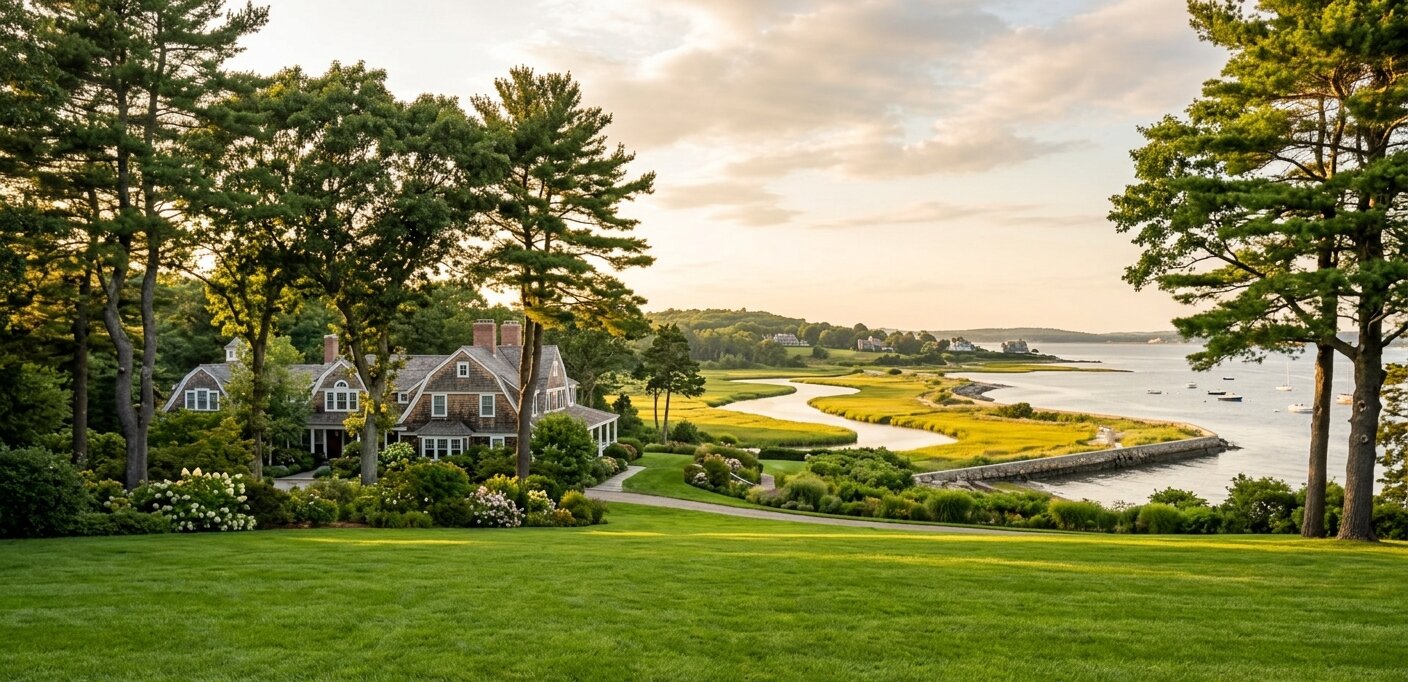
Premium markets covered in this guide
The South Shore of Massachusetts is shaped by a regulatory and environmental framework that's genuinely different from the rest of the Northeast, and that framework directly affects what sod specifications work. The single most distinctive fact: the North River — flowing through Hanover, Pembroke, Norwell, Marshfield, Scituate, and Hanson — was designated under the Massachusetts Scenic and Recreational Rivers Act (G.L. c. 21, s. 17B) and the North River Commission Act (c. 367, s. 62 of the Acts of 1978) as the first and only state scenic protected river in Massachusetts. The North River Scenic Protective Order remains in effect today, administered by the North River Commission, with the explicit purpose of protecting "irreplaceable wild, scenic and recreational river resources" within the watershed. Layered on top of that, the entire South Shore corridor — Norwell, Hingham, Scituate, Marshfield, Hanover, Pembroke, Whitman, Hanson, Duxbury, Weymouth, Rockland, and Abington — sits within the North and South Rivers watershed, monitored continuously since 1970 by the North and South Rivers Watershed Association (NSRWA), one of the oldest and most active grassroots watershed organizations in New England. Add the Massachusetts statewide phosphorus restriction (M.G.L. c. 128, s. 65A and 330 CMR 31.00, effective June 5, 2015), the substantial Atlantic Ocean salt aerosol exposure on Massachusetts Bay-facing properties, and the deep Boston Brahmin summer-colony architectural-landscape tradition in Cohasset and Hingham, and the framework genuinely shapes which variety specifications work.
"Irreplaceable wild, scenic and recreational river resources" — the explicit statutory purpose of the North River Scenic Protective Order, the first and only state scenic protected river in Massachusetts.
Layered onto the regulatory and environmental framework: the substantial Boston Brahmin summer colony tradition in Cohasset (incorporated 1770, separated from Hingham, with substantial wealthy-Bostonian estate development from the mid-19th century forward); the deep colonial residential history of Hingham (settled 1633, named for Hingham, Norfolk, England, deeded by the Wampanoag sachem Wompatuck in 1655, with one of the oldest continuously used wooden church structures in the United States — the Old Ship Church, built 1681); the Pilgrim heritage anchor of Duxbury (settled 1627 by separatists from Plymouth Colony, including Myles Standish and John Alden); the substantial 1900-1930 estate residential development across the broader Hingham, Cohasset, Scituate, and Duxbury corridor; the historic shipbuilding industry that produced over 1,000 vessels at 24 shipyards along the North River from the mid-1600s through the late 1800s, with Hanover home to Barstow's Shipyard (founded 1656, the last shipyard active on the river); the country club estate culture concentrated in the South Shore Country Club corridor and the broader Hingham / Cohasset / Duxbury yacht club tradition; and the substantial year-round affluent residential character that has substantially replaced the historic seasonal-residency pattern in much of the corridor.
This guide is the canonical reference for sod variety selection across South Shore Massachusetts. It draws on UMass Extension's Center for Agriculture, Food and the Environment (the authoritative state-level extension resource and the institution whose Best Management Practices are explicitly referenced in 330 CMR 31.00), the UMass Extension Turf Program, the North River Commission, the North and South Rivers Watershed Association, the Massachusetts Department of Agricultural Resources (MDAR) Plant Nutrient Management program, and the substantial Massachusetts Pesticide Control Act regulatory framework (M.G.L. c. 132B and 333 CMR). Coverage includes Hanover (the inland anchor of the North River shipbuilding corridor and increasingly the executive estate residential market), Cohasset (the Norfolk County exclave on the immediate Massachusetts Bay shore), Hingham (one of the wealthiest Boston suburbs, with the substantial Boston Harbor / Hingham Bay shore frontage), Scituate (the substantial coastal estate market with the immediate Massachusetts Bay shore), Duxbury (the historic Pilgrim estate corridor with substantial Duxbury Bay frontage), Marshfield (the substantial coastal residential market), Norwell (the substantial inland estate market and home to the NSRWA headquarters), Pembroke (the substantial inland residential corridor), and the broader South Shore premium residential market.
For broader context, see our complete Massachusetts sod guide. For coastal Northeast variety considerations specifically, see our coastal Northeast lawns guide. For Boston suburb context generally, see our best sod varieties for Boston suburbs guide. For Cape Cod variety treatment, see our Cape Cod and the Islands guide and Cape Cod bluegrass vs fescue comparison.
Quick Answer Section: The Sod-Specific Bottom Line for South Shore Massachusetts
The single most important fact about South Shore sod selection that property owners should know: the North River corridor is the only state scenic protected river in Massachusetts (under the North River Scenic Protective Order), and the broader 12-town watershed has been continuously monitored since 1970 by the North and South Rivers Watershed Association. Combined with the statewide Massachusetts phosphorus restriction (M.G.L. c. 128, s. 65A; 330 CMR 31.00, effective June 5, 2015) and the substantial Atlantic Ocean salt aerosol exposure on bay-facing properties, the framework strongly favors lower-input variety specifications — fine fescue blends particularly with slender creeping red fescue salt-tolerant component, tall fescue and RTF secondarily — over Kentucky Bluegrass-dominant specifications that require higher fertility inputs.
The five cool-season variety categories that work in South Shore Massachusetts:
Kentucky Bluegrass — produces the iconic dense blue-green Boston Brahmin estate aesthetic on properties with adequate irrigation and fertility. UMass-noted limitations specifically relevant to South Shore: poor shade tolerance (problematic on properties with substantial mature canopy from the established residential corridor), poor drought tolerance, highest feeding requirements (problematic given the active North River watershed framework and the statewide phosphorus restriction), salt sensitivity (problematic on bay-facing properties and roadside zones).
Fine fescue blends (red fescue, Chewings fescue, hard fescue, slender creeping red fescue) — UMass-rated excellent shade tolerance and lowest feeding needs. Essential for South Shore properties with substantial mature canopy. Slender creeping red fescue is the most salt-tolerant fine fescue species — important for Massachusetts Bay-facing properties.
Turf-type tall fescue — UMass-rated good shade tolerance, some drought tolerance, average feeding needs. The traditional bunch-type tall fescue category for active-use zones, drought-prone sites, and salt-exposed roadside zones.
RTF (Rhizomatous Tall Fescue) — structurally different from traditional bunch-type tall fescue. Spreads by rhizomes for self-repair capacity that bunch-type cannot match. The right specification for active-use family estates, dog-traffic zones, bay-facing properties where KBG is unsuitable, and roadside zones facing substantial road salt exposure.
Perennial ryegrass — UMass-rated poor shade and drought tolerance, fastest establishment (14-21 days). Best as a 15-20% blend component per UMass guidance.
Variety recommendations by South Shore market:
Bay-facing properties (Cohasset, the immediate shore corridors of Hingham, Scituate, Marshfield, and Duxbury): Atlantic Ocean salt aerosol exposure favors fine fescue blends with slender creeping red fescue salt-tolerant component, tall fescue specifications, RTF specifications, or bluegrass-fescue blends with reduced KBG percentage. Hard fescue does NOT tolerate salt — important caveat for bay-facing applications.
Hanover: The substantial inland executive estate residential corridor, with the historic North River frontage along the northern town boundary and substantial maturing residential canopy throughout much of the town. Properties within the North River corridor face the active Scenic Protective Order framework — variety specifications matched to the watershed protection context (fine fescues, RTF, lower-input specifications) integrate substantially better than high-input KBG specifications. Inland properties away from the river support standard cool-season variety landscape with KBG-dominant blends on showcase areas with reliable irrigation and fine fescue specifications under canopy. RTF on active-use zones.
Cohasset: The Norfolk County exclave on the immediate Atlantic shore — the substantial Boston Brahmin summer colony estate tradition (developed from the mid-19th century forward when wealthy Bostonians built large summer estates that remain today) produces refined estate residential character favoring bluegrass-fescue blends on showcase areas with mature established irrigation infrastructure, fine fescue specifications under canopy, and substantial salt-tolerant fescue specifications on bay-facing exposure zones. The Cohasset Yacht Club, Cohasset Golf Club, and the broader yacht-club corridor support refined Kentucky Bluegrass specifications on club-adjacent properties.
Hingham: One of the wealthiest Boston suburbs, with substantial colonial-through-modern residential character anchored by the Old Ship Church (built 1681, the oldest continuously used wooden church in the United States), the World's End Reservation (a Frederick Law Olmsted-designed peninsula at the mouth of the Weymouth Back River, originally planned as estate residential before becoming conservation land), and the substantial harbor-front estate corridor along Hingham Harbor and Boston Harbor. Variety zoning across Hingham estate properties matches the varied conditions — KBG-dominant blends on showcase areas with reliable irrigation, fine fescue specifications under mature canopy, salt-tolerant fescue specifications on harbor-facing zones, RTF on active-use zones.
Scituate: The substantial coastal estate market with substantial bay-facing residential character. Properties along the immediate shore corridor face substantial salt aerosol exposure favoring fine fescue blends with slender creeping red fescue salt-tolerant component, RTF specifications, or bluegrass-fescue blends with reduced KBG percentage. Inland Scituate properties support standard cool-season variety landscape.
Duxbury: The historic Pilgrim estate corridor (settled 1627, with substantial colonial heritage anchored by the Standish-Alden tradition), with substantial Duxbury Bay frontage and the substantial Powder Point / Duxbury Beach corridor. The Duxbury Yacht Club anchors substantial yacht club estate residential character. Bay-facing properties favor salt-tolerant fescue specifications; inland Duxbury properties support standard cool-season variety landscape with KBG-dominant blends on showcase areas.
Marshfield: The substantial coastal residential market with the immediate Massachusetts Bay frontage. Bay-facing properties favor salt-tolerant fescue specifications. Inland Marshfield properties support standard cool-season variety landscape. Properties within the North River watershed (Marshfield is one of the 12 NSRWA member towns) face the active watershed framework.
Norwell: The substantial inland estate market and home to the NSRWA headquarters. Substantial mature residential canopy on most established properties favoring fine fescue specifications for shaded zones; bluegrass-fescue blends on broader maintained lawn. Properties within the North River corridor face the active Scenic Protective Order framework.
Pembroke: The substantial inland residential corridor on the southern boundary of the North River. Properties within the North River corridor face the active Scenic Protective Order framework. Standard cool-season variety landscape with substantial mature canopy zones favoring fine fescue specifications.
Optimal sod installation timing in South Shore Massachusetts: Late summer through early fall (late August through late September) is the optimal window per UMass Extension. Late spring (May through mid-June) is the second-best window. See our September sod installation guide, spring sod installation guide, and how late you can lay sod for the timing technical reference.
Lyme disease and tick pressure is a real South Shore landscape consideration. Plymouth County has substantial Lyme incidence and tick exposure pressure. Variety selection alone doesn't address tick pressure; integrated landscape management (edge management at woodland transitions, deer management, appropriate aftercare practices) does. Variety specifications that produce dense, healthy turf (less attractive habitat for tick-vector mammals than thin, weedy lawns) work better with integrated tick management programs than thin or struggling specifications.
The road salt consideration matters substantially in South Shore Massachusetts. Massachusetts applies substantial road salt during winter, and the South Shore commuter road network (Route 3, Route 3A — the historic coastal road, Route 53, Route 139, Route 14, Route 123, and the substantial secondary road network) produces predictable annual roadside turf damage. Salt-tolerant variety specifications in roadside and driveway-adjacent zones — RTF, tall fescue, slender creeping red fescue — outperform Kentucky Bluegrass substantially.
Soil pH testing matters. The substantial mature oak-pine-maple canopy litter across South Shore Massachusetts produces naturally acidic soil conditions on most established properties. UMass Soil and Plant Nutrient Testing Laboratory (Amherst) provides authoritative soil testing services for Massachusetts properties. See our soil pH and sod guide.
That covers the practical answer. The rest of the guide goes substantially deeper for property managers, landscape architects, and homeowners wanting the full technical reference.
The North River Scenic Protective Order: The Defining South Shore Sod Context
This section deserves the deepest treatment because it's the most distinctive feature of the South Shore sod conversation and the most consistently underserved by generic Massachusetts lawn care content.
The North River Scenic and Recreational River Designation
The North River is a tidal river, approximately 12 miles long, formed by the confluence of the Indian Head River and Herring Brook at Luddams Ford on the Hanover-Pembroke boundary. It flows along the boundary between Hanover and Pembroke, then between Norwell and Pembroke, then between Scituate and Marshfield, before reaching Massachusetts Bay at New Inlet. The river holds extraordinary historical significance — from the mid-1600s through the late 1800s, the North River was the heart of an industry that produced over 1,000 vessels at 24 shipyards. By 1800-1808, a workforce of 400 ship carpenters at the Hanover shipyards alone constructed at least ten ships per year. The Fox Hill Shipyard (Norwell) produced over 56 vessels between 1690-1869.
In 1978, the Massachusetts Legislature enacted the North River Commission Act (c. 367, s. 62 of the Acts of 1978), establishing the North River Commission and pursuant to the Massachusetts Scenic and Recreational Rivers Act (G.L. c. 21, s. 17B). The North River Scenic Protective Order — promulgated under this authority and remaining in effect today — protects the North River and its associated tributaries within the towns of Scituate, Marshfield, Pembroke, Norwell, Hanover, and Hanson. The North River Commission has representatives and alternates from each of the six river-corridor towns; it's housed at the James Library in Norwell Center and holds public hearings on the third Thursday of every month at the Norwell Town Hall.
The North River Scenic Protective Order remains the only state scenic protected river designation in Massachusetts. Massachusetts has many rivers, but only the North River carries this state-level scenic protective designation.
What this means for premium South Shore sod programs on properties within the North River corridor: The active scenic protective framework places direct regulatory and environmental attention on land use within the corridor. Variety specifications that minimize fertility requirements (fine fescues particularly, with their UMass-rated lowest feeding needs) align with the protective framework substantially better than high-input KBG specifications. Properties within the riverfront area covered by the Order, the broader corridor zones, and the watershed feeding the river all face heightened attention to fertility programs and landscape inputs.
The North and South Rivers Watershed Association: 50+ Years of Continuous Watershed Monitoring
The North and South Rivers Watershed Association (NSRWA) was founded in 1970 — roughly the same era as the federal Clean Water Act framework was being established — and has grown to over 1,500 members today. The NSRWA is one of the oldest and most active grassroots watershed organizations in New England and serves the 12 South Shore towns within the watershed: Norwell, Hingham, Scituate, Marshfield, Hanover, Pembroke, Whitman, Hanson, Duxbury, Weymouth, Rockland, and Abington.
The NSRWA's continuous watershed monitoring activities have produced documented environmental progress: 9 miles of river reopened in the watershed by removing dams, support for opening 8 additional miles in other South Shore watersheds through their MassBays partnership, and 607 acres of shellfish beds reopened to harvesters after years of closure due to contamination. The organization runs an annual herring count in Norwell, Scituate, Marshfield, Pembroke, and Hanover, monitors water quality at numerous sites throughout the watershed, and maintains active educational programs reaching over 2,500 South Shore middle school students each year.
The NSRWA explicitly identifies stormwater nitrogen runoff and unmanaged stormwater pollution as among the central remaining challenges for the watershed. As of the organization's 2020 watershed assessment, the biggest environmental concerns for the North and South Rivers include old dams, reduced groundwater from human use, and bacterial pollution. The NSRWA has been actively advocating for sustainable gardening practices through its Gardening Green Expo and related educational programs.
What this means for premium sod programs across all 12 NSRWA member towns: The active watershed monitoring framework and the substantial citizen-science engagement across the corridor place ongoing attention on residential land use practices. Variety specifications that minimize fertility runoff (lower-input fine fescues, RTF) and aftercare practices that minimize nitrogen leaching (proper irrigation, split fertility applications, biological programs that retain nitrogen in the soil profile) align with the watershed protection framework.
The Wampanoag and Massachusett Heritage Context
The North River corridor sits within the historical homelands of the Massachusett and Wampanoag peoples. The Hingham land was deeded to the English by the Wampanoag sachem Wompatuck in 1655. The Massachusett tribe at Ponkapoag and the Mattakeeset band of the Massachusett share the region's deep heritage. This context isn't directly relevant to variety selection, but it's important for the cultural framing of the watershed's deeper history beyond the colonial-era shipbuilding tradition.
The Massachusetts Statewide Regulatory Framework Beyond the North River
The Massachusetts Phosphorus Lawn Fertilizer Restriction (M.G.L. c. 128, s. 65A; 330 CMR 31.00)
In August 2012, Governor Deval Patrick signed Chapter 262 of the Acts of 2012 — An Act Relative to the Regulation of Plant Nutrients — which authorized the Massachusetts Department of Agricultural Resources (MDAR), in consultation with the Department of Environmental Protection, to promulgate regulations restricting how fertilizers containing phosphorus, nitrogen, or potassium may be applied. MDAR adopted the regulations at 330 CMR 31.00 in 2015. The fertilization-of-turf provisions became effective on June 5, 2015.
The core provision (codified at M.G.L. c. 128, s. 65A): No person shall apply any phosphorus-containing fertilizer to lawn or non-agricultural turf in Massachusetts except when (1) a soil test indicates that additional phosphorus is needed for growth of that lawn, or (2) the phosphorus fertilizer is confirmed to be used for establishing a new lawn or new non-agricultural turf area. "Phosphorus-containing fertilizer" is defined as fertilizer with available phosphate content greater than 0.67 percent by weight, excluding organic compost and natural organic fertilizer.
The MDAR retail signage requirement (333 CMR 31.08) requires the following retail-store language be posted: "PHOSPHORUS RUNOFF POSES A THREAT TO WATER QUALITY. THEREFORE, UNDER MASSACHUSETTS LAW, PHOSPHORUS CONTAINING FERTILIZER MAY ONLY BE APPLIED TO LAWN OR NON-AGRICULTURAL TURF WHEN (i) a Soil Test indicates that additional phosphorus is needed for the growth of that Lawn or Non-agricultural Turf; or (ii) is used for newly established Lawn or Non-agricultural Turf."
The regulation explicitly references UMass Extension's Best Management Practices for Soil and Nutrient Management in Turf Systems as the authoritative compliance reference. MDAR may impose administrative penalties of up to $1,000 per day for violations of the regulations, with each day of violation constituting a separate offense.
What this means for premium South Shore sod programs: Most established lawn programs should not be applying phosphorus. The N-P-K labeling on fertilizer bags should typically show middle number = 0 unless soil testing has confirmed phosphorus deficiency. New sod installation is the exception — starter fertilizer with phosphorus is allowed and frequently beneficial during the establishment phase. See our biologically active starter fertilizer guide and best fertilizer for new sod.
Local Watershed Bylaws on Cape Cod and Adjacent Corridors
While South Shore Massachusetts towns have not generally enacted local fertilizer bylaws as strict as those in some Cape Cod towns (Orleans, for example, prohibits any nitrogen or phosphorus application between October 16 and April 14, and prohibits application during heavy rainfall under Town Bylaw Chapter 103), the regulatory trajectory across coastal Massachusetts has consistently moved toward additional restrictions on residential nutrient applications. Property owners and landscape professionals working in the South Shore corridor should monitor local bylaw developments — the regulatory framework continues to evolve.
The Massachusetts Pesticide Control Act (M.G.L. c. 132B and 333 CMR)
The Massachusetts Pesticide Control Act (MPCA), enacted in 1978, places pesticide regulatory authority with MDAR. The implementing regulations are codified at 333 CMR. Key provisions relevant to residential lawn programs:
333 CMR 13 (Turf Pesticide Regulations): Requires commercial or certified applicators to post signs when pesticide applications are made for the control of turf pests on public or private non-residential properties (333 CMR 13.07(2)). The Massachusetts framework relies heavily on professional applicator licensing (333 CMR 10.00) rather than on per-application notification of neighboring property owners — a structural difference from neighboring Connecticut and from New York's neighbor notification framework.
The Act Protecting Children and Their Families from Harmful Pesticides (effective 2000): Restricts pesticide use on property used by school children and requires parental notification for school outdoor pesticide use, codified at 333 CMR 14.00.
UMass Extension as the IPM Authority Reference: The Massachusetts framework explicitly relies on UMass Extension's Best Management Practices and Integrated Pest Management guidance as the authoritative compliance reference for both nutrient management (under 330 CMR 31.00) and turf pest management.
What this means for premium South Shore sod programs: Routine preventive pesticide programs are both regulatorily encumbered (through professional licensing requirements) and frequently unnecessary. Integrated pest management approaches — variety selection that resists insects through endophyte-enhanced cultivars, soil biology programs that suppress disease, cultural practices that reduce stress — work substantially better with the regulatory framework. This favors variety specifications supporting IPM approaches: tall fescue and fine fescue blends with endophyte-enhanced cultivars; disease-resistant Kentucky Bluegrass cultivars; overall blend specifications that produce healthy, stress-resistant turf with minimal chemical inputs. For the homeowner perspective on integrated pest management timing in this region, see our spring pre-emergent timing in Massachusetts guide and homeowner's guide to grub control.
The Boston Brahmin Estate Tradition and the Architectural-Landscape Heritage of the South Shore
This section deserves substantive treatment because South Shore Massachusetts's distinctive architectural-landscape heritage genuinely affects sod specification choices on most established premium properties — and most generic Massachusetts sod content treats the coastal estate corridor as undifferentiated when it actually carries deep specific tradition.
The Boston Brahmin Summer Colony Tradition (Cohasset)
The Boston Brahmin tradition — the wealthy New England Yankee establishment that defined Boston's social structure from the mid-19th century forward — produced two principal summer colony corridors: the North Shore (centered on the Myopia Hunt Club tradition in Hamilton, Wenham, and the broader Manchester / Beverly / Marblehead corridor) and the South Shore (centered on Cohasset). Cohasset became the principal South Shore Boston Brahmin summer colony in the mid-19th century, when wealthy Bostonians built large summer estates along the rocky Atlantic shore. Many of these substantial estates remain today.
The South Shore Brahmin tradition was somewhat different in character from the North Shore tradition — somewhat less concentrated, with substantial estates more dispersed along the Cohasset / Hingham / Scituate / Duxbury corridor rather than concentrated in a single town like the Myopia Hunt Club tradition produced in Hamilton. The Cohasset Yacht Club, Cohasset Golf Club, and the broader yacht-club tradition anchored the social character.
The original architectural-landscape character emphasized refined formal lawn areas integrated with substantial mature canopy framing, formal garden enclosures, ocean-view orientation, and substantial integrated estate-scale residential design. Properties retain this character today.
Why this matters for sod specification on Cohasset Brahmin estate properties: The original architectural-landscape integration favored landscape specifications that worked with the rocky Atlantic shore topography, the mature canopy framing, and the formal estate aesthetic. Sod specifications that work with that character — refined Kentucky Bluegrass-dominant blends on showcase formal lawn areas with reliable irrigation, fine fescue blends in shaded zones under mature canopy, salt-tolerant fescue specifications on the bay-facing exposure zones — integrate with the architectural-landscape tradition substantially better than imposed single-variety specifications.
The Colonial Heritage of Hingham (settled 1633)
Hingham was settled by English colonists in 1633, named for Hingham, Norfolk, England, and deeded to the English by Wompatuck in 1655. The town's substantial colonial heritage includes the Old Ship Church (built 1681) — the oldest continuously used wooden church in the United States and a National Historic Landmark — substantial 17th and 18th century residential and civic architecture, and the substantial 19th and early 20th century estate development that established Hingham as one of the wealthiest Boston suburbs.
The World's End Reservation (a 251-acre peninsula at the mouth of the Weymouth Back River) was originally planned in the 1880s by John Brewer as a 163-lot residential subdivision, with the road system designed by Frederick Law Olmsted. The development was never built, and the property was eventually conserved by the Trustees of Reservations in 1967. The World's End character — and the Olmstedian landscape design tradition reflected throughout substantial portions of Hingham — reflects the deep integration of estate residential design with the natural coastal landscape that characterizes substantial portions of the town.
Why this matters for sod specification on Hingham estate properties: The Olmstedian landscape design tradition emphasized integration of refined lawn areas with naturalized woodland edges, substantial mature canopy framing, and ocean / harbor-view orientation. Variety zoning across substantial Hingham estate properties — with KBG-dominant blends on showcase lawn areas, fine fescue specifications under mature canopy, salt-tolerant fescue specifications on harbor-facing zones, naturalized fine fescue at woodland edges — integrates with the design tradition.
The Pilgrim Heritage Tradition (Duxbury, settled 1627)
Duxbury was settled in 1627 by separatists from Plymouth Colony, including Captain Myles Standish and John Alden — figures of substantial historical significance in American colonial history. The town carries one of the deepest colonial heritage anchors in the country. The Standish-Alden tradition shaped Duxbury's residential character for centuries, with substantial estate development from the late 19th century forward layered over the deep colonial heritage. The Duxbury Yacht Club anchors substantial yacht club estate residential character, and the substantial Powder Point and Duxbury Beach corridors anchor the bay-facing residential character.
Why this matters for sod specification on Duxbury estate properties: The substantial estate residential corridor with both bay-facing and inland properties produces conditions where variety zoning typically delivers better outcomes than single-variety specifications. KBG-dominant blends on showcase areas with reliable irrigation; salt-tolerant fescue specifications on bay-facing zones; fine fescue specifications under mature canopy; RTF on active-use zones.
The Hanover Inland Estate Corridor and the North River Shipbuilding Heritage
Hanover sits at the inland headwaters of the North River, where the Indian Head River and Herring Brook converge at Luddams Ford to form the North River. The town carries substantial historical significance as the location of the last shipyard active on the North River — Barstow's Shipyard (founded 1656, operating into the 19th century) — and a substantial network of historical shipyards (Smith's Yard, Barstow's Lower Yard, Barstow's Two Oaks Shipyard, Clark's Yard, Perry's Yard, the Yard of Thomas Barstow and Robert L. Eels, Kingman's Yard, Wing's Yard, Col. Jno. Bailey's Yard, and others) that produced substantial portions of the colonial-era North River fleet.
The substantial inland Hanover residential market today combines the historical residential character of the older village core with substantial modern executive estate residential development that has expanded substantially over the past several decades. The town sits within commuter distance of Boston via Route 3 and the broader South Shore commuter network.
Why this matters for sod specification on Hanover estate properties: Properties within the North River corridor face the active North River Scenic Protective Order framework, favoring variety specifications matched to the watershed protection context (fine fescues, RTF, lower-input specifications). Inland Hanover properties away from the river support standard cool-season variety landscape with KBG-dominant blends on showcase areas, fine fescue specifications under canopy, and RTF on active-use zones. The substantial mature residential canopy across many established Hanover properties typically requires fine fescue specifications for substantial shaded zones.
Why South Shore Massachusetts Requires Its Own Sod Variety Treatment
Beyond the regulatory and environmental framework and the architectural-landscape heritage tradition, six structural factors make South Shore Massachusetts genuinely distinctive for sod selection compared to the broader Boston metro market and other Northeast premium markets.
1. The active North River Scenic Protective Order framework. Already covered substantively above. The North River corridor is the only state scenic protected river in Massachusetts, and the protective framework places direct regulatory and environmental attention on land use within the corridor.
2. The substantial Atlantic Ocean salt aerosol exposure. Properties along the immediate Atlantic shore — the Cohasset, Scituate, Marshfield, and Duxbury bay-facing corridors, plus the Hingham harbor corridor — face measurable salt deposition during storm events, particularly during nor'easters and offshore-wind summer thunderstorms. Properties within roughly half a mile of the immediate coast experience substantial salt exposure that compromises Kentucky Bluegrass performance. UMass guidance for salt-exposed zones: tall fescue and fine fescue specifications outperform KBG and perennial ryegrass. Slender creeping red fescue is the most salt-tolerant fine fescue species — coastal ecotypes have been documented surviving salt levels five times higher than seawater. Hard fescue does NOT tolerate salt despite being a fine fescue, so should be avoided on bay-facing zones.
3. The substantial mature canopy across most established residential properties. South Shore Massachusetts's substantial pre-1950 residential development plus substantial mature post-war canopy produces substantial mature canopy on most established properties — towering eastern white pines, white oaks, red oaks, sugar maples, American beeches, paper birches, and substantial flowering tree specimens. UMass's variety guidance is explicit: Kentucky Bluegrass has poor shade tolerance and fine fescues have excellent shade tolerance — so mature-canopy properties typically require substantial fine fescue specifications. See our best sod options for shady lawns in Massachusetts guide for the deep treatment.
4. The substantial road salt exposure along the South Shore commuter corridor. Massachusetts applies substantial road salt during winter, and the South Shore commuter road network — Route 3 (the principal commuter highway), Route 3A (the historic coastal road from Boston to Cape Cod), Route 53, Route 139, Route 14, Route 123, the Massachusetts Turnpike connections, and the substantial secondary road network — produces predictable annual roadside turf damage. RTF and slender creeping red fescue handle annual salt cycles substantially better than Kentucky Bluegrass.
5. Lyme disease and tick pressure as a real landscape consideration. Plymouth County has substantial Lyme incidence and tick exposure pressure. *Ixodes scapularis* (the blacklegged tick that vectors Lyme) populations across the South Shore corridor shape how property owners approach lawn maintenance, edge management, and wildlife (particularly white-tailed deer) interactions. Variety selection alone doesn't solve tick pressure — but variety specifications that produce dense, healthy turf (less attractive habitat for tick-vector mammals than thin, weedy lawns) work better with integrated tick management programs. Edge management at woodland transitions matters substantially; naturalized fine fescue at woodland edges integrates well with tick-aware landscape management.
6. The Boston commuter wealth concentration. The South Shore corridor has substantially shifted from the historic seasonal-residency Boston Brahmin tradition to a year-round affluent commuter corridor, particularly across Hingham, Cohasset, Norwell, Hanover, Duxbury, Scituate, and parts of Marshfield. This has produced substantial year-round residential investment in lawn programs, a shift from informal seasonal lawn care to professional year-round programs, and substantially expanded estate residential development on what were historically agricultural and woodland properties.
The Cool-Season Variety Landscape for South Shore Massachusetts
The five cool-season variety categories appropriate for South Shore Massachusetts each have distinct characteristics affecting variety selection.
Kentucky Bluegrass
Kentucky Bluegrass produces the iconic dense blue-green premium lawn aesthetic that defines the country club estate corridor and the Boston Brahmin estate tradition across the broader Northeast. Kentucky Bluegrass spreads by underground rhizomes (horizontal underground stems that produce new shoots), knits together well, tolerates cold winter temperatures, handles heavy wear, and performs exceptionally on full-sun, well-drained sites with moderate-to-high fertility and regular irrigation.
Per UMass Extension Turf Program: most cool-season sods are improved Kentucky Bluegrass varieties because their spreading rhizomes intertwine to form a structurally strong sod. KBG is the structural foundation of most commercial sod production for this reason. The UMass variety characterization is specific: shade tolerance Poor, drought tolerance Poor, wear tolerance Good, establishment 30-90 days (slowest among cool-season species), feeding need Highest.
Standard KBG cultivars commonly specified for premium South Shore lawns: the Midnight family (Midnight, Midnight II, Bluechip), Award, Beyond, NuGlade, and other elite dark-green cultivars. These cultivars produce the deep blue-green color associated with country club estate landscapes and the formal Boston Brahmin estate aesthetic on Cohasset, Hingham, Duxbury, and similar properties.
properties with full-sun conditions (6+ hours of direct sun daily), established irrigation infrastructure, adequate topsoil depth (6+ inches preferred), distance from immediate Atlantic salt exposure (more than half a mile from the immediate coast), and the maintenance investment to support the variety's higher fertility and irrigation requirements within the regulatory framework. The country club estate corridor in Cohasset, the showcase Boston Brahmin estate tradition properties, the Hingham estate corridor with reliable irrigation, the Duxbury yacht club corridor, and the showcase entertainment areas of substantial estate properties typically support KBG specifications.
deeply shaded zones under mature canopy (most established estate properties have substantial shaded zones); roadside and driveway-adjacent zones where road salt accumulates during winter; immediate bay-facing properties within half a mile of the coast; properties without comprehensive irrigation in Massachusetts's drought-prone summers; properties within the North River corridor where the active Scenic Protective Order favors lower-input specifications; properties prioritizing low-input maintenance philosophy.
For complete Kentucky Bluegrass technical reference, see our Kentucky Bluegrass varieties, sod, and turf performance guide. For historical context relevant to estate KBG specifications, see our Midnight Kentucky Bluegrass guide, Merion Kentucky Bluegrass history, and origin and rise of Kentucky Bluegrass. For installation specifics, see how to lay Kentucky Bluegrass sod and Kentucky Bluegrass lawn diseases.
Fine Fescue Blends
Fine fescue blends are essential across most South Shore Massachusetts premium properties. UMass Extension's variety characterization is explicit: fine fescue has Excellent shade tolerance (the highest rating of any cool-season species), Some drought tolerance, Poor wear tolerance, Average establishment time (21-50 days), Lowest feeding needs.
The fine fescue species each contribute distinct characteristics:
Red fescue (*Festuca rubra rubra*) — also called creeping red fescue. Spreads by rhizomes, knits well into a lawn, fine-textured. Widely used in shade lawn mixes; can be used alone as unmown meadow grass, slope erosion control, or low-maintenance shaded lawn. Particularly relevant for the naturalized woodland edge transitions on South Shore Brahmin estate properties and the Olmstedian landscape design tradition reflected throughout substantial portions of Hingham.
Slender creeping red fescue (*Festuca rubra litoralis*) — the most salt-tolerant fine fescue species. The right specification for bay-facing properties facing salt aerosol exposure and roadside zones facing substantial road salt accumulation. Coastal ecotypes have been documented surviving salt levels five times higher than seawater.
Chewings fescue (*Festuca rubra commutata*) — provides the densest fine fescue surface, bunch-type growth (does not spread by rhizomes the way red fescue does), excellent shade tolerance, fine texture. Commonly specified where formal aesthetic character matters in shaded zones — well-matched to the formal Boston Brahmin estate architectural-landscape integration tradition. See our complete Chewings fescue guide for the full technical treatment.
Hard fescue (*Festuca brevipila*) — most stress-tolerant fine fescue, excellent drought tolerance, low fertility tolerance. Important caveat: hard fescue does NOT tolerate salt. Avoid hard fescue specifications on bay-facing properties or roadside zones facing substantial road salt. Hard fescue works well on inland South Shore properties (Hanover, Norwell, Pembroke, inland Marshfield, inland Duxbury) without substantial salt exposure.
Why fine fescues work with the South Shore regulatory framework. UMass Extension notes that fine fescues "are quite tolerant of dry soils, acid soils, and low fertility." The species genuinely thrives at the lower nitrogen and phosphorus inputs that the Massachusetts Phosphorus Lawn Fertilizer Restriction mandates and the North River Scenic Protective Order framework supports. Heavily amended or fertilized sites can actually produce weaker fine fescue stands than poor soils — fine fescues are the rare premium turfgrass category that's compromised by excess fertility rather than enhanced by it. This makes them genuinely well-matched to the South Shore regulatory and watershed context.
For complete fine fescue technical reference, see our shaded yards fine fescue guide, fine fescue sod for shady areas, and best sod varieties for shaded lawns.
Turf-Type Tall Fescue
Turf-type tall fescue is the traditional bunch-type tall fescue category — substantially improved over the past three decades from older common-type cultivars like Kentucky-31. UMass's variety characterization: Good shade tolerance, Some drought tolerance, Good wear tolerance, Average establishment (21-30 days), Average feeding need.
Tall fescue is the most heat- and drought-tolerant of cool-season turfgrasses (deep root system reaches 2-3+ feet), grows well in compacted soils, stands up to substantial foot traffic, and requires less nitrogen than Kentucky Bluegrass. Tall fescue also has substantial salt tolerance compared to KBG.
Bunch-type growth limitation. Traditional tall fescue is bunch-type — the plants grow in clumps without producing rhizomes or stolons that fill in damaged areas. This means tall fescue lawns can develop bare spots that don't fill in naturally over time, requiring overseeding to maintain density. This limitation is what RTF (covered separately below) was specifically bred to address.
When traditional tall fescue works in South Shore Massachusetts: properties prioritizing drought tolerance and heat tolerance with moderate wear; the broader inland South Shore corridor where heat tolerance matters during summer; salt-exposed roadside zones; properties where the bunch-type growth pattern isn't a limitation (low-traffic display lawn rather than active-use lawn).
For complete tall fescue technical reference, see our tall fescue varieties, sod, and turf performance guide and tall fescue vs Kentucky Bluegrass comparison.
RTF (Rhizomatous Tall Fescue)
RTF (Rhizomatous Tall Fescue) is a structurally different category from traditional bunch-type tall fescue and deserves dedicated treatment because its characteristics genuinely differ.
The structural difference. Traditional turf-type tall fescue is bunch-type — plants grow in individual clumps without lateral spread. RTF cultivars (developed primarily through breeding programs at Barenbrug USA over the past two decades) spread by rhizomes (horizontal underground stems that produce new shoots), the same growth mechanism that gives Kentucky Bluegrass its sod-forming structural integrity. This structural difference fundamentally changes RTF's role in lawn applications.
Why the structural difference matters:
Self-repair capacity. Bare spots, dog urine damage, foot traffic wear, and other localized turf damage on RTF lawns fill in naturally as the rhizomes spread laterally and produce new shoots. Traditional tall fescue lawns develop persistent bare spots that don't self-repair without overseeding.
Sod production capability. Traditional bunch-type tall fescue doesn't produce sod with strong structural integrity — the harvested sod tears easily because there are no lateral connections between individual plants. RTF's rhizomatous spread produces a dense interconnected mat that holds together as harvested sod, similar to Kentucky Bluegrass sod but with tall fescue's drought, heat, salt, and wear characteristics.
Density development. RTF lawns develop dense, uniform turf cover over time as the rhizomes fill in any gaps. Traditional tall fescue lawns can show clumpy texture as individual plants mature without lateral fill.
RTF performance characteristics: Maintains tall fescue's deep root system (2-3+ feet, providing exceptional drought tolerance), heat tolerance, wear tolerance, salt tolerance, and lower fertility requirements compared to KBG. Adds rhizomatous self-repair and sod-forming capability.
Where RTF specifications excel in South Shore Massachusetts:
Bay-facing properties where KBG performance is compromised. RTF's salt tolerance handles ocean salt aerosol substantially better than KBG. The right specification for the immediate Atlantic shore corridor in Cohasset, Scituate, Marshfield, and Duxbury, plus the harbor corridor in Hingham.
Roadside and driveway-adjacent zones. RTF tolerates road salt exposure substantially better than KBG. The substantial South Shore commuter road network (Route 3, Route 3A, Route 53, Route 139, Route 14, Route 123) produces predictable annual road salt damage that RTF handles where KBG cannot.
Properties with substantial dog activity. RTF is widely considered the most dog-resistant cool-season variety category — the rhizomatous self-repair handles urine damage substantially better than bunch-type alternatives. See our complete most dog-resistant sod guide and bermudagrass vs RTF for dogs guide.
Active-use family estate properties. Properties with substantial foot traffic from family activity, athletic use, or entertainment use benefit from RTF's combination of wear tolerance and self-repair.
Drought-prone properties without comprehensive irrigation. RTF's deep root system handles Massachusetts's drought-prone summers substantially better than KBG.
Properties within the North River corridor. RTF's lower fertility requirements compared to KBG align with the active Scenic Protective Order framework.
Properties prioritizing reduced maintenance investment. RTF requires less mowing frequency, less fertility input, and less irrigation than KBG-dominant specifications.
For complete RTF technical reference, see our RTF (Rhizomatous Tall Fescue) complete guide.
Where RTF specifications are limited:
Properties prioritizing the deepest blue-green Boston Brahmin estate aesthetic (RTF produces a darker green with slightly coarser texture than premium KBG cultivars).
Showcase areas where the most refined premium aesthetic matches the formal Boston Brahmin or yacht club estate architectural-landscape tradition.
Perennial Ryegrass
Perennial ryegrass plays a supporting role in South Shore seed and sod blends but rarely as a standalone specification. UMass's variety characterization: Poor shade tolerance, Poor drought tolerance, Good wear tolerance, Fastest establishment (14-21 days), Average feeding need.
UMass's specific guidance: avoid mixes that have more than 20% perennial ryegrass, as its fast-establishing seedlings can overwhelm the slower-establishing Kentucky Bluegrass and fine fescue species.
Perennial ryegrass best as a 15-20% component in seed and sod blends — provides establishment speed and wear tolerance while slower-establishing species develop.
Bluegrass-Fescue Blends
Bluegrass-fescue blends combine Kentucky Bluegrass with fine fescue or tall fescue species, capturing some of the bluegrass aesthetic refinement while gaining fescue durability, drought tolerance, salt tolerance, and lower input requirements. The most common appropriate sod specification across the broader South Shore premium market — properties with mixed sun-shade conditions, properties prioritizing balanced performance across varied conditions, properties matching the country club estate aesthetic without committing to pure KBG specifications, properties integrating with the Boston Brahmin or Olmstedian architectural-landscape tradition.
Typical KBG-fine fescue blend ratios for sun-emphasized applications: 70-80% Kentucky Bluegrass + 20-30% fine fescue. For balanced sun-shade applications: 50-60% KBG + 40-50% fine fescue. For shade-emphasized applications: 70%+ fine fescue with smaller KBG percentage for visual integration. For full-sun specification thinking, see our best sod for full sun guide.
Bentgrass
Bentgrass is appropriate for golf course putting greens and high-end tee complexes but is generally not recommended for home lawns due to intensive maintenance requirements, high disease potential, and poor performance under standard residential mowing heights. South Shore Massachusetts's substantial country club golf course infrastructure (the Cohasset Golf Club, the Hingham country club tradition, the Duxbury Yacht Club, the South Shore Country Club, and the broader regional country club network) supports premium bentgrass specifications on appropriate institutional applications. For golf course bentgrass treatment, see our golf course sod supplier guide.
Variety Zoning for South Shore Massachusetts Estate Properties
The substantial residential lot sizes typical of South Shore Massachusetts premium markets and the varied conditions on most properties produce conditions where variety zoning typically delivers better outcomes than single-variety specifications.
Typical variety zoning approach for South Shore premium properties:
Showcase entertainment and front lawn areas with reliable irrigation, set back from immediate bay exposure: Kentucky Bluegrass-dominant blends, or KBG / fine fescue blends matching country club estate or formal Boston Brahmin aesthetic.
Broader maintained lawn footprint: Bluegrass-fescue blends (50-60% KBG + 40-50% fine fescue) capturing aesthetic refinement with broader environmental resilience.
Shaded zones under mature canopy: Fine fescue blends — Chewings fescue, hard fescue (only on inland properties without salt exposure), creeping red fescue. The UMass-rated excellent shade tolerance category does the actual shade work.
Bay-facing exposure zones (Cohasset, the immediate shore corridors of Hingham, Scituate, Marshfield, Duxbury): Slender creeping red fescue-dominated blends, RTF specifications, or bluegrass-fescue blends with reduced KBG percentage. Avoid pure KBG and avoid hard fescue specifications.
Roadside and driveway-adjacent zones: RTF or fine fescue blends with substantial road salt tolerance.
Active-use zones with substantial foot traffic, dog activity, or athletic use: RTF specifications. The rhizomatous self-repair handles wear and damage substantially better than bunch-type alternatives.
Country club estate adjacency: Refined Kentucky Bluegrass-dominant specifications matching the surrounding country club aesthetic.
Woodland edge transitions on South Shore Brahmin estate properties and Olmstedian-tradition Hingham properties: Naturalized fine fescue blends integrating with the architectural-landscape integration vision.
This zoned approach matches each variety to its optimal conditions across the property rather than forcing single-variety specifications across the genuinely varied conditions common on South Shore premium properties.
The Major South Shore Massachusetts Premium Markets: Sod-Specific Considerations
Hanover
Hanover anchors the inland headwaters of the North River, where the Indian Head River and Herring Brook converge at Luddams Ford. The town carries substantial historical significance as the home of Barstow's Shipyard (founded 1656, the last shipyard active on the North River) and a substantial network of historical shipyards (Smith's Yard, Barstow's Lower Yard, Barstow's Two Oaks Shipyard, and others) that produced substantial portions of the colonial-era North River fleet. The substantial inland Hanover residential market today combines the historical residential character of the older village core (the Hanover Center and Four Corners corridors particularly) with substantial modern executive estate residential development.
Cultural and historical anchors: the Stetson House (an 18th-century historical property), the Hanover Center Historic District, the substantial North River corridor along the northern town boundary (covered by the active Scenic Protective Order), and the substantial conservation land throughout the watershed corridor.
Variety considerations specific to Hanover: Properties within the North River corridor face the active Scenic Protective Order framework — variety specifications matched to the watershed protection context (fine fescues, RTF, lower-input specifications) integrate substantially better than high-input KBG specifications. Inland Hanover properties away from the river support standard cool-season variety landscape with KBG-dominant blends on showcase areas with reliable irrigation, fine fescue specifications under mature canopy, and RTF on active-use zones. The substantial maturing residential canopy on many established Hanover properties typically requires fine fescue specifications for substantial shaded zones.
Cohasset
Cohasset (incorporated 1770, separated from Hingham, in Norfolk County while the rest of the principal South Shore towns sit in Plymouth County) anchors the South Shore Boston Brahmin summer colony tradition. Substantial wealthy-Bostonian estate development from the mid-19th century forward — large summer estates along the rocky Atlantic shore, many of which remain today.
Cultural and historical anchors: Minot's Ledge Lighthouse (the present 1860 structure, replacing the 1850 original destroyed in an April 1851 gale), the South Shore Music Circus, the Cohasset Yacht Club, the Cohasset Golf Club, the substantial historic district anchored by the First Parish Meeting House, the Cushing-Nichols House, and the substantial Black Rock Country Club adjacency.
Variety considerations specific to Cohasset: The substantial Boston Brahmin estate tradition produces refined estate residential character with substantial KBG-dominant specifications on showcase areas matched to the formal estate aesthetic. The immediate Atlantic shore corridor faces substantial salt aerosol exposure favoring fine fescue blends with slender creeping red fescue salt-tolerant component, RTF specifications, or bluegrass-fescue blends with reduced KBG percentage. Hard fescue does NOT tolerate salt — avoid hard fescue specifications on bay-facing properties. Mature canopy zones on the substantial estate properties typically require fine fescue specifications. RTF on active-use zones. Variety zoning across substantial Cohasset estate properties matches the varied conditions.
Hingham
Hingham (settled 1633, named for Hingham, Norfolk, England) is one of the wealthiest Boston suburbs and carries substantial colonial-through-modern residential character. The town covers approximately 22 square miles of land along the substantial Boston Harbor / Hingham Bay frontage and the substantial inland residential corridor.
Cultural and historical anchors: the Old Ship Church (built 1681, the oldest continuously used wooden church in the United States, a National Historic Landmark), the World's End Reservation (251-acre Frederick Law Olmsted-designed peninsula at the mouth of the Weymouth Back River, conserved by the Trustees of Reservations in 1967), the substantial Hingham Harbor estate corridor, the substantial Tranquility Grove site (where the largest abolitionist picnic in history took place in 1844), the Wompatuck State Park (substantial state park spreading across Hingham, Cohasset, Scituate, and Norwell), and the substantial Hingham Hill Cemetery and Old Ship Burying Ground.
Variety considerations specific to Hingham: The substantial colonial-through-modern residential character with substantial mature canopy typically requires variety zoning across estate properties — Kentucky Bluegrass-dominant blends on showcase areas with reliable irrigation matched to the formal estate aesthetic and the Olmstedian landscape design tradition reflected throughout substantial portions of Hingham; fine fescue specifications under mature canopy in shaded zones; salt-tolerant fescue specifications on harbor-facing zones; RTF on active-use zones and along roadside / driveway frontages.
Scituate
Scituate (settled 1633, named "Satuit" after the Wampanoag word for "cold brook") covers substantial Massachusetts Bay frontage from the Cohasset town line south to the North River New Inlet (the river mouth). The town carries substantial coastal estate residential character anchored by Scituate Harbor, the substantial cliffs along the bay-facing corridor, and the substantial inland residential corridor.
Cultural and historical anchors: the Scituate Lighthouse (built 1811, one of the oldest U.S. lighthouses), the substantial Old Scituate Light Cliffs corridor, the Lawson Tower (a 153-foot turreted water tower built in 1902 by Thomas Lawson, modeled on a German castle tower), the substantial Cliffs of Scituate residential corridor, and the substantial conservation land throughout the watershed corridor.
Variety considerations specific to Scituate: Properties along the immediate Atlantic shore corridor face substantial salt aerosol exposure favoring fine fescue blends with slender creeping red fescue salt-tolerant component, RTF specifications, or bluegrass-fescue blends with reduced KBG percentage. Inland Scituate properties support standard cool-season variety landscape. Properties within the North River corridor at the Scituate-Marshfield boundary face the active Scenic Protective Order framework.
Duxbury
Duxbury (settled 1627 by separatists from Plymouth Colony, including Captain Myles Standish and John Alden) carries one of the deepest colonial heritage anchors in the country. The town covers substantial Duxbury Bay frontage and the substantial inland residential corridor.
Cultural and historical anchors: the Myles Standish Burial Ground, the John Alden House Historic Site (built circa 1653, owned by John Alden's son Jonathan), the substantial Powder Point and Duxbury Beach corridors, the Duxbury Yacht Club, the substantial Duxbury Harbor and Bug Light Lighthouse corridor, the substantial King Caesar House (an 1808 Federal-style mansion built by shipping magnate Ezra Weston II), and the substantial conservation land throughout the bay corridor.
Variety considerations specific to Duxbury: Bay-facing properties favor salt-tolerant fescue specifications — fine fescue blends with slender creeping red fescue salt-tolerant component or RTF specifications. Inland Duxbury properties with substantial mature canopy support standard cool-season variety landscape with KBG-dominant blends on showcase areas and fine fescue specifications under canopy. The Duxbury Yacht Club corridor produces refined estate residential character with substantial KBG specifications on showcase areas adjacent to the club.
Marshfield
Marshfield covers substantial Massachusetts Bay frontage from the South River north to the North River New Inlet, plus substantial inland residential corridor. The town carries substantial historical significance as the home of Daniel Webster's estate (Marshfield was Webster's residence from 1832 until his death in 1852).
Cultural and historical anchors: the substantial Daniel Webster Estate, the substantial Brant Rock and Marshfield Beach corridors, the substantial Humarock corridor (the unique geographic anomaly created when the 1898 Portland Gale changed the course of the North River), the substantial conservation land throughout the watershed corridor.
Variety considerations specific to Marshfield: Bay-facing properties favor salt-tolerant fescue specifications. Inland Marshfield properties support standard cool-season variety landscape. Properties within the North River corridor face the active Scenic Protective Order framework. Properties within the broader NSRWA watershed face the active watershed framework.
Norwell
Norwell anchors substantial inland estate residential character along the North River corridor and is home to the NSRWA headquarters (214 South Street, Norwell). Substantial mature residential canopy on most established properties.
Cultural and historical anchors: the substantial James Library (which houses the North River Commission), the substantial Jacobs Pond and conservation corridor, the historic Fox Hill Shipyard site (which produced over 56 vessels between 1690-1869), the substantial Wompatuck State Park adjacency, and the substantial South Shore Country Club.
Variety considerations specific to Norwell: Properties within the North River corridor face the active Scenic Protective Order framework. Substantial mature residential canopy on most established properties favoring fine fescue specifications for shaded zones; bluegrass-fescue blends on broader maintained lawn. RTF on active-use zones.
Pembroke
Pembroke anchors substantial inland residential character along the southern boundary of the North River. The town carries substantial historical significance as a North River shipbuilding center.
Cultural and historical anchors: the substantial Herring Brook corridor, the historic North River shipyard sites, the substantial Pembroke Harbor and conservation corridor.
Variety considerations specific to Pembroke: Properties within the North River corridor face the active Scenic Protective Order framework. Standard cool-season variety landscape with substantial mature canopy zones favoring fine fescue specifications. RTF on active-use zones.
Soil and Site Preparation for South Shore Massachusetts Sod Installations
South Shore Massachusetts's distinctive soil profile creates site preparation considerations affecting sod establishment.
Glacial outwash and sandy soils on much of the South Shore. The geology is dominated by glacial outwash deposits — sandy and gravelly soils left behind by glacial meltwater rather than the unsorted glacial till common in inland New England. Substantial portions of the South Shore feature NRCS soil series including Carver (well-drained sandy soils on outwash plains), Hinckley (well-drained gravelly soils on outwash terraces), and Windsor (well-drained loamy sands on outwash plains). Site-specific evaluation matters substantially given the variability across properties. The sandy soils typically require substantial compost amendment to improve organic matter content and water retention. See our amending sandy soil with compost guide.
Coastal sandy alluvial soils on immediate bay-facing properties. Properties within roughly a quarter mile of the immediate Atlantic shore typically feature sandy alluvial and dune soils with rapid drainage and limited nutrient retention. Site preparation often requires substantial compost amendment.
Inland glacial till soils on Hanover, Norwell, and inland portions of the corridor. The inland portions feature more substantial glacial till soils — including the Paxton series (well-drained loam over compacted till, producing the "hardpan" drainage challenges on some properties) and the Charlton series (well-drained loam on uplands).
Wetlands and seasonal high water tables. The South Shore corridor includes substantial wetlands and properties with seasonal high water tables, particularly in the broader watershed corridor. The Massachusetts Wetlands Protection Act (M.G.L. c. 131, s. 40) establishes substantial regulatory framework for activities within 100 feet of wetlands, with additional regulation under the Rivers Protection Act for activities within 200 feet of perennial streams and rivers. Sod installation projects within these regulatory zones may require Conservation Commission review.
Acidic soil pH from substantial mature canopy litter. The substantial mature oak-pine-maple canopy across most established South Shore properties produces naturally acidic soil conditions. The substantial pine cover particularly contributes to acidic soil pH. Soil pH testing before installation is essential. Most cool-season grasses prefer pH 6.0-7.0; many South Shore sites test below this range and benefit from lime application before installation. The UMass Soil and Plant Nutrient Testing Laboratory (Amherst) provides authoritative soil testing services for Massachusetts properties. See our soil pH and sod guide.
Established estate property topsoil. Premium estate properties with multi-generation residency often have substantial established topsoil from decades of organic matter accumulation. Cohasset Brahmin estate properties, the older Hingham estate corridor, the historic Duxbury estate properties, and similar substantial established properties typically have a century or more of established topsoil character on the maintained lawn areas. For topsoil specifications, see our best topsoil for sod guide and topsoil depth guide.
The biological underpinning of sod establishment matters across all South Shore soil conditions — and matters more under the active North River Scenic Protective Order and the broader watershed framework, since healthy soil biology retains nitrogen in the soil profile rather than letting it leach to surface waters:
Soil Biology and New Sod: Why Most Lawns Are Installed on Dead Soil
Mycorrhizal Fungi and New Sod Rooting: The Complete Guide
Glomalin: The Soil Protein That Determines Lawn Health
Humic Acid and New Sod Establishment
Biologically Active Starter Fertilizer for New Sod
For site preparation, see our guides on how to prep your yard for sod, how to remove grass before laying sod, and can I just lay sod over dirt.
Installation Timing for South Shore Massachusetts Properties
UMass Extension provides clear guidance on optimal timing for Massachusetts cool-season grass establishment.
Late summer / early fall (late August through late September): The optimal window per UMass Extension. Soil temperatures still warm enough for active rooting, fewer weeds competing, the lawn catches both fall and following spring rooting seasons before facing first-summer stress. See our September sod installation guide.
Late spring (May through mid-June): The second-best window. Active root growth begins as soil temperatures climb. See our spring sod installation guide and is April a good time to lay sod in New England.
Summer (mid-June through mid-August): Possible but requires intensive watering. Massachusetts summer heat stress on inland properties during heat waves challenges newly-established cool-season turf substantially. Bay-facing properties experience moderated temperatures from the Atlantic but still face substantial summer heat stress.
Late fall and winter: Generally avoided. South Shore Massachusetts first-frost timing typically arrives by mid-October. The harsh winter conditions challenge poorly-rooted sod substantially. See how late you can lay sod.
Aftercare for South Shore Massachusetts Sod Installations
Our complete aftercare guides cover the establishment process across cool-season climates:
New Sod Aftercare: First 14 Days Watering Guide
What to Do the First 30 Days After Sod Installation
How New Sod Roots: The Complete 12-Month Timeline
What Fertilizer Should You Use on New Sod
Can I Walk on Freshly Laid Sod?
How Long Can Sod Sit Before Laying?
South Shore Massachusetts-specific aftercare considerations:
UMass Extension watering guidance. UMass Extension is explicit: cool-season grasses need no more than one inch of water per week during active growth. Over-watering also flushes nitrogen through the root zone — counterproductive both for lawn health and for the active North River watershed framework.
North River watershed-aware fertility programs. Properties within the North River corridor and the broader 12-town NSRWA watershed face active watershed protection attention. Variety choices that minimize fertility requirements (fine fescues particularly), proper application timing (avoiding pre-rain applications), and split applications (4 lighter applications across the growing season rather than 2 heavy ones) align with the watershed protection framework.
Massachusetts Phosphorus Lawn Fertilizer Restriction compliance. Most established South Shore lawns should not be applying phosphorus. Soil testing through the UMass Soil and Plant Nutrient Testing Laboratory confirms whether phosphorus deficiency exists; if not, fertilizer should be specified with N-P-K middle number = 0. New sod installation is the exception — starter fertilizer with phosphorus is allowed during establishment.
Salt damage recovery. Spring rinsing of salt-damaged areas with fresh water accelerates recovery. Properties along major roads and immediate bay-facing properties face annual salt damage in predictable patterns each spring. Variety choice in these zones matters substantially — RTF and slender creeping red fescue handle annual salt cycles substantially better than Kentucky Bluegrass.
White grub monitoring per UMass IPM guidance. The UMass IPM program is explicit: many lawns are treated for grubs unnecessarily because grubs aren't actually present. UMass's grub assessment guidance involves cutting a section of lawn in late August through October and examining the roots for actual grub presence rather than blanket preventive treatment. See our homeowner's guide to grub control and grub control for new sod.
Dog urine damage. For properties with substantial dog activity, the variety choice matters substantially — see our how to repair dog urine spots in cool-season grass guide, how to prevent and fix dog urine spots on new sod, and designated dog potty area training guide.
Acid soil correction. Many South Shore properties benefit from periodic lime application to maintain soil pH in the 6.0-7.0 range optimal for cool-season grasses. The substantial pine canopy across many properties produces particularly acidic conditions requiring more frequent lime application than properties with predominantly hardwood canopy.
CT Sod Delivery to South Shore Massachusetts
CT Sod delivers premium sod across South Shore Massachusetts — Hanover, Cohasset, Hingham, Scituate, Duxbury, Marshfield, Norwell, Pembroke, and the broader South Shore corridor. Premium variety availability includes Kentucky Bluegrass premium specifications, fine fescue blends matched to mature canopy estate conditions, fine fescue blends with slender creeping red fescue salt-tolerant component for bay-facing properties, traditional turf-type tall fescue, RTF (Rhizomatous Tall Fescue) for active-use and salt-exposed zones, and bluegrass-fescue blends matched to the Boston Brahmin estate and Olmstedian architectural-landscape tradition.
For project inquiries across South Shore Massachusetts, call (203) 806-4086 to discuss your property and project timeline.
Frequently Asked Questions
What is the North River Scenic Protective Order and how does it affect my South Shore lawn?
The North River — flowing through Hanover, Pembroke, Norwell, Marshfield, Scituate, and Hanson — was designated under the Massachusetts Scenic and Recreational Rivers Act (G.L. c. 21, s. 17B) and the North River Commission Act (c. 367, s. 62 of the Acts of 1978) as the first and only state scenic protected river in Massachusetts. The Scenic Protective Order remains in effect today, administered by the North River Commission, and protects the river plus parts of associated tributaries. Properties within the river corridor face the active protective framework — variety specifications matched to the watershed protection context (fine fescues, RTF, lower-input specifications) integrate substantially better than high-input KBG specifications.
What does UMass Extension recommend for South Shore sod selection?
UMass Extension's Center for Agriculture, Food and the Environment publishes the authoritative variety selection guidance for Massachusetts cool-season grasses through the UMass Extension Turf Program. UMass rates the cool-season species: Kentucky Bluegrass (poor shade and drought tolerance, highest feeding needs); fine fescue (excellent shade tolerance, lowest feeding needs); tall fescue (good shade tolerance, some drought tolerance, average feeding needs); perennial ryegrass (poor shade and drought tolerance, fastest establishment).
What's the difference between traditional turf-type tall fescue and RTF?
Traditional turf-type tall fescue is bunch-type — plants grow in individual clumps without lateral spread, so bare spots don't fill in naturally and the harvested sod has limited structural integrity. RTF (Rhizomatous Tall Fescue) cultivars spread by rhizomes (horizontal underground stems, like Kentucky Bluegrass), producing self-repair capacity and sod-forming structural integrity that bunch-type tall fescue can't achieve. RTF maintains tall fescue's deep root system, drought tolerance, heat tolerance, salt tolerance, and lower fertility requirements while gaining rhizomatous self-repair. RTF is the preferred specification for bay-facing properties, roadside zones, active-use family estates, and dog-traffic zones. See our RTF complete guide.
What's the best sod for Hanover estate properties?
Properties within the North River corridor face the active Scenic Protective Order framework — variety specifications matched to the watershed protection context (fine fescues, RTF, lower-input specifications) integrate substantially better than high-input KBG specifications. Inland Hanover properties away from the river support standard cool-season variety landscape with KBG-dominant blends on showcase areas with reliable irrigation, fine fescue specifications under mature canopy, and RTF on active-use zones. The substantial maturing residential canopy on many established Hanover properties typically requires fine fescue specifications for substantial shaded zones.
What's the best sod for Cohasset Boston Brahmin estate properties?
The substantial Boston Brahmin estate tradition (developed from the mid-19th century forward when wealthy Bostonians built large summer estates that remain today) produces refined estate residential character favoring substantial KBG-dominant specifications on showcase areas with reliable irrigation. The immediate Atlantic shore corridor faces substantial salt aerosol exposure favoring fine fescue blends with slender creeping red fescue salt-tolerant component, RTF specifications, or bluegrass-fescue blends with reduced KBG percentage. Hard fescue does NOT tolerate salt — avoid hard fescue specifications on bay-facing properties. Mature canopy zones on the substantial estate properties typically require fine fescue specifications.
What's the best sod for Hingham estate properties?
The substantial colonial-through-modern residential character with substantial mature canopy and the Olmstedian landscape design tradition reflected throughout substantial portions of Hingham favors variety zoning across estate properties — KBG-dominant blends on showcase areas with reliable irrigation matched to the formal estate aesthetic, fine fescue specifications under mature canopy in shaded zones, salt-tolerant fescue specifications on harbor-facing zones, RTF on active-use zones and along roadside / driveway frontages.
What's the best sod for Scituate, Marshfield, and Duxbury bay-facing properties?
Bay-facing properties along the immediate Atlantic shore face substantial salt aerosol exposure favoring fine fescue blends with slender creeping red fescue salt-tolerant component, RTF specifications, or bluegrass-fescue blends with reduced KBG percentage. Hard fescue does NOT tolerate salt — avoid hard fescue specifications on bay-facing properties. Inland properties support standard cool-season variety landscape. See our coastal Northeast lawns guide for the deep variety treatment.
What's the best sod for Norwell and Pembroke estate properties?
Properties within the North River corridor face the active Scenic Protective Order framework. Substantial mature residential canopy on most established properties favoring fine fescue specifications for shaded zones; bluegrass-fescue blends on broader maintained lawn. RTF on active-use zones.
Why does UMass Extension say Kentucky Bluegrass has poor shade tolerance?
UMass Extension's variety characterization is direct: Kentucky Bluegrass requires 6+ hours of direct sun daily to maintain quality. Under mature canopy shade conditions (most established South Shore Massachusetts residential properties have substantial canopy), KBG thins out, develops disease pressure (powdery mildew is the main shade-related KBG disease), loses color, and eventually dies out. Fine fescues — UMass-rated excellent shade tolerance — are the right specification for shaded zones. See our best sod options for shady lawns in Massachusetts guide.
Is hard fescue appropriate for South Shore Massachusetts?
Hard fescue is excellent for inland South Shore Massachusetts properties without substantial salt exposure (Hanover, Norwell, Pembroke, inland Marshfield, inland Duxbury) — provides the most stress-tolerant fine fescue performance with excellent drought tolerance and tolerance for low-fertility acidic soils. Hard fescue does NOT tolerate salt, so avoid hard fescue specifications on bay-facing properties or roadside zones facing substantial road salt accumulation. Use slender creeping red fescue or strong creeping red fescue instead in salt-exposed zones.
Does the Massachusetts Phosphorus Lawn Fertilizer Restriction apply to my South Shore property?
Yes. M.G.L. c. 128, s. 65A (effective for turf provisions on June 5, 2015, and codified in regulation at 330 CMR 31.00) prohibits phosphorus-containing lawn fertilizer applications to lawn or non-agricultural turf statewide except for new lawn establishment (first growing season) or where soil testing has demonstrated phosphorus deficiency. "Phosphorus-containing fertilizer" is defined as fertilizer with available phosphate content greater than 0.67 percent by weight. Most established South Shore lawns should not be applying phosphorus. The UMass Soil and Plant Nutrient Testing Laboratory provides authoritative soil testing services.
What pesticide regulations apply to my South Shore Massachusetts lawn?
The Massachusetts Pesticide Control Act (M.G.L. c. 132B, enacted 1978) places pesticide regulatory authority with MDAR. The implementing regulations are codified at 333 CMR. Massachusetts relies heavily on professional applicator licensing (333 CMR 10.00) for the regulatory framework and explicitly references UMass Extension's Best Management Practices and Integrated Pest Management guidance as the authoritative compliance reference. Properties using integrated pest management approaches work substantially better with the regulatory framework than properties relying on routine pesticide applications.
What's the optimal sod installation timing for South Shore Massachusetts?
Late summer through early fall (late August through late September) is the optimal window per UMass Extension. Late spring (May through mid-June) is the second-best window. Sod installation can be successful from May through September.
How does road salt affect sod selection in South Shore Massachusetts?
The South Shore commuter road network — Route 3, Route 3A (the historic coastal road from Boston to Cape Cod), Route 53, Route 139, Route 14, Route 123, the Massachusetts Turnpike connections, and the substantial secondary road network — produces predictable annual roadside turf damage from winter road salt application. RTF and slender creeping red fescue handle annual salt cycles substantially better than Kentucky Bluegrass.
Does Lyme disease affect how I should think about my South Shore lawn?
Yes — Plymouth County has substantial Lyme incidence and tick exposure pressure. *Ixodes scapularis* (the blacklegged tick that vectors Lyme) populations across the South Shore corridor shape how property owners should approach lawn maintenance, edge management, and wildlife (particularly white-tailed deer) interactions. Variety selection alone doesn't solve tick pressure — but variety specifications that produce dense, healthy turf (less attractive habitat for tick-vector mammals than thin, weedy lawns) work better with integrated tick management programs. Edge management at woodland transitions matters substantially; naturalized fine fescue at woodland edges integrates well with tick-aware landscape management.
What's the best sod for properties with substantial dog activity in South Shore Massachusetts?
RTF (Rhizomatous Tall Fescue) is widely considered the most dog-resistant cool-season variety category. The rhizomatous self-repair capacity handles urine damage and wear substantially better than bunch-type alternatives. See our most dog-resistant sod guide.
Should I consider variety zoning across my South Shore Massachusetts estate property?
For substantial estate-scale properties (the larger Cohasset, Hingham, Duxbury, and Norwell properties particularly), variety zoning typically delivers better outcomes than single-variety specifications. For more compact properties or properties with substantially uniform conditions, refined two-zone (sun + shade) specifications typically work well.
A Final Note on South Shore Massachusetts Sod Selection
South Shore Massachusetts — anchored by the Hanover inland estate corridor and the historic North River shipbuilding heritage with Barstow's Shipyard founded 1656, the Cohasset Boston Brahmin summer colony estate tradition, the Hingham colonial-through-modern residential corridor with the Old Ship Church built 1681 and the Olmstedian World's End Reservation tradition, the Scituate substantial coastal estate corridor with Scituate Lighthouse built 1811, the Duxbury Pilgrim heritage corridor settled 1627 by Captain Myles Standish and John Alden, the Marshfield Daniel Webster estate corridor, the Norwell substantial inland estate corridor and NSRWA headquarters, the Pembroke North River shipbuilding corridor, and the broader integrated South Shore premium residential market — represents one of the most regulatory-and-environmentally-shaped premium residential markets in Massachusetts for lawn care. Variety selection considerations are distinctive to the active North River Scenic Protective Order (the only state scenic protected river in Massachusetts), the substantial 12-town NSRWA watershed framework continuously monitored since 1970, the substantial Atlantic Ocean salt aerosol exposure, the substantial mature residential canopy, the country club estate culture, the architectural-landscape integration tradition anchored by the Boston Brahmin estate heritage, and the layered Massachusetts statewide regulatory framework including the Phosphorus Lawn Fertilizer Restriction (M.G.L. c. 128, s. 65A; 330 CMR 31.00) and the Massachusetts Pesticide Control Act (M.G.L. c. 132B; 333 CMR).
The right specification for any specific South Shore Massachusetts property aligns variety choice with actual site conditions: distance from immediate Atlantic salt aerosol exposure, soil character (NRCS series typically Carver, Hinckley, or Windsor on outwash plains; Charlton or Paxton on inland uplands), mature canopy character, irrigation availability, country club estate adjacency, architectural-landscape integration tradition, regulatory compliance considerations including North River Scenic Protective Order context where applicable, and aesthetic priorities. Generic Massachusetts sod advice that defaults to Kentucky Bluegrass specifications without accounting for the substantial canopy, bay-shore conditions, the Massachusetts Phosphorus Lawn Fertilizer Restriction, the active North River Scenic Protective Order framework, the substantial NSRWA watershed monitoring framework, and the architectural-landscape integration tradition misses meaningful nuance that affects outcomes.
For broader Massachusetts context, see our complete Massachusetts sod guide. For coastal Northeast variety considerations specifically, see our coastal Northeast lawns guide. For Boston suburb context generally, see our best sod varieties for Boston suburbs guide. For the broader cool-season variety treatment, see our Kentucky Bluegrass, tall fescue, RTF, and fine fescue variety guides.
For specific projects across South Shore Massachusetts, call (203) 806-4086 to discuss your property — there's no obligation, and our team coordinates premium estate sod delivery and installation across the Northeast.
*Based on more than 30 years of hands-on sod, soil, and landscape experience across the Northeast.*
Ready To Order?
Fresh-Cut Sod Delivered
CT Sod delivers Kentucky Bluegrass, Tall Fescue & RTF sod across CT, MA, NY, NJ, RI, NH, VT & ME.
Keep Reading
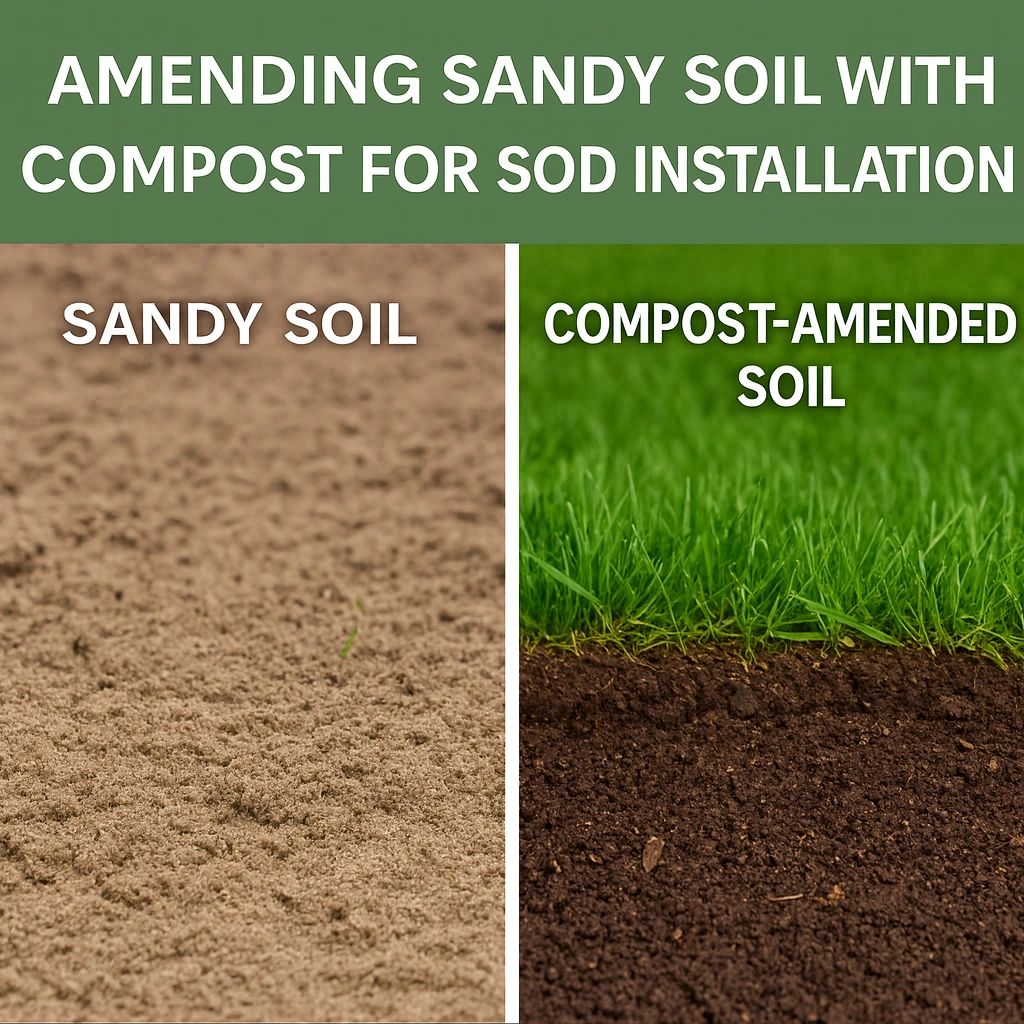
Amending Sandy Soil with Compost for Sod Installation CT, NY, MA
August 25, 2025
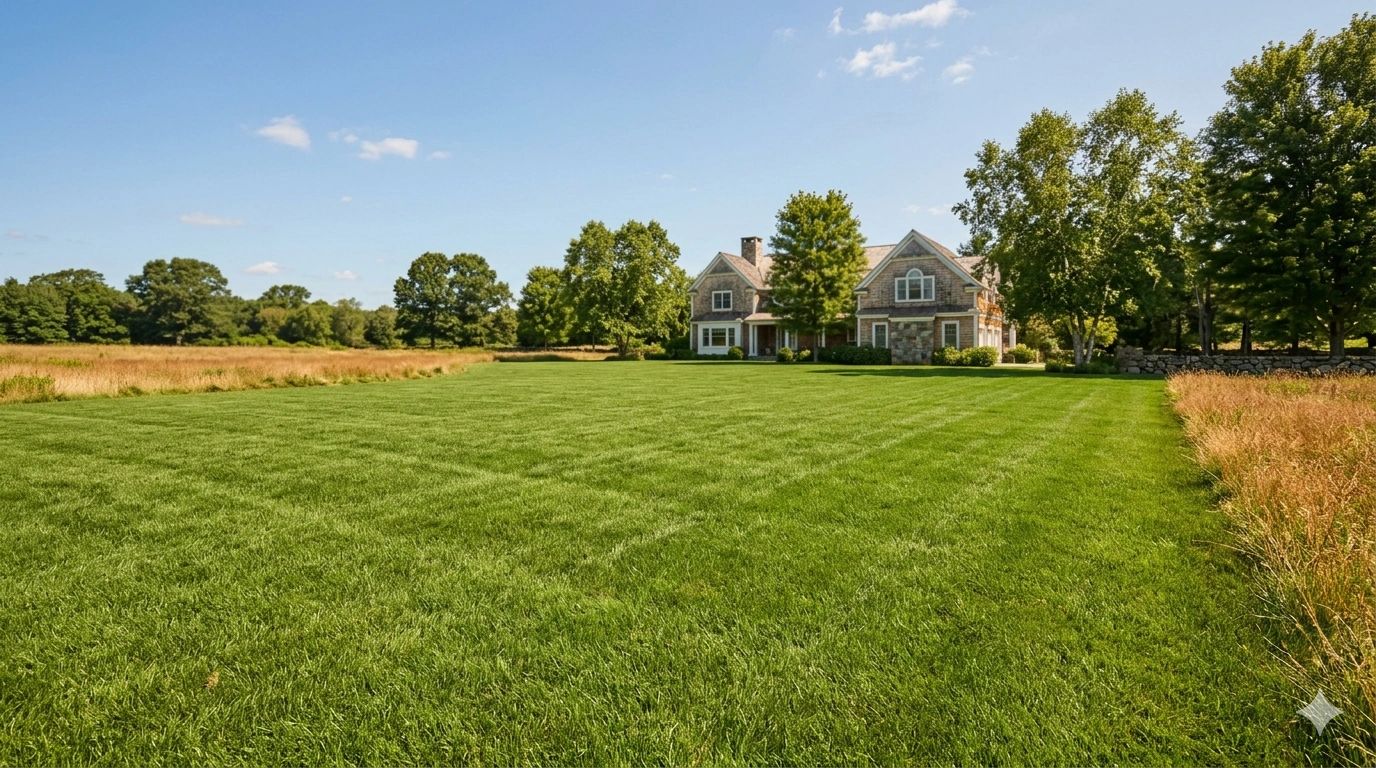
Best Drought-Tolerant Sod Varieties: Northeast Guide
April 30, 2026
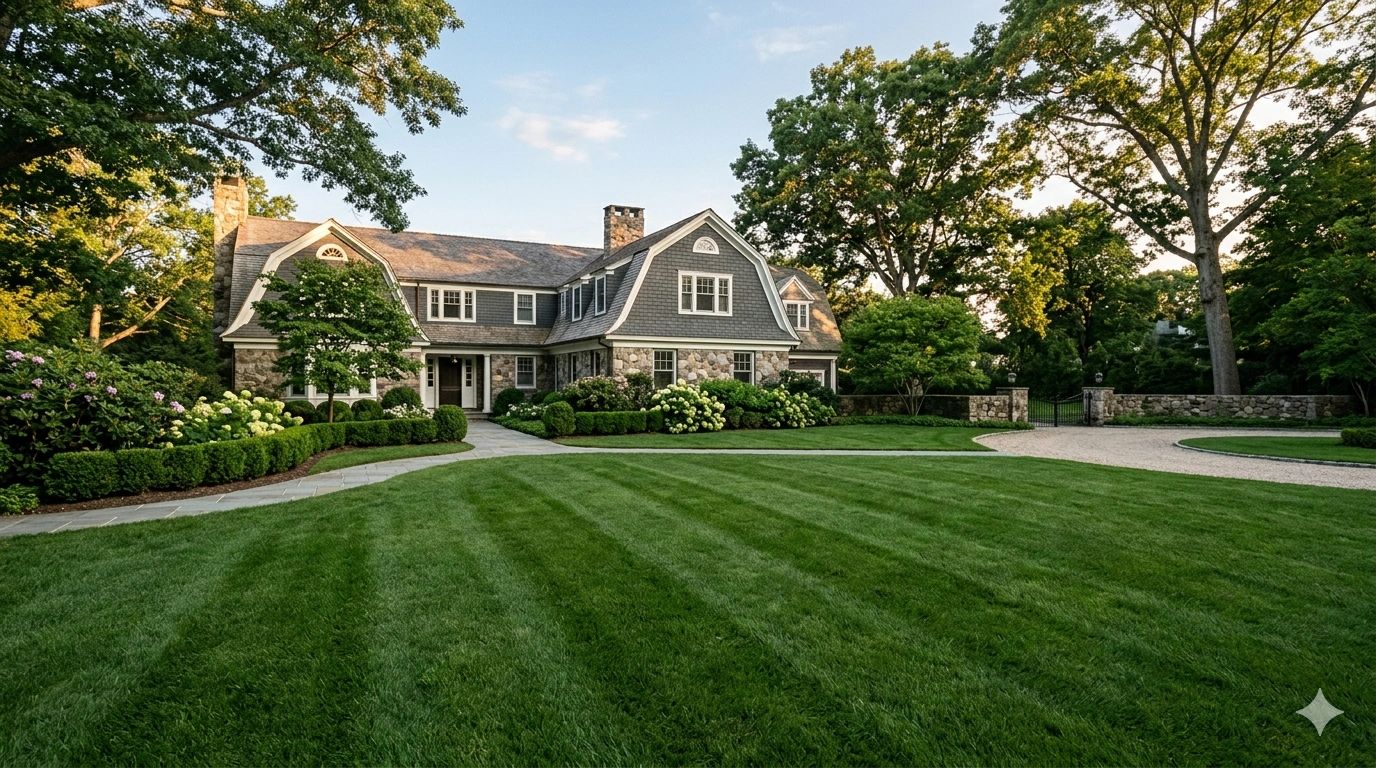
Best Sod for Connecticut Lawns: Complete Regional Guide
April 28, 2026
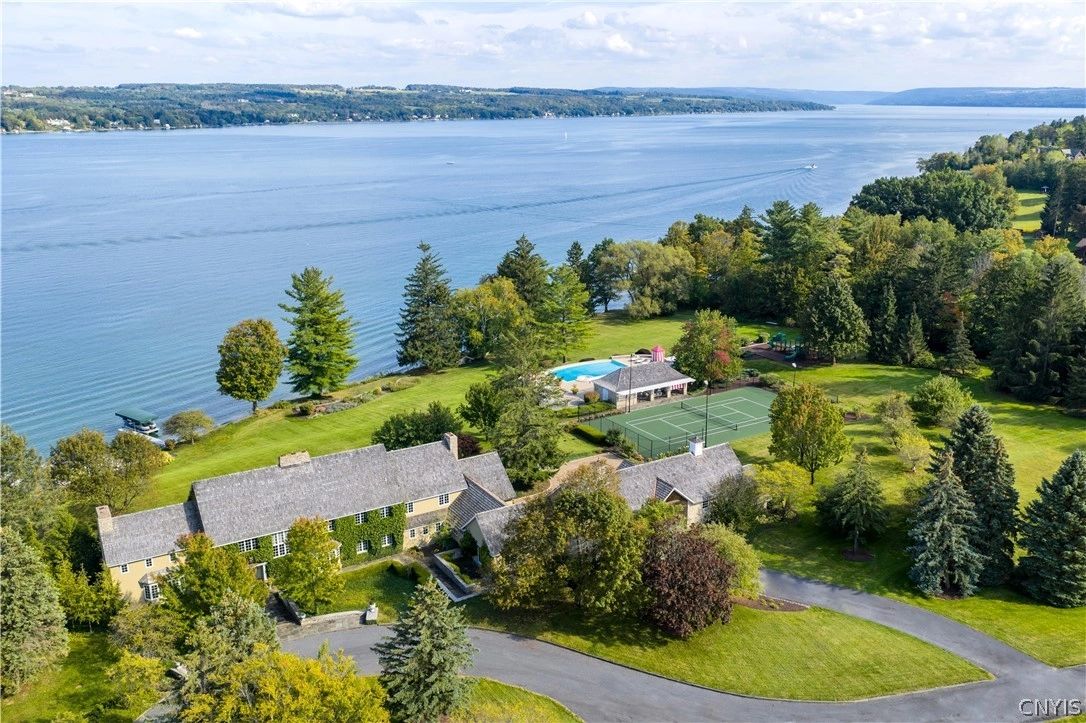
Best Sod for Finger Lakes Properties: Regional Guide
April 29, 2026