
By Sean, CT Sod — Sod delivery and installation across CT, MA, NY, NJ, and RI
Kentucky bluegrass is the cornerstone of the American sod industry. It’s the cultivar that made sod production possible in the first place — a grass whose rhizomatous root system knits itself into a tight, harvestable mat the way no other cool-season turfgrass can. When you buy sod in the northern half of the United States, you are almost certainly buying Kentucky bluegrass, a blend heavy in Kentucky bluegrass, or a sod held together by it.
Installing it well matters. Most "how to lay sod" guides treat sod as a generic product, but Kentucky bluegrass has specific characteristics — rooting timeline, dormancy behavior, heat tolerance thresholds, and how fast the seams knit together — that affect how it performs in the first 30 days. The install mechanics are similar across sod types, but knowing how KBG specifically behaves after it's down is what separates a lawn that thrives from one that struggles.
I deliver and install Kentucky bluegrass sod across five Northeast states. I’ve installed thousands of pallets on everything from Hamptons estates to new-construction builds in winter. This guide covers how to lay KBG sod the way a sod supplier actually does it — not the generic step-by-step you find on big-box store websites.
Kentucky Bluegrass Sod Installation: Quick Steps
01. Test soil pH and amend with lime if below 6.0 02. Kill existing vegetation with glyphosate or a sod cutter 03. Either till the soil 4–6 inches deep and amend with topsoil or compost, OR spread 3 inches of fresh topsoil over the killed lawn 04. Grade smooth and slope away from buildings 05. Schedule sod delivery for the day of installation 06. Lay the first row along a straight edge 07. Stagger seams in a brickwork pattern with no overlaps 08. Roll the sod with a water-filled lawn roller 09. Water within 30 minutes of installation, soaking 4–6 inches deep 10. Water daily for 14 days, then taper gradually over the next month
Why Kentucky Bluegrass Dominates the Sod Industry
Before the install details, a quick note on why this cultivar matters so much. Kentucky bluegrass spreads by underground stems called rhizomes. Those rhizomes are the reason KBG sod holds together in a roll, why it knits together at the seams within weeks, and why it self-repairs small bare spots over time.
Tall fescue is a bunch-type grass. It grows in clumps and doesn’t spread the way Kentucky bluegrass does, which is why fescue sod historically needed netting to hold the mat together during harvest. Modern harvesting and thicker sod cuts have largely eliminated the need for netting in today’s sod — most fescue sod coming off Northeast farms now holds together without it. But the underlying reason is still true: Kentucky bluegrass is a self-binding sod because of its rhizome network, which is exactly what makes it the foundation cultivar of the entire sod industry. Fresh KBG sod can look tighter and heavier than fescue, and once it’s rooted, it tends to establish a more uniform lawn.
For the full history of how Kentucky bluegrass became the standard, see our deep dive on the origin and rise of Kentucky bluegrass and on Merion Kentucky bluegrass — the 1947 cultivar that started the modern sod industry.
When to Install Kentucky Bluegrass Sod in the Northeast
The standard advice you’ll read online is “install in spring or fall.” That’s not wrong, but it’s incomplete — and it’s missing the single most useful fact about Kentucky bluegrass sod that most articles ignore.
You can install Kentucky bluegrass sod almost year-round in the Northeast, as long as the ground isn’t frozen.
At CT Sod, we install in every month of the year. Winter is slow because most homeowners aren’t thinking about lawns in January, but we regularly install in December, February, and March for contractors finishing new builds who need sod down to get a certificate of occupancy, or for projects that couldn’t wrap up before the first frost. The farms we work with harvest whenever the ground allows. If we can cut it, we can deliver it, and you can install it.
Here’s how the seasons actually break down:
Spring (April–early June): The most popular window. Soil is workable, temperatures are mild, rainfall is frequent, and the sod roots in fast. The one watch-out is late May through early June, when temperatures can swing into the 80s and watering demands spike.
Summer (mid-June–August): Possible but the hardest season. Sod can absolutely be installed in summer — we do it constantly — but watering becomes critical. A pallet sitting in 90-degree sun for three hours starts cooking. Install early in the morning, water aggressively, and don’t let the sod dry out at any point during the install.
Fall (September–early November): Arguably the best time in the Northeast. Cooler air, warm soil, consistent rainfall, and the grass has the full cool season to root before summer stress. If you’re asking when Kentucky bluegrass sod establishes most reliably, this is it.
Winter (December–March): The overlooked window. Dormant KBG sod installs just fine as long as the ground isn’t frozen. The grass will be yellow or brown when it arrives — that’s normal dormancy, not dead sod — and it will green up in spring as temperatures rise. Winter installs actually have one underappreciated advantage: watering demand is minimal because evaporation is low. Contractors finishing late-season projects or needing a CO before winter lock their lawns in this way all the time.
The only thing that stops us is frozen ground. If the farm can’t cut it or you can’t prep the soil to receive it, you wait.
How Much Kentucky Bluegrass Sod You Need
Before anything else, measure your lawn. Length times width in feet gives you square footage for rectangles. For irregular shapes, break the area into rectangles and triangles, calculate each, and add them together.
A standard pallet of KBG sod covers 500 square feet. At CT Sod, we can pack pallets up to 600 square feet depending on the cut. Order 5–10% extra for trimming, curves, and mistakes. You will need it.
For rough planning:
• Small front lawn: 1 pallet (500–600 sq ft)
• Typical suburban backyard: 2–4 pallets (1,000–2,400 sq ft)
• Large residential property: 5–10 pallets
• Estate-scale: 10+ pallets, and you should talk to a supplier about custom pricing
Our Hamptons crews have installed 40,000 square feet of sod on a single property in a day. Scale is not the problem — planning and prep is.
Soil Preparation for Kentucky Bluegrass Sod
This is where most failed sod installs actually fail. The sod itself is rarely the problem. The soil it’s laid on is.
Test the Soil
Kentucky bluegrass thrives in soil with a pH between 6.0 and 7.0. Most Northeast soils lean acidic — often in the 5.0–5.5 range — which means you probably need lime. A simple soil test kit from a hardware store, or a test through your state extension service, will tell you where you stand. UConn, UMass, Cornell, Rutgers, and URI all offer affordable mail-in soil testing.
If your pH is below 6.0, apply lime before installing sod. Pelletized lime works into new soil quickly and is easy to spread.
Kill Existing Vegetation
Sod will not survive if it’s laid on top of living grass or weeds. Whatever is underneath will grow up through the new sod or compete with it for water and nutrients.
Options:
• Glyphosate (Roundup or generic equivalent) — most effective, but wait 7–14 days after application before installing sod. Stubborn weeds may need a second application.
• Sod cutter — rents for about $80–100/day at equipment rental stores. Physically removes the existing lawn. Faster turnaround than chemical kill.
• Sheet mulching / smothering — slowest but organic. Cover with cardboard and compost and wait months.
For new construction where there’s no existing lawn, this step is already done for you — skip to soil prep.
Till and Amend
Till the top 4–6 inches of soil to break up compaction and allow root penetration. If your soil is poor — heavy clay, too sandy, or low in organic matter — amend it by working 1–2 inches of compost or screened topsoil into the top layer.
For the Northeast specifically, glacial till soils often need meaningful amendment. Builders notoriously leave new-construction lots with compacted subsoil and almost no topsoil. If you’re putting sod on a newly graded lot, assume you need at least 4 inches of fresh topsoil spread and raked in. This single step is the difference between sod that roots in two weeks and sod that struggles for a year.
Grade and Level
Final grade should slope away from your house — roughly 1 inch of drop per 10 feet for the first 10 feet from the foundation. Beyond that, general slope is fine.
Rake the surface smooth. Walk it. Re-rake low spots. The surface you lay sod on is the surface you’ll have forever — sod takes the exact shape of the soil underneath it. Any divot, lump, or footprint will telegraph through the finished lawn.
Final grade should sit about 1 inch below walkways, driveways, and patios so the finished sod height lines up clean with hardscape.
Starter Fertilizer (Optional but Helpful)
A phosphorus-rich starter fertilizer before or right after installation can give new sod a head start on rooting. Starter blends are formulated specifically for establishment — the numbers you want look something like 10-20-10, with phosphorus (the middle number) notably higher than nitrogen.
In practice, most of our installs come up beautifully without starter fertilizer as long as the soil was prepped properly. If you want to use it, water it in before the sod arrives so the roots contact lightly damp, fertilized soil. If you skip it, focus on good soil prep and proper watering — that’s the bigger driver of successful rooting.
Scheduling the Delivery
Sod is a perishable product. This is not like ordering mulch.
A pallet of fresh-cut Kentucky bluegrass sod has a shelf life measured in hours, not days. In cool weather it can hold on a pallet for 24–36 hours. In summer, under direct sun, it can start to die within 8 hours. Once the center of a pallet starts heating up — sod composts itself when stacked tight and wet — the grass is done.
Schedule delivery for a day you are ready to install. Not the day before. Not the day you’ll “probably get to it.” The day you will physically be laying sod.
At CT Sod, we text our customers their delivery window the day before so they can have crew, tools, and water ready. Our installation crews arrive with the sod when you book install service, so there’s no pallet-aging gap between delivery and install.
If you absolutely cannot install the same day, keep the pallets in shade, keep them moist, and cover them with a tarp. But understand that every hour on a pallet is a cost to the lawn you’re trying to grow.
How to Install Kentucky Bluegrass Sod: The Actual Process
Tools you need:
• Sharp utility knife or linoleum knife
• Garden rake
• Wheelbarrow (optional, helpful for large areas)
• Lawn roller (rented — about $15/day, well worth it)
• Hose with sprinkler or, better, a sprinkler system ready to go
• Gloves
• Plywood boards (a few pieces to walk on without compressing fresh sod)
Step 1: Start With a Straight Edge
Pick the longest straight edge in your install area — a driveway, patio, sidewalk, or fence line — and lay your first row along it. Starting straight makes every subsequent row easier to align.
Unroll the first piece carefully so it lies flat against the soil with no air pockets or wrinkles underneath.
Step 2: Stagger the Seams
Lay the second row in a brickwork pattern. Cut the first piece of the second row in half so the end seams don’t line up with the first row. Continue this staggered pattern across the entire install.
Staggered seams are non-negotiable for two reasons: they prevent visible lines across the finished lawn, and on slopes, they prevent water from channeling down aligned seams and washing soil out from underneath.
Step 3: Butt Seams Tight, Don’t Overlap
Every seam — end-to-end and side-to-side — should be pressed tight against the adjacent piece. Zero gaps. Zero overlaps.
Overlapped sod dries out and dies at the overlap. Gapped sod browns at the edges and shows visible seams for months. Neither corrects itself naturally.
On slopes, lay sod pieces perpendicular to the slope (running across, not up and down) to prevent erosion at the seams.
Step 4: Cut to Fit
Use your utility knife to cut pieces for curves, around trees, near sprinkler heads, and at the edges. Cut from the back side of the sod for cleaner lines. Save scraps — you will need them for small fill-ins.
Step 5: Roll the Finished Sod
Once the entire area is laid, roll it with a water-filled lawn roller. This presses the sod into firm contact with the soil underneath, eliminates air pockets, and smooths out minor lumps.
Don’t skip this step. Root-to-soil contact is what makes sod root. Air pockets underneath sod are where establishment fails.
Step 6: Water Immediately
Water the sod within 30 minutes of laying it. On hot days, don’t wait until the whole area is installed — water as you go, soaking each section as soon as it’s down.
You’re aiming for soil that is saturated 4–6 inches deep. The easiest test: after watering, lift a corner of a freshly laid piece. If the soil underneath is dark and wet to a depth of several inches, you’re good. If it’s still dry below the surface, water more.
The First 30 Days: Where Kentucky Bluegrass Sod Lives or Dies
Watering Schedule
Days 1–14: Water daily, usually twice — once in the morning and once in the late afternoon. The goal is to keep the sod and the top 2 inches of soil consistently moist. In hot weather, you may need three short watering sessions.
Days 15–21: Transition to watering every other day, but deeper. You want the roots chasing water down into the soil, which means less frequent but longer watering sessions.
Days 22–30: Water every 2–3 days, deeply. At this point the sod should be knitted to the soil and rooting.
After 30 days: Standard lawn watering — about 1 inch per week including rainfall, delivered in one or two deep sessions rather than daily shallow watering.
Kentucky bluegrass has a shallower root system than tall fescue by nature, which means KBG is slightly more forgiving of watering mistakes in the first two weeks but also more dependent on consistent moisture through the entire first season.
Traffic
Stay off the sod for the first two weeks entirely if possible. For weeks 3–4, light foot traffic is okay but no play, no pets running on it, no parking on it. By week 5, the lawn should be rooted well enough to handle normal use.
Mowing
Wait until the grass is 3–4 inches tall and the sod is firmly rooted — pull up gently on a corner, if it resists and the roots are gripping soil, you’re ready. First mow should be on the highest setting, removing no more than the top third of the blade. Bag the clippings for the first couple of mows, then resume mulching once the lawn is established.
Fertilizing
Apply a second round of starter fertilizer around 4 weeks after installation if you used it initially. After that, transition to a standard lawn fertilizer program — most Northeast homeowners fertilize 3–4 times per year, in spring, early summer, early fall, and late fall.
Common Kentucky Bluegrass Sod Installation Failures
Sod fails predictably. After thousands of installs, the failure modes are always the same:
Pallet sat too long. Sod ordered before the site was ready. Pallet sat in the sun for a day, center cooked, sod arrived already dying. Always be ready for delivery.
Skipped the weed kill step. Existing grass and weeds come right through the new sod within weeks. The finished lawn is a patchwork of new KBG and whatever you tried to bury.
Laid on compacted subsoil. Common on new construction. Builder left the lot with bulldozer-compacted clay and no topsoil. Sod never roots deeply, struggles for years, eventually thins out.
Overwatered in week one. Soggy soil drowns roots. If the lawn feels spongy or stays wet between waterings, back off. Too much water is as bad as too little.
Underwatered at the edges. Sprinklers miss corners. Sod dries out 6 inches in from the edge, browns, and dies back. Hand-water edges and corners until roots establish.
Overlapped seams. The overlap strip dries out and dies, leaving visible brown lines across the lawn.
Laid on a hot day without watering as you go. Sod dries from the top down. By the time you finish laying and start watering, the pieces you laid first are already stressed.
Mowed too early. Pulling a mower over unrooted sod lifts it. Wait until it grips before mowing.
Most of these failures trace back to one thing: treating sod like a product instead of a living plant on a clock.
DIY Install vs. Hiring It Out
People ask this constantly. Honest answer from someone who sells both delivery-only and full install:
DIY makes sense if:
• Your area is under 1,000 square feet
• Your site is already prepped, flat, and easy to access
• You have at least one helper
• You have a full day to commit, uninterrupted
• You’re willing to handle the watering schedule for 30 days
Hire it out if:
• Your install is over 2,000 square feet
• The site has slopes, curves, or tight access
• You can’t commit a full day of physical labor
• You want a warranty-backed professional result
• You need it done fast — our crews install up to 30,000 square feet in a day
CT Sod offers both. If you have the area prepped — tilled, raked, leveled — we install. 1,000 square foot minimum for installation service. If you want to handle it yourself, we deliver fresh-cut KBG sod anywhere in CT, MA, NY, NJ, and RI. See our professional sod installation page for details.
Kentucky Bluegrass Sod Cost in the Northeast
Current CT Sod pricing for Kentucky bluegrass:
• 1 pallet (500 sq ft): $699
• 2 pallets (up to 1,100 sq ft): $0.90/sq ft
• 2–4 pallets (1,200–2,000 sq ft): $0.75/sq ft
• 4–8 pallets (2,100–3,900 sq ft): $0.70/sq ft
• 8+ pallets (4,000+ sq ft): $0.66/sq ft
• Custom pricing over 10,000 sq ft
Delivery is $99 flat. These prices are the same across all five states we serve. For installation pricing on prepped sites, call us directly.
Frequently Asked Questions About Installing Kentucky Bluegrass Sod
How do you install Kentucky bluegrass sod?
Install Kentucky bluegrass sod by preparing the soil to a depth of 4–6 inches, grading smooth, laying sod in a staggered brickwork pattern with tight seams, rolling the installed sod for soil contact, and watering within 30 minutes to soak the soil 4–6 inches deep. Keep the sod consistently moist for the first two weeks, then gradually reduce watering frequency while increasing depth.
What do I put down before I lay sod?
Before laying sod, put down 3 inches of fresh topsoil (4 inches if you're amending poor soil, though deeper can feel too soft underfoot) and grade it smooth with a slope away from buildings. Rake the surface level, walk it to identify low spots, and re-rake as needed. A phosphorus-rich starter fertilizer is optional but helpful. The finished grade should sit about 1 inch below walkways and driveways so sod height lines up clean with hardscape.
What month should you lay Kentucky bluegrass sod in the Northeast?
The best months for laying Kentucky bluegrass sod in the Northeast are September and October in fall, and April through May in spring. However, Kentucky bluegrass sod can be installed in any month of the year as long as the ground isn't frozen. Summer installs are possible but require aggressive watering, and winter installs are common for contractors finishing new builds.
Can you lay sod over existing grass?
No, sod should not be laid over existing grass. Living grass and weeds underneath will compete with the new sod for water and nutrients, preventing proper rooting and eventually growing up through the new lawn. Kill existing vegetation with glyphosate or remove it with a sod cutter before installation.
Is October too late to lay sod in the Northeast?
October is not too late to lay sod in the Northeast — it's actually one of the best months for sod installation. Cool air temperatures, warm soil, and consistent fall rainfall create ideal rooting conditions. Sod installed in October typically establishes before winter dormancy and resumes strong growth the following spring.
How long does Kentucky bluegrass sod take to root?
Kentucky bluegrass sod typically starts rooting within 7–10 days of installation and is firmly rooted within 2–3 weeks under normal conditions. Rooting speed depends on soil contact, moisture, and temperature. Sod installed in cool fall weather may take slightly longer to root visibly but establishes a strong root system before winter.
How much water does new Kentucky bluegrass sod need?
New Kentucky bluegrass sod needs enough water to keep the soil consistently moist 4–6 inches deep for the first two weeks. This usually means watering twice per day in warm weather and once per day in cool weather. After two weeks, transition to every-other-day watering, then to deep watering 2–3 times per week once the sod is rooted.
Can you install Kentucky bluegrass sod in summer?
Yes, Kentucky bluegrass sod can be installed in summer, but it requires careful planning. Install early in the morning to avoid heat stress, water the sod as you lay it rather than waiting until the entire area is installed, and plan to water twice or three times per day for the first two weeks. A pallet of sod left in 90-degree sun for more than a few hours will start to decline.
What are the common mistakes when laying Kentucky bluegrass sod?
The most common Kentucky bluegrass sod installation mistakes are: letting the pallet sit too long before installing, laying sod over unkilled grass or weeds, installing on compacted subsoil without topsoil, overwatering in week one, underwatering the edges and corners, overlapping seams, and mowing before the sod is rooted. Most sod failures trace back to rushed soil prep or delayed installation.
How much Kentucky bluegrass sod do I need?
Measure the area in square feet (length × width for rectangles, or break irregular shapes into measurable sections). Order 5–10% extra to account for trimming and cuts. One standard pallet of Kentucky bluegrass sod covers 500 square feet, though CT Sod can pack pallets up to 600 square feet depending on the cut.
How much does Kentucky bluegrass sod cost in Connecticut?
CT Sod Kentucky bluegrass pricing ranges from $0.66 to $0.90 per square foot depending on quantity. One pallet (500 sq ft) is $699. Larger orders of 4,000+ square feet drop to $0.66 per square foot. Delivery is $99 flat across Connecticut, Massachusetts, New York, New Jersey, and Rhode Island.
Final Thoughts From a Sod Supplier
Kentucky bluegrass sod, installed properly on well-prepped soil, becomes the lawn most homeowners imagine when they picture a lawn. Dense. Fine-bladed. Deep green. Soft underfoot. Self-repairing. The kind of lawn that doesn’t need renovation for a decade if you take care of it.
The install week is the most important week that lawn will ever have. Get the soil right, get the timing right, get the watering right, and the sod does the rest. Kentucky bluegrass has been the backbone of the American sod industry for nearly 80 years because it delivers — as long as you give it a fair shot during establishment.
If you’re planning a Kentucky bluegrass sod install anywhere in Connecticut, Massachusetts, New York, New Jersey, or Rhode Island, give us a call at (203) 806-4086 or request a quote through our contact page. We deliver farm-fresh Kentucky bluegrass sod and handle professional installation throughout New England.
Fresh sod. Expert installation. The lawn you’ve always wanted.
Ready To Order?
Fresh-Cut Sod Delivered
CT Sod delivers Kentucky Bluegrass, Tall Fescue & RTF sod across CT, MA, NY, NJ, RI, NH, VT & ME.
Keep Reading
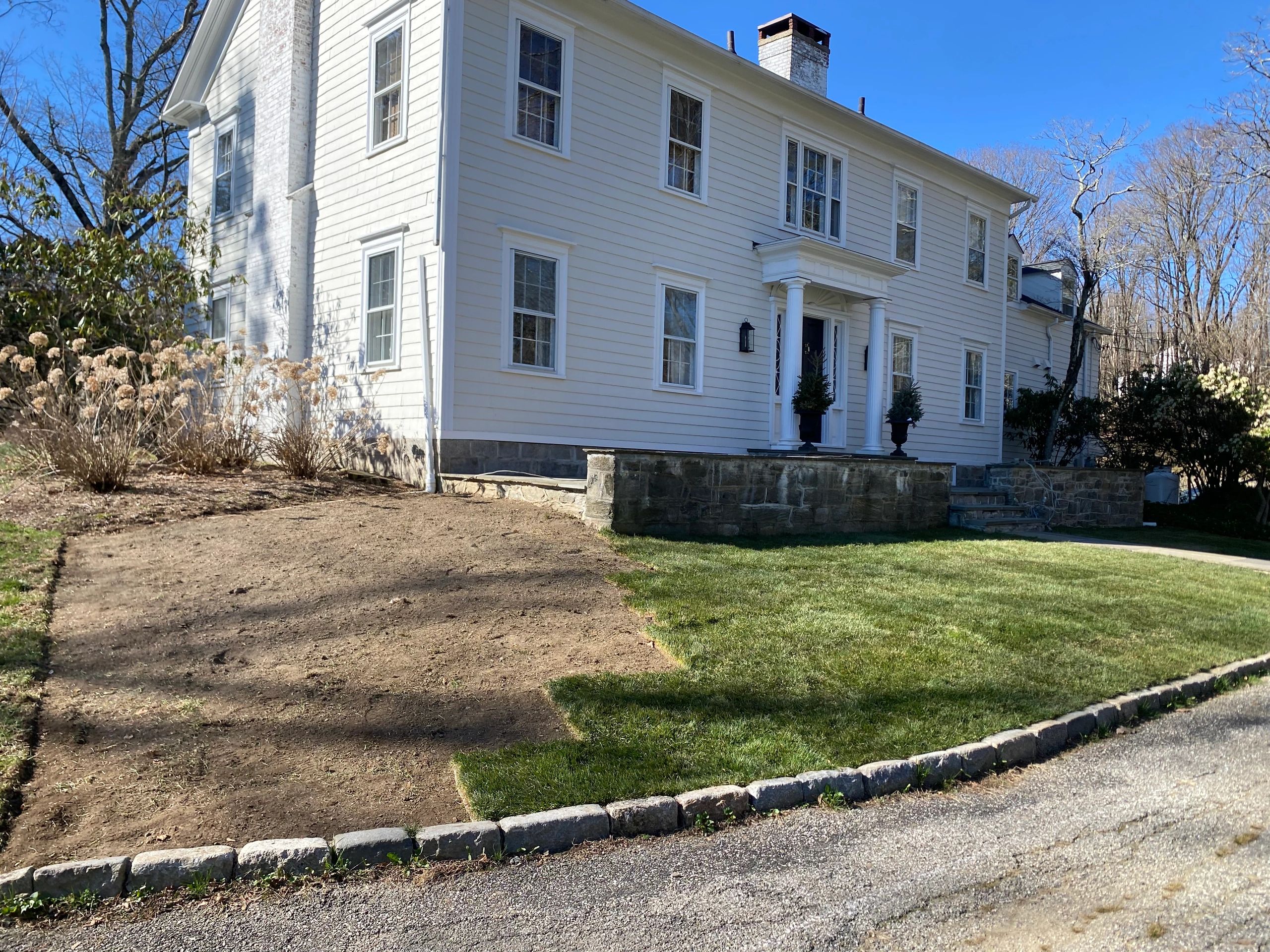
1,000 Square Foot Sod Prep and Installation in Wilton, CT
April 11, 2026
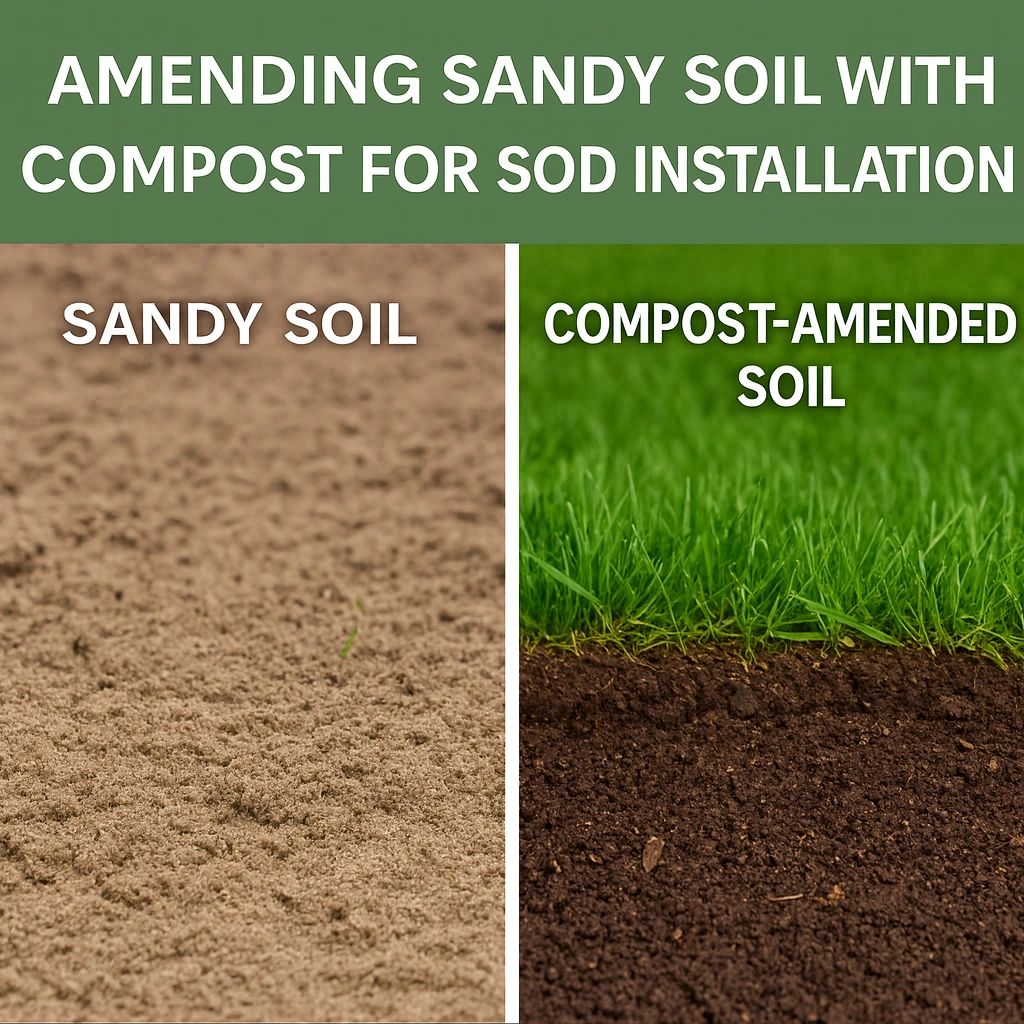
Amending Sandy Soil with Compost for Sod Installation CT, NY, MA
August 25, 2025
Best Drought-Tolerant Sod Varieties: Northeast Guide
April 30, 2026
Best Sod for Connecticut Lawns: Complete Regional Guide
April 28, 2026