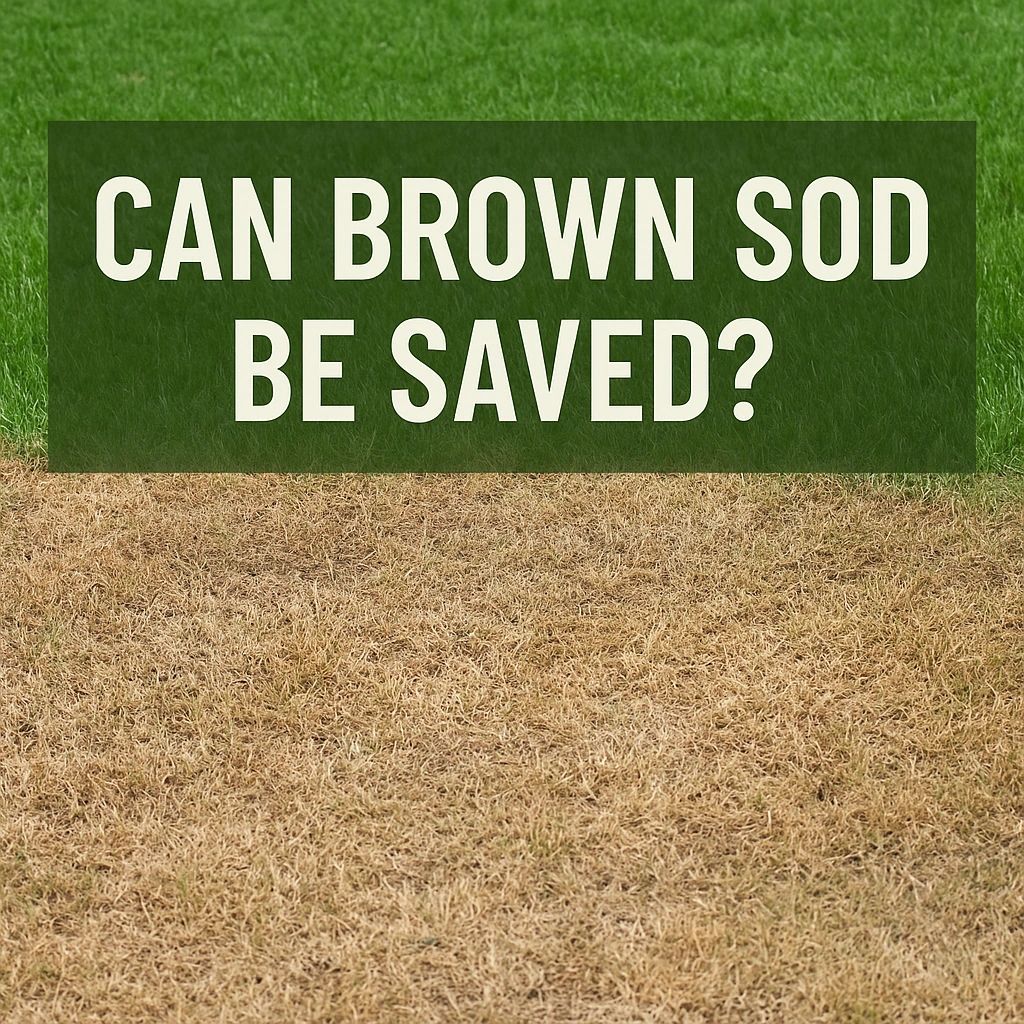
Can Brown Sod Be Saved? A Complete Diagnostic Guide for Cool-Season and Warm-Season Lawns
Brown sod can often be saved — but the answer depends entirely on whether your grass is a cool-season or warm-season variety, when in the year you're seeing the brown color, and what's actually happening underneath the surface. The most common mistake homeowners make when diagnosing brown sod is applying universal advice to a situation that needs variety-specific diagnosis.
Cool-season sod (Kentucky bluegrass, tall fescue, RTF, fine fescues, perennial ryegrass) turning brown almost always indicates stress, drought, disease, fertilizer burn, or death. Brown cool-season sod during the growing season is a problem requiring immediate diagnosis and intervention.
Warm-season sod (zoysia, Bermuda, St. Augustine, centipede, Bahia, buffalo) turning brown is often completely normal seasonal dormancy from late fall through spring across most of the country. Brown warm-season sod during winter dormancy is healthy. Brown warm-season sod during the active growing season indicates a real problem with diagnosis that differs from cool-season troubleshooting.
This guide separates the two diagnostic frameworks so you can identify which situation applies to your lawn and respond accordingly. The first section covers cool-season sod. The second covers warm-season sod. Sections at the end cover the shared considerations — delivery problems, prevention, and frequently asked questions that apply to both grass types.
First, Identify Your Sod Type
Before diagnosing brown sod, identify what you have:
Cool-season varieties are the dominant residential turf across the Northeast, the Midwest, the Pacific Northwest, the upper Mountain states, and the upper Mid-Atlantic. The major cool-season sods are:
- Kentucky Bluegrass
- Tall fescue (including Black Beauty)
- Rhizomatous Tall Fescue (RTF)
- Fine fescues (Chewings, hard, creeping red, sheep)
- Perennial ryegrass
Warm-season varieties are the dominant residential turf across the South, the Southeast, parts of the Southwest, and the transition zone. The major warm-season sods are:
- Zoysia (Meyer, Empire, Zeon, Innovation, others)
- Bermuda (common, hybrid, TifTuf, Celebration, others)
- St. Augustine (Floratam, Palmetto, ProVista, others)
- Centipede
- Bahia
- Buffalo grass
If you don't know which type you have, the dormancy pattern itself is the easiest identifier — if your lawn has been green every winter, you have cool-season. If it goes tan-brown for three to seven months and greens up in late spring, you have warm-season.
Section 1: Brown Cool-Season Sod
Cool-season sod turning brown is almost always a problem requiring immediate diagnosis. The exceptions are limited — extreme summer heat can cause partial dormancy, and severe winter conditions can produce some browning that recovers in spring — but during the normal growing season (spring, fall, and most of summer), brown cool-season sod indicates stress, damage, or death that needs intervention.
Was the Sod Brown When It Arrived?
If your cool-season sod arrived brown, yellow, hot in the center of the pallet, or smelling sour and composty, the sod was already dying before it hit your property — and that's a supplier problem, not a homeowner problem. Healthy cool-season sod arrives green, cool to the touch, and smelling like fresh-cut grass.
When sod arrives in poor condition, stop unloading, take timestamped photos of the pallets and the delivery receipt, and contact your supplier immediately. A pallet that sat too long after harvest, sweated through a hot trailer, or was cut and held for days is the supplier's responsibility to replace. [Verify before acting — specific remedies depend on your supplier's terms and state consumer law.]
For the technical side of how long sod can survive on a pallet, see our pallet shelf life guide.
How Long Can Cool-Season Sod Sit Before It Dies?
Fresh cool-season sod can survive 24 to 48 hours on a pallet under cool, shaded conditions, but in summer heat that window can shrink to under 24 hours. The reason is the heat of decomposition: stacked sod traps heat inside the pallet, and internal temperatures can exceed 130°F fast enough to cook the roots before the grass blades even wilt.
Kentucky bluegrass and tall fescue both struggle on the pallet in heat, with bluegrass being somewhat more vulnerable to heat stress during the storage period. The rule for cool-season sod: lay it the same day it's delivered. If weather or scheduling forces a delay, break the pallet open, spread rolls in a shaded area, and mist lightly. Watering the intact pallet does not help — moisture doesn't penetrate the stack, and the heat keeps building.
Dormant vs. Dead Cool-Season Sod: The Tug Test
To tell if brown cool-season sod is dormant or dead, grab the blades and tug firmly. If the sod resists and you can see white, thread-like roots anchoring into the soil, the grass is alive and recoverable. If it peels up like a rug with no resistance and the underside is dry and crispy, the sod is dead and must be replaced.
A second confirmation: peel back a corner and inspect the crown — the transition point between root and blade where the plant actually lives. A firm, white-to-light-green crown means the plant is alive. A brown, mushy, or husk-dry crown means it's gone. Dormant or stressed cool-season grass will green back up within 10 to 14 days of consistent watering. Dead grass will not green up no matter what you do.
Why Cool-Season Sod Turns Brown: Five Causes
Cool-season sod turns brown because of underwatering, overwatering, poor soil contact, heat or drought stress, or fertilizer burn. Each cause has a different fix, and applying the wrong fix makes the problem worse.
Underwatering. The most common cause. New cool-season sod needs to stay continuously moist for the first two to three weeks while shallow roots develop. One dry day during that window can brown the blades. Fix: water deeply two to three times daily until roots establish. Check moisture by lifting a corner — the soil underneath should feel like a wrung-out sponge. Our complete first-14-days aftercare guide covers the watering cadence in detail.
Overwatering. Less common but harder to reverse. Constant saturation suffocates roots, invites fungal disease, and causes root rot. Signs include slimy patches, musty odor, and brown patches that spread despite heavy watering. Fix: back off watering, improve drainage, let the soil breathe between cycles.
Poor soil contact. Sod laid over compacted ground, old grass, rocks, or uneven dirt develops air pockets. Roots cannot bridge an air gap, so those rolls brown out even when the rest of the lawn thrives. Fix: lift the affected rolls, backfill with quality topsoil, press firmly, and water. The deeper prevention is proper yard preparation before installation.
Heat or drought stress. In peak summer, even properly watered cool-season sod can go partially dormant as a survival response. Blades turn straw-colored but the crown stays alive. Fix: consistent deep watering; the grass usually greens back up as temperatures drop.
Fertilizer burn. New sod is already fertilized at the farm. Adding more high-nitrogen fertilizer in the first few weeks burns the shallow roots. Fix: flush the soil with deep watering and skip fertilizer until the sod is fully rooted. Our guide to the right starter fertilizer for new sod covers what to apply and when.
Can Brown Cool-Season Sod Recover? It Depends on the Cause
Heat-stressed or drought-dormant cool-season sod usually recovers fully with two to three weeks of deep, consistent watering. Sod with poor soil contact recovers if you lift and relay within the first week or two. Sod with mild root rot can bounce back if you stop overwatering immediately. Sod with severe root rot — black, slimy roots — cannot be saved. Fully dead sod with brittle crowns and no root resistance cannot be revived at any point.
The practical window for recovery is short. If brown sections haven't started to green up after two weeks of corrected watering and care, they're not coming back and need to be replaced.
For longer-term context on what's happening underneath the sod across the establishment period, see our complete 12-month sod rooting timeline.
Section 2: Brown Warm-Season Sod
Warm-season sod has an entirely different relationship with the color brown than cool-season sod. The diagnostic framework is fundamentally different, and applying cool-season troubleshooting to warm-season sod produces wrong conclusions and wasted effort.
Brown Warm-Season Sod Is Often Completely Normal
The single most important fact about brown warm-season sod: across most of their range, warm-season grasses go dormant in winter. Dormancy is a survival mechanism that protects the plant during cold months when it cannot grow. Dormant warm-season sod is brown, tan, or straw-colored — and it is healthy.
The dormancy timing varies by variety and location:
- Bermuda grass: Goes dormant when soil temperatures drop below approximately 55°F, typically late October through early April in the transition zone, with shorter dormancy further south.
- Zoysia: Goes dormant when soil temperatures drop below approximately 55-60°F. Dormancy can run from mid-October through early to mid-May in the transition zone, particularly the Long Island and northern New Jersey portions of zoysia's residential range. Shorter dormancy windows further south.
- St. Augustine: Less true dormancy than other warm-season grasses, but slows dramatically and can show partial browning during the coldest portions of winter, particularly in the northern parts of its range.
- Centipede: Goes dormant similarly to zoysia, with brown winter color across most of its range.
- Bahia: Goes dormant in cooler conditions, with brown winter color from mid-fall through early spring across most of its range.
- Buffalo grass: Goes dormant earlier than other warm-season grasses, with brown color from approximately mid-September through mid-May across most of its range.
How to Verify Dormant Warm-Season Sod Is Healthy
Even though brown warm-season sod is usually normal, you can verify health with the same tug test approach used for cool-season sod:
Grab a section of brown blades and tug firmly. Healthy dormant warm-season sod resists the pull and shows white root threads anchoring into the soil. Dead warm-season sod peels up with no resistance and reveals brittle, husk-dry crowns and roots.
Also check the crown directly. Healthy dormant warm-season sod has firm, intact crowns even when the visible blades are brown. The crown is the survival structure — as long as the crown is alive, the plant will green up when conditions return to favorable.
When Brown Warm-Season Sod Is a Real Problem
Warm-season sod that's brown during the active growing season (when soil temperatures are reliably above 60°F and the grass should be actively growing) indicates a problem that needs diagnosis. The causes for active-season browning differ from cool-season causes:
Winterkill. The most serious warm-season problem. When winter conditions exceed the variety's cold tolerance, portions of the lawn die during dormancy and never green up. Winterkill is most common at the northern edge of each variety's range — Long Island and northern New Jersey for zoysia, the upper transition zone for Bermuda, the northern range edge for St. Augustine. Winterkill diagnosis: areas that should have greened up by late spring (May to mid-June) but remain brown indicate dead turf from winter damage. Recovery: damaged areas need to be replaced with new sod or sprigs/plugs.
Spring transition delays. Warm-season grasses don't all green up at the same time, and some areas of a single lawn can lag behind others. Shaded areas, low spots, and north-facing exposures may green up several weeks after sunny areas. Diagnosis: if some areas of your lawn are green and others are still brown in late spring, give the lagging areas additional time before assuming they're dead. Most lagging areas catch up by early summer.
Disease. Warm-season grasses face disease pressure during their active growing season. Large patch (zoysia and centipede), spring dead spot (Bermuda), gray leaf spot (St. Augustine), and other warm-season diseases produce browning during periods when the grass should be green. Diagnosis requires identifying the specific disease pattern and confirming with a soil/sample test if the diagnosis isn't obvious.
Drought stress. Warm-season grasses generally tolerate drought better than cool-season grasses, but extended drought during active growing season produces browning that responds to deep watering. Recovery usually occurs within a week to two weeks of consistent irrigation.
Insect damage. Chinch bugs, sod webworm, armyworm, and grub damage can all produce browning during the active growing season. Diagnosis: examine affected areas for visible insects, larvae in the soil, or characteristic damage patterns.
Poor soil contact (newly installed sod). Same as cool-season — sod laid over compacted, uneven, or poorly prepared soil develops air pockets where roots can't establish. Newly installed warm-season sod with poor soil contact browns during the establishment period regardless of the season.
Improper installation timing. Warm-season sod installed during dormancy or just before dormancy doesn't establish reliably. The sod survives the dormancy period if conditions are right but may show poor recovery in spring. Fall installation of warm-season sod is risky in the upper portions of warm-season range.
Diagnosing Brown Warm-Season Sod: The Decision Tree
The diagnostic approach for brown warm-season sod follows a different sequence than cool-season:
Step 1: What's the season and soil temperature? If the grass is in normal dormancy for the variety and climate, the brown is almost certainly healthy. Wait for spring green-up.
Step 2: If we're past expected green-up, do the tug test. Resistance and white roots = alive (probably late green-up). No resistance and brittle crowns = dead (winterkill or other damage).
Step 3: If the grass is alive but should have greened up by now, evaluate position. Shaded or low spots often green up later. Give them additional time before declaring failure.
Step 4: If the grass is dead or producing brown patches during the active growing season, identify the specific cause: winterkill (uniform damage in cold-exposed areas), disease (specific damage patterns), insect damage (visible pests or larvae), drought stress (overall thinning across the lawn), or installation problems (newly installed sod with poor soil contact).
Step 5: Match the recovery approach to the diagnosis. Winterkill requires replacement. Disease requires fungicide and cultural correction. Insect damage requires insecticide and cultural correction. Drought requires deep irrigation. Installation problems require lifting and relaying with proper soil prep.
Can Brown Warm-Season Sod Recover?
Dormant warm-season sod with intact crowns recovers naturally in spring with no intervention required. Late green-up areas typically catch up over the course of late spring. Drought-stressed warm-season sod recovers fully with deep watering. Disease-damaged warm-season sod typically recovers with fungicide and corrected cultural practices, though some severe cases require sod replacement. Insect-damaged warm-season sod recovers with insecticide and time, with severe damage areas sometimes requiring sod replacement.
Winterkilled warm-season sod does not recover. Affected areas need replacement. The replacement approach varies by variety — Bermuda and zoysia can be re-established with sod, sprigs, or plugs. St. Augustine establishment is sod-only. Plugging or sprigging is often the cost-effective option for partial winterkill across larger areas.
Delivery and Pallet Problems Apply to Both Grass Types
Whether you ordered cool-season or warm-season sod, the delivery quality matters identically. Sod that arrived in poor condition is the supplier's responsibility regardless of variety. The diagnostic signs of bad delivery are universal:
- Visible browning, yellowing, or fading on arrival
- Hot temperatures inside the pallet
- Sour, composty, or fermented odor
- Slimy or wet conditions inside the stack
- Visible mold or fungal growth
- Sod that cuts and breaks easily rather than rolling cleanly
How to Prevent Brown Sod in the First Place
The most reliable way to deal with brown sod is to prevent it. Four non-negotiables for any new sod install regardless of grass type:
Lay sod the same day it's delivered — every hour on the pallet in summer heat is damage you cannot undo.
Prep the soil before delivery, not after. That means removing existing grass, tilling 4 to 6 inches deep, grading for drainage away from the house, and having quality topsoil ready. Our grass removal guide covers the prep process in detail. For sandy soils, see our sandy soil amendment guide.
Water within 30 minutes of installation, then maintain strict moisture for the first two to three weeks. Our first 14 days aftercare guide covers the watering cadence in detail.
Install during the right season. For cool-season sod, spring (April-May) and fall (September-October) are dramatically easier than July and August. Our fall installation guide covers why fall is one of the best establishment windows. For warm-season sod, late spring through mid-summer (May-July) is the optimal window when soil temperatures reliably support active warm-season growth.
Frequently Asked Questions
How long does it take for sod to die on a pallet?
Sod can begin breaking down within 12 hours in summer heat and is usually unrecoverable after 48 hours, even in cooler weather. Cool-season grasses like Kentucky bluegrass and tall fescue are more fragile on the pallet than warm-season varieties like zoysia and Bermuda. [Estimated — exact survival times vary with pallet density, ambient temperature, and grass variety.]
Can I revive brown sod with more water?
For cool-season sod: yes, if the sod is dormant or stressed with live crowns and white roots — deep, consistent watering over 10 to 14 days will usually bring it back. No, if the crowns are brittle and there's no root resistance.
For warm-season sod in dormancy: no intervention required. The grass will green up naturally as soil temperatures rise in spring. Watering dormant warm-season sod doesn't accelerate green-up and can promote disease. For drought-stressed warm-season sod during the active growing season, deep watering produces recovery within 1-2 weeks.
Why is only part of my lawn brown?
For cool-season sod, spot browning almost always traces to uneven watering coverage, sprinkler dead zones, air pockets under specific rolls, or localized drainage problems. Map the brown areas against your sprinkler pattern first.
For warm-season sod, partial browning can indicate uneven dormancy break-up (some areas green up before others, particularly shaded or low spots), winterkill in cold-exposed areas, disease pressure in specific zones, or installation problems in newly installed sod. The pattern of the browning often indicates the cause.
My zoysia or Bermuda is brown all winter — is that normal?
Yes. Zoysia, Bermuda, centipede, Bahia, and buffalo grass all go dormant in winter across most of their range. Brown winter color is healthy and expected. The grass will green up in spring as soil temperatures rise above approximately 55-60°F.
My zoysia didn't green up this spring like it normally does — what happened?
Most likely winterkill. Zoysia at the northern edge of its range (Long Island, northern New Jersey, the upper transition zone) sometimes experiences winterkill during severe winters. Damaged areas need replacement with new sod, sprigs, or plugs. Some zoysia varieties have stronger winter hardiness than others — Meyer specifically has the strongest winter hardiness track record at the northern edge of zoysia's range.
What if my supplier refuses to replace sod that arrived brown?
Document the pallet condition with timestamped photos, keep the delivery paperwork, and escalate the complaint in writing. Reputable sod farms and distributors replace product that failed before installation. [Verify before acting — remedies depend on supplier terms and state consumer protection law.]
Is brown sod always dead?
No. For cool-season sod, brown can mean dormant from extreme heat, stressed, or dead — the tug test distinguishes between them. For warm-season sod, brown is usually normal seasonal dormancy, with active-season browning indicating winterkill, disease, drought, or other problems.
How soon after installation should sod turn green if it went brown?
For cool-season sod, if the sod was dormant or stressed rather than dead, you should see fresh green growth within 10 to 14 days of corrected watering. No change after two weeks usually means the roots are gone.
For warm-season sod, dormancy timing depends on the season — dormant sod in winter will not green up until spring soil temperatures rise above approximately 55-60°F. Green-up timing varies by variety and location, with most warm-season sods showing initial green-up within 2-4 weeks of consistent warm soil conditions.
Can I use the same diagnostic approach for both cool-season and warm-season sod?
Partially. The tug test (resistance + white roots = alive, no resistance + brittle crowns = dead) works identically for both grass types. The interpretation of brown color differs significantly — brown cool-season sod during the growing season indicates a problem, while brown warm-season sod during dormancy is normal and expected. Apply the diagnostic framework appropriate to your grass type.
What if I don't know whether I have cool-season or warm-season sod?
The dormancy pattern is the easiest identifier. If your lawn has been green every winter, you have cool-season sod. If it goes tan-brown for several months and greens up in late spring, you have warm-season sod. The transition zone (parts of Virginia, Tennessee, North Carolina, Oklahoma, southern Pennsylvania, and similar latitude regions) supports both variety types, with zoysia being the most common warm-season choice in the upper transition zone.
Bottom Line
Brown sod is not automatically a dead investment, but the diagnostic approach must match the grass type:
For cool-season sod, the clock starts the moment you notice browning during the growing season. Run the tug test, diagnose the cause, and correct it within the first week or two for the best recovery odds. Brown cool-season sod is usually a problem requiring intervention.
For warm-season sod, the diagnostic approach is fundamentally different. Brown winter color is usually healthy dormancy that will resolve naturally with spring green-up. Active-season browning indicates winterkill, disease, drought, or other problems requiring variety-specific diagnosis and treatment.
In both cases, if the sod was compromised before it hit your property, document the delivery condition and call your supplier. If it died on well-prepped soil despite proper aftercare, the cause typically traces to prep, moisture, or installation timing — all addressable factors for next time.
For homeowners in the Northeast working on sod projects with cool-season varieties, CT Sod handles delivery and professional installation across the broader regional residential and estate market. Call (203) 806-4086 for delivery, professional installation, or guidance on diagnosis and recovery for your specific situation.
Based on more than 30 years of hands-on sod, soil, and landscape experience.
Ready To Order?
Fresh-Cut Sod Delivered
CT Sod delivers Kentucky Bluegrass, Tall Fescue & RTF sod across CT, MA, NY, NJ, RI, NH, VT & ME.
Keep Reading
1,000 Square Foot Sod Prep and Installation in Wilton, CT
April 11, 2026
Amending Sandy Soil with Compost for Sod Installation CT, NY, MA
August 25, 2025
Best Drought-Tolerant Sod Varieties: Northeast Guide
April 30, 2026
Best Sod for Connecticut Lawns: Complete Regional Guide
April 28, 2026