Best Topsoil for Sod in Connecticut: Complete Guide to Soil Preparation, Custom Blends, and What Actually Works for Sod Installation
If you're installing sod in Connecticut and you've decided to handle the soil prep yourself or specify the topsoil to your contractor, the topsoil decision matters more than most homeowners realize. Sod installations don't usually fail because of the sod itself — modern commercial sod from established farms is consistent, healthy, and properly grown. They fail because the soil underneath was wrong. Wrong texture, wrong organic matter content, wrong drainage characteristics, or simply not enough of it. The lawn looks great for the first two weeks while the surface is moist and the roots are still in the sod itself, then it starts thinning, yellowing, or struggling as the roots try to extend into soil that isn't suited for them.
This guide walks through what makes topsoil good for sod specifically, why Connecticut soils require specific attention, the differences between fill, generic topsoil, screened topsoil, screened compost as a soil amendment, and custom-blended topsoil for sod prep, how much topsoil you actually need and how to calculate it, what to look for in a Connecticut topsoil supplier, and how Grillo Services in Milford produces and blends the topsoil and compost that landscape contractors across Fairfield County, New Haven County, and much of Connecticut have been using for sod installations for over thirty years.
Why Most Sod Installations Actually Fail
Walk through any neighborhood in Connecticut a year after a wave of new sod installations and you can pick out the ones that worked from the ones that didn't. The successful installations look like established lawns — dense, dark green, uniform color, healthy growth pattern. The failed installations show thin spots, yellowing zones, areas that never quite filled in, patches that died and got reseeded, or whole lawns that look stressed even when watering and mowing have been correct.
The visible failures almost always trace back to soil prep, not to anything that happened after the sod was laid. Specifically, three soil prep mistakes account for the majority of installation failures:
Insufficient topsoil depth. Sod laid directly on existing subsoil, compacted construction fill, or thin topsoil layers under 2 inches deep can establish surface roots in the first few weeks but can't extend deeper as the season progresses. By midsummer, when surface moisture decreases and the lawn needs to access water from deeper in the soil profile, the roots have nowhere to go. The lawn stresses, thins, and never reaches the density a well-prepped installation would have achieved.
Wrong soil texture. Topsoil that's too sandy doesn't hold moisture or nutrients. Topsoil that's too clay-heavy doesn't drain and creates anaerobic conditions that suffocate roots. Topsoil that's full of construction debris, large rocks, or unscreened organic chunks creates voids and weak spots where roots can't establish. The sod looks fine on top but the soil below isn't supporting healthy root growth.
Inadequate organic matter and biological activity. New sod's roots need to extend into living soil — soil with active microbial communities, mycorrhizal fungi populations, and the organic matter that supports those biological systems. Soil that's been stockpiled in plastic, biologically inactive, or sterile from chemical history can support sod survival but not sod thriving. The lawn establishes but never develops the deep root systems and density that healthy soil biology produces.
The good news is that all three of these failures are preventable with proper topsoil selection and application. The bad news is that most sod installations in Connecticut are still happening with topsoil that's chosen based on price-per-yard or convenience rather than on what the sod actually needs to succeed.
Why Connecticut Soils Specifically Require Attention
Connecticut native soils are not generally well-suited to sod installation without amendment. Understanding what's already in your yard helps explain why imported topsoil and soil amendments matter so much.
Connecticut soils are predominantly glacial till — the soil left behind when the last continental glaciation retreated roughly 12,000 years ago. Glacial till is characterized by mixed particle sizes, abundant rock content, variable depth to bedrock, and inconsistent texture across short distances. A property in any Connecticut town might have sandy loam in one area, heavy clay in another, and rock-laden subsoil in a third — all within a quarter-acre lot.
Most Connecticut soils are also acidic. Typical pH range is 5.5 to 6.5, which is below the optimal range for cool-season turfgrass (which prefers 6.0 to 7.0). Acidic soil limits availability of phosphorus, calcium, and magnesium even when those nutrients are physically present in the soil profile. Sod laid on unamended Connecticut soil often shows nutrient deficiency symptoms within the first growing season despite normal fertilization.
Drainage is another common Connecticut soil challenge. The same glacial till that produces variable texture also produces variable drainage — some areas drain too freely (sandy outwash deposits), others retain water excessively (compacted glacial till with high silt content). For sod specifically, drainage issues create either drought stress (rapid drying in sandy areas) or root rot (saturated conditions in poorly-drained areas). Both kill new sod establishment.
The construction history of most residential properties compounds these natural soil challenges. New construction sites typically remove the original topsoil during grading, then recompact the subsoil with construction equipment. The "topsoil" that gets respread before final landscaping is often whatever happened to be in the contractor's stockpile — sometimes the original site soil, sometimes generic imported topsoil of unknown quality, sometimes barely 1-2 inches over compacted subsoil. Sod installed on construction-grade topsoil over compacted subsoil rarely thrives.
Even on established properties, the soil immediately below an existing lawn isn't necessarily suitable for new sod. Years of fertilization and lawn maintenance can build up surface organic matter that decomposes during sod removal, leaving exposed subsoil with different characteristics than the original lawn surface. Reusing existing soil as the base for new sod is rarely the right answer without amendment.
What "Good Sod Topsoil" Actually Means
Sod doesn't need any topsoil — it needs the right topsoil. Generic "topsoil" advertised by aggregators or brokers may meet the legal definition of topsoil (typically defined as the surface 2-12 inches of soil with measurable organic matter) without being remotely suited for sod establishment. The technical characteristics that distinguish sod-appropriate topsoil from generic topsoil:
Particle size distribution. Topsoil for sod should be screened to remove rocks, roots, and large debris. Half-inch screening (1/2") is the professional standard — small enough to produce a smooth, plantable surface, large enough to maintain pore structure for drainage. Topsoil screened finer than 1/2" tends to compact more readily; topsoil with larger particles or unscreened debris creates voids and rough surfaces under sod.
Texture balance. Ideal sod topsoil is a loam — meaning a balanced mixture of sand, silt, and clay particles. Sand provides drainage and prevents compaction. Silt provides water retention and nutrient holding capacity. Clay provides the structural integrity and cation exchange capacity that keeps nutrients available to roots. Topsoil that's predominantly any single particle size — pure sand, pure clay, or pure silt — doesn't perform well for sod regardless of its other characteristics.
Organic matter content. Topsoil for sod should have meaningful organic matter content, typically 5-10% by volume. Organic matter holds water, supports soil biology, releases nutrients gradually, and improves soil structure. Topsoil with less than 3% organic matter behaves like subsoil regardless of what's labeled on it. Topsoil with excessive organic matter (over 15%) tends to settle and shrink, creating low spots and uneven surfaces as the organic content decomposes.
Biological activity. Living topsoil contains active microbial communities, fungi populations, and the soil fauna (earthworms, beneficial insects, microorganisms) that distinguish soil from sterile growing medium. Topsoil that's been stockpiled in plastic for months, fumigated, or exposed to soil-sterilizing chemicals supports sod survival but not sod thriving. Fresh topsoil produced and screened on-site at active operations tends to have stronger biological activity than topsoil from broker stockpiles. The broader background on why this matters is in the soil biology and new sod guide and the mycorrhizal fungi pillar.
pH range. Optimal sod topsoil pH is 6.0-7.0, which matches the optimal range for cool-season turfgrass. Connecticut native soils are typically acidic (5.5-6.5) and benefit from lime addition before sod installation. Topsoil that's been blended with compost during production typically tests closer to 6.5-7.0 because finished compost acts as a pH buffer.
Fertility baseline. Topsoil should provide a fertility baseline that supports establishment — measurable but not excessive nitrogen, adequate phosphorus to support root development, and balanced potassium. Topsoil that's been blended with finished compost typically has appropriate fertility levels for sod establishment without additional amendments. Topsoil that's pure mineral content without organic matter inputs typically requires significant fertilizer inputs to support establishment.
Free of contaminants. Topsoil for residential sod should be free of construction debris, contaminated fill, sewage sludge, municipal waste, herbicide residues, and disease pathogens. Topsoil produced at CT DEEP-permitted facilities operating under regulatory oversight is more likely to meet these standards than topsoil from informal sources.
Two Buyer Paths: Replacing Surface Soil vs. Improving Existing Soil
Most sod installation guides assume you're stripping the existing surface layer and replacing it with imported topsoil. That's the right approach for many situations, but it's not the only approach, and it's not always the best one. Connecticut sod buyers fall into two distinct profiles that lead to different soil prep strategies:
Profile 1: Replacing surface soil entirely. Buyers in this category are dealing with one of several scenarios — new construction with poor or absent topsoil, established properties where the existing surface soil has been damaged or contaminated, sites where grading work has already removed the original surface layer, or projects where the buyer simply wants to start with the best possible foundation regardless of what's already there. The right approach is bringing in 4-6 inches of high-quality screened topsoil over prepared subsoil, then installing sod on the fresh surface.
Profile 2: Improving existing soil before sod installation. Buyers in this category have existing soil that's adequate but not optimal — established residential properties with reasonable existing topsoil depth, areas where the native soil structure is workable but lacks organic matter or biological activity, or projects where complete soil replacement isn't practical or cost-effective. The right approach is incorporating 2-4 inches of screened compost into the existing soil through tilling or aggressive raking, allowing it to settle, then installing sod on the amended surface.
The two approaches solve different problems and use different products. Buyers in Profile 1 need screened topsoil — the imported material that becomes the new surface layer. Buyers in Profile 2 need screened compost — the amendment that gets tilled into the existing soil to improve its biological activity, organic matter content, and overall structure.
Many Connecticut sod installations actually benefit from both approaches combined. The deeply-graded areas needing complete reconstruction get fresh screened topsoil; the surrounding areas with adequate existing soil get screened compost tilled in. Knowing which approach applies to which areas of your project produces better results than treating the whole installation with a single soil prep strategy.
The Difference Between Fill, Generic Topsoil, Screened Topsoil, Screened Compost, and Custom Blends
The topsoil and amendment market in Connecticut includes several product categories at very different price points, quality levels, and use cases. Understanding the differences prevents the common mistake of buying the wrong product for the application.
Fill (or screened fill). Subsoil screened to remove large rocks but not blended with organic matter. Used for raising grade, filling low areas, or as a base layer beneath topsoil. NOT a growing medium — sod laid directly on fill will not establish well regardless of how the fill is graded or compacted. Fill is appropriate for the bottom of deep grading projects where you'll cap with topsoil; it's not appropriate as the surface layer for sod. Grillo Services screened fill runs $20/yard.
Generic topsoil. The broad category of topsoil products of variable origin and quality. May meet legal topsoil definitions without meeting any specific quality standard. Often brokered or trucked from off-site stockpiles where production conditions are unknown. Sometimes acceptable for sod, sometimes not — the variability means buyers can't predict what they're getting.
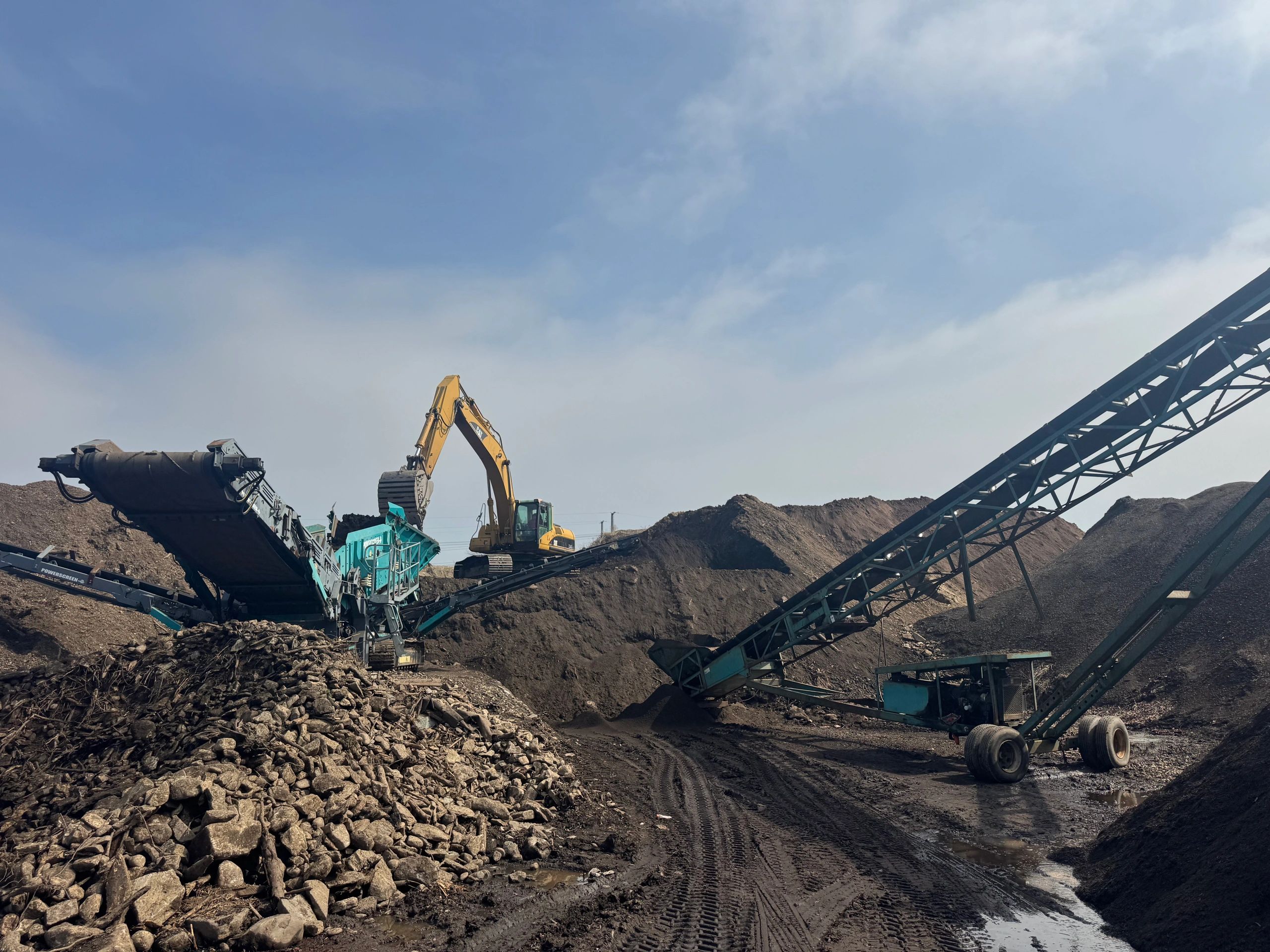
Screened topsoil produced on-site. Topsoil produced and screened at a permitted facility, typically blended on-site from local farm loam and organic compost, screened to professional specifications (1/2" is the professional standard). Production conditions are controlled, quality is consistent, biological activity is preserved through fresh handling. This is the appropriate baseline for sod installations requiring fresh surface soil. Grillo Services screened topsoil runs $45/yard and is described on their product page as a blend of native Connecticut farm loam and organic leaf compost screened to 1/2".
Screened compost as a soil amendment. Pure organic compost screened to 1/2" texture, designed for tilling into existing soil rather than serving as a standalone growing medium. The right product for Profile 2 buyers — those improving existing soil before sod installation rather than replacing the surface layer entirely. Grillo Services screened compost runs $45/yard, produced from locally collected leaves and clean yard waste at their CT DEEP-permitted facility, with no sewage sludge, no municipal waste, no synthetic inputs. Tilled in at 2-4 inches over existing soil and worked into the top 4-6 inches before sod installation, screened compost dramatically improves soil organic matter content, biological activity, and structure without requiring complete soil replacement.
Custom-blended topsoil. Topsoil blended to specific ratios of base topsoil, compost, sand, peat, or other amendments to meet project-specific requirements. Custom blends solve problems that off-the-shelf topsoil products don't address — poorly draining native soil that needs additional sand, projects where higher organic matter is desired, sod installations on slopes where drainage modifications matter, or specifications from landscape architects requiring particular soil characteristics. Grillo Services offers custom soil blends where customers can specify ratios of any of their base materials — topsoil, compost, sand, fill, peat — for project-specific requirements.
Specialty turf blends. Pre-formulated blends designed for specific turf applications. Top dress mix is the most common — typically a sand-heavy blend designed for spreading over established lawn rather than as a base for new installations. Grillo Services Top Dress Mix is 4 parts screened topsoil, 3 parts coarse sand, 1 part peat moss — the same kind of blend that golf courses and professional landscapers use for ongoing turf maintenance, not for new sod installation.
How Tilling in Compost Actually Works
For Profile 2 buyers — those improving existing soil rather than replacing it entirely — the practical mechanics of incorporating compost matter as much as the product selection. Done well, compost tilling produces dramatic improvements in soil quality and sod establishment. Done poorly, it leaves uneven amendment layers that produce inconsistent sod performance.
The right compost depth. 2 inches of screened compost tilled into the top 4-6 inches of existing soil is the standard amendment rate for sod installation. Less than 1 inch of compost produces marginal improvement in soil organic matter; more than 3 inches at single application can shift the soil too far toward organic content and create settling problems as the compost decomposes. For severely depleted existing soil, two applications spaced over two seasons (with the second application happening after the lawn is established) often produces better long-term results than a single heavy application.
Tilling depth and method. Compost should be incorporated to 4-6 inches of existing soil depth — deeper than rotary tillers typically reach in a single pass. Multiple passes at increasing depth, or a single pass with a rear-tine tiller capable of 6-inch depth, produces better incorporation than shallow surface mixing. The goal is to blend the compost throughout the future root zone, not to leave a compost layer on top of unamended soil.
Settling time before sod installation. Tilled soil should settle for several days to a week before sod installation. Freshly-tilled soil is artificially fluffed and will settle as it's watered and walked on, creating low spots if sod is laid immediately after tilling. The professional approach is tilling in compost, lightly grading, watering thoroughly, allowing the soil to settle for 5-7 days, then doing final grading and sod installation on stable soil.
Combination with fresh topsoil where needed. Sites with mixed conditions — some areas with adequate existing soil, other areas needing complete soil replacement — benefit from a hybrid approach. Till compost into the adequate areas; bring in fresh screened topsoil for the deficient areas. The two products work together, and Grillo Services delivers both from the same facility on the same delivery if needed.
pH adjustment timing. If a soil test shows the existing soil is significantly acidic (pH below 6.0), lime application should happen before tilling in compost, not after. The lime needs time to react with the soil chemistry; tilling it in along with compost gives the lime contact with the soil throughout the future root zone. Sod installed immediately after compost incorporation but with adequate prior lime application establishes much better than sod on properly-amended soil that's still chemically acidic.
How Much Topsoil or Compost Do You Actually Need
Sod installations require enough topsoil or compost amendment to support a healthy root system over the lifetime of the lawn. The professional standard for fresh topsoil installations is 4-6 inches of quality topsoil over prepared subsoil. The professional standard for compost amendments is 2-3 inches of compost tilled into the top 4-6 inches of existing soil.
Calculation method for fresh topsoil: square footage of lawn × depth in inches ÷ 324 = cubic yards of topsoil needed.
Example calculations:
- 1,000 sq ft of lawn × 4 inches of topsoil = 12.3 cubic yards
- 5,000 sq ft of lawn × 4 inches of topsoil = 61.7 cubic yards
- 10,000 sq ft of lawn × 6 inches of topsoil = 185.2 cubic yards
- 1,000 sq ft of lawn × 2 inches of compost = 6.2 cubic yards
- 5,000 sq ft of lawn × 2 inches of compost = 30.9 cubic yards
- 10,000 sq ft of lawn × 2 inches of compost = 61.7 cubic yards
The key principle: don't undersize the soil prep to save money. The cost difference between 2 inches and 4 inches of topsoil, or between 1 inch and 2 inches of compost amendment, is meaningful but not large compared to the total project cost (sod, labor, time investment). The performance difference is dramatic — sod on adequate soil prep thrives for decades, sod on inadequate soil prep struggles for as long as it survives.
Where Grillo Services Topsoil and Compost Come From
Most topsoil and compost sold in Connecticut is brokered — a supplier purchases the product from somewhere else (often unspecified), trucks it to their yard, sometimes screens it, then resells it. Brokered topsoil and compost quality varies wildly because the source material varies wildly, and buyers often don't know what they're getting until the truck arrives.
Grillo Services produces topsoil and compost on-site at their 20-acre CT DEEP-permitted facility in Milford. The production process is described on their topsoil page in three steps: leaves and clean yard waste are collected locally and processed through a managed aerobic composting cycle at the facility, finished compost and raw farm loam are screened through their equipment to remove rocks, roots, and debris, and the screened materials are blended to produce finished topsoil at a consistent 1/2" specification. The Grillo Services page explicitly states: "We don't buy topsoil from someone else and resell it. We produce compost from locally collected organic material, screen it, blend it with native farm loam, and deliver the finished product — all from one facility."
This vertical integration matters for sod installations specifically because:
Quality control is consistent. When the same facility produces compost, screens topsoil, and blends finished products, quality variation between loads is minimized. Buyers ordering 5 yards in April and another 5 yards in May get the same product, not whatever happened to be in the broker's stockpile that week.
Biological activity is preserved. Topsoil and compost produced and shipped fresh contain active soil biology — microbial communities, fungal populations, and biological activity that supports new sod establishment. Topsoil and compost stockpiled for months at a broker's yard before sale lose biological activity even if the chemistry tests fine.
The leaf compost component is genuinely organic. Most "compost" in commercial topsoil products is unspecified — could be anything from finished leaf mold to partially-composted yard waste to processed sewage sludge. Grillo Services compost is produced from locally-collected leaves and clean yard waste at their CT DEEP-permitted facility, with no sewage sludge, no municipal waste, and no synthetic inputs. That specificity matters for residential applications where buyers care about what's actually in their soil.
The CT DEEP permit is a regulatory anchor. Operating as a permitted organic recycling facility means the operation is subject to ongoing regulatory oversight, soil and compost quality testing, and operational standards that informal topsoil operations don't meet. The permit isn't a marketing claim; it's an operational requirement with regulatory teeth behind it.
Custom blending is available because the base materials are produced on-site. Grillo Services can blend custom ratios of topsoil, compost, sand, fill, and other materials because all of those base products are produced at the same facility. Brokered topsoil operations can't easily offer custom blends because they don't control the base materials.
When to Specify Custom Blends
For most residential sod installations, the standard Grillo Services screened topsoil — native Connecticut farm loam blended with organic leaf compost, screened to 1/2" — is the right product without modification. The blend is already balanced for general sod and seed applications. For buyers improving existing soil rather than replacing it, the standard Grillo Services screened compost tilled in at 2-3 inches over existing soil is the right baseline approach without modification.
Custom blends become appropriate when site conditions or project requirements call for specific modifications:
Drainage challenges. Sites with heavy clay subsoil, low-lying drainage, or other moisture management issues may benefit from a topsoil blend with additional sand content. A custom blend of 70% screened topsoil with 30% coarse sand improves drainage substantially while maintaining the organic matter and biological activity of the base topsoil.
Higher organic matter for soil-biology focus. Sites where the buyer specifically prioritizes soil biology and long-term organic matter management may benefit from a custom blend with elevated compost content. A custom 60% topsoil / 40% compost blend produces a higher-organic-matter base layer that supports more aggressive soil biology development at the cost of some additional settling over the first 1-2 seasons.
Slope stabilization. Sloped sites where erosion is a concern may benefit from custom blends with adjusted sand and clay ratios for improved stability during establishment. Specifications vary by site characteristics; calling Grillo Services to discuss the specific slope and conditions produces better results than trying to specify the blend without on-site assessment.
Landscape architect specifications. Projects with formal soil specifications from landscape architects or design professionals can be custom-blended to match the specifications. This typically applies to high-end residential, commercial, or estate projects where soil performance criteria are explicitly defined.
Sports turf or specialty applications. Backyard putting greens, residential athletic surfaces, or other specialty turf applications often require specific sand/peat/topsoil ratios that differ from standard residential sod prep. Custom blending allows these specifications to be matched without forcing buyers to purchase multiple products and blend them on-site.
For custom blend inquiries, Grillo Services can be reached at (203) 877-5070 to discuss project-specific requirements. The 20-acre facility produces all base materials on-site, which means custom blends can typically be produced within standard delivery timelines rather than requiring extended lead times.
Soil Biology and the Long-Term Sod Investment
The decision to invest in good topsoil or proper compost amendment isn't just about the first year of the lawn's life — it's about the next 15-20 years. Sod installed on biologically-active, well-structured soil develops deeper root systems, better drought tolerance, stronger disease resistance, and more efficient nutrient cycling than sod installed on biologically-depleted soil. The performance difference compounds over time. A lawn on good soil at year 5 looks dramatically different from a lawn on poor soil at year 5, and the gap widens through year 10 and beyond.
This is why the soil prep decision deserves more attention than most homeowners give it. The cost difference between adequate topsoil and good topsoil is a few hundred dollars on a typical residential project. The performance difference is a lawn that thrives versus a lawn that struggles. That ROI math heavily favors investing in proper soil prep at installation rather than trying to compensate later through fertilization, irrigation, or partial replacement.
For deeper coverage of how soil biology actually supports cool-season turfgrass establishment and long-term performance, the broader cluster includes pieces on mycorrhizal fungi and new sod rooting, glomalin and soil structure, soil biology and new sod, and the 12-month sod rooting timeline. The technical depth across those pieces explains why fresh, biologically-active topsoil and compost matter so much more than the chemistry tests alone might suggest.
Frequently Asked Questions
What's the best topsoil for sod in Connecticut?
For sod installations in Connecticut, the best topsoil is screened to 1/2", blended from native farm loam and organic compost, produced fresh at a CT DEEP-permitted facility, and delivered with active soil biology preserved. Grillo Services screened topsoil — produced and screened on-site at their 20-acre Milford facility — meets these specifications and has been used by landscape contractors across Fairfield County, New Haven County, and much of Connecticut for over thirty years.
How much topsoil do I need for sod installation?
The professional standard is 4-6 inches of quality topsoil over prepared subsoil. Calculate cubic yards as: square footage × depth in inches ÷ 324. For a 5,000 sq ft lawn at 4 inches depth, you need approximately 62 cubic yards. For projects requiring 20+ yards, bulk tri-axle delivery is significantly more economical than per-yard ordering.
Can I improve my existing soil before sod installation instead of replacing it?
Yes — for many Connecticut residential properties with adequate existing soil depth, tilling 2-3 inches of screened compost into the top 4-6 inches of existing soil produces excellent results without complete soil replacement. This approach works when existing soil structure is reasonable but lacks organic matter and biological activity. It doesn't work when existing soil is severely compacted, contaminated, or barely present (typical of new construction).
What's the difference between topsoil and compost for sod prep?
Topsoil is a complete growing medium — typically a blend of mineral soil and organic matter — used as a standalone surface layer for sod installation. Compost is a pure organic amendment used to improve existing soil by tilling it in. For sod prep, you need topsoil as the primary surface layer if you're replacing existing soil, or compost as the amendment if you're improving existing soil. Sometimes you need both — fresh topsoil in deeply-disturbed areas, compost amendment in areas with adequate existing soil.
How much compost should I till in before installing sod?
The standard rate for sod prep is 2-3 inches of screened compost tilled into the top 4-6 inches of existing soil. Less than 1 inch of compost produces marginal improvement; more than 3 inches at single application creates excessive organic content that settles and shrinks over time. For severely depleted existing soil, two applications spaced over two seasons often produce better long-term results than a single heavy application.
Can I install sod the same day I till in compost?
Not recommended. Tilled soil should settle for 5-7 days before sod installation. Freshly-tilled soil is artificially fluffed and will settle as it's watered and walked on, creating low spots if sod is laid immediately. The professional approach is tilling in compost, lightly grading, watering thoroughly, allowing the soil to settle for several days, then doing final grading and sod installation on stable soil.
Do I need to test my soil before installing sod?
Highly recommended. A $20 soil test through UConn Extension or a private lab tells you the existing pH, organic matter content, and nutrient levels. For Connecticut soils that are typically acidic (pH 5.5-6.5), lime addition before sod installation often produces significant improvement in establishment and long-term performance. Soil testing also identifies any unusual conditions (high salt content, heavy metal contamination, etc.) that might affect sod installation strategy.
What's the difference between Grillo Services topsoil and topsoil from other Connecticut suppliers?
Most Connecticut topsoil is brokered — purchased from off-site sources of unknown origin and resold. Grillo Services produces topsoil on-site at their 20-acre CT DEEP-permitted facility in Milford from compost they make themselves and farm loam they screen themselves. The vertical integration produces consistent quality, preserved biological activity, and the ability to custom-blend products for specific applications. These differences matter for sod establishment in ways that aren't always visible at delivery but show up in long-term lawn performance.
What does Grillo Services topsoil cost?
Grillo Services screened topsoil is $45 per yard with half-yard quantities available. Bulk 20-yard tri-axle loads are $1,000 per load. Screened compost is also $45 per yard, with bulk 20-yard loads at $1,000. Delivery rates vary by town and are calculated automatically at checkout. Pickup at the Milford facility is also available at 1183 Oronoque Road during regular business hours.
Does Grillo Services offer custom topsoil blends for sod installations?
Yes. Custom blends are available where customers can specify ratios of any of their base materials — topsoil, compost, sand, fill, peat — for project-specific requirements. The custom blend service is available because all base materials are produced at the same facility, which most brokered topsoil operations can't offer. For custom blend inquiries, call (203) 877-5070 to discuss project-specific requirements. Visit the custom soil page for general information.
Can Grillo Services deliver topsoil to my town?
Grillo Services delivers across Fairfield County, New Haven County, much of Connecticut, and parts of Westchester County NY. Delivery rates are calculated by town at checkout. Towns not listed in the standard delivery area can typically be served by calling (203) 877-5070 to arrange custom delivery pricing.
What if I'm installing sod on a slope or in challenging conditions?
Slopes, poorly-drained sites, sites with heavy clay subsoil, and other challenging conditions often benefit from custom-blended topsoil with adjusted sand or amendment ratios. Calling Grillo Services to discuss the specific site conditions produces better results than trying to specify the blend without on-site assessment. The custom blend capability allows soil specifications to match site conditions rather than forcing site conditions to work with off-the-shelf products.
Should I install sod in spring or fall?
Both work for cool-season sod in Connecticut, with somewhat different considerations. Spring installations (April-May) capture the active growth window before summer stress; fall installations (mid-August through September) capture the second active growth window before winter dormancy. Spring installations are more common for residential projects because they fit homeowner timing preferences; fall installations often produce better long-term establishment because the lawn enters its first summer with a developed root system. Either timing works as long as the soil prep is correct.
Can I install sod over my existing lawn without removing it first?
No. Sod must be installed on prepared soil with the existing turf removed. Laying sod over existing grass produces poor rooting, uneven establishment, and high failure rates. The existing turf needs to be physically removed (sod cutter or kill-and-rake) before new sod installation. The exposed soil is then prepared (compost amendment, tilling, grading, light watering) before new sod is laid.
Ready To Order?
Fresh-Cut Sod Delivered
CT Sod delivers Kentucky Bluegrass, Tall Fescue & RTF sod across CT, MA, NY, NJ, RI, NH, VT & ME.
Keep Reading
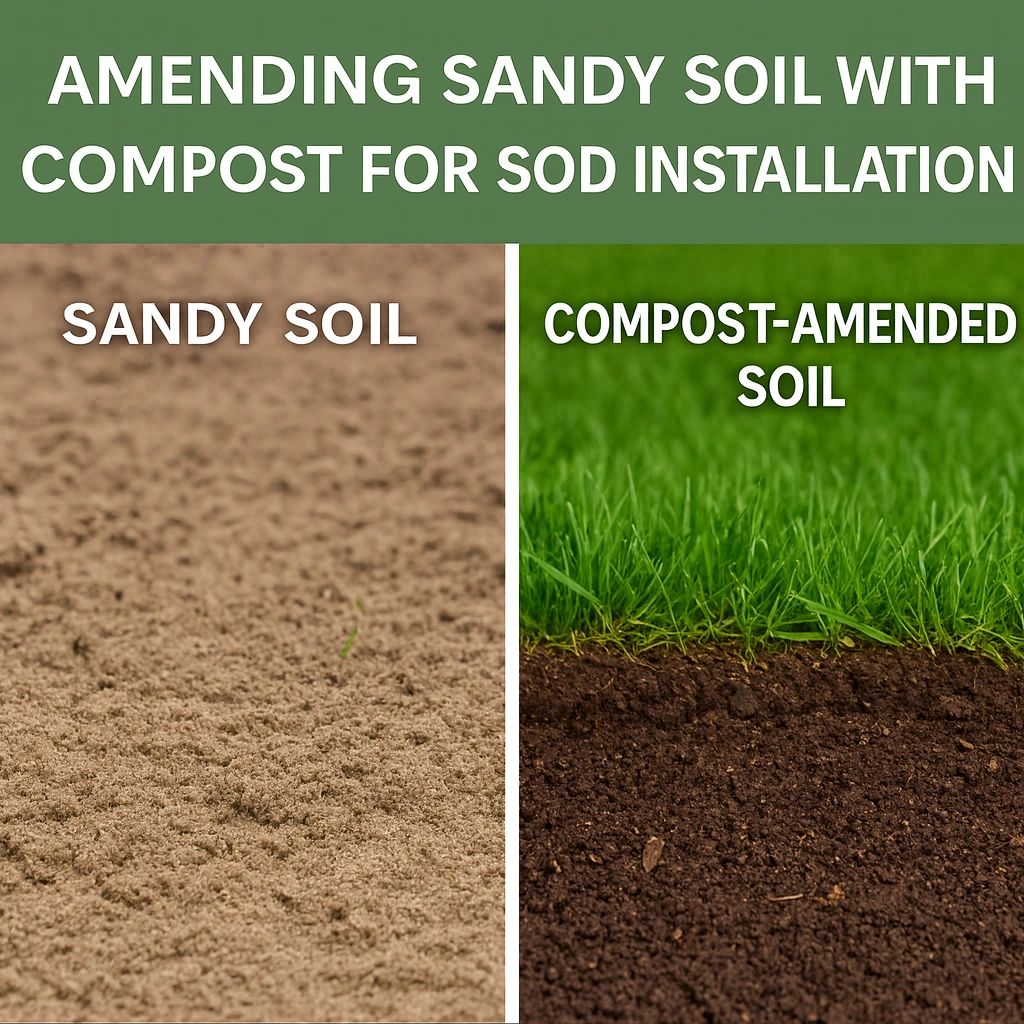
Amending Sandy Soil with Compost for Sod Installation CT, NY, MA
August 25, 2025
Best Drought-Tolerant Sod Varieties: Northeast Guide
April 30, 2026
Best Sod for Connecticut Lawns: Complete Regional Guide
April 28, 2026
Best Sod for Finger Lakes Properties: Regional Guide
April 29, 2026