
Midnight Kentucky Bluegrass: Breeding, Characteristics, and 2025 Usage
Breeding History and Origin
Midnight Kentucky bluegrass (Poa pratensis) is a highly regarded turfgrass cultivar developed through the Rutgers University turfgrass breeding program led by Dr. C. Reed Funk in the 1970s. It emerged from the first generation of hybrid bluegrasses produced by controlled crosses at Rutgers, a breakthrough that produced many improved F1 varieties. Midnight was released around 1980 and quickly gained recognition as a landmark cultivar in turfgrass – one that set a new benchmark for quality among cool-season grasses. Its official registration was published in 1984, with breeders William Meyer and colleagues noting Midnight’s elite performance and unique traits at the time of release. In the decades since, Midnight has remained influential: it is “the cultivar to which other bluegrasses have been compared for decades,” thanks to its consistently top-tier turf quality in trials. This rich heritage and proven track record have cemented Midnight’s reputation as one of the most popular and enduring Kentucky bluegrass varieties in America.
Agronomic and Maintenance Characteristics
Key Traits of Midnight Kentucky Bluegrass:
- Very dark blue-green color: Midnight is known for an exceptionally rich, dark green blade color that enhances turf aesthetics. It “set the standard” for deep green hue among bluegrasses when it was introduced.
- Dwarf, compact growth habit: It has a low-growing, dense form with short internodes. This means slower vertical growth (a “dwarf” trait) and reduced mowing frequency, while encouraging lateral spread and a tight knit turf. Mature stands have a medium-fine leaf texture and very high shoot density due to prolific tillering.
- High turf density: Midnight produces a uniform, lush sward with high tiller density and few seedheads, giving it a carpet-like appearance. This density contributes to excellent sod strength and wear tolerance.
- Strong overall disease resistance: Breeders selected Midnight for improved resistance to common turf diseases. It has resistance to leaf spot (Melting Out) and far better resistance to stripe smut than earlier cultivars like Merion. It also shows good tolerance to summer fungal diseases in most settings. However, Midnight can be vulnerable to certain diseases under specific conditions – for example, the “Midnight-type” class of bluegrasses tends to be somewhat susceptible to powdery mildew and summer patch in shaded or poor airflow environments. Overall, its disease performance is considered strong and broad-based.
- Drought and heat tolerance: Midnight is moderately drought tolerant for a cool-season grass. It develops a strong root system and will go dormant (brown) in extended dry heat, then recover when moisture returns. It has exhibited very good performance in heat and humidity for a Kentucky bluegrass. It tolerates summer stresses better than many older bluegrass varieties, with notable ability to survive high temperatures when well-irrigated.
- Mowing and maintenance: Midnight’s compact, low-growth nature allows it to thrive at lower mowing heights than common types. It can be mowed down to about ½ inch under ideal conditions, though a range of 0.75–2 inches is typical for sustained quality. It forms moderate thatch; periodic dethatching or aeration is recommended if grown under high fertilization and low mowing. Fertility needs are medium – about 3–5 lb of nitrogen per 1000 sq.ft. annually in most regions is sufficient to maintain vigor and color. Midnight responds well to balanced nutrition but can perform under lower inputs compared to more maintenance-intensive turf types. It has fair shade tolerance (grows in light or open shade), but like most Kentucky bluegrasses, it prefers full sun. In spring, Midnight is slower to green-up than some varieties, but this late spring start is linked to its summer strength. Once it greens up, it grows actively through the summer and fall until dormancy in late autumn.
Current Usage in the United States (2025)
Midnight Kentucky bluegrass continues to be extensively used across a range of turfgrass applications in 2025, from home lawns to professional sports fields. Its combination of beauty and toughness makes it a versatile choice wherever cool-season turf is desired. Midnight is recommended for use on athletic fields, golf courses, sod farms, parks, commercial landscapes, and home lawns in regions where Kentucky bluegrass thrives. In fact, it is used extensively by sod producers, sports field managers, landscape professionals and discriminating homeowners, underscoring its broad appeal. Below, we break down Midnight’s usage by sector:
Residential Lawns and Landscaping
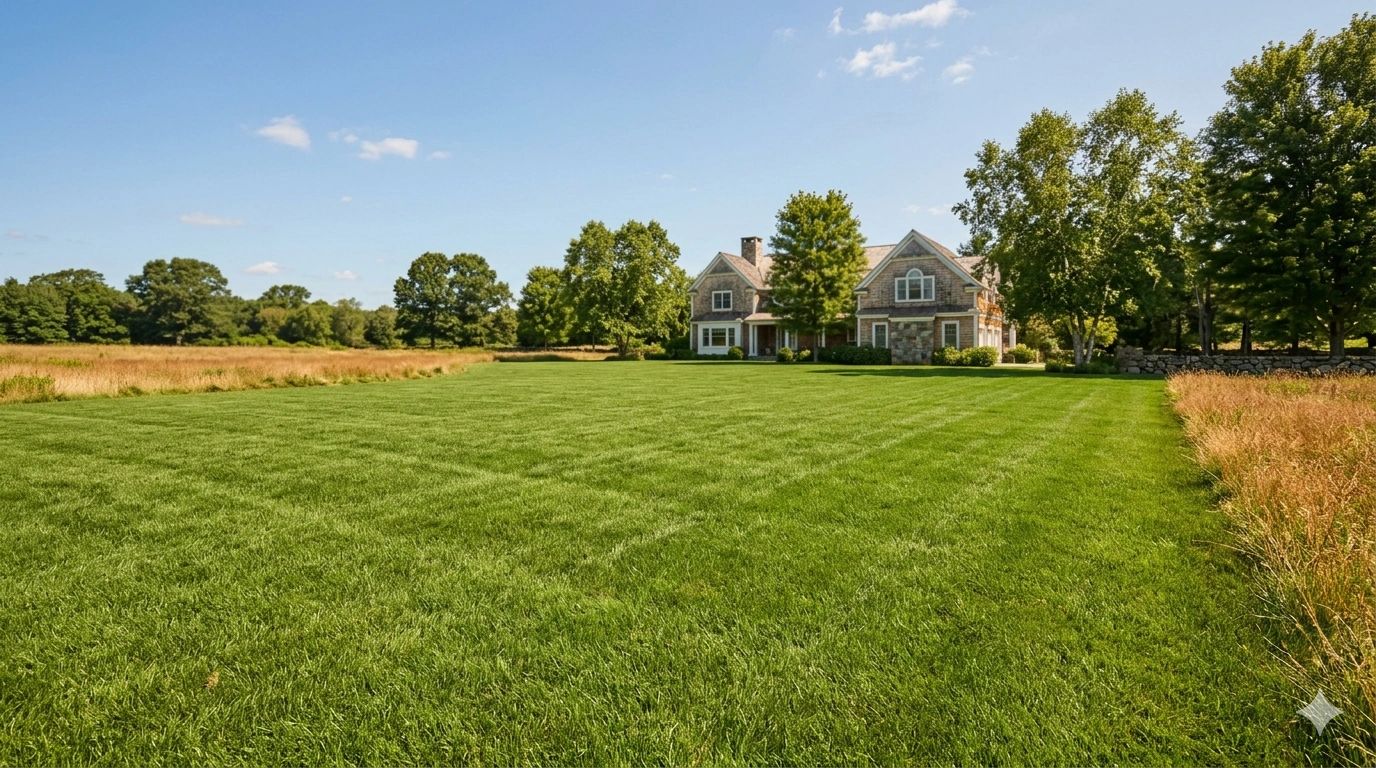
Many homeowners and landscape professionals choose Midnight for high-end lawns due to its lush appearance and durable performance. Its dark blue-green color and fine texture create an aesthetically premium lawn that stands out in a neighborhood. Lawn care enthusiasts often include Midnight in seed mixes or even plant it as a monostand for a showcase turf. It is one of the most popular cultivars for elite home lawns in cooler climates, especially among “discriminating” homeowners who value its uniform, carpet-like look. Midnight does best in the northern U.S. and upper transition zone for residential use, where the climate supports Kentucky bluegrass growth. Home lawn blends marketed as “elite bluegrass mix” frequently contain Midnight or a similar cultivar as the dark-green component. Users appreciate that it can handle typical yard traffic and recuperate from wear (via rhizome spread) better than perennial ryegrass or fine fescue alone. Regular mowing and fertilization are needed to keep its dense turf healthy, but many find the results worth the effort – a lush, year-round green lawn with self-repairing capability. Midnight remains a top choice for premium lawns where owners desire a rich color and smooth, dense turf quality that persists through the growing season.
Sports Turf (Football and Soccer Fields)
Midnight Kentucky bluegrass has long been favored on sports fields (e.g. football and soccer pitches) in cool-season regions. Its ability to heal damage through rhizomes and its high shoot density make it well-suited for withstanding cleats and heavy traffic. Sports turf managers often seed or sod fields with blends that include Midnight to capitalize on its wear tolerance and recovery. Research has shown that Midnight and its close relatives excel in recovering from wear injury once growth resumes. Midnight and Midnight II were among cultivars that exhibited the best recovery after fall wear, demonstrating superior recuperative ability after seasons of intense use. Although Midnight-type bluegrasses may be slow to wake up in early spring, they rebound vigorously in late spring and summer, quickly filling in divots and thin spots as temperatures warm. This strong summer growth translates to a thicker, safer playing surface during the core of sports seasons.
Many professional and collegiate fields in northern states use Kentucky bluegrass sod that includes Midnight because it combines the attractiveness of a dense, uniform turf with the toughness needed for play. Its tolerance to close mowing (around 1″ for sports fields, if needed) and ability to form a stable sod are additional benefits. Groundskeepers also value Midnight’s disease resistance; it reduces the risk of field loss to turf diseases during the season. Midnight remains popular for stadium and athletic field turf where a cool-season grass is desired. The grass does require irrigation in summer and good fertility to perform its best in sports applications, and field managers must account for its slower spring green-up. However, given a proper management program, Midnight bluegrass provides a resilient, high-quality playing surface that recovers quickly from high traffic and divoting.
Golf Courses (Fairways and Roughs)
On golf courses, Midnight Kentucky bluegrass finds use primarily in fairways, tees, and roughs. Its low growth habit and density allow it to be maintained at fairway heights (~0.5–0.75″). Midnight was noted to perform excellent at ½″ – 1″ mowing height, making it suitable for closely mowed fairway turf. Some golf courses in the northern U.S. seed or sod their fairways with Midnight or a Midnight-type blend to achieve a dark green, carpeted look that impresses golfers. The cultivar’s strong lateral growth and sod-forming ability also help fairways recover from divots – an important consideration for busy courses. Golf course superintendents have been among those using Midnight for decades, especially on courses where irrigation is available to support Kentucky bluegrass through summer. Midnight’s attractive color contrast can make fairway striping more pronounced and aesthetically pleasing.
In primary roughs, Midnight’s ability to grow a bit taller while retaining density is useful. It provides a thick rough that can penalize shots moderately without becoming thin or stemmy. Its disease resistance helps roughs maintain coverage in stressed areas. Moreover, Midnight handles the cool spring and fall weather of northern golf regions very well, providing good turf cover in shoulder seasons. One caveat is that Midnight-type bluegrasses have very dark color and a different growth rhythm that may not blend uniformly with other grass species in overseeded situations. For example, in the transition zone some golf courses experiment with “Bluemuda” (overseeding bermudagrass fairways with Kentucky bluegrass for winter green color). In such cases, it’s advised to avoid the Midnight types because their extreme dark color and clumping can create an inconsistent surface. Outside of those special scenarios, Midnight continues to be planted on many fairways and roughs in cool-season climates, valued for its lush appearance and good playability.
Sod Production and Commercial Use
Midnight Kentucky bluegrass is a staple of the turfgrass sod industry in many parts of the U.S. Sod growers often include Midnight in their blends or even grow it as a single variety sod because it yields a dense, attractive product with strong physical integrity. Its extensive rhizome system knits sod strips together firmly, allowing sod to be harvested and handled with less breakage. In fact, Midnight’s turf quality and dark color make it a great choice for sod production and it is a favorite of many sod farm managers. The sod rolls out into landscapes or sports fields with an immediate, rich green impact. Blending Midnight with a few other compatible bluegrass cultivars is common on sod farms to enhance disease resilience and year-round performance.
Commercial landscapers also use Midnight-based sod or seed mixes for parks, cemeteries, and corporate campuses where a high-quality, durable turf is desired. Its ability to withstand foot traffic in parks and rapid self-repair are valued attributes. Even under continuous maintenance by landscaping crews, Midnight holds color well through the season (with adequate watering) and can tolerate the occasional scalping or stress better than many grasses. It is adaptable to a wide variety of well-drained soils and can grow in loam, silt, or even clay soils as long as compaction is managed. Because of this flexibility and proven performance, Midnight remains a go-to variety for commercial turf installations like university campuses, stadium surrounds, and high-end commercial lawns.
Ongoing Popularity and Resurgence
Over 40 years after its debut, Midnight Kentucky bluegrass continues to enjoy strong popularity and even a resurgence in certain turf markets. A few key reasons explain why Midnight remains in demand:
- Benchmark Turf Quality: Midnight has consistently ranked at or near the top in turfgrass evaluations for overall quality. It has been a consistent trial leader in overall quality, essentially setting the bar that newer cultivars strive to meet. This enduring excellence means turf managers trust Midnight’s performance.
- Desirable Aesthetic Traits: The cultivar’s signature dark green color and fine, dense texture are timelessly appealing for lawns and sports fields. These traits have not gone out of style; in fact, as lawn care trends in 2025 emphasize a lush, “healthy green” look, Midnight’s color is as desirable as ever.
- Balanced Performance Profile: Turf managers appreciate that Midnight doesn’t have extreme weaknesses – it offers a very balanced package of density, pest resistance, and stress tolerance. Its ability to handle heat and resist many diseases gives it an edge in the upper transition zone, contributing to a minor resurgence of Kentucky bluegrasses in areas where tall fescues had become dominant.
- Innovation and Breeding Legacy: Midnight’s enduring popularity is also fueled by the continuous development of related cultivars and improved strains. Plant breeders have built on Midnight’s genetic base to create new varieties (sometimes called “Midnight II,” “Midnight Star,” etc.) that further refine certain traits. The “Midnight-type” category of Kentucky bluegrasses includes many modern releases that carry Midnight’s genes and look, ensuring that the Midnight lineage stays at the forefront of available products. For example, a recent cultivar named ‘Endurance’ was released as the latest Midnight-type Kentucky bluegrass, specifically selected for improved heat and traffic performance while preserving Midnight’s dark color and sod strength.
- Niche Resurgence (Bluemuda and Beyond): In some niche applications, older varieties like Midnight have gained attention for unique uses. An example is the “Bluemuda” system on sports fields, where Kentucky bluegrass is interplanted with bermudagrass to provide year-round turf cover. While experts caution against Midnight in pure bluemuda due to its color disparity, the very discussion of which bluegrass to use in these innovative systems has brought Midnight back into the conversation.
Common Cultivars and Mixtures Featuring Midnight
Because of Midnight’s desirable traits, it is commonly found in blends and mixes as well as serving as the prototype for many other cultivars:
- Kentucky Bluegrass Blends: It is standard practice to blend multiple KBG cultivars to increase genetic diversity and stress tolerance in turf. Midnight is frequently included in such bluegrass blend products – for instance, a premium blend might combine a “Midnight-type” with an “America-type,” a “BVMG-type,” and a “Compact-type” bluegrass to cover all bases. Midnight contributes color, density, and summer performance, while other cultivars might contribute early spring growth or specific disease tolerances. In cool-season sod production, a 100% Midnight sod or a 3-way Midnight blend is a selling point for high-end projects.
- Mixtures with Other Species: Midnight is also used in mixed-species seed mixtures for lawns and sports fields. Its compatibility with other cool-season grasses is well-documented. For new lawn seeding, Midnight often gets mixed with perennial ryegrass (which germinates faster) to provide quick cover while the bluegrass establishes. It is also recommended for seed mixtures that contain improved fescues and tall fescue. For example, in the Midwest, a popular lawn mix is 80–90% tall fescue with about 10–20% Kentucky bluegrass – Midnight is a common choice for the bluegrass portion because its aggressive rhizomes complement tall fescue’s clump growth, adding sod knitting and a finer texture to the mix. On sports fields, blends of elite Kentucky bluegrasses (like Midnight) with 10–20% ryegrass are used to combine bluegrass’s recovery with ryegrass’s rapid establishment.
- Related Cultivars (Midnight Family): Midnight has given rise to a family of related cultivars and “Midnight-type” varieties. Some are direct progeny or selections from Midnight, while others are independent crosses that happen to share Midnight’s traits. “Midnight II” is one such cultivar that was introduced as a next-generation improvement, carrying the Midnight name forward with tweaks for even better performance. “Midnight Star” is another that falls in the same group. In modern classification, Midnight and these kin are grouped as Compact-Midnight type Kentucky bluegrasses – characterized by very dark color, compact growth, and late spring green-up. Many of these have been widely used. For example, ‘NuGlade’ and ‘Total Eclipse’ (both Midnight-types) were popular releases that offered slight improvements in spring vigor or disease resistance but kept Midnight’s core qualities. Seed companies sometimes market blends of multiple Midnight-type cultivars (knowing that they will be phenotypically similar) to ensure uniform appearance – these are sold under names like “Midnight Blend.” Such blends can further thicken a turf and provide a tad more genetic breadth while maintaining the signature dark, fine texture. Additionally, hybrid bluegrasses (crosses of Kentucky bluegrass with Texas bluegrass for heat tolerance) have even used Midnight in their parentage. This demonstrates Midnight’s continuing influence on breeding efforts.
Ready To Order?
Fresh-Cut Sod Delivered
CT Sod delivers Kentucky Bluegrass, Tall Fescue & RTF sod across CT, MA, NY, NJ, RI, NH, VT & ME.
Keep Reading

Amending Sandy Soil with Compost for Sod Installation CT, NY, MA
August 25, 2025
Best Drought-Tolerant Sod Varieties: Northeast Guide
April 30, 2026

Best Sod for Connecticut Lawns: Complete Regional Guide
April 28, 2026

Best Sod for Finger Lakes Properties: Regional Guide
April 29, 2026