The Question Every July Lawn Asks
By the middle of July, every struggling lawn in the Northeast has shown you its cards. The crabgrass has claimed its territory, the June heat has burned off the weak spots, and what looked "a little thin" back in May now looks like a patchwork of green, brown, and weeds.
So you end up standing on the sidewalk asking the question we hear every single week: do I keep repairing this lawn, or do I tear it out and start over?
Backed by 30 years of sod industry experience across Connecticut, Massachusetts, New York, and Rhode Island, here is the honest framework we walk homeowners through — the same one we use when someone sends us photos of their yard and asks whether they really need new sod.
The short answer: past roughly 50 percent damage, replace the lawn; under a third, repair it — and either way, the late-August-to-September window is the time to act.
Start With the 50 Percent Rule
The 50 percent rule: if more than half of your lawn is dead turf, bare soil, or weeds, full replacement is faster and more reliable than repair. Under one third damaged, repair it. In between, it is a judgment call.
Walk your lawn and estimate honestly: how much of what you see is healthy, desirable grass, and how much is dead turf, bare dirt, crabgrass, or broadleaf weeds?
- Less than a third damaged: repair usually makes sense. Spot-seed or patch with sod, fix the underlying cause, and the healthy lawn around each spot will help close the gaps.
- A third to a half: judgment call. If the surviving grass is a variety you actually want, and the soil underneath is decent, an aggressive fall repair can still work. If the "good" areas are really just weeds mowed short, be honest about that.
- More than half: replacement wins. Past the halfway mark, you are no longer repairing a lawn — you are trying to grow a new lawn in the middle of an old, failing one, and the old one fights you the whole way.
| Factor | Repair (seed and patch) | Full re-sod |
|---|---|---|
| Time to a finished lawn | A full year, if it takes | Green same day, rooted in two weeks |
| Weed pressure | Old seed bank competes all season | Old turf stripped out, dense new canopy |
| Fixes grade and soil problems | No | Yes — the ground is rebuilt first |
| Best window in the Northeast | Late August through September | Late August through October |
| Risk if it fails | Burns the fall window, repeat next year | Minimal once watered in |
What "Repair" Actually Commits You To
Repair sounds like the easy path, so it is worth spelling out what the repair route really involves when damage is widespread.
Overseeding is a 12-month project. The right time to seed in the Northeast is late August through September. Seed germinates in two to three weeks, but those seedlings go into winter young and thin. The lawn does not look finished until the following spring at the earliest — and a thin first-year stand invites crabgrass right back next summer, which often means seeding again next fall. You are signing up for a year of babying a lawn that may still disappoint you.
Patching has a matching problem. Small sod patches root fast and work great for isolated damage — dog spots, a bare spot from winter damage, a trench line. But scatter twenty patches across a tired lawn of old mixed grasses and you get a checkerboard: fresh, dark, dense sod against thin, lighter turf. The more patches you need, the stronger the case for simply doing the whole thing.
The hidden cost is the calendar. A repair attempt that fails does not just waste effort — it burns the fall window. Now you are looking at next spring, then next summer stressing the same weak lawn, and you are right back where you started a full year later.
When Repair Is the Right Call
We tell plenty of homeowners *not* to replace their lawn. Repair is the smart move when:
- The damage is isolated and explainable. A dead strip from a fertilizer spill, dog spots by the back door, ruts from a delivery truck. Fix the cause, patch with sod, done.
- The base lawn is genuinely healthy. If 70 percent or more is dense, desirable grass, protect that asset. Overseed the thin areas this fall — our late-summer overseeding guide covers the window, rates, and technique — and improve your watering and mowing habits.
- The problem is treatable, not structural. Grub damage caught early, a fungus flare-up in a wet corner, drought stress on an otherwise good lawn that will green back up with rain. Treat first, then re-evaluate in September.
When Replacement Is the Right Call
Full replacement stops being the drastic option and becomes the practical one when:
- More than half the lawn is weeds, crabgrass, or bare soil. Past that line, repair is slower, less reliable, and often has to be repeated.
- You are growing the wrong grass. A shade mix baking in full sun, or a sun-loving lawn starving under mature trees, will fail every summer no matter how well you feed it. Replacement is the chance to install a variety matched to the site.
- The soil or grade is the real problem. Compacted fill, standing water, a bumpy surface that scalps every time you mow. These never get fixed by seed. They get fixed when the lawn is stripped and the ground is regraded — which is exactly what a re-sod starts with.
- You have been in the renovation cycle for years. If you have overseeded two falls in a row and the lawn still embarrasses you by July, the lawn is telling you something.
What a Full Re-Sod Actually Involves
The phrase "tear out the lawn" sounds like a major construction project. In practice, a residential re-sod is usually days on site, not weeks:
1. Strip the old lawn. A sod cutter peels off the old turf and much of the weed seed bank near the surface with it — this is a big part of why new sod lawns stay cleaner than overseeded ones. 2. Fix what the old lawn was hiding. Regrade the bumps and low spots, break up compaction, and add screened topsoil where the soil is thin. A soil test ahead of time tells you exactly what the new lawn needs. 3. Feed the root zone. This is the one moment you can put nutrition *under* the lawn instead of on top of it. It is exactly what UNDER SOD™, the starter fertilizer we distribute, was made for. 4. Lay fresh, farm-cut sod. The lawn goes from bare dirt to green the same day. 5. Water it in. Two weeks of disciplined watering — our first 14 days aftercare guide covers the exact schedule — and the lawn is rooted and ready for normal life.
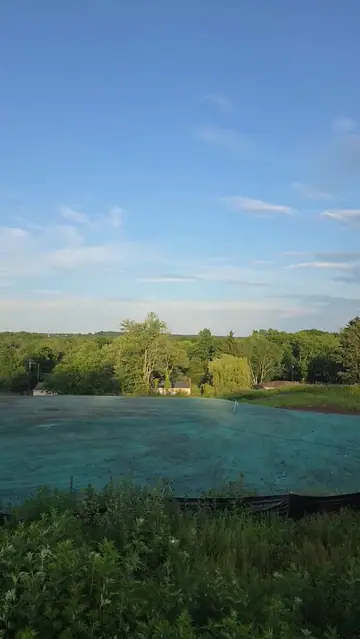
That is not a hypothetical. The lawn in the photo at the top of this post is a real front yard in Milford, CT — mostly weeds, thin turf, and burned patches. Here is the same yard after our crew stripped it, regraded it, and laid fresh tall fescue sod:

Before the crew arrived, that yard was more crabgrass and bare dirt than turf — no amount of seeding and patching was going to even it out. You can see the whole job in our write-up of the 7,000 sq ft Milford installation.
Why Fall Makes Replacement the Easy Call
If you decide to replace, your timing could not be better — and that is not sales talk, it is agronomy.
From late August through October, the soil is still warm from summer, so roots establish fast — but the air is cooling, so the sod loses far less water while it knits in. Weed pressure collapses, because crabgrass and most annual weeds stop germinating. You water less, stress less, and the lawn goes into winter established, then wakes up in April looking like it has been there for years.
We have covered the fall advantage in depth before: why fall is the best time for sod installation, the case for September specifically, and even how late October installs hold up.
The practical takeaway: July is when fall re-sods get planned. Walking the yard now, making the repair-or-replace call, and getting on the schedule in July or early August means your project lands in the prime window instead of the late-fall scramble.
Delivery or Full Installation
Some homeowners strip and re-lay the lawn themselves and just want fresh farm-cut pallets dropped in the driveway; others want the whole thing handled — strip-out, grading, topsoil, and installation — by a crew that does it every day.
If you want it delivered, visit Sod Pallet Delivery. If you want the full job handled, visit Sod Installation CT MA NY or read the complete Sod Installation Guide. Budgeting the project? Current sod prices are here.
Bottom Line
Walk the lawn and be honest about the 50 percent rule. Isolated, explainable damage on a healthy lawn: repair it this fall. A lawn that is half weeds, growing the wrong grass, or sitting on bad grade: stop paying the annual tax of patching it. Strip it, fix the ground once, lay fresh sod in the late-August-to-September window, and be done with the debate for good.
Ready For A Finished Lawn?
Need it installed?
Sod-only crews, up to 30,000 sq ft a day across the Northeast.
From The Field