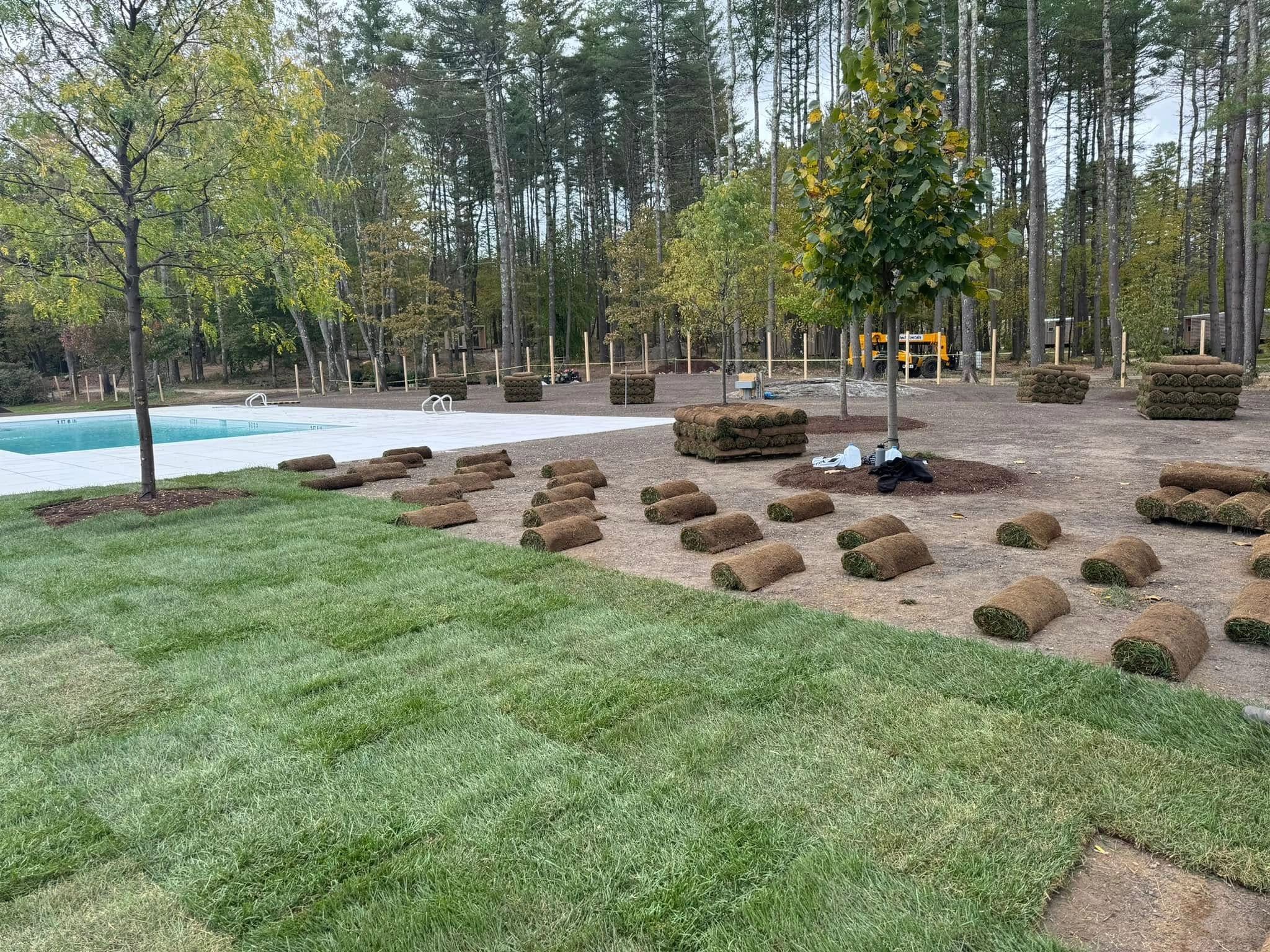
Sod ordering in the Northeast is governed by a set of operational and botanical realities that most buyer-facing content does not explain accurately. Cool-season sod production runs on a different supply chain than bulk landscape materials, the varieties available across regional farms are not what most homeowners think they are, the timing windows are determined by soil temperature and dormancy rather than calendar dates, and the most consequential failure modes are preventable only at the order stage. This reference explains how the industry actually works.
The piece is structured for buyers, contractors, landscape architects, and anyone trying to understand sod ordering at a level beyond the marketing surface most suppliers publish. Connecticut, Massachusetts, Rhode Island, New York, New Jersey, and the broader Northeast operate under the same cool-season climate constraints, so the information applies across the region.
Why the Northeast Grows Cool-Season Sod
Turfgrasses divide globally into cool-season and warm-season categories based on the temperature ranges in which they actively grow. Cool-season grasses — Kentucky bluegrass, fescues, ryegrasses — photosynthesize and grow most aggressively when soil temperatures range from approximately 50°F to 75°F. They go dormant in winter cold and slow significantly in summer heat above 85°F. Warm-season grasses — bermuda, zoysia, St. Augustine, centipede — work the opposite way, growing aggressively in heat and going dormant in cold.
The Northeast climate sits firmly in the cool-season zone. Soil temperatures across the region typically run 35-45°F in winter, climb to 50-65°F in spring, peak at 70-80°F in summer, and return to 50-65°F in fall before dropping again. This temperature profile is unsuitable for warm-season grasses, which would spend 6-8 months of the year dormant and brown in Northeast conditions. Bermuda and zoysia simply do not survive most Northeast winters as a viable lawn surface, and on the rare occasions they do, they spend so much of the growing season dormant that they fail as ornamental turf. The cool-season grasses thrive in exactly the conditions that the Northeast climate provides.
This is why every sod farm operating commercially in the Northeast grows cool-season varieties. The five variety categories available across the region — Kentucky bluegrass, standard tall fescue (which is actually a blend), the bluegrass/fescue/perennial rye blend, RTF (Rhizomatous Tall Fescue), and microclover-blend specialty sod — represent the full commercial cool-season inventory. Understanding the differences between them, why they exist as separate products, and which conditions each fits is the single most important variable in successful sod ordering.
The Botanical Reality Behind Sod Production
Most homeowners assume sod varieties are sold as pure single-species products. The operational reality is more nuanced, and understanding why explains the entire structure of the cool-season sod product line.
Cool-season grasses fall into two functional categories for sod production: rhizomatous grasses, which spread underground via runners called rhizomes and bind themselves together into a dense mat, and bunch-type grasses, which grow in clumps and do not spread. Sod can only be harvested as a cohesive layer when the grass plants are knit together at the soil surface and through the root zone. A grass that does not produce rhizomes cannot be harvested as single-species sod because the individual plants do not bind into a transportable layer. They would fall apart on the harvester.
Kentucky bluegrass produces aggressive rhizomes — under favorable conditions, a single Kentucky bluegrass plant can produce 20 to 50 feet of rhizomes in five months. This rhizomatous behavior is exactly what allows Kentucky bluegrass to be sold as 100% pure variety sod, and it is also why Kentucky bluegrass became the foundation of the commercial sod industry across northern climates beginning in the mid-20th century. Kentucky bluegrass is, in a real sense, the grass that made sod production possible in the Northeast.
Tall fescue is the opposite. Standard tall fescue is a bunch-type grass that grows in clumps and does not produce rhizomes. The plants do not knit together at the surface. This is why every "tall fescue sod" sold across the Northeast is actually a blend — typically approximately 90% tall fescue and 10% Kentucky bluegrass, though specific percentages vary by farm. The 10% Kentucky bluegrass component provides the rhizomes that bind the tall fescue plants together into harvestable sod. Without that bluegrass binding, the sod cannot be cut, rolled, and shipped intact. The result is a lawn that performs as tall fescue (the 90% majority) while being structurally possible to grow and ship as sod. Most competitor websites describe their tall fescue sod as if it were pure tall fescue. It is not.
The RTF cultivar is the only exception, and it exists because of decades of targeted breeding work specifically to solve this problem. More on that below.
The Five Variety Categories Across Northeast Sod Farms
Kentucky Bluegrass (Poa pratensis) is the classic Northeast lawn — fine-bladed, deep emerald color, dense uniform appearance, self-repairing through rhizomatous spread. It is the variety most homeowners picture when they think of a premium lawn. Kentucky bluegrass performs best in full sun to partial shade with regular irrigation, needs 1-1.5 inches of water per week during the growing season, and benefits from regular fertilization. Soil temperatures must consistently reach 50°F or above before Kentucky bluegrass breaks winter dormancy and begins active growth, which is why sod installed in early spring may show yellow-green color until soil temperatures climb.
Kentucky bluegrass is unusual among grasses in that it is largely apomictic — most cultivars reproduce asexually, producing genetically uniform seed without traditional cross-pollination. This is what allows specific Kentucky bluegrass cultivars to maintain their distinguishing characteristics across generations, and it is what made commercial cultivar development possible beginning in the mid-20th century.
The cultivar history matters because the Kentucky bluegrass available today is the result of approximately 75 years of progressive breeding work. The story begins in 1936, when Joe Valentine, the superintendent at the Merion Golf Club in Ardmore, Pennsylvania, noticed a patch of bluegrass on the course that performed dramatically better than the surrounding common types. Valentine took plugs to the USDA agricultural station in Beltsville, Maryland for evaluation. After more than a decade of testing, the cultivar was released in 1947 by the USGA Green Section and the Plant Science Research Division of the USDA as 'Merion' Kentucky bluegrass. Merion was the first improved Kentucky bluegrass cultivar registered in the United States, and it became the dominant lawn grass for residential and commercial planting in the Northeast for the next quarter century. If a Kentucky bluegrass lawn was planted in the Northeast between approximately 1955 and 1970, it was likely Merion. The full historical context is covered in History of Merion Kentucky Bluegrass.
The 1960s through 1980s brought a flood of new Kentucky bluegrass cultivars, primarily out of the breeding program at Rutgers University under Dr. C. Reed Funk and out of private seed companies. Cultivars like Adelphi, Bonnieblue, Glade, Majestic, Nugget, Pennstar, and Windsor expanded the genetic base. By the mid-1980s, the Midnight cultivar — released by Pure Seed Testing — established a new performance standard with its dark color, dense growth habit, and disease resistance. Midnight became one of the most widely used Kentucky bluegrass cultivars in commercial sod production, particularly in sod grown in the Willamette Valley of Oregon, which supplies a significant portion of the seed used in Northeast sod farms. The breeding background and current usage is covered in Midnight Kentucky Bluegrass: Breeding, Characteristics, and Usage.
Modern Kentucky bluegrass sod across the Northeast typically contains a blend of multiple cultivars rather than a single variety. Cultivar blending — combining a Midnight-type, an America-type, a Compact-type, and a Bellevue-type, for example — provides genetic diversity that protects against disease and stress in ways a single cultivar cannot. The full cultivar reference is in Kentucky Bluegrass: Guide to Varieties, Sod, and Turf Performance.
The right buyer for Kentucky bluegrass: showcase residential lawns, estate properties, sports surfaces, full-sun yards with sprinkler systems, and homeowners committed to the maintenance regime that Kentucky bluegrass requires.
Tall Fescue (Festuca arundinacea) is the cool-season practical workhorse. Tall fescue produces deep roots — up to 4 feet under favorable conditions — which give it exceptional drought tolerance, urine resistance, and durability under foot traffic. Tall fescue handles partial shade better than Kentucky bluegrass, tolerates heat stress more gracefully, and requires significantly less water to maintain through Northeast summers. The blade is coarser-textured than Kentucky bluegrass, so the visual quality of a tall fescue lawn is less refined than a Kentucky bluegrass lawn — but the practical performance is meaningfully better for properties without irrigation, properties with high foot traffic, properties with dogs, and homeowners who want a lower-maintenance lawn that survives the conditions Northeast climate actually delivers.
The tall fescue cultivar history runs parallel to Kentucky bluegrass. Early tall fescue varieties — Kentucky 31, Alta, Fawn — were forage grasses bred for pasture rather than turf, with coarse blades and clump growth that made for poor lawns. The transformation came with the development of "turf-type tall fescue" cultivars beginning in the 1970s, which selected for finer blades, denser growth, and improved color. Modern turf-type tall fescue cultivars in the Rebel, Falcon, and Bonsai families produce a substantially refined turf surface compared to the K-31 forage types of earlier eras, though the blade is still coarser than Kentucky bluegrass.
The operational reality of tall fescue sod, again, is that the product sold as "tall fescue sod" across the Northeast is approximately 90% tall fescue and 10% Kentucky bluegrass. The bluegrass component is structural, not aesthetic — it is required to bind the bunch-type tall fescue into harvestable sod. The lawn performs as tall fescue (the 90% majority dictates the performance profile), but the product is technically a blend.
The right buyer for standard tall fescue: full-sun properties without irrigation systems, high-traffic family yards, properties with single dogs or moderate pet traffic, properties in shaded conditions where Kentucky bluegrass would fail, and homeowners who want lower maintenance than Kentucky bluegrass requires.
Bluegrass/Tall Fescue/Perennial Rye Blend is the most versatile cool-season sod option and the right choice for properties with mixed conditions. The blend combines the rich color and self-healing of Kentucky bluegrass, the deep roots and durability of tall fescue, and the fast germination and wear tolerance of perennial ryegrass.
Perennial ryegrass deserves brief explanation because it is a third functional category beyond rhizomatous and bunch-type. Perennial ryegrass is bunch-type — it does not produce rhizomes — but it germinates and establishes faster than any other cool-season grass, often within 5-7 days under favorable conditions. This makes it valuable in seed mixes for fast establishment, and in sod blends for surface durability. Modern turf-type perennial ryegrass cultivars (Manhattan, Pennfine, and their descendants) produce fine-bladed, dark green turf that is comparable visually to Kentucky bluegrass.
The blend's genetic diversity also protects against disease and stress in ways a single-species sod cannot. If a leaf-spot disease attacks the Kentucky bluegrass component in late spring, the tall fescue and perennial ryegrass components carry the lawn through. If summer heat stresses the bluegrass into dormancy, the tall fescue maintains color. The blend is the sod that performs across the widest range of Northeast residential conditions.
The right buyer for the blend: properties with mixed sun and shade exposure, families wanting balanced performance, homeowners who are not sure which variety fits their conditions, and properties where reliability across seasons matters more than peak ornamental appearance.
RTF (Rhizomatous Tall Fescue) is the only commercially available 100% pure tall fescue sod, and the most differentiated cool-season variety on the Northeast market. RTF exists because of more than two decades of targeted breeding work by Barenbrug, the Dutch-founded global turfgrass company. The breakthrough was the development of tall fescue cultivars that produce true rhizomes — something tall fescue had historically been incapable of.
The RTF technology is patented, and the resulting cultivars are protected intellectual property. Barenbrug introduced the first generation of RTF varieties to commercial production in the early 2000s, and the RTF lineup has been refined through subsequent cultivar releases. The current commercial RTF blend used in Northeast sod typically combines turf-type tall fescues with the rhizomatous Barenbrug cultivars, producing a sod that delivers the full performance profile of tall fescue (deep roots, drought tolerance, urine tolerance, heat tolerance, durability) combined with the self-repairing rhizomatous behavior that previously only existed in Kentucky bluegrass.
The functional implication is significant. Standard tall fescue blends recover from damage only by reseeding or overseeding — the bunch-type plants cannot fill in bare spots through their own growth. RTF fills in damage automatically through rhizomatous spread, the same way Kentucky bluegrass does, but without losing any of the tall fescue performance characteristics. RTF is, accordingly, the only commercially available tall fescue sod that combines self-repair with deep-root drought tolerance and urine resistance.
The right buyer for RTF: properties with multiple dogs, athletic surfaces, high-traffic family yards, properties where standard sod has failed before, and any buyer who has experienced the seasonal degradation of standard tall fescue or Kentucky bluegrass under heavy use. RTF availability and pricing varies by farm and season because rhizomatous tall fescue cultivars carry limited harvest volume relative to standard varieties.
Microclover Sod is the fifth and most specialized variety category — a relatively recent addition to the U.S. residential lawn market and one of the most misunderstood products in the cool-season space. Microclover sod is not technically a sod variety in the same sense as the four categories above. It is a blend of cool-season turfgrass species (typically tall fescue, Kentucky bluegrass, and perennial ryegrass) with approximately 5% microclover by seed weight added to the blend. Microclover itself is a dwarf cultivar of white clover (Trifolium repens), bred specifically for lawn compatibility, with the most common commercial cultivars being Pirouette and Pipolina, both selected from European breeding programs.
The biology behind microclover sod is what makes it interesting and what makes it the wrong product for most properties. Microclover is a legume, not a grass. Legumes form symbiotic relationships with soil bacteria called Rhizobia that fix atmospheric nitrogen into a plant-available form, which is the source of microclover's self-fertilizing characteristic. A properly established microclover-blend lawn requires minimal or no synthetic nitrogen fertilizer because the microclover provides ongoing fertility to the surrounding turfgrass through nitrogen fixation. For conservation-area properties, lakefront and waterfront zones with synthetic fertilizer restrictions, and environmentally-minded homeowners, this is a meaningful functional advantage.
Microclover has been used in European lawns for decades — particularly in the Netherlands, Denmark, and the UK — and adoption in U.S. residential markets has expanded significantly since approximately 2018-2020 as sustainability priorities, water restrictions, and fertilizer regulations have driven demand for low-input alternatives. The Northeast market is currently in the early adoption phase, with availability expanding rapidly across estate corridors and conservation-area properties.
The honest limitations matter because microclover sod is frequently specified for the wrong properties by homeowners reading sustainability marketing without getting the full operational picture. Microclover has significantly lower foot traffic tolerance than turfgrass — properties with kids' play, dog activity, sports use, or substantial wear pressure should specify RTF rather than microclover. Microclover requires minimum 4 hours of direct sun and performs poorly in shade — properties with mature canopy or north-facing exposures should specify fine fescue blends instead. Microclover is herbicide-incompatible — a single application of standard broadleaf weed control (2,4-D, dicamba, MCPP) eliminates the clover component permanently, so properties planning traditional weed control programs cannot use microclover sod. Microclover blooms attract bees, which is a feature for environmentally-minded buyers and a problem for households with bee-sting allergies.
Microclover sod has a finite functional lifespan of approximately 4-5 years before the clover component thins and the lawn either needs reseeding to restore the microclover content or transitions back toward functioning as a pure turfgrass lawn. The aesthetic is "natural" rather than "showcase manicured" — meaningfully different from the refined Kentucky bluegrass estate look that defines premium Northeast residential lawns.
The right buyer for microclover sod: conservation-area properties with synthetic fertilizer restrictions, lakefront and waterfront estate properties facing fertilizer regulations, environmentally-minded homeowners prioritizing low-input lawns and pollinator support, properties with substantial sun exposure and modest foot traffic, and buyers willing to accept the natural-aesthetic trade-off and the periodic renovation cycle. The wrong buyer for microclover sod is most Northeast residential properties — properties wanting the showcase Kentucky bluegrass aesthetic should specify Kentucky bluegrass, properties with active families and pets should specify RTF, properties with substantial shade should specify fine fescue blends, and properties planning traditional weed control should specify standard turfgrass varieties.
Variety Mistakes Most Common Across the Region
The variety choice at order time is one of the most consequential decisions in the entire ordering process, and the same handful of mistakes account for most variety-related failures.
Ordering Kentucky bluegrass for a heavily shaded backyard. Kentucky bluegrass needs at least 4-6 hours of direct sun daily to maintain density. In a yard shaded by mature trees, Kentucky bluegrass thins out and dies within a season. Standard tall fescue, the blend, or fine fescue for deeply shaded conditions is the right call.
Ordering tall fescue for a showcase front lawn where the homeowner wants the carpet-look. Tall fescue is coarser-bladed than Kentucky bluegrass, so it does not deliver the same fine-textured uniform appearance. The buyer is disappointed even though the sod is healthy.
Ordering Kentucky bluegrass for a property without irrigation. Kentucky bluegrass without consistent water in Northeast summer heat goes dormant or dies. If there is no sprinkler system and the homeowner is not committed to hand-watering for the first 4-6 weeks of establishment plus regular watering through summer afterward, tall fescue or RTF is the safer choice.
Ordering standard tall fescue for a property with multiple dogs. Standard tall fescue tolerates dog urine better than Kentucky bluegrass, but the 90/10 blend does not self-repair. Within 1-2 seasons the lawn shows persistent urine spots and worn paths that require overseeding to recover. RTF is purpose-built for this scenario — it delivers the urine tolerance of tall fescue plus the self-repair of true rhizomatous behavior. RTF is documented as the most dog-resistant cool-season sod available.
Ordering Kentucky bluegrass for a high-traffic family yard. Kentucky bluegrass self-repairs through rhizomes, but the surface cannot keep up with daily heavy foot traffic from kids, pets, and outdoor furniture. RTF or the blend handles this scenario significantly better.
Ordering microclover sod for a shaded property. The single most common microclover sod mistake. Microclover requires minimum 4 hours of direct sun daily and performs best with 6+ hours. Shaded properties that specify microclover see the clover component thin out during the first establishment season, leaving the buyer with the premium price and a mediocre turfgrass-only result. Shaded properties should specify fine fescue blends instead.
Ordering microclover sod for an active family property. Microclover's foot traffic intolerance produces visible damage on properties with substantial active use. Properties with kids playing daily, multiple dogs, sports activities, or any concentrated wear pressure should specify RTF rather than microclover sod. The wear recovery characteristic of RTF supports the active use; microclover-blend lawns develop permanent damage under the same conditions.
Ordering microclover sod for a property planning traditional weed control. The herbicide incompatibility is structural, not a management preference. Once microclover sod is installed, traditional broadleaf weed control is permanently off the table. A single application of 2,4-D or similar broadleaf herbicide eliminates the microclover component permanently. Properties seeking the traditional "weed-free lawn through herbicide application" management model should specify standard turfgrass varieties, not microclover blends.
How Cool-Season Sod Pallets Are Built
This is operational reality that most buyers do not know and most competitor content does not explain.
Cool-season sod pallets across Northeast operations are not wrapped. The rolls are stacked 10 pieces per layer, with each layer alternating in direction across the layer below it. The crossing-pattern stack interlocks the rolls so the pallet holds itself together for transport without wrapping or strapping. This is structurally different from warm-season sod operations in southern markets, which often wrap pallets, and different from many bulk landscape materials that arrive shrink-wrapped or strapped.
The unwrapped alternating-stack structure has practical implications for heat management once the pallet is on the ground. Heat does not build up under a wrap — there is no wrap. But heat does build up between the densely-stacked layers, especially in the middle of the pallet where rolls are surrounded on all sides by other rolls. The middle layers run hotter than the outside layers, and the sod in those middle positions is stressed before there is any visible sign on the surface. Buyers who do not know this assume the pallet is fine because the visible sod looks fine. By the time installation reveals the problem, the damage is done.
The operational practice that prevents this is to split the pallet on warm days. Taking the top half of the pallet off and setting the rolls on the ground next to the pallet takes a few minutes and dramatically reduces internal heat buildup. The exposed surface area increases, the trapped heat dissipates, and the sod that would otherwise be in the hottest middle position is now in ambient air.
Misting the outside of the pallet helps the exposed surface layers but does nothing for the sod inside. The layers buyers cannot see are usually the ones in the most trouble. Misting plus pallet-splitting is the right protocol. Misting alone is not.
Tarping the pallets to "protect" them in heat is the single most counterproductive thing a buyer can do. Tarps trap heat against the pallet and accelerate degradation, creating a greenhouse effect that bakes the sod faster than direct sun would. Direct shade from a building, tree, or temporary structure is good. A tarp over the pallets makes the problem worse.
If conditions prevent immediate installation in extreme heat, the right response is to take the rolls off the pallet entirely. Roll each one out fully in a shaded area. Water them where they sit. This cools and hydrates the sod and lets the trapped pallet heat dissipate. The sod is in a far better state on rolled-out, watered ground in the shade than stacked on a hot pallet. In extreme heat, keeping the sod out of direct sun wherever possible is the operational priority from the moment it leaves the truck.
Project Size and the Operational Reality
Sod ordering operates differently at different project scales. Understanding the four typical buyer categories explains why lead times, prep complexity, delivery logistics, and pricing all vary across project sizes.
Small projects (1-3 pallets, 500-1,500 square feet) include backyard repairs, dog-damaged sections, fill-in patches around new construction, post-pool-removal restoration, and small individual sections needing replacement. Typically homeowner-installed. Prep is straightforward and the project finishes in a day. Per-square-foot pricing across the industry is highest at this scale because sod pricing structures carry significant per-pallet premiums on the smallest orders.
Mid-size projects (4-9 pallets, 2,000-4,500 square feet) include small yards, sections of larger yards, partial lawn replacements, defined backyard or front-yard sections. Mix of homeowner-installed and professionally-installed projects. Per-square-foot pricing improves at this scale. Site prep is meaningful but manageable in a day or two of work.
Substantial projects (10-40 pallets, 5,000-20,000 square feet) are full residential lawn renovations, complete front and back yard replacements, mid-size new construction final landscaping. This is where the majority of full-property residential sod work happens. Per-square-foot pricing reaches favorable volume tiers. Site prep is real work — usually requires fresh topsoil, tilling, grading, and a professional crew or significant homeowner commitment. Mix of homeowner-managed and installer-coordinated projects.
Large projects (40+ pallets, 20,000+ square feet) include full new construction lawns, total lawn renovations replacing existing turf, estate properties, commercial sites, golf course rough-in, sports fields, athletic facilities, HOA common areas, and multi-property portfolios. Almost always installer-coordinated. Requires coordinated logistics — staggered deliveries, dedicated installation crews, sometimes road permits or site access negotiations. Per-square-foot pricing reaches the lowest tier in standard regional pricing structures. Operational experience matters most at this scale.
Measuring the Lawn
Sod is sold by the square foot. Standard pallets across Northeast sod farms are 500 square feet, with up to 600 square feet possible on larger pallets when conditions allow. For deeper background on how sod pallets are sized and built, see How Sod Is Sold: Roll Dimensions, Pallet Weight, and Handling Tips. Ordering too little means a second delivery, which costs another minimum delivery fee and another day. Ordering too much means waste, since sod cannot be returned.
For rectangular areas, multiply length times width. For irregular shapes, break the area into rectangles, triangles, and circles, calculate each, and add. Triangle is base times height divided by two. Circle is 3.14 times the radius squared.
For complex properties, Google Earth Pro's free measurement tool drops pins around the perimeter and calculates the area. For most residential properties this is faster and more accurate than walking the perimeter with a measuring wheel.
Add 5-10% for cutting and waste. Sod pieces have to be cut around walkways, garden beds, irrigation heads, and irregular edges, and the offcuts are usually too small to reuse. A 1,200 square foot lawn typically needs 1,260-1,320 square feet ordered. For complex shapes with lots of edges and obstacles, plan for 10-15% waste.
Round up to whole pallets. Running short means stopping mid-install with bare soil exposed, scheduling a second delivery, and losing several days while the existing sod sits installed and the bare patches sit waiting.
Site Preparation
This is where most projects go wrong before the truck even arrives.
The single most useful framing for site prep: laying sod is like laying carpet over a hardwood floor. Any bumps, ridges, or surface rocks underneath will be felt and regretted as long as the lawn exists. The finish quality of the prepped soil determines the finish quality of the lawn. Hand-raked, debris-free, smooth soil is the foundation that everything else depends on.
Prep work to complete BEFORE the sod arrives, not after:
- Remove existing grass, weeds, and debris from the installation area
- Till or loosen the top 4-6 inches of soil
- Add fresh topsoil if existing soil is poor — typically a 2-3 inch layer for renovation work ( more on topsoil depth requirements)
- Grade the soil to final contour with a slight slope away from buildings for drainage
- Hand-rake the surface free of rocks, roots, and debris — anything that would create a bump under the sod
- Lightly water the prepared soil the day before delivery so it is moist but not muddy on delivery day
- Confirm truck access is clear (gates open, vehicles moved, low branches trimmed)
- Have the installation crew or helpers ready and on-site for the delivery day
Delivery Day Logistics
Reputable Northeast sod suppliers deliver via all-terrain forklift, which allows pallets to be placed directly where they are needed — driveway, side yard, backyard, wherever access allows.
Forklift access standards across the industry:
- Minimum 8 feet of horizontal clearance through the access path
- Approximately 10 feet of vertical clearance (low branches and wires are deal-breakers)
- Reasonable ground conditions
- No paved surface required
The Day-of-Install Standard
The non-negotiable rule across Northeast sod operations: sod must be laid the day it is received. This is not a suggestion. Sod is a perishable, living product, and the sooner it is on the ground after delivery, the better the establishment outcome. For more on the operational realities of pallet timing, see How Long Can Sod Sit Before Laying.
Standard delivery practice across the region: sod is cut the day before delivery. During the hottest stretches of summer, sod is cut the night before and trucked in cooler conditions to preserve quality.
When air temperatures exceed 85°F, sod needs to be laid immediately on arrival. The installation crew should be waiting for the truck, ready to start laying as soon as the first pallet is on the ground.
Watering as the Install Progresses
Watering should not wait until the entire job is finished. Especially in summer heat, watering should start on the first piece that goes down and continue as installation progresses. For the complete watering protocol through the establishment period, see New Sod Aftercare: First 14 Days Watering Guide.
A homeowner installing 3,000 square feet on a hot day who waits until the end to start watering has left the first 800 square feet sitting in the sun for hours before any water reaches it. Those pieces are already in heat stress before the first drop hits them.
Roll lightly after installation to ensure soil contact. Water thoroughly the day of installation — soak until water just begins to pool on the surface.
The First 30 Days
The first 30 days determine whether the lawn establishes cleanly or struggles. For the complete protocol, see What to Do the First 30 Days After Sod Installation. The non-negotiable rules across the Northeast cool-season climate:
Continue watering 2-3 times per day for the first 7-10 days. Each watering should run long enough to wet the soil to a depth of 4-6 inches under the sod.
After the first 7-10 days, gradually reduce watering frequency while increasing duration. By the end of week 4, deep watering 2-3 times per week is the right pattern.
Avoid foot traffic for the first 2 weeks. The roots have not anchored yet and walking compacts the soil under the new sod.
Do not mow until the sod has rooted, typically around day 14-21. First mow should remove only the top third of the blade height. Microclover-blend lawns specifically should be mowed at 3-4 inches throughout the year — high enough to support the clover content, high enough to support the cool-season turfgrass component, and high enough to reduce blooming intensity.
Do not fertilize for the first 4-6 weeks. Fresh sod has been pre-fertilized at the farm, and additional fertilizer too early causes burn. Microclover-blend sod specifically should not receive supplemental nitrogen at all — the nitrogen fixation begins functioning within the first establishment weeks, and synthetic nitrogen actually works against microclover establishment by stimulating turfgrass growth that competes with the establishing clover.
For deeper background on what is actually happening underground during establishment, see How New Sod Roots: Complete 12-Month Timeline and How Long Does It Take for Sod to Root in New England.
For full establishment guidance and troubleshooting:
- Why Is My New Sod Turning Brown? Causes and Recovery
- Is Sod Dead If It Turns Yellow? Recovery Guide
- Best Fertilizer for New Sod
- Can I Walk On Freshly Laid Sod?
What Goes Wrong Most Often (And How to Prevent It)
The same problems account for almost every failed install. None of them are unfixable. All of them are preventable at the order stage. For deeper diagnostic guidance once installation is complete, see What Are Signs of Unhealthy Sod After Installation and Can Brown Sod Be Saved.
Access width that did not get measured. The all-terrain forklift needs 8 feet of horizontal clearance and approximately 10 feet of vertical clearance. Driveway gates and access points often run narrower than buyers estimate by eye. The driver arrives, cannot reach the placement area, and the homeowner has to either accept curbside drop or refuse the delivery. Prevention: measure access width with a tape measure before ordering. Not eyeballing.
Overhead clearance that did not get checked. Driveway is wide enough but a low tree branch hangs at 9 feet. Same problem as access width. Prevention: check overhead clearance at every point along the path the forklift will travel.
Surface prep that left bumps and rocks. Sod is a thin, flexible layer that conforms to whatever is underneath it. Rocks, roots, and debris that were not raked off the surface translate directly into bumps and dead spots in the finished lawn. The prep should be hand-raked smooth, not just tilled. Prevention: hand-rake the surface debris-free before the sod arrives. Treat it like prepping a floor before laying carpet.
Installation crew that did not show. Homeowner schedules sod delivery for a specific day, books the landscaper for the same day. The landscaper bumps to a different job. Sod sits on the driveway in summer heat for the entire day before another crew can be found. Prevention: confirm installation crew the day before delivery, in writing if possible. Have a backup plan if the primary crew falls through.
Crew not ready when the truck arrives in extreme heat. When temperatures exceed 85°F, the crew should be waiting for the truck and ready to start laying immediately. A crew that arrives an hour after the sod gives the pallets an hour of summer heat exposure that compromises quality. Prevention: in extreme heat, the crew is on-site before the truck.
Pallets left stacked on warm days. Heat builds up between the densely-stacked layers in the middle of the pallet faster than buyers realize. The sod in the middle layers is stressed before there is any visible sign on the outside. Prevention: split the pallet on warm days. Move the top half to the ground next to the pallet. A few minutes of work prevents heat damage to sod that would otherwise look fine until installation reveals the problem.
Tarping the pallets to "protect" them in heat. This is the single most counterproductive thing a buyer can do. Tarps trap heat against the pallet and accelerate degradation. Prevention: never tarp the pallets. If immediate installation is not possible in extreme heat, roll the sod out fully in shade and water it.
Variety mismatch on shade or sun exposure. Homeowner orders Kentucky Bluegrass for a backyard that turns out to be 70% shaded by mature trees. Kentucky Bluegrass thins out within one season. Prevention: walk through the property light conditions with the supplier before ordering.
Variety mismatch on dog traffic. Homeowner with dogs orders standard tall fescue or the standard blend, expecting the urine tolerance of tall fescue plus the self-repair of Kentucky Bluegrass. The 90/10 standard tall fescue blend does not self-repair the way RTF does. Within one season the lawn shows urine spots that need overseeding. Prevention: for properties with dogs, RTF is the right variety.
Microclover specified for a property where it is the wrong fit. Shaded conditions, active families with kids and dogs, properties planning traditional weed control programs, and households with bee-sting allergies are all property profiles where microclover-blend sod produces disappointing results. Prevention: match microclover specifically to its intended use cases — conservation areas, fertilizer-restricted zones, full-sun environmentally-minded properties — and specify other varieties for everything else.
Measurement off by 20-30%. Homeowner measures by walking the perimeter and estimating. Actual square footage is significantly higher. Project stops short with bare soil exposed. Prevention: measure with a tape, a measuring wheel, or Google Earth Pro. Add the waste buffer. Round up to the nearest pallet.
Same-day installation that turned into next-day installation. Homeowner figured they would "get to it" but the prep was not done, the installation help bailed, and the sod sits on the pallet overnight. By the next afternoon it is dropping pieces from heat damage. Prevention: prep finishes BEFORE sod arrives. Installation happens the SAME DAY the sod is delivered.
Friday delivery for Saturday installation. Sod sitting on a pallet from Friday afternoon through Saturday morning loses meaningful quality. The Saturday installation crew arrives to sod that is already stressed. Prevention: schedule delivery for the morning of installation day.
Watering on day one that started after the whole job was finished. Homeowner installs 3,000 square feet on a hot day, then starts watering at the end. The first pieces that went down have been sitting in the sun for hours. They are in heat stress before any water reaches them. Prevention: water as the install progresses. Start on the first piece that goes down.
Prep that was rushed or skipped. Homeowner does not do the topsoil layer because "the existing soil looks fine." Existing soil is compacted clay with poor drainage. Sod struggles for 3 months and never fully establishes. Prevention: when in doubt, get fresh topsoil. The cost of 2-3 inches of fresh topsoil is small compared to the cost of failed sod.
Large project ordered without staggered delivery. Estate-scale buyer orders all the sod for delivery in one shot. The installation crew can lay at a finite daily pace, and the sod that does not get laid that day sits on pallets stressing in the heat. Prevention: for large projects, stagger deliveries across multiple days to match the installation pace.
Rain that nobody planned for. Sod arrives on the morning of a forecast thunderstorm. Soil prep is now soaked. Installation either happens on muddy soil (poor outcome) or gets delayed (sod sits on pallets). Prevention: check weather 48-72 hours before delivery. If significant rain is forecast for delivery day, reschedule when possible.
Buying from the wrong supplier. Sod delivery scams are an active problem across the Northeast. The scam looks invisible to buyers because a real truck shows up with real sod — scammers take orders below market price, then place real orders with legitimate farms using stolen credit cards, and instruct buyers to pay them by Cash App, PayPal, Zelle, Venmo, or wire transfer on delivery. The fraud surfaces weeks later when the stolen card transaction reverses. Two red flags identify the scam at order stage: refusal to accept credit cards (legitimate suppliers do, scammers cannot because of chargeback protection), and prices roughly half the market rate. Prevention: pay with a credit card whenever possible, and treat any half-market quote as a warning, not an opportunity.
Northeast Seasonal Timing
Sod can be cut and delivered any time the ground is not frozen — early spring through late fall and into winter in mild years across the Northeast. Frozen ground is the only hard blocker for installation.
Best establishment windows in the region:
- April–May (Spring Peak): Cool soil, frequent rainfall, strong root development before summer heat. One of the two equal-peak windows for new lawn establishment in the Northeast. See Spring Sod Installation Guide: Why April and May Are Best for details on the spring window.
- September–October (Fall Peak): Warm soil, cool air, strong fall root growth before winter dormancy. The other equal-peak window — the lawn is well-established by the following spring. See Why Fall Is the Best Time for Sod Installation in CT, MA, NY and September Sod Installation for the fall protocol.
- June & November — Okay: Solid shoulder months around the peaks. Cool enough to root well without the watering load of high summer; November installs finish establishing the following spring.
Workable with realistic expectations:
- November: Covered above with June as a shoulder month. See How Late Can You Install Sod in Connecticut for late-season specifics.
- December through February — Dormant Install: Sod can still go down as long as the ground isn't frozen, but the grass is fully dormant — no active growth. The lawn won't green up or root meaningfully until spring soil temperatures return, so the sod will hold position through winter and establish in spring. This is a workable window for buyers with project timing constraints (real estate closings, construction completion, event deadlines) who do not need an immediately green lawn.
Lead Time Realities
Northeast sod delivery does not run on a normal-fleet schedule the way bulk material delivery does. Sod orders are scheduled around harvest cycles and trucking availability, which means lead times are longer than buyers might expect compared to ordering mulch or topsoil.
For most projects, planning ahead is the right approach — placing orders one to two weeks in advance during peak windows ensures delivery scheduling lines up with installation timing. During off-peak periods, lead times can be shorter, but the variability is real.
Faster delivery on dedicated trucking is available. Buyers who need delivery faster than the standard scheduling window can typically have orders accommodated, but the cost reflects dedicated truck routing rather than route-shared delivery. Single-order deliveries to off-window locations or compressed timelines may carry higher trucking costs because the truck is committed to a single stop rather than batched with other regional orders. For buyers willing to pay for the dedicated logistics, delivery flexibility is significantly greater than the standard scheduling implies.
Microclover-blend sod typically carries longer lead times than standard varieties because the supply is more limited and the planting cycles run on different schedules at the farms that produce it.
Variety Reference Guides
For deeper guidance on choosing the right variety for specific property conditions:
- Kentucky Bluegrass: Guide to Varieties, Sod, and Turf Performance
- Tall Fescue Sod: Complete Guide and Comparison to Bluegrass
- RTF (Rhizomatous Tall Fescue) Sod: Complete Guide
- Microclover Sod: Complete Guide for Northeast Properties
- Best Sod for Shaded Yards: Fine Fescue Guide
- Midnight Kentucky Bluegrass: Breeding, Characteristics, and Usage
- History of Merion Kentucky Bluegrass
Comprehensive Reference
For buyers who want the deepest possible reference content on Northeast sod operations:
Regional Coverage Across the Northeast
Sod ordering practices and regional logistics vary somewhat across the Northeast. For specific delivery information by region:
- Connecticut Sod Delivery
- Massachusetts Sod Delivery
- Westchester County Sod Delivery
- Rhode Island Sod Delivery
- New Jersey Sod Delivery
- Hamptons Sod Installation
- Cape Cod Sod Installation
About This Guide
This guide is published by CT Sod, a Northeast sod supplier delivering Kentucky Bluegrass, standard tall fescue, Kentucky Bluegrass/Fescue/Perennial Rye blend, RTF, and microclover-blend specialty sod across Connecticut, Massachusetts, Rhode Island, mainland New York, Long Island, the Hamptons, New Jersey, New Hampshire, Vermont, Maine, and Pennsylvania. For project-specific quotes, current pricing, regional availability, or to discuss a specific property, call (203) 806-4086.
Based on more than 30 years of hands-on sod, soil, and landscape experience across the Northeast.
Ready To Order?
Fresh-Cut Sod Delivered
CT Sod delivers Kentucky Bluegrass, Tall Fescue & RTF sod across CT, MA, NY, NJ, RI, NH, VT & ME.
Keep Reading
Amending Sandy Soil with Compost for Sod Installation CT, NY, MA
August 25, 2025
Best Drought-Tolerant Sod Varieties: Northeast Guide
April 30, 2026
Best Sod for Connecticut Lawns: Complete Regional Guide
April 28, 2026
Best Sod for Finger Lakes Properties: Regional Guide
April 29, 2026