
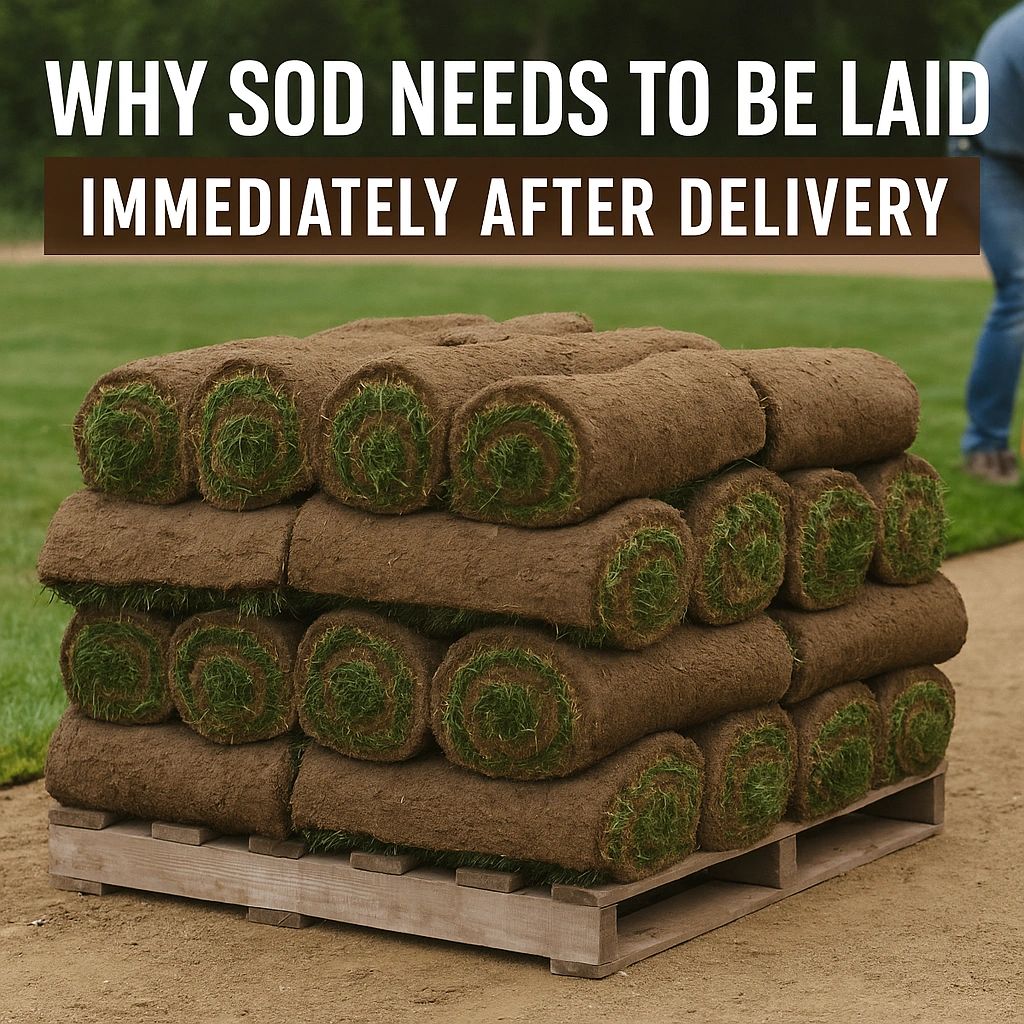
How Long Can Sod Sit on a Pallet Before It Goes Bad? A Complete Guide to Sod Shelf Life and Emergency Storage
Sod should be installed within 24 hours of delivery in most conditions, and within 12 hours during summer heat. After that, heat buildup inside the pallet, root desiccation, and lack of sunlight begin damaging the sod from the inside out. By 48 hours, most unopened pallets in warm weather show significant decline. By 72 hours, much of the sod is dead or dying.
This is the question that causes more new-lawn failures than any other. Homeowners order sod, prep isn't ready, work runs late, weather turns bad — and the pallets sit. What looks like a stack of perfectly green rolls on day one can be yellow-brown dead sod by day three, and the visible damage often doesn't appear until the sod is already past saving.
This guide explains exactly how long sod lasts, what's happening inside the pallet that causes decline, and what to do if you can't install on delivery day.
Quick Answers
How long can sod sit on a pallet? Ideally, install same-day. In summer heat, 12 hours is the realistic maximum. In cool fall or spring weather, up to 24 to 48 hours is possible but quality still drops.
What happens to sod on a pallet? Stacked sod generates heat from decomposition and respiration. The center of the pallet can reach 100°F+ within hours in summer, cooking the grass from the inside.
Can I store sod overnight? Yes, as a last resort. Unstack the rolls into a single layer in shade, water them lightly, and install first thing the next morning.
Why does sod overheat on a pallet? Living plant tissue generates heat through respiration. When sod is stacked tight, that heat can't escape, and the temperature rises until the grass dies.
Can I return unused sod? No. Sod is a perishable product and cannot be returned once delivered, even if unopened.
What's the first sign sod is going bad? Yellowing at the center of the pallet, wilted blades in the top rolls, and a distinctive sour or "compost" smell.
What's Actually Happening Inside the Pallet
Sod arrives alive. Each roll contains living grass, living roots, and soil microorganisms — all of which continue their biological processes after harvest. Understanding what's happening inside the pallet is the key to understanding why timing matters so much.
Respiration generates heat. All living plant tissue respires — breaking down stored sugars for energy. That process releases heat. In a single grass blade this heat is negligible, but when 50 rolls of sod are stacked tight, the combined heat output has nowhere to go. The pallet becomes an insulated container trapping heat inside.
Soil microorganisms accelerate decomposition. Sod soil contains active bacteria and fungi that begin breaking down organic matter the moment the sod is harvested. In normal soil conditions, this process is slow and beneficial. In a stacked pallet with rising temperatures and no oxygen exchange, it accelerates rapidly — the same process that heats up a compost pile.
No sunlight means no photosynthesis. Grass needs light to produce food. A roll in the middle of a pallet stack receives zero light. Within 24 hours, the grass begins depleting its stored energy reserves. By 48 hours, yellowing starts as chlorophyll breaks down.
Roots are severed from water. The thin layer of soil in a sod roll holds some moisture at delivery, but that reserve runs out within hours in warm weather. Roots start drying out quickly — and dried-out roots don't recover when the sod is finally laid.
Put all four factors together and you get the typical failure pattern: pallets that look fine on delivery day, show edge yellowing within 24 hours, and arrive at unsalvageable damage within 48 to 72 hours in warm weather.
How Temperature Affects Shelf Life
The outside temperature is the single biggest variable in how long sod lasts.
Summer Conditions (Above 80°F)
6 to 12 hours is the realistic window. The center of a pallet in direct sun can reach 100°F+ within a few hours. Sod left on a summer pallet overnight is often unsalvageable by morning. If you order sod for summer installation, you must be ready to install the moment the truck arrives.
Spring and Fall Conditions (55 to 75°F)
24 hours is reasonable. 48 hours is the outside limit before significant quality loss. Cooler ambient temperatures slow respiration and reduce heat buildup inside the pallet.
Late Fall and Early Winter Conditions (Below 55°F)
Up to 48 to 72 hours in some cases, assuming no freezing. Cold weather dramatically slows the biological processes causing decline. That said, sod that sits for 48+ hours in any conditions still shows reduced establishment rates versus same-day installation.
What the Decline Timeline Actually Looks Like
Assuming summer conditions (80°F+):
Hours 0 to 6. Sod is in peak condition. Grass blades upright and fully green.
Hours 6 to 12. Heat buildup begins in the pallet core. Outer rolls still fine; innermost rolls start to warm.
Hours 12 to 24. Yellowing begins at the center of the pallet. Pallet core temperature may reach 90 to 100°F. Blades start to wilt on the top rolls.
Hours 24 to 48. Visible yellow or brown patches throughout the center of the pallet. Distinctive sour smell develops. Root desiccation accelerates.
Hours 48 to 72. Significant sections dying. Pallets that looked acceptable on the outside reveal heavy damage when unstacked.
72+ hours. Most of the pallet is dead or dying. What rolls remain viable show reduced establishment rates even if installed.
In cool-season weather, each stage is delayed by 12 to 24 hours, but the sequence is the same.
Warning Signs Sod Is Going Bad
Check these from outside the pallet without unstacking.
Yellowing at roll edges visible from the outside layers.
Wilted or droopy grass blades on top rolls.
Sour or "compost" smell as you approach the pallet.
Warm to the touch — if any part of the pallet feels warmer than ambient temperature, it's already degrading.
Darkened or slimy soil visible on the sides of the stack.
Shrinking rolls where grass has pulled away from cut edges.
If you see any of these signs, install whatever can be saved immediately. Stop waiting.
Emergency Protocol If You Can't Install on Delivery Day
This is emergency protocol, not best practice. Quality will still drop — the goal is minimizing further damage until you can get sod in the ground.
Unstack the pallet. Pull rolls off the pallet and spread them out in a single layer. Stop the heat buildup that's actively damaging the sod. Do this within 12 hours of delivery in summer, 24 hours in cooler weather.
Place rolls in shade. Direct sun dries out exposed rolls fast. Shade slows moisture loss significantly.
Lightly water the rolls. Not soaking — just enough to keep the grass and soil moist. A garden sprinkler on low or a hose on gentle spray for a few minutes works well.
Check roll integrity. If rolls are already wilted or yellowing, those go down first when you install — there's no point preserving sod that's already compromised.
Install first thing the next morning. Don't let rolls sit a second night. Even with unstacking and watering, quality continues to decline.
Better to reschedule than to let sod sit. If your site isn't ready and delivery hasn't happened yet, call and push the delivery back. Losing a day to prep is cheaper than losing a pallet to heat damage.
How to Time Delivery and Installation Correctly
The right sequence prevents the shelf-life problem entirely.
Complete all prep before delivery. Soil grading, tilling, topsoil spread, and starter fertilizer applied. The ground should be ready to receive sod the moment the truck arrives.
Confirm weather and scheduling. Don't schedule summer delivery on a forecast 95°F day unless you're absolutely certain the install will happen same-day.
Line up labor. Larger lawns require crews. A 2,000 sq ft install takes 2 to 4 people a full day — not 1 person a full weekend.
Have water ready. Hoses hooked up, sprinklers positioned, or irrigation system tested. The first watering needs to happen within 30 minutes of the first rolls going down.
Schedule morning delivery when possible. Morning deliveries give you the full day to install, rather than racing sunset.
Variety Considerations and Shelf Life
The variety choice doesn't significantly affect shelf life, but a few considerations apply.
Kentucky Bluegrass has slightly more sensitivity to heat stress during the pallet period than tall fescue varieties. Summer pallet handling matters slightly more for Kentucky Bluegrass installations.
Rhizomatous Tall Fescue (RTF) and Tall Fescue handle pallet conditions slightly better than Kentucky Bluegrass because of the deeper root structure and broader stress tolerance characteristic of the species.
Kentucky Bluegrass and Tall Fescue Blend falls between the two pure varieties for shelf life sensitivity.
Fine Fescue Blends typically handle pallet conditions reasonably well, though all sod requires same-day installation regardless of variety.
The practical implication: variety choice doesn't change the fundamental shelf life timeline, but Kentucky Bluegrass installations during summer warrant slightly more careful handling during the delivery-to-installation window.
For comprehensive guidance on variety selection across cool-season Northeast conditions, see our regional cluster pieces — including the coastal New England sod guide for shoreline properties and the Westchester, Greenwich, and Fairfield County sod guide for Tri-State premium residential.
Why Sod Is Sold as a Perishable Product
Sod behaves more like fresh produce than construction material. Every sod company treats sod as non-returnable once delivered because the product cannot survive long enough to be returned, inspected, and resold. The buyer accepts responsibility for timely installation as part of the purchase.
This isn't a sales tactic. It's the biological reality of the product. Once sod is cut, every hour matters — and once it's delivered, that clock is running on your property, not the grower's.
The practical implication for buyers: order sod when you're genuinely ready to install, complete site preparation before scheduling delivery, and confirm weather and labor availability before the truck leaves the farm. The shelf life problem prevents itself when delivery aligns with installation readiness.
Frequently Asked Questions
How long can sod sit on a pallet before it goes bad?
In summer heat (80°F+), sod begins declining within 6 to 12 hours and is often unsalvageable after 24 hours. In cool spring or fall weather, 24 to 48 hours is the realistic limit. Same-day installation is always the goal.
What happens if sod isn't laid right away?
Sod left on pallets experiences heat buildup from respiration, yellowing from lack of sunlight, root desiccation, and microbial decomposition. These factors compound quickly — a pallet that looks fine at 24 hours can be significantly damaged by 48 hours.
Can I store sod overnight?
Only as a last resort. Unstack the rolls into a single layer in shade, lightly water to keep roots and grass moist, and install first thing the next morning. Expect reduced establishment rates compared to same-day installation.
What should I do if my site isn't ready when sod is scheduled for delivery?
Reschedule delivery before the truck leaves the farm. Losing a day to finish prep is far cheaper than losing a pallet to heat damage. Most growers will accommodate a same-day or next-day schedule change if notified early.
How soon should I water after laying sod?
Immediately — within 30 minutes of the first rolls going down. Water until the soil beneath is moist 3 to 4 inches deep. Delayed watering, even by a few hours on a hot day, causes shrinkage at the seams and slows rooting.
Can sod be returned if it sits too long and dies?
No. Sod is sold as a perishable product and is non-returnable once delivered. Timely installation is the buyer's responsibility, which is why delivery timing and site readiness matter so much.
What if sod arrives and already looks damaged?
Inspect rolls when the truck arrives. If sod shows yellowing, browning, or excessive warmth at delivery, document the condition with photos and contact the grower immediately. Quality problems present at delivery are the grower's responsibility; problems developing after delivery are not.
Does cool-season sod last longer than warm-season?
Sod shelf life is driven more by ambient temperature and pallet handling than by grass type. A cool-season pallet in 90°F summer heat will decline as fast as a warm-season pallet in the same conditions. Cool-season sod simply benefits from the fact that most cool-season regions have cooler weather during the main installation seasons.
Does the time of day delivery happens affect shelf life?
Yes. Morning deliveries provide more daylight hours for installation before pallet conditions become problematic. Afternoon or evening deliveries reduce the available installation window before overnight pallet sitting becomes necessary. Schedule morning delivery whenever possible.
What about cold weather extremes?
Sod tolerates cold conditions better than heat conditions, but freezing damages sod the same way it damages most plants. Pallets sitting in below-freezing conditions for extended periods can suffer ice crystal damage to leaf tissue and root systems. Late fall and winter installations require attention to overnight low temperatures during the delivery-to-installation window.
Is there any way to make pallets last longer?
Limited options. Keeping pallets in shade prevents direct sun heating. Light watering of the outside layers can reduce surface desiccation. Unstacking onto single layers prevents heat buildup. None of these techniques meaningfully extend shelf life — they just slow the decline rate. Same-day installation remains the goal.
A Final Note on Sod Shelf Life
The shelf life problem prevents itself when delivery timing aligns with installation readiness. Buyers experiencing sod failure from extended pallet sitting almost always trace the failure back to inadequate preparation or scheduling rather than product quality issues.
The practical approach for successful sod installations: complete site preparation before scheduling delivery, confirm weather conditions support same-day installation, line up adequate labor for the project size, schedule morning delivery whenever possible, and have water infrastructure ready for immediate post-installation watering.
For most properties, the shelf life consideration becomes a non-issue when these preparation steps occur in the right sequence. Buyers ready to install when delivery arrives have functional new lawns within hours of pallet arrival. Buyers not ready when delivery arrives face the shelf life problem that this guide addresses.
The honest framing for sod buyers: order when genuinely ready, prepare thoroughly before delivery, install immediately on arrival. The product works reliably when handled within its biological constraints; the constraints don't bend regardless of buyer intentions or scheduling preferences.
_Based on more than 30 years of hands-on sod, soil, and landscape experience across the Northeast._
Ready To Order?
Fresh-Cut Sod Delivered
CT Sod delivers Kentucky Bluegrass, Tall Fescue & RTF sod across CT, MA, NY, NJ, RI, NH, VT & ME.
Keep Reading
Amending Sandy Soil with Compost for Sod Installation CT, NY, MA
August 25, 2025
Best Drought-Tolerant Sod Varieties: Northeast Guide
April 30, 2026

Best Sod for Connecticut Lawns: Complete Regional Guide
April 28, 2026

Best Sod for Finger Lakes Properties: Regional Guide
April 29, 2026