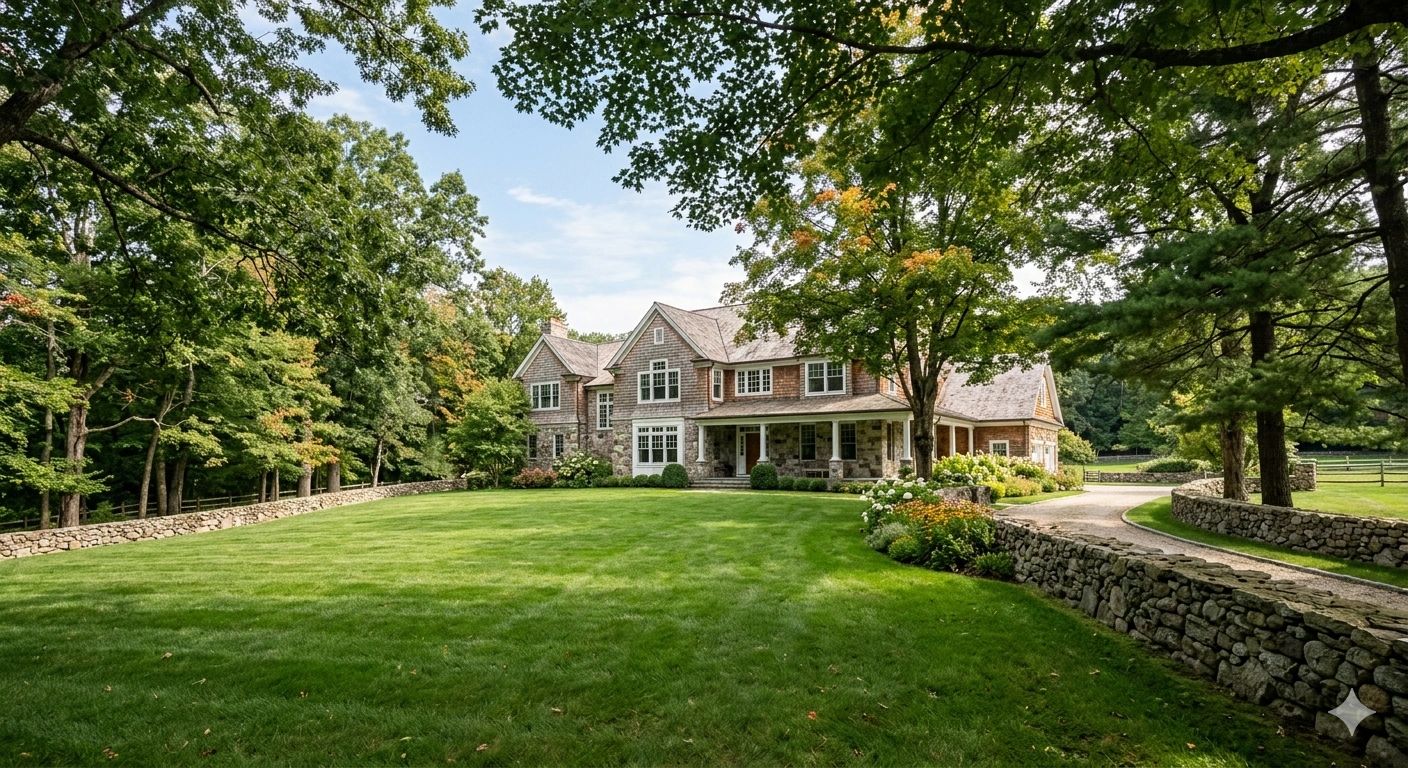
Premium markets covered in this guide
Northern Westchester is one of the most regulatory-shaped premium residential markets in the United States for lawn care. The combination of the New York City drinking water supply watershed (the Croton system covering substantial portions of Bedford, North Salem, Lewisboro, Somers, and the surrounding region — supplying drinking water to 85% of Westchester residents plus 9 million New York City residents), the Westchester County Pesticide Notification Law (Chapter 691 of the Westchester County Code, adopted in 2001 — requiring 48-hour written notice for commercial lawn applications and visual notification markers for residential applications exceeding 100 square feet, with penalties up to $5,000 per day for commercial applicators), the New York State Phosphorus Lawn Fertilizer Law (effective since 2012, prohibiting phosphorus in lawn fertilizer except for new establishment or where soil testing demonstrates deficiency), and the East of Hudson Watershed Corporation's coordinated phosphorus reduction program produces the most layered regulatory framework affecting residential lawn care of any Northeast premium market.
This regulatory reality is not abstract. Premium estate properties in Bedford, Pound Ridge, North Salem, Lewisboro, and the broader Northern Westchester corridor face substantive constraints on what fertility programs can be applied, when, where, and with what notification. A landscape architect specifying sod for a Bedford estate property is genuinely working within a different regulatory environment than a landscape architect working in Greenwich, Litchfield County, or virtually any other Northeast premium market. The variety selection conversation should reflect this — and most generic Northeast sod content does not.
Layered onto the regulatory framework: the substantial mature oak-hickory-sugar-maple-eastern-hemlock canopy across most established Northern Westchester estate properties (most premium residential development in Bedford, Pound Ridge, Armonk, and surrounding towns dates to the late 19th and early 20th centuries, producing canopy maturity that puts most lawn areas under partial-to-deep shade); the genuinely substantial estate-scale lot sizes (Pound Ridge has the lowest population density of any Westchester town at approximately 0.3 person per acre; North Salem zones substantial portions for 4-acre minimums; Bedford's RA-2 and RA-4 zoning produces 2-4+ acre estate properties across much of the town); the substantial integrated open-space character anchored by the 4,700-acre Ward Pound Ridge Reservation in Pound Ridge and Lewisboro, the Mianus River Gorge Preserve in Bedford, the Bedford Audubon Society sanctuaries, and substantial land trust holdings throughout the region; the working horse farm equestrian estate culture that defines North Salem and substantial portions of Bedford; and the country club estate culture that anchors the regional landscape aesthetic.
This guide is the canonical reference for sod variety selection across the Northern Westchester premium estate corridor. It draws on Cornell Cooperative Extension Westchester, the Cornell Turfgrass Program at the College of Agricultural and Life Sciences (CALS), the NYC Department of Environmental Protection's watershed protection program at the Valhalla DEP office, and the Westchester County Department of Health's Pesticide Notification Law enforcement framework. Coverage includes Bedford (Bedford Village, Bedford Hills, Katonah hamlet), Pound Ridge, Armonk (the principal hamlet of North Castle), Chappaqua (the principal hamlet of New Castle, with Millwood), Mt. Kisco, North Salem, Lewisboro (Goldens Bridge, South Salem, Cross River, Waccabuc, Lewisboro hamlet, Vista), Somers, Yorktown Heights, and the broader Northern Westchester premium residential market.
For broader context, see our complete New York sod guide.
Substantial portions of Bedford, North Salem, Lewisboro, and Somers sit within the New York City drinking water supply watershed — the Croton system. That single fact should shape every Northern Westchester variety decision.
Quick Answer Section: The Sod-Specific Bottom Line for Northern Westchester
The single most important fact about Northern Westchester sod selection that property owners should know: Substantial portions of Bedford, North Salem, Lewisboro, and Somers sit within the New York City drinking water supply watershed (the Croton system). The combination of NYC DEP watershed regulations, the New York State Phosphorus Lawn Fertilizer Law, and Westchester County's Pesticide Notification Law produces a regulatory framework where lower-input variety specifications — fine fescue blends particularly, tall fescue and RTF secondarily — work better than Kentucky Bluegrass-dominant specifications that require higher fertility and more pesticide intervention to maintain at peak performance.
The five cool-season variety categories that work in Northern Westchester:
1. Kentucky Bluegrass — produces the iconic dense blue-green country club estate aesthetic on properties with adequate irrigation and fertility. Cornell-noted limitations specifically relevant to Northern Westchester: poor shade tolerance, poor drought tolerance, highest feeding requirements. 1. Fine fescue blends (red fescue, Chewings fescue, hard fescue, sheep fescue) — Cornell-rated excellent shade tolerance and lowest feeding needs. Essential for the substantial mature canopy across most Northern Westchester estates. 1. Turf-type tall fescue — Cornell-rated good shade tolerance, some drought tolerance, average feeding needs. The traditional bunch-type tall fescue category for active-use zones, drought-prone sites, and watershed-protected zones requiring lower-input maintenance. 1. RTF (Rhizomatous Tall Fescue) — structurally different from traditional bunch-type tall fescue. Spreads by rhizomes for self-repair capacity that bunch-type cannot match. The right specification for active-use family estates, dog-traffic zones, and properties prioritizing wear tolerance with low input requirements. 1. Perennial ryegrass — Cornell-rated poor shade and drought tolerance, fastest establishment (14-21 days). Best as a 15-20% blend component per Cornell guidance.
Variety recommendations by Northern Westchester market:
- Bedford (Bedford Village, Bedford Hills, Katonah): Substantial mature canopy and the broader Bedford equestrian estate corridor along Old Post Road, Hook Road, Guard Hill Road. Variety zoning across estate properties with KBG-dominant blends on showcase areas with adequate sun, fine fescue specifications under canopy, RTF in active-use zones. Properties within the Croton watershed face additional fertility considerations.
- Pound Ridge: Substantial 2-acre minimum zoning across most of the town with extensive mature canopy. Variety zoning essentially required across estate-scale properties. The Ward Pound Ridge Reservation adjacency on much of the town's residential market produces conditions where naturalized fine fescue specifications at woodland edges integrate properties with the surrounding protected forest landscape.
- Armonk and the broader North Castle market: IBM headquarters anchor and substantial executive estate residential character. Standard cool-season variety landscape with substantial irrigation infrastructure on most premium properties supporting Kentucky Bluegrass-dominant specifications. The Whippoorwill Club corridor produces refined estate residential character.
- Chappaqua and the New Castle market (Millwood): Substantial historic estate residential character. Standard cool-season variety landscape works.
- North Salem: Substantial equestrian estate corridor with working horse farms and large parcels. Lower-input maintenance philosophy across many properties favors fine fescue and tall fescue specifications. Substantial portions within the Titicus Reservoir watershed.
- Lewisboro (six hamlets): Mixed character including substantial Ward Pound Ridge Reservation adjacency and the Cross River Reservoir watershed. Wooded estate properties dominate; fine fescue specifications under canopy.
- Mt. Kisco: More urban than the surrounding estate towns, with substantial Victorian residential character. Standard cool-season variety landscape works.
The white grub consideration matters substantially in Northern Westchester. Cornell IPM guidance is specific: white grubs (Japanese beetle and European chafer larvae) cause substantial lawn damage across Westchester County, with eggs hatching late August through October. But Cornell is also explicit that "most lawns do not always have high numbers of grubs each season. Many lawns are treated with insecticide needlessly because there are few or no grubs present." The Cornell IPM action threshold for treatment is typically 5-10 grubs per square foot — not preventive blanket treatment. This matters in Northern Westchester because the Westchester County Pesticide Notification Law requires advance notification of any commercial pesticide application, making blanket preventive grub treatments both regulatorily encumbered and frequently unnecessary.
Soil pH testing matters. The substantial mature oak-hickory-maple canopy litter across Northern Westchester produces naturally acidic soil conditions on most established estate properties. Cornell Cooperative Extension Westchester provides soil testing through the county office. See our soil pH and sod guide.
That covers the practical answer. The rest of the guide goes substantially deeper for property managers, landscape architects, and homeowners wanting the full technical reference.
The Northern Westchester Regulatory Framework: Why It Shapes Variety Selection
This section deserves substantial treatment because it's the most distinctive feature of the Northern Westchester sod conversation and the most consistently underserved by generic Northeast lawn care content.
The New York City Drinking Water Supply Watershed
Substantial portions of Bedford, North Salem, parts of Lewisboro, Somers, and the broader Northern Westchester landscape sit within the New York City watershed — specifically the East of Hudson portion of the Croton system. The Croton Reservoir Source System covers 18,000 acres of land and water surface in Westchester County (plus additional acreage in Putnam County), feeding the Croton Reservoir, the Cross River Reservoir (in Lewisboro), the Muscoot Reservoir, the Titicus Reservoir (in North Salem), the Amawalk Reservoir (in Somers), and the broader Croton system. The Kensico Reservoir in central Westchester County is the terminal reservoir for NYC's Catskill/Delaware system; the UV disinfection facility at the Eastview site in Westchester treats this water before delivery to NYC.
The 1997 NYC Watershed Memorandum of Agreement established the regulatory framework that governs activities within the watershed. The "Rules and Regulations for the Protection from Contamination, Degradation and Pollution of the New York City Water Supply and its Sources" (most recently amended in 2019) cover stormwater discharges, septic systems, hazardous materials handling, certain pesticide applications, and other watershed-impacting activities. The East of Hudson Watershed Corporation — a local development corporation established by Northern Westchester, Putnam, and Dutchess County municipalities — coordinates phosphorus reduction stormwater retrofit projects to meet NYSDEC reduction targets.
What this means for premium estate sod programs: Properties within the watershed face NYC DEP regulatory review for activities that could affect water quality. While individual residential lawn care isn't directly permitted by DEP, the broader watershed protection framework shapes what fertility and pesticide programs are appropriate. Variety choices that minimize fertility requirements (fine fescues particularly, with their Cornell-rated lowest feeding needs) and disease-resistant Kentucky Bluegrass cultivars (reducing pesticide reliance) align with the watershed protection framework substantially better than high-input KBG specifications.
The New York State Phosphorus Lawn Fertilizer Law
NYS prohibited the application of phosphorus-containing lawn fertilizer to residential lawns starting in 2012, except in two specific circumstances: (1) new lawn establishment (first growing season after sod or seed installation), and (2) where soil testing has demonstrated phosphorus deficiency. The law applies statewide.
What this means for premium estate sod programs: Most established Northern Westchester lawn programs should not be applying phosphorus. The N-P-K labeling on fertilizer bags (the three numbers indicating percentage by weight of nitrogen, phosphorus, and potassium) should typically show middle number = 0 unless soil testing has confirmed phosphorus deficiency. New sod installation is the exception — starter fertilizer with phosphorus is allowed and frequently beneficial during the establishment phase. See our biologically active starter fertilizer guide and best fertilizer for new sod for the establishment fertility technical reference.
The Westchester County Pesticide Notification Law (Chapter 691)
Westchester County adopted the New York State Neighbor Notification Law as Chapter 691 of the Westchester County Code in 2001. The law requires:
- Commercial lawn applications: At least 48 hours prior to any commercial lawn application of a pesticide, the applicator must provide written notice to the property owner and to any abutting property owners.
- Residential applications over 100 sq ft: Property owners making residential lawn pesticide applications to more than 100 square feet must post visual notification markers around the application site.
- Retail establishments: Stores selling general use lawn pesticides must post consumer information signs describing notification requirements.
What this means for premium estate sod programs: Routine preventive pesticide programs are both regulatorily encumbered and frequently unnecessary. Integrated pest management approaches — variety selection that resists insects through endophyte-enhanced cultivars, soil biology programs that suppress disease, cultural practices that reduce stress — work substantially better with the regulatory framework. This actively favors variety specifications that support IPM approaches: tall fescue and fine fescue blends with endophyte-enhanced cultivars that resist chinch bugs, billbugs, and sod webworms; disease-resistant Kentucky Bluegrass cultivars that don't require fungicide intervention; and overall blend specifications that produce healthy, stress-resistant turf with minimal chemical inputs.
Why Northern Westchester Requires Its Own Sod Variety Treatment
Beyond the regulatory framework, six structural factors make Northern Westchester genuinely distinctive for sod selection compared to other Northeast premium markets.
1. The substantial estate-scale lot sizes and integrated open-space character. Pound Ridge has approximately 0.3 person per acre population density — the lowest in Westchester County. North Salem zones substantial portions for 4-acre minimums. Bedford's RA-2 and RA-4 zoning produces substantial 2-4+ acre estate properties across much of the town. Lewisboro's six hamlets sit within and adjacent to the 4,700-acre Ward Pound Ridge Reservation. Substantial portions of Bedford, Pound Ridge, North Salem, and Lewisboro are protected as town parks, county reservations, land trust holdings, and watershed lands. Premium estate properties typically include substantial mature canopy, woodland edge transitions, and integrated naturalized landscape character — favoring variety specifications that work across varied conditions on the same property.
2. The substantial mature canopy character. Northern Westchester's residential history — substantial portions developed in the late 19th and early 20th century as country estate corridors — produces substantial mature canopy on most established properties. Towering eastern white pines, sugar maples, white oaks, red oaks, American beeches, paper birches, eastern hemlocks dominate many estate properties. Cornell's variety guidance is explicit: Kentucky Bluegrass has poor shade tolerance and fine fescues have excellent shade tolerance — so mature-canopy properties typically require substantial fine fescue specifications.
3. The equestrian estate culture. North Salem specifically has been a center of equestrian residential character since the 18th century, with substantial working horse farms, hunt clubs, and equestrian estate properties continuing today. Bedford has substantial equestrian character along Hook Road and Guard Hill Road. The integrated horse farm character — pastures, paddocks, equestrian event grounds — produces variety specifications appropriate for working farm conditions alongside refined estate residential lawn.
4. The country club estate culture. The broader Northern Westchester landscape character is substantially shaped by country club culture — Whippoorwill Club (Armonk), Bedford Golf and Tennis Club, Mt. Kisco Country Club, Pound Ridge Golf Club, Bonnie Briar Country Club, Mohansic Golf Course, and the broader country club network produce a regional aesthetic where Kentucky Bluegrass-dominant specifications are the norm for refined showcase areas. For golf course-specific bentgrass treatment, see our golf course sod supplier guide.
5. White grub pressure as the dominant lawn pest. Cornell Extension is explicit that white grubs cause substantial lawn damage across Westchester County. The European chafer beetle has become particularly established in the region; Japanese beetles continue to be present. The grub pressure affects variety selection indirectly (no cool-season variety effectively resists root-feeding white grubs through endophyte-enhanced varieties; endophytes resist surface-feeding insects, not root feeders) and affects integrated pest management programs across most premium estate properties.
6. The substantial mature soil character. Premium estate properties with multi-generation residency frequently have substantial established topsoil from decades of organic matter accumulation, but the underlying glacial till geology produces variable drainage and frequently rocky outcrops (Pound Ridge particularly features substantial granite outcroppings). Soil pH frequently runs below the 6.0-7.0 range optimal for cool-season grasses due to the substantial mature oak-hickory-maple canopy litter. Soil testing through Cornell Cooperative Extension Westchester before installation confirms whether lime application is needed.
The Cool-Season Variety Landscape for Northern Westchester
The five cool-season variety categories appropriate for Northern Westchester each have distinct characteristics affecting variety selection.
Kentucky Bluegrass
Kentucky Bluegrass produces the iconic dense blue-green premium lawn aesthetic that defines the country club estate corridor across the broader Northeast. Kentucky Bluegrass spreads by underground rhizomes (horizontal underground stems that produce new shoots), knits together well, tolerates cold winter temperatures, handles heavy wear, and performs exceptionally on full-sun, well-drained sites with moderate-to-high fertility and regular irrigation.
Per Cornell Turfgrass Program: most cool-season sods are improved Kentucky Bluegrass varieties because their spreading rhizomes intertwine to form a structurally strong sod. KBG is the structural foundation of most commercial sod production for this reason. The Cornell variety characterization is specific: shade tolerance Poor, drought tolerance Poor, wear tolerance Good, establishment 30-90 days (slowest among cool-season species), feeding need Highest.
Standard KBG cultivars commonly specified for premium Northern Westchester lawns: the Midnight family (Midnight, Midnight II, Bluechip), Award, Beyond, NuGlade, and other elite dark-green cultivars. These cultivars produce the deep blue-green color associated with country club estate landscapes and perform well under sun conditions with adequate fertility and irrigation.
properties with full-sun conditions (6+ hours of direct sun daily), established irrigation infrastructure, adequate topsoil depth (6+ inches preferred), and the maintenance investment to support the variety's higher fertility and irrigation requirements within the regulatory framework. The country club estate corridor and the showcase entertainment areas of substantial estate properties typically support KBG specifications.
deeply shaded zones under mature canopy (most established estate properties have substantial shaded zones); roadside and driveway-adjacent zones where road salt accumulates during winter; properties without comprehensive irrigation in NY's drought-prone summers; watershed-protected zones requiring lower fertility inputs; properties prioritizing low-input maintenance philosophy.
For historical context relevant to estate KBG specifications, see our Midnight Kentucky Bluegrass guide, Merion Kentucky Bluegrass history, and origin and rise of Kentucky Bluegrass.
Fine Fescue Blends
Fine fescue blends are essential across most Northern Westchester premium properties. Cornell Extension's variety characterization is explicit: fine fescue has Excellent shade tolerance (the highest rating of any cool-season species), Some drought tolerance, Poor wear tolerance, Average establishment time (21-50 days), Lowest feeding needs.
The fine fescue species each contribute distinct characteristics:
Red fescue (Festuca rubra rubra) — also called creeping red fescue. Spreads by rhizomes, knits well into a lawn, fine-textured. Widely used in shade lawn mixes; can be used alone as unmown meadow grass, slope erosion control, or low-maintenance shaded lawn.
Chewings fescue (Festuca rubra commutata) — provides the densest fine fescue surface, bunch-type growth (does not spread by rhizomes the way red fescue does), excellent shade tolerance, fine texture. Commonly specified where formal aesthetic character matters in shaded zones.
Hard fescue (Festuca brevipila) — most stress-tolerant fine fescue, excellent drought tolerance, low fertility tolerance. Particularly relevant for Northern Westchester properties with naturally acidic granitic-influenced soils and substantial drought stress during summer.
Sheep fescue (Festuca ovina) — sometimes used in naturalized fine fescue meadow specifications.
Why fine fescues work with the Northern Westchester regulatory framework. UNH and Cornell Extension both note that fine fescues "are quite tolerant of dry soils, acid soils, and low fertility." The species genuinely thrives at the lower nitrogen and phosphorus inputs that the NYS Phosphorus Lawn Fertilizer Law mandates. Heavily amended or fertilized sites can actually produce weaker fine fescue stands than poor soils — fine fescues are the rare premium turfgrass category that's compromised by excess fertility rather than enhanced by it.
For complete fine fescue technical reference, see our shaded lawns variety guide and fine fescue sod guide.
Turf-Type Tall Fescue
Turf-type tall fescue is the traditional bunch-type tall fescue category — substantially improved over the past three decades from older common-type cultivars like Kentucky-31. Cornell's variety characterization: Good shade tolerance, Some drought tolerance, Good wear tolerance, Average establishment (21-30 days), Average feeding need.
Tall fescue is the most heat- and drought-tolerant of cool-season turfgrasses (deep root system reaches 2-3+ feet), grows well in compacted soils, stands up to substantial foot traffic, and requires less nitrogen than Kentucky Bluegrass.
Bunch-type growth limitation. Traditional tall fescue is bunch-type — the plants grow in clumps without producing rhizomes or stolons that fill in damaged areas. This means tall fescue lawns can develop bare spots that don't fill in naturally over time, requiring overseeding to maintain density. This limitation is what RTF (covered separately below) was specifically bred to address.
When traditional tall fescue works in Northern Westchester: properties prioritizing drought tolerance and heat tolerance with moderate wear; the broader inland estate corridor where heat tolerance matters during summer; watershed-protected zones requiring lower-input maintenance; properties where the bunch-type growth pattern isn't a limitation (low-traffic display lawn rather than active-use lawn).
For comparison context, see our tall fescue vs Kentucky Bluegrass comparison.
RTF (Rhizomatous Tall Fescue)
RTF (Rhizomatous Tall Fescue) is a structurally different category from traditional bunch-type tall fescue and deserves dedicated treatment because its characteristics genuinely differ.
The structural difference. Traditional turf-type tall fescue is bunch-type — plants grow in individual clumps without lateral spread. RTF cultivars (developed primarily through breeding programs at Barenbrug USA over the past two decades) spread by rhizomes (horizontal underground stems that produce new shoots), the same growth mechanism that gives Kentucky Bluegrass its sod-forming structural integrity. This structural difference fundamentally changes RTF's role in lawn applications.
Why the structural difference matters:
1. Self-repair capacity. Bare spots, dog urine damage, foot traffic wear, and other localized turf damage on RTF lawns fill in naturally as the rhizomes spread laterally and produce new shoots. Traditional tall fescue lawns develop persistent bare spots that don't self-repair without overseeding. 1. Sod production capability. Traditional bunch-type tall fescue doesn't produce sod with strong structural integrity — the harvested sod tears easily because there are no lateral connections between individual plants. RTF's rhizomatous spread produces a dense interconnected mat that holds together as harvested sod, similar to Kentucky Bluegrass sod but with tall fescue's drought and wear characteristics. 1. Density development. RTF lawns develop dense, uniform turf cover over time as the rhizomes fill in any gaps. Traditional tall fescue lawns can show clumpy texture as individual plants mature without lateral fill.
RTF performance characteristics: Maintains tall fescue's deep root system (2-3+ feet, providing exceptional drought tolerance), heat tolerance, wear tolerance, and lower fertility requirements compared to KBG. Adds rhizomatous self-repair and sod-forming capability. Cornell-rated similar to traditional tall fescue: Good shade tolerance, Some drought tolerance, Good wear tolerance, with substantially better recovery from damage.
Where RTF specifications excel in Northern Westchester:
- Properties with substantial dog activity. RTF is widely considered the most dog-resistant cool-season variety category — the rhizomatous self-repair handles urine damage substantially better than bunch-type varieties. See our complete most dog-resistant sod guide and bermudagrass vs RTF for dogs guide.
- Active-use family estate properties. Properties with substantial foot traffic from family activity, athletic use, or entertainment use benefit from RTF's combination of wear tolerance and self-repair.
- Watershed-protected zones. RTF's lower fertility requirements compared to KBG align with the regulatory framework constraints affecting Northern Westchester properties within the Croton watershed.
- Drought-prone properties without comprehensive irrigation. RTF's deep root system handles NY's drought-prone summers substantially better than KBG.
- Roadside and driveway-adjacent zones. RTF tolerates road salt exposure substantially better than KBG.
- Properties prioritizing reduced maintenance investment. RTF requires less mowing frequency, less fertility input, and less irrigation than KBG-dominant specifications.
- Properties prioritizing the deepest blue-green country club estate aesthetic (RTF produces a darker green with slightly coarser texture than premium KBG cultivars).
- Showcase areas where the most refined premium aesthetic justifies the higher input requirements of KBG.
Perennial Ryegrass
Perennial ryegrass plays a supporting role in Northern Westchester seed and sod blends but rarely as a standalone specification. Cornell's variety characterization: Poor shade tolerance, Poor drought tolerance, Good wear tolerance, Fastest establishment (14-21 days), Average feeding need.
Cornell's specific guidance: "100% perennial ryegrass seeds sprouts the fastest and should only be used to patch small bare spots. For renovation or new establishment avoid mixes that have more than 20% perennial ryegrass as its seedlings can overwhelm the other species."
Perennial ryegrass best as a 15-20% component in seed and sod blends — provides establishment speed and wear tolerance while slower-establishing Kentucky Bluegrass and fine fescue species develop.
Bluegrass-Fescue Blends
Bluegrass-fescue blends combine Kentucky Bluegrass with fine fescue or tall fescue species, capturing some of the bluegrass aesthetic refinement while gaining fescue durability, drought tolerance, and lower input requirements. The most common appropriate sod specification across the broader Northern Westchester premium market — properties with mixed sun-shade conditions, properties prioritizing balanced performance across varied conditions, properties matching the country club estate aesthetic without committing to pure KBG specifications.
Typical KBG-fine fescue blend ratios for sun-emphasized applications: 70-80% Kentucky Bluegrass + 20-30% fine fescue. For balanced sun-shade applications: 50-60% KBG + 40-50% fine fescue. For shade-emphasized applications: 70%+ fine fescue with smaller KBG percentage for visual integration.
Bentgrass
Bentgrass is appropriate for golf course putting greens and high-end tee complexes but is generally not recommended for home lawns due to intensive maintenance requirements, high disease potential, and poor performance under standard residential mowing heights. Northern Westchester's substantial country club golf course infrastructure (Whippoorwill, Bedford Golf and Tennis, Mt. Kisco Country Club, Pound Ridge Golf Club, and the broader regional country club network) supports premium bentgrass specifications on appropriate institutional applications. For golf course bentgrass treatment, see our golf course sod supplier guide.
Variety Zoning for Northern Westchester Estate Properties
The substantial estate-scale lot sizes and varied conditions on most premium Northern Westchester properties produce conditions where variety zoning typically delivers substantially better outcomes than single-variety specifications.
Typical variety zoning approach for Northern Westchester premium estate properties:
- Showcase entertainment and front lawn areas with reliable irrigation: Kentucky Bluegrass-dominant blends, or KBG / fine fescue blends matching country club estate aesthetic.
- Broader maintained lawn footprint: Bluegrass-fescue blends (50-60% KBG + 40-50% fine fescue) capturing aesthetic refinement with broader environmental resilience.
- Shaded zones under mature canopy: Fine fescue blends — Chewings fescue, hard fescue, creeping red fescue. The Cornell-rated excellent shade tolerance category does the actual shade work.
- Active-use zones with substantial foot traffic, dog activity, or athletic use: RTF specifications. The rhizomatous self-repair handles wear and damage substantially better than bunch-type alternatives. See our most dog-resistant sod guide.
- Working horse pasture and equestrian zones: Specialty equestrian pasture mixes (substantially different from residential lawn specifications); typically include orchardgrass, Kentucky Bluegrass, fine fescue, white clover.
- Watershed and water-body adjacent zones: Variety choice should emphasize species that perform well at minimal fertility — fine fescues primarily, RTF or traditional tall fescue secondarily.
- Woodland edge transitions: Naturalized fine fescue blends, possibly no-mow specifications.
- Roadside and driveway-adjacent zones: RTF or fine fescue blends with substantial road salt tolerance.
The Major Northern Westchester Premium Markets: Sod-Specific Considerations
Bedford (Bedford Village, Bedford Hills, Katonah)
Bedford anchors the substantial premium estate corridor of Northern Westchester. The town comprises three distinct hamlets with substantially different character.
Bedford Village — the historic colonial village center anchored by the Bedford Village Memorial Park, the Bedford Historical Society, and the Caramoor Center for Music and the Arts (the historic Rosen estate, now a substantial cultural anchor with summer concert series). Substantial historic colonial residential character with mature canopy.
Bedford Hills — the hamlet anchored by the Metro-North Bedford Hills station with substantial mixed residential character including the Bedford Hills Memorial Park.
Katonah — the hamlet with substantial Victorian and early 20th century residential character along the historic village center, anchored by the Katonah Museum of Art (one of the most distinguished small museums in the country), the John Jay Homestead State Historic Site (1801, the home of the first Chief Justice of the United States), and the historic Katonah village green.
Bedford's broader estate corridor includes substantial 19th-century country estate residential character along Old Post Road, Hook Road, Guard Hill Road, Cross River Road, and the surrounding road network. The town's RA-2 (2-acre minimum) and RA-4 (4-acre minimum) zoning has preserved substantial estate-scale residential character.
Variety considerations specific to Bedford: Estate-scale properties typically feature substantial mature oak-hickory-maple canopy producing substantial shaded zones favoring fine fescue specifications. Open lawn areas on showcase estates support KBG-dominant blends. Active-use zones — substantial dog runs, family athletic areas, entertainment lawn — favor RTF specifications. The broader equestrian estate character along Hook Road and Guard Hill Road produces conditions where variety zoning across the property accommodates pasture, refined lawn, and shaded zones in single integrated specifications. Properties within the Croton watershed face fertility considerations favoring fine fescue and tall fescue / RTF specifications.
Pound Ridge
Pound Ridge anchors the lowest-density estate corridor in Westchester County (approximately 0.3 person per acre) with substantial 2-acre minimum zoning across most of the town.
Scotts Corners — the small commercial hamlet center, the village shopping district.
The substantial Ward Pound Ridge Reservation adjacency — the 4,700-acre reservation covers substantial portions of Pound Ridge and Lewisboro, producing conditions where many premium estate properties border or integrate with the substantial protected forest landscape.
The Pound Ridge Land Conservancy has preserved substantial additional acreage as land trust holdings.
Variety considerations specific to Pound Ridge: Substantial mature canopy across most established properties favors fine fescue specifications for the substantial shaded zones; KBG-dominant blends work on showcase areas with adequate sun. Variety zoning across substantial 2-acre+ properties is essentially required given varied conditions. The integrated woodland-edge character of most Pound Ridge estates favors naturalized fine fescue at woodland transitions. RTF specifications work well on active-use zones and properties prioritizing low-input maintenance.
Armonk and the North Castle Market
Armonk anchors the North Castle market with substantial executive estate residential character. The town is home to IBM corporate headquarters anchoring the broader Armonk character.
Armonk's village center — substantial commercial corridor with high-end boutiques and dining anchored by the Armonk village green and the surrounding historic residential character.
The Whippoorwill Club — the substantial country club estate corridor along Whippoorwill Road and the broader North Castle estate residential market.
Variety considerations specific to Armonk: Substantial executive estate residential character with substantial irrigation infrastructure on most premium properties typically supporting Kentucky Bluegrass-dominant specifications. The broader Whippoorwill country club corridor supports refined estate residential character with KBG-dominant specifications on showcase areas. Mature canopy on most established properties justifies fine fescue specifications for canopy-shaded zones. RTF specifications work well on active-use zones.
Chappaqua and the New Castle Market (Chappaqua, Millwood)
Chappaqua anchors the New Castle market as one of the most prestigious year-round residential corridors in Northern Westchester.
Chappaqua's village center — substantial walkable downtown anchored by the Chappaqua Performing Arts Center and the surrounding historic residential corridor.
Millwood — the secondary hamlet of New Castle, with substantial mixed residential character.
Variety considerations specific to Chappaqua: Standard cool-season variety landscape with substantial year-round residential character supporting refined estate specifications. The substantial mature canopy across most established Chappaqua properties typically justifies fine fescue specifications for canopy zones. KBG-dominant blends on showcase areas with reliable irrigation. RTF on active-use zones.
North Salem
North Salem (incorporated 1788) anchors the substantial equestrian estate corridor of Northern Westchester. The town features substantial 4-acre minimum zoning across much of the rural residential character, with substantial working horse farms and equestrian event grounds throughout the town.
North Salem's equestrian estate culture runs continuously from the 18th century through the present. The town has hosted substantial hunt clubs, riding stables, and equestrian estate properties for over two centuries. The Goldens Bridge Hounds (a private hunt club traceable to the 1920s) anchors the broader regional fox-hunting tradition.
The Titicus Reservoir — part of the New York City drinking water supply watershed, anchoring substantial portions of North Salem within the watershed protection framework.
Variety considerations specific to North Salem: Variety zoning across substantial estate-scale properties with horse pastures, refined estate lawn, and shaded zones in single integrated specifications. Working horse pasture specifications (substantially different from residential lawn specifications) for the equestrian zones; KBG-dominant blends on showcase residential lawn; fine fescue specifications under canopy. The lower-input maintenance philosophy of many North Salem equestrian estates favors fine fescue and RTF specifications. Watershed considerations affect fertility programs on properties within the Titicus Reservoir watershed.
Lewisboro (Goldens Bridge, South Salem, Cross River, Waccabuc, Lewisboro hamlet, Vista)
Lewisboro is a 29-square-mile town comprising six hamlets. The town's substantial integration with the Ward Pound Ridge Reservation (the 4,700-acre reservation occupies substantial portions of Lewisboro and adjacent Pound Ridge) and the seven residential lake communities throughout the town produces a distinctive integrated estate-and-natural-landscape character.
The hamlets:
- Goldens Bridge — the southwestern hamlet, anchored by the Metro-North station.
- South Salem — substantial residential character along Lake Truesdale and Lake Kitchawan.
- Cross River — adjacent to the Ward Pound Ridge Reservation, substantial wooded estate residential character.
- Waccabuc — substantial historic estate residential character along Lake Waccabuc.
- Lewisboro hamlet — the central hamlet.
- Vista — the eastern hamlet bordering Connecticut.
Variety considerations specific to Lewisboro: Substantial wooded estate character across most of the town favors fine fescue specifications for substantial shaded zones. The lake community properties along the seven residential lakes face moderated lake microclimate conditions. Variety zoning across estate-scale properties with mature canopy, lakefront zones, and reservation-adjacent zones in integrated specifications. Watershed considerations affect fertility programs on properties within the Cross River Reservoir watershed.
Mount Kisco
Mount Kisco anchors the more urban commercial center of Northern Westchester with substantial Victorian residential character along the central corridor and substantial mixed residential character extending into the surrounding neighborhoods.
Mount Kisco's commercial center — substantial walkable downtown with shopping, dining, and the Northern Westchester Hospital anchor.
Variety considerations specific to Mount Kisco: Standard cool-season variety landscape works on most properties. The Victorian residential character with substantial mature canopy typically justifies bluegrass-fescue blends with substantial fine fescue percentage on shaded zones. RTF on active-use zones.
Somers
Somers — known as the "Cradle of the American Circus" with the historic Elephant Hotel landmark — features substantial rural residential character with rolling pastoral landscape and substantial historic estate properties.
The Amawalk Reservoir in Somers is part of the New York City drinking water supply watershed.
Variety considerations specific to Somers: Substantial estate-scale properties on glacial till uplands with mature canopy. Variety zoning typical of the broader Northern Westchester corridor. Watershed considerations affect fertility programs on properties within the Amawalk Reservoir watershed.
The Broader Northern Westchester Estate Corridor
Beyond the major towns, the broader Northern Westchester premium residential market extends through Yorktown Heights, Briarcliff Manor, and the surrounding Hudson River corridor. Mt. Pleasant's Pocantico Hills includes the historic Rockefeller family estate (the substantial Pocantico Hills Rockefeller compound, including the Kykuit estate). Variety considerations across this broader corridor follow the same fundamental Northern Westchester logic — variety zoning across estate-scale properties matching varied conditions, with mature canopy zones favoring fine fescue and showcase areas supporting Kentucky Bluegrass.
Soil and Site Preparation for Northern Westchester Sod Installations
Northern Westchester's distinctive soil profile creates site preparation considerations affecting sod establishment substantially.
Glacial till soils on most Northern Westchester properties. The geology is dominated by glacial till (the unsorted sediment left behind by retreating glaciers) with variable composition across properties. Drainage typically ranges from well-drained on hillside sites to slow-drained in low-lying areas where compacted till layers produce drainage challenges.
Rocky outcrops on substantial portions of the corridor. Pound Ridge particularly features substantial granite outcroppings and rocky soil profiles. Site preparation often requires substantial topsoil amendment to support adequate root development. See our topsoil depth guide and best topsoil for sod guide.
Acidic soil pH from the substantial mature oak-hickory-maple canopy litter. The canopy across most established Northern Westchester properties produces naturally acidic soil conditions. Soil pH testing before installation is essential. Most cool-season grasses prefer pH 6.0-7.0; many Northern Westchester sites test below this range and benefit from lime application (calcium carbonate that neutralizes soil acidity) before installation. Cornell Cooperative Extension Westchester provides soil testing services through the county office. See our soil pH and sod guide.
Sandy alluvial soils in some river valley locations. The Croton River corridor, the Cross River corridor, and other Northern Westchester river valleys produce sandy alluvial soils on the immediate floodplain. These soils benefit from compost amendment to improve organic matter content. See our sandy soil compost amendment guide.
Established estate property topsoil. Premium estate properties with multi-generation residency often have substantial established topsoil from decades of organic matter accumulation, particularly on lawn areas maintained continuously. This supports sod establishment well across all variety choices.
The biological underpinning of sod establishment matters across all Northern Westchester soil conditions — and matters more under the regulatory framework's fertility constraints, since healthy soil biology reduces dependence on synthetic fertility:
- Soil Biology and New Sod: Why Most Lawns Are Installed on Dead Soil
- Mycorrhizal Fungi and New Sod Rooting: The Complete Guide
- Glomalin: The Soil Protein That Determines Lawn Health
- Humic Acid and New Sod Establishment
- Biologically Active Starter Fertilizer for New Sod
Installation Timing for Northern Westchester Properties
Cornell Cooperative Extension provides clear guidance on optimal timing for NY cool-season grass establishment.
Late summer / early fall (late August through September): The optimal window per Cornell Extension. Soil temperatures still warm enough for active rooting, fewer weeds competing, the lawn catches both fall and following spring rooting seasons before facing first-summer stress. See our September sod installation guide.
Late spring (May through mid-June): The second-best window. Active root growth begins as soil temperatures climb. See our spring sod installation guide.
Summer (mid-June through mid-August): Possible but requires intensive watering. NY summer heat stress on inland properties during heat waves challenges newly-established cool-season turf substantially.
Late fall and winter: Generally avoided. Northern Westchester first-frost timing typically arrives by mid-October. The harsh winter conditions challenge poorly-rooted sod substantially. See how late you can lay sod.
Aftercare for Northern Westchester Sod Installations
Our complete aftercare guides cover the establishment process across cool-season climates:
- New Sod Aftercare: First 14 Days Watering Guide
- What to Do the First 30 Days After Sod Installation
- How New Sod Roots: The Complete 12-Month Timeline
- What Fertilizer Should You Use on New Sod
- Best Fertilizer for New Sod
- Can I Walk on Freshly Laid Sod?
- Can Brown Sod Be Saved?
- How Long Can Sod Sit Before Laying?
Cornell watering guidance. Cornell Extension is explicit: cool-season grasses need no more than one inch of water per week during active growth.
Watershed-aware fertility programs. Properties within the New York City drinking water supply watershed (substantial portions of Bedford, North Salem, parts of Lewisboro, Somers) face watershed protection considerations affecting fertility programs. Variety choices that minimize fertility requirements (fine fescues particularly) and disease-resistant Kentucky Bluegrass cultivars work well within watershed contexts.
NYS Phosphorus Lawn Fertilizer Law compliance. Most established Northern Westchester lawns should not be applying phosphorus. Soil testing through Cornell Cooperative Extension confirms whether phosphorus deficiency exists; if not, fertilizer should be specified with N-P-K middle number = 0. New sod installation is the exception — starter fertilizer with phosphorus is allowed during establishment.
White grub monitoring per Cornell IPM guidance. Cornell's IPM program is explicit: many lawns are treated for grubs unnecessarily because grubs aren't actually present. Cornell's grub assessment guidance involves cutting a section of lawn in late August through October and examining the roots for actual grub presence rather than blanket preventive treatment. Cornell IPM threshold typically exceeds 5-10 grubs per square foot before treatment is warranted.
Chinch bug awareness. Cornell Extension flags chinch bugs (July through October) as substantially destructive lawn pests across NY that are often misdiagnosed as drought damage, grub feeding, or disease. Endophyte-enhanced varieties (perennial ryegrass, tall fescue, fine fescues) resist chinch bugs.
Dog urine damage. For properties with substantial dog activity, the variety choice matters substantially — see our how to repair dog urine spots in cool-season grass guide and how to prevent and fix dog urine spots on new sod guide.
Acid soil correction. Many Northern Westchester properties benefit from periodic lime application to maintain soil pH in the 6.0-7.0 range optimal for cool-season grasses.
CT Sod Delivery to Northern Westchester
CT Sod delivers across Northern Westchester — Bedford, Pound Ridge, Armonk, Chappaqua, Katonah, Mt. Kisco, North Salem, Lewisboro, and the broader Northern Westchester corridor — with confirmed delivery days scheduled in advance and accurate 2-hour delivery windows communicated to customers the afternoon before each delivery. Routes are finalized the afternoon prior to delivery to account for the full day's stops, traffic conditions across the corridor, and operational sequencing — producing accurate 2-hour windows rather than vague all-day estimates.
Premium variety availability includes Kentucky Bluegrass premium specifications, fine fescue blends matched to mature-canopy estate conditions, traditional turf-type tall fescue, RTF (Rhizomatous Tall Fescue), bluegrass-fescue blends, and watershed-friendly low-fertility specifications.
For project inquiries across Northern Westchester, call (203) 806-4086 to discuss your property and project timeline.
Frequently Asked Questions
What does Cornell Cooperative Extension recommend for Northern Westchester sod selection?
Cornell publishes the Turfgrass Species and Variety Guidelines for New York State — the authoritative reference for cool-season variety selection in NYS. Cornell rates the cool-season species: Kentucky Bluegrass (poor shade and drought tolerance, highest feeding needs, best for sun with irrigation); fine fescue (excellent shade tolerance, lowest feeding needs, best for shaded zones); tall fescue (good shade tolerance, some drought tolerance, average feeding needs, good for active-use zones); perennial ryegrass (poor shade and drought tolerance, fastest establishment, best as 15-20% blend component).
What's the difference between traditional turf-type tall fescue and RTF?
Traditional turf-type tall fescue is bunch-type — plants grow in individual clumps without lateral spread, so bare spots don't fill in naturally and the harvested sod has limited structural integrity. RTF (Rhizomatous Tall Fescue) cultivars spread by rhizomes (horizontal underground stems, like Kentucky Bluegrass), producing self-repair capacity and sod-forming structural integrity that bunch-type tall fescue can't achieve. RTF maintains tall fescue's deep root system, drought tolerance, heat tolerance, wear tolerance, and lower fertility requirements while gaining rhizomatous self-repair. RTF is the preferred specification for active-use family estates, dog-traffic zones, and properties prioritizing wear tolerance with low input requirements.
What's the best sod for Bedford estate properties?
Variety zoning across estate-scale Bedford properties — Kentucky Bluegrass-dominant blends on showcase areas with mature canopy fine fescue specifications under shaded zones; bluegrass-fescue blends on the broader maintained lawn footprint; RTF for active-use zones. The substantial mature canopy on most established Bedford properties typically requires substantial fine fescue specifications.
What's the best sod for Pound Ridge estate properties?
Pound Ridge's substantial 2-acre minimum zoning, extensive mature canopy, and woodland edge character favors variety zoning across estate properties. Fine fescue specifications under canopy; KBG-dominant blends on showcase areas with adequate sun; RTF on active-use zones; naturalized fine fescue at woodland edge transitions. Variety zoning is essentially required given varied conditions on most properties.
What's the best sod for Armonk estate properties?
Armonk's substantial executive estate residential character with substantial irrigation infrastructure typically supports Kentucky Bluegrass-dominant specifications on showcase areas. The Whippoorwill country club corridor and the broader North Castle estate market support refined KBG specifications. Mature canopy zones still require fine fescue specifications. RTF on active-use zones.
What's the best sod for North Salem equestrian estate properties?
North Salem's substantial equestrian estate corridor produces conditions where variety zoning across the property accommodates working horse pastures (specialty equestrian pasture mixes, substantially different from residential lawn specifications), refined estate lawn (KBG-dominant blends or bluegrass-fescue blends), shaded zones (fine fescue specifications), active-use zones (RTF), and possibly watershed-protected zones (lower-fertility fine fescue or RTF specifications).
How does the New York City watershed affect sod selection in Northern Westchester?
Substantial portions of Bedford, North Salem, parts of Lewisboro, Somers, and the broader Croton system are within the New York City drinking water supply watershed. Watershed regulations affect lawn fertility programs and pesticide application on properties within the watershed. Variety choices that minimize fertility requirements (fine fescues particularly) and disease-resistant Kentucky Bluegrass cultivars work well within watershed contexts.
What does the Westchester County Pesticide Notification Law require for my lawn?
The law (Chapter 691 of the Westchester County Code, in effect since 2001) requires commercial lawn applicators to provide 48-hour advance written notice of pesticide applications to the property owner and abutting property owners. Residential applications over 100 square feet require visual notification markers around the application site. Penalties for violations run up to $5,000 per day for commercial applicators. Properties using integrated pest management approaches (variety selection that resists insects, soil biology programs that suppress disease, cultural practices that reduce stress) work substantially better with the regulatory framework than properties relying on routine pesticide applications.
Does the New York State Phosphorus Lawn Fertilizer Law apply to my Northern Westchester property?
Yes. NYS prohibits phosphorus-containing lawn fertilizer applications to residential lawns statewide except for new lawn establishment (first growing season) or where soil testing has demonstrated phosphorus deficiency. Most established Northern Westchester lawns should not be applying phosphorus. Look for fertilizer N-P-K with middle number = 0 unless soil testing has confirmed phosphorus deficiency. New sod installation starter fertilizer with phosphorus is allowed during establishment.
Should I consider variety zoning across my Northern Westchester estate property?
Yes — particularly given the varied conditions on most premium Northern Westchester properties (sun-shade variation across mature canopy, formal lawn versus woodland transitions, possibly working horse pastures, possibly watershed-protected zones, possibly active-use family zones with substantial dog or athletic use). Variety zoning matching each variety to its optimal conditions typically delivers substantially better outcomes than single-variety specifications.
What's the optimal sod installation timing for Northern Westchester?
Late summer through early fall (late August through September) is the optimal window per Cornell Extension. Late spring (May through mid-June) is the second-best window. Sod installation can be successful from May through September.
What about white grubs in Northern Westchester?
Cornell Extension flags white grubs as substantial lawn pests across Westchester County, with eggs hatching late August through October. Cornell's IPM guidance is specific: many lawns are treated needlessly because grubs aren't actually present. Proper grub assessment (cutting a section of lawn and examining roots) before treatment is the right approach. Endophyte-enhanced varieties don't resist white grubs (they resist surface-feeding insects, not root feeders).
Is hard fescue appropriate for Northern Westchester?
Yes. Hard fescue is the most stress-tolerant fine fescue with excellent drought tolerance and tolerance for low-fertility acidic soils — well-matched to Northern Westchester's granitic-influenced soils and substantial summer drought stress. Note: hard fescue does not tolerate salt, but salt aerosol exposure is essentially absent in inland Northern Westchester (unlike coastal markets).
What's the best sod for properties with substantial dog activity in Northern Westchester?
RTF (Rhizomatous Tall Fescue) is widely considered the most dog-resistant cool-season variety category. The rhizomatous self-repair capacity handles urine damage and wear substantially better than bunch-type alternatives. See our most dog-resistant sod guide and how to prevent and fix dog urine spots on new sod guide.
A Final Note on Northern Westchester Sod Selection
Northern Westchester's premium estate corridor — from Bedford and the Caramoor cultural anchor through Pound Ridge and the Ward Pound Ridge Reservation integration, Armonk and the IBM headquarters anchor, Chappaqua, North Salem and the working horse farm equestrian estate culture, Lewisboro's six hamlets and seven lake communities, Mount Kisco's commercial center, and the broader integrated estate corridor — represents one of the most regulatory-shaped premium residential markets in the United States for lawn care, with variety selection considerations rewarded by guidance specific to the actual conditions and the layered regulatory framework.
The right specification for any specific Northern Westchester property aligns variety choice with actual site conditions: lot size, mature canopy character, sun-shade distribution across the property, irrigation availability, watershed context, equestrian or active-use components, regulatory compliance considerations, and aesthetic priorities. Generic Northeast sod advice that defaults to Kentucky Bluegrass specifications without accounting for the substantial canopy, watershed considerations, the New York State Phosphorus Lawn Fertilizer Law, the Westchester County Pesticide Notification Law, and the varied estate conditions misses meaningful nuance that affects outcomes.
For broader New York context, see our complete New York sod guide. For the broader cool-season variety treatment, see our Kentucky Bluegrass, tall fescue, RTF, and fine fescue variety guides.
For specific projects across Northern Westchester, call (203) 806-4086 to discuss your property — there's no obligation, and our team coordinates premium estate sod delivery and installation across the Northeast.
Based on more than 30 years of hands-on sod, soil, and landscape experience across the Northeast.
Ready To Order?
Fresh-Cut Sod Delivered
CT Sod delivers Kentucky Bluegrass, Tall Fescue & RTF sod across CT, MA, NY, NJ, RI, NH, VT & ME.
Keep Reading
Amending Sandy Soil with Compost for Sod Installation CT, NY, MA
August 25, 2025
Best Drought-Tolerant Sod Varieties: Northeast Guide
April 30, 2026
Best Sod for Connecticut Lawns: Complete Regional Guide
April 28, 2026
Best Sod for Finger Lakes Properties: Regional Guide
April 29, 2026