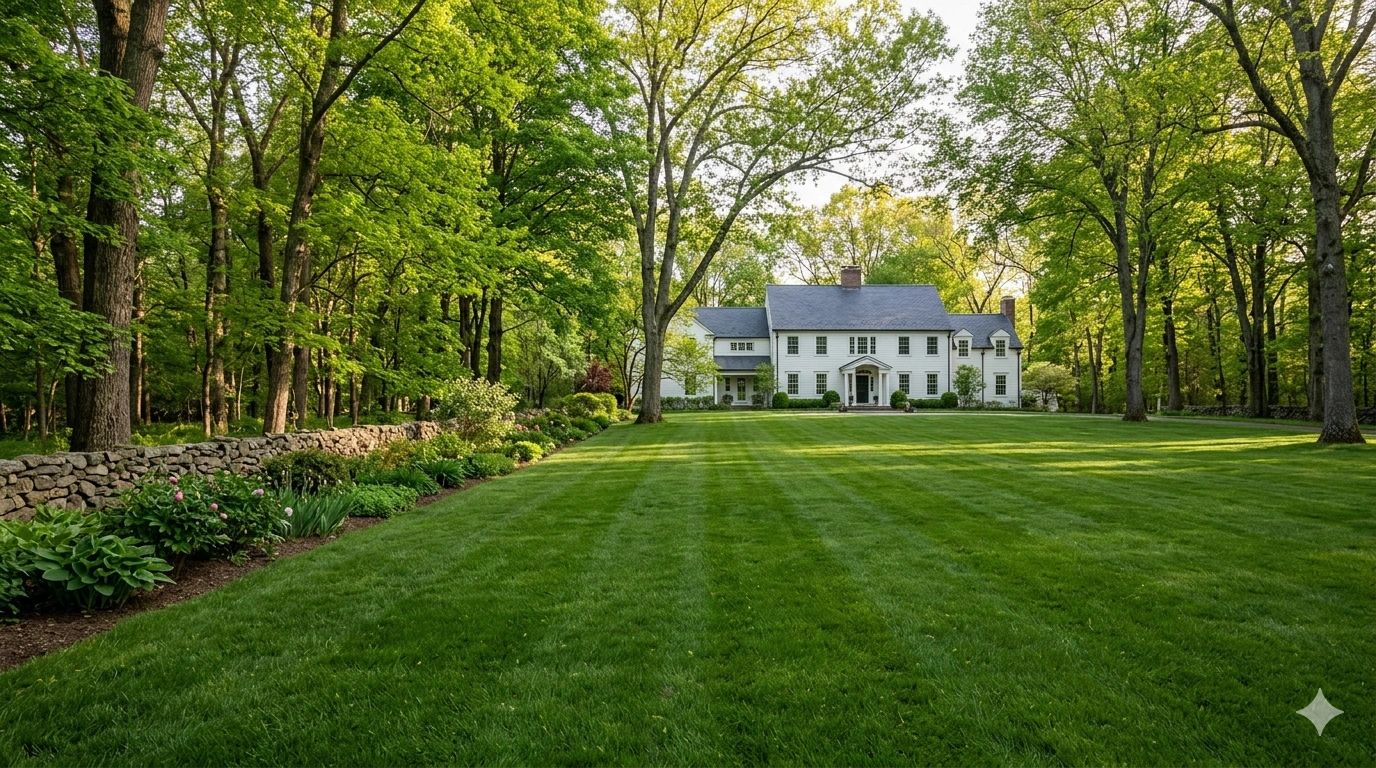
Premium markets covered in this guide
The inland Fairfield County and Housatonic Valley corridor represents one of the most distinctive premium residential markets in Connecticut and one of the least understood from outside the region. Outside Connecticut, the Greenwich and Westchester estate corridors get most of the attention. Inside Connecticut, coastal Fairfield County dominates the conversation. But the inland corridor running from Shelton north through Monroe and Newtown along the Housatonic Valley, combined with the western inland corridor from Easton through Redding, Weston, Wilton, and Ridgefield, represents a depth of premium estate residential character that genuinely rivals the coastal markets — built on substantially larger lot sizes, more substantial mature canopy, more rural-leaning landscape character, and the kind of multi-generational estate ownership that produces 30-year landscape thinking.
This is not coastal Fairfield County. The Greenwich, Westport, Darien, and Fairfield coastal corridor — with its Long Island Sound waterfront, hedgerow estates, salt aerosol exposure, and refined coastal residential character — operates as a structurally distinct market with its own variety considerations. The inland Fairfield County corridor is genuinely different in ways that matter for sod selection: lots are typically 2-3 acres minimum (Easton's northern section requires 3 acres, Weston requires 2 acres in its R-2A district, Wilton requires 2 acres across most of the town, Ridgefield requires 2 acres in RAA), salt exposure is essentially absent, mature canopy is more substantial on most properties, and the buyer profile leans more toward old-line professional services and creative class wealth than the institutional finance concentration that defines lower coastal Fairfield County.
Each town within this corridor has its own distinctive character that affects variety selection. Shelton's history as Huntington — the original 1789 town name — and its three distinct historic neighborhoods (Coram/Long Hill, White Hills, Huntington Center) create three different sod markets within one city. Newtown spans roughly 60 square miles with the third-largest town footprint in Connecticut, encompassing Sandy Hook village along the Pootatuck River, the Lake Zoar and Lake Lillinonah waterfront estate corridors, and the substantial inland estate properties along Castle Hill and Great Ring Road. Easton's split zoning (1-acre in Lower Easton along Sport Hill Road and Morehouse Highway, 3-acre in Northern Easton) produces two structurally different residential markets within one town. Weston's R-2A district ties together approximately one-third of the town in permanent open space (Devil's Den Preserve at 1,800 acres is the largest in Connecticut, plus Saugatuck Reservoir and Lachat Town Farm). Wilton's five designated historic districts and 27-square-mile footprint with the Norwalk River running through it. Ridgefield's late-19th-century summer cottage estates (some original parcels exceeded 2,000 acres, broken up during the Great Depression into the 2-acre subdivisions that now define the town).
These geographic and zoning specifics matter for sod selection in ways generic regional sod advice doesn't capture. This guide is the canonical reference for variety selection across the inland Fairfield County and Housatonic Valley corridor.
For broader Connecticut state-wide context, see our complete Connecticut sod guide. For coastal Fairfield County estate properties, see our Westchester / Greenwich / Fairfield County guide and our Westport coastal estate guide. For Trumbull specifically — which sits at the southern edge of this inland corridor — see our dedicated Trumbull sod guide. For the Litchfield County estate corridor immediately to the north, see our regional pillar covering the western Connecticut estate market.
Properties within the Saugatuck Reservoir watershed — substantial portions of Redding and Weston — face landscape practice considerations affecting fertility programs and pesticide use. That single fact pushes variety selection toward fine fescues across much of inland Fairfield County.
Quick Answer Guide: Best Sod for the Inland Fairfield County and Housatonic Valley Corridor
What's the best sod for Shelton's three distinct residential markets? Long Hill (Coram), White Hills (northern, most rural), and Huntington Center (historic) require different specifications. Long Hill's older established residential character with substantial mature canopy typically requires fine fescue blend specifications for shaded zones with Kentucky Bluegrass or bluegrass-fescue blends for open lawn areas. White Hills' agricultural-to-residential transition character with substantial open exposure supports Black Beauty Tall Fescue and bluegrass-fescue blends well. Huntington Center's historic district character with established mature trees typically justifies fine fescue specifications for shaded zones.
What's the best sod for Monroe estate properties along the Stevenson Dam and Lake Zoar corridor? Lake Zoar waterfront and water-view estate properties benefit from the lake microclimate (somewhat moderated temperatures, somewhat extended growing season) and the substantial mature canopy on most lake estate properties typically requires fine fescue specifications for shaded zones. The broader Monroe residential market along the Easton Road corridor and Wheeler Road estate areas supports the full variety landscape with variety zoning across larger estate properties.
What's the best sod for Newtown's substantial estate corridor along Castle Hill, Great Ring Road, and the broader 60-square-mile town? Newtown's substantial size produces genuinely varied conditions across the town. The Sandy Hook village area along the Pootatuck River requires different specifications than the inland estate corridor along Castle Hill. The Lake Zoar and Lake Lillinonah waterfront estates require yet different specifications. Variety zoning across estate properties is essentially required given the varied conditions on most multi-acre Newtown estates.
What's the best sod for Sandy Hook properties specifically? Sandy Hook's historic village character along the Pootatuck River, with the established residential corridor extending out from the village center and the Lake Zoar adjacent properties, supports refined sod work. Variety selection should account for the Pootatuck River corridor microclimate (somewhat warmer daytime conditions in the river valley, somewhat cooler night air drainage) and the substantial mature canopy on most established Sandy Hook properties.
What's the best sod for Easton's split-zoning residential market? Lower Easton along Sport Hill Road and Morehouse Highway (1-acre zoning) supports the standard variety landscape with site-specific variety choice. Northern Easton (3-acre zoning) produces substantial estate-scale properties with varied conditions across the lot — variety zoning is essentially required. The Bridgeport Hydraulic Company reservoir lands cut Easton off from much of Trumbull, Fairfield, and Weston, creating distinctive landscape identity. The Aspetuck River corridor through Easton produces river valley microclimate considerations.
What's the best sod for Redding estate properties along the Saugatuck Reservoir corridor? Redding's 2-acre minimum zoning, substantial mature canopy on most established properties, and the Saugatuck Reservoir watershed protection considerations produce specific variety considerations. Properties within the watershed face landscape practice considerations affecting fertility programs — fine fescue specifications with their lower fertility requirements and disease-resistant Kentucky Bluegrass cultivars work well within watershed contexts.
What's the best sod for Weston's R-2A estate properties? Weston's R-2A district — covering most residential land with 2-acre minimum, deep setbacks, low coverage limits — produces estate properties with substantial yard space and mature tree buffers. The town's approximately one-third permanent open space (Devil's Den Preserve, Saugatuck Reservoir, Lachat Town Farm) creates a landscape context where premium estate properties sit within substantial natural surroundings. Variety zoning across estate properties matches the R-2A residential character.
What's the best sod for Wilton's estate properties across the 27-square-mile town? Wilton's two-acre zoning, five designated historic districts, and the substantial premium residential character (including North Wilton, Wilton's most expensive neighborhood) supports the full variety landscape with variety choice driven by specific property conditions. The Norwalk River through the town produces a river valley microclimate. The historic districts require sympathetic landscape treatment with traditional variety specifications.
What's the best sod for Ridgefield's village historic district and surrounding 2-acre estate properties? Ridgefield's tree-lined Main Street historic district with late Victorian and Colonial architecture supports refined traditional variety specifications. The surrounding 2-acre subdivisions — built on the broken-up parcels of late-19th-century summer cottages — produce substantial estate properties with established mature landscape character. South Ridgefield is the most active residential corridor.
What's the best sod for Brookfield Lake Lillinonah and Bethel residential properties? The northern Housatonic Valley corridor — Brookfield along Lake Lillinonah and Bethel as the broader residential market — supports the full variety landscape with somewhat more suburban character than the larger-lot inland Fairfield County estate corridor to the south. Lake estate properties benefit from the lake microclimate.
Should I consider variety zoning across my inland Fairfield County estate property? Yes — particularly given the substantial 2-3 acre minimum zoning across most of this corridor. Variety zoning that matches each variety to its optimal conditions (Kentucky Bluegrass on showcase areas with irrigation, tall fescue or RTF in active-use zones, fine fescue blends in shaded transition zones under mature canopy) typically delivers substantially better outcomes than single-variety specifications across the varied site conditions common on estate-scale properties.
What Makes Inland Fairfield County Different From Coastal Fairfield County
Understanding why this corridor warrants its own variety selection guide requires understanding how it differs structurally from coastal Fairfield County. The differences shape sod selection in ways generic regional advice misses.
Salt aerosol exposure is essentially absent inland. Coastal Fairfield County properties within roughly two miles of Long Island Sound experience measurable salt aerosol exposure during storm-driven conditions, particularly during nor'easters and summer thunderstorms with onshore winds. This salt exposure produces tip burn on Kentucky Bluegrass at concentrations that fine fescue blends and tall fescue varieties tolerate substantially better. Coastal Greenwich, Westport, and Darien estate properties sometimes specify fescue-dominated blends specifically because of this salt exposure consideration. Inland properties — Shelton north of the lower river area, Monroe, Newtown, Easton, Redding, Weston, Wilton, Ridgefield — face essentially no salt exposure, which means Kentucky Bluegrass specifications work in inland zones where they would compromise on the coast. This is a meaningful structural difference that affects variety choice on otherwise comparable premium properties.
Lot sizes are substantially larger inland. Coastal Fairfield County premium properties typically run 1-2 acres on the highest-end estates, with many premium properties on smaller lots (half-acre to one acre is common in the most desirable Greenwich and Westport corridors). The inland corridor produces structurally larger lots: Easton's northern 3-acre minimum zoning, Weston's 2-acre R-2A across most of the town, Wilton's 2-acre zoning across most residential land, Ridgefield's 2-acre RAA standard, Newtown's substantial 2-5 acre estate properties. This lot size difference matters because larger lots produce varied conditions across single properties — sun and shade zones, irrigated and non-irrigated zones, formal lawn areas and active-use zones, ornamental gardens and woodland transitions. Variety zoning across the property is structurally necessary on 2-3 acre estate properties, where it's optional on 1-acre coastal properties.
Mature canopy is substantially more developed inland. The inland corridor includes substantial mature canopy on most established estate properties — century-old oaks, sugar maples, beeches, hickories, and white pines define the residential character of older estates. This is partly because the inland towns developed more slowly than the coastal corridor and retained more of the original woodland character through the 20th century, and partly because the larger lot sizes produced landscape designs that integrated rather than removed mature canopy. The substantial mature canopy substantially affects variety selection — fine fescue blend specifications are typically appropriate for shaded zones across most premium inland properties.
The buyer profile leans differently. Coastal Fairfield County premium residential buyers concentrate institutional finance executive families, hedge fund and private equity wealth, and the kind of newer-money character that defines the lower Greenwich and Westport corridors. The inland corridor leans somewhat differently — substantial concentration of professional services partnerships, creative class wealth (Weston specifically attracted artists, writers, and actors from New York starting in the 1930s), media and publishing executive families, and old-line professional services families. Wilton has substantial Fortune 500 corporate executive concentration. Ridgefield's late-19th-century history of summer cottages built by wealthy New Yorkers produced a multi-generational old-money character that persists in the present residential market.
These differences produce subtle but real implications for sod selection conversations. Coastal Greenwich finance executive families typically expect refined Kentucky Bluegrass specifications matching the institutional aesthetic of the broader landscape. Inland Weston creative class buyers may be more open to naturalized landscape integration, fine fescue specifications, and the kind of variety zoning that integrates lawn with woodland character. Ridgefield old-money families typically expect traditional refined specifications matching the village historic district character. Wilton corporate executive families often expect refined Kentucky Bluegrass on showcase areas with appropriate irrigation infrastructure.
The integrated estate corridor logic differs. Coastal Fairfield County operates as a continuous estate corridor running along the Sound from Greenwich east through Westport. The inland corridor operates as two related but distinct corridors — the Housatonic Valley corridor running from Shelton north through Monroe, Newtown, Brookfield, and Bethel along the river, and the western inland corridor running from Easton through Redding, Weston, Wilton, and Ridgefield along the Saugatuck and Norwalk River drainages. Estate property managers and landscape architects working in this market think in these connected corridors rather than as a single coastal continuum.
The Housatonic Valley Estate Corridor
The Housatonic Valley estate corridor running from Shelton north through Monroe, Newtown, Brookfield, and Bethel shares characteristics that affect variety selection across the corridor.
The river itself produces a distinctive geographic identity. The Housatonic River through this corridor — including the impounded sections at Lake Zoar (Stevenson Dam, between Monroe and Newtown) and Lake Lillinonah (between Newtown and Brookfield/Bridgewater) — creates river valley microclimate effects and substantial waterfront estate property character. Properties along the river, on the lake corridors, or in the broader Housatonic Valley share these geographic effects.
The river valley microclimate. The Housatonic Valley produces somewhat warmer daytime conditions in the river valley floor than the surrounding higher elevations, somewhat cooler night air drainage as cool air settles into the valley overnight, and somewhat more humid conditions during summer due to the river's moisture contribution. The practical implications for sod establishment: spring soil warming begins somewhat earlier on valley floor properties than higher-elevation ridges in this corridor, summer heat stress is somewhat more pronounced on valley floor without irrigation, fall installation extends slightly longer in the valley than on the surrounding ridges.
The Lake Zoar and Lake Lillinonah lake estate microclimates. The impounded sections of the Housatonic — Lake Zoar created by the Stevenson Dam, Lake Lillinonah further north — produce lake estate microclimates with somewhat moderated temperatures (the lake's thermal mass moderates both summer highs and winter lows), somewhat extended growing seasons compared to surrounding higher elevations, and the kind of waterfront and water-view estate residential character that justifies refined sod specifications. Lake estate properties typically have substantial mature canopy from the established residential character along these corridors.
The alluvial soils along the river valley. The Housatonic River valley floor includes substantial alluvial deposits — variable texture, generally good drainage, often with stone content from the river's geological history. These soils typically benefit from compost amendment to improve organic matter content and water retention. Higher-elevation properties on the ridges between the river and the broader inland landscape have rockier glacial till soils with shallower topsoil depth in many areas.
The connecting cultural identity. The Housatonic Valley creates a connecting cultural identity for the eastern portion of this corridor that's genuinely distinct from coastal Fairfield County. The Naugatuck Valley industrial heritage of Shelton (transformed from agricultural Coram in 1680 through the Sanford & Shelton tack factory in the 1860s through the Ousatonic Water Company industrial period through the 20th-century industrial decline through the present revitalization) shapes Shelton's residential character differently than Monroe's somewhat more agricultural-residential identity or Newtown's mixed identity (the iconic 110-foot flagpole on Main Street as the town symbol, the substantial inland estate corridor, the Sandy Hook village character).
The Western Inland Fairfield County Estate Corridor
The western inland corridor — Easton through Redding, Weston, Wilton, and Ridgefield — shares different characteristics that produce its own integrated market identity.
The 2-acre minimum zoning standard. This corridor is substantially defined by the 2-acre minimum zoning across most of its residential land. Weston's R-2A, Wilton's 2-acre standard, Ridgefield's RAA, Redding's 2-acre minimum, Easton's northern 3-acre zoning — these zoning standards produce structurally similar residential character across the corridor. The 2-acre standard typically pairs with deep setbacks, low coverage limits, and the kind of low-density residential character that defines this corridor's identity.
The Saugatuck River drainage and Saugatuck Reservoir. The Saugatuck River runs through this corridor, with the Saugatuck Reservoir occupying substantial land in Redding and Weston. The watershed protection considerations affect landscape practices on properties within the watershed — fertility programs and pesticide use require attention to watershed standards. The reservoir itself creates a landscape feature that defines the residential identity of properties in the surrounding corridor.
The Norwalk River drainage in Wilton. Wilton sits along the Norwalk River, with the Norwalk River Valley Trail running along the central waterway through the town. The river valley produces microclimate effects similar to the Housatonic — somewhat warmer daytime conditions in the valley, somewhat cooler night air drainage, slightly extended growing season.
The substantial preserved open space. This corridor includes substantial preserved open space that affects residential landscape character. Weston's Devil's Den Preserve at 1,800 acres is the largest in Connecticut. Wilton's Weir Farm National Historical Park (60 acres dedicated to American painting, formerly the studio of impressionist J. Alden Weir) provides cultural anchor. Redding's Saugatuck Reservoir and surrounding watershed lands. Easton's reservoir lands operated by Bridgeport Hydraulic Company subsidiaries (cutting Easton off from much of Trumbull, Fairfield, and Weston on an east-west basis). These preserved lands shape residential landscape expectations across the corridor — properties here exist in substantial natural surroundings that influence variety selection toward landscape integration rather than displacement.
The historic residential character. The corridor includes substantial historic residential character. Wilton's five designated historic districts. Ridgefield's tree-lined Main Street with late Victorian and Colonial architecture and the late-19th-century summer cottage history (some original parcels exceeded 2,000 acres before Great Depression breakup into the current 2-acre subdivisions). Weston's stone walls — centuries-old stone fences that are still visible today. Easton's preserved working farms (over twenty active working farms, more than one-third of land permanently preserved). This historic character produces residential expectations that favor traditional refined variety specifications.
The buyer profile. The corridor's buyer profile is genuinely distinctive — Weston attracts creative class wealth (artists, writers, actors with strong NYC commute history). Wilton has substantial Fortune 500 corporate executive concentration. Ridgefield's old-money multi-generational character connects to the late-19th-century summer cottage history. Redding and Easton lean somewhat more rural-traditional. These distinctions affect how variety conversations actually go on premium properties.
Sod Variety Guide for Inland Fairfield County Properties
The cool-season variety landscape works well across the inland Fairfield County corridor, with variety choice driven by specific property conditions, sun exposure, irrigation availability, lot size, mature canopy, and use patterns.
Kentucky Bluegrass
Kentucky Bluegrass is the classic premium aesthetic across the inland Fairfield County estate corridor. Deep emerald green color, fine soft texture, dense growth from rhizomes that allow self-repair from foot traffic damage, and the kind of refined appearance that the premium estate culture across the corridor expects.
Kentucky Bluegrass requires reliable irrigation through inland Fairfield County summers — without it, KBG may go summer-dormant during heat stress periods. Properties with established irrigation infrastructure across the inland corridor can support Kentucky Bluegrass at its highest performance level.
Modern Kentucky Bluegrass cultivars are dramatically different from previous generations. Named cultivars from the Midnight family ( see our Midnight Kentucky Bluegrass guide), Award-type cultivars, and blended elite varieties have been bred for deeper color, improved disease resistance, and tighter density. For historical context, see our Merion Kentucky Bluegrass history and origin and rise of Kentucky Bluegrass.
Kentucky Bluegrass is the right choice for inland Fairfield County properties with at least 6 hours of direct sun daily, established or planned irrigation, refined estate aesthetic priority, and long-term lawn quality across decades as the priority over first-season convenience.
Black Beauty Tall Fescue and Bluegrass-Fescue Blends
Black Beauty Tall Fescue — a premium tall fescue variety developed by Jonathan Green — combines refined aesthetic with substantial drought tolerance, heat tolerance, and broader environmental resilience. Deep root system extending 2-3 feet into the soil profile. Performs reliably without the irrigation infrastructure Kentucky Bluegrass demands.
Bluegrass-fescue blends combine Kentucky Bluegrass with tall fescue, capturing much of bluegrass's aesthetic refinement while gaining tall fescue's drought tolerance. One of the most popular sod specifications across the inland Fairfield County corridor for properties wanting refined appearance with reliable performance.
Black Beauty and bluegrass-fescue blends are particularly appropriate for larger lot estate properties where irrigation across the full lawn footprint is impractical, the non-showcase zones of estate properties where refined character matters but peak aesthetic isn't the priority, properties on higher-elevation ridges with rockier shallower soils that drain faster than KBG prefers (Easton's Northern 3-acre zone, Weston's higher elevations, Ridgefield's hilly residential corridors), and the broader inland Fairfield County residential market where reliable performance matters more than peak aesthetic perfection.
For complete variety comparison framework, see our tall fescue vs Kentucky Bluegrass comparison.
RTF (Rhizomatous Tall Fescue)
RTF combines tall fescue durability with self-repair through rhizomes. The premier choice for active-use inland Fairfield County properties with high foot traffic, families with dogs, kids running on the lawn, or substantial active family use that exceeds standard cool-season turf tolerance.
RTF is particularly relevant for family properties across the inland corridor with active children, properties with substantial dog activity (see our most dog-resistant sod guide), estate properties with informal play areas alongside refined ornamental zones, and the active-use zones of large estate properties where variety zoning specifies different varieties for different property zones.
For dog urine spot prevention and repair, see our dog urine spot prevention guide and dog urine spot repair guide.
Fine Fescue Blends
Fine fescue blends are essential for the inland Fairfield County corridor given the substantial mature canopy across most established estate properties.
The substantial mature canopy on most established inland Fairfield County estate properties — century-old oaks, sugar maples, beeches, hickories — produces conditions where Kentucky Bluegrass cannot establish in the deeply shaded zones. Fine fescues are the only viable cool-season variety for those areas. Properties across the corridor with substantial mature trees typically benefit from fine fescue blend specifications for shaded zones.
Premium fine fescue blends combine Chewings fescue, hard fescue, and creeping red fescue. Lower water and fertility requirements than other varieties — particularly relevant for the larger lot sizes common across the inland corridor where irrigating the full property is impractical and watershed protection considerations affect fertility programs in Saugatuck Reservoir watershed properties (much of Redding and Weston). See our shaded lawns complete variety guide and fine fescue sod guide.
Variety Zoning Across Estate Properties
The 2-3 acre estate properties common across the inland Fairfield County corridor benefit substantially from variety zoning across the property — Kentucky Bluegrass in the showcase entertainment and front lawn areas where irrigation is reliable, tall fescue or RTF in the play and active-use zones, fine fescue blends in the shaded transition zones under mature canopy, and possibly different specifications for transitional zones where front lawn meets woodland edge.
This kind of zoned approach matches each variety to its optimal conditions across the property rather than forcing a single variety choice across varied site conditions. Estate properties with varied conditions across multiple acres typically benefit substantially more from this approach than smaller properties where single-variety specifications work adequately.
The Shelton Premium Market
Shelton's distinctive character comes from its three historic neighborhoods, each with different residential character that affects sod selection.
The Long Hill (Coram) section. The Long Hill section was the first English settlement in Shelton — settled in 1680 by farmers from Stratford, originally called Coram by the Native Americans (a reservation occupied until 1732). Today's Long Hill is the established residential corridor along Long Hill Avenue and the surrounding streets, with substantial mature canopy from the established residential character that has been maintained for generations. The Long Hill premium residential market typically requires fine fescue blend specifications for shaded zones (substantial mature canopy is the defining landscape character) with Kentucky Bluegrass or bluegrass-fescue blends for open lawn areas.
The White Hills section. White Hills is Shelton's most rural section — northern, named for the higher altitude (snow melts slower in spring, lyme rock visible, wild dogwood blossoms). It borders Monroe to the north and west, with the Housatonic River to the east. The neighborhood retains substantial agricultural character — multigenerational family farms (Jones Family Farms is a Shelton landmark in this section), preserved farmlands, and the kind of agricultural-to-residential transition character that produces somewhat more open exposure than Long Hill. White Hills properties support Black Beauty Tall Fescue and bluegrass-fescue blends well, with Kentucky Bluegrass on showcase areas where irrigation is established.
The Huntington Center historic district. Huntington Center is the heart of historic Shelton — established as Ripton Parish in 1717 before becoming Huntington in 1789, then Shelton in 1919. The historic district includes Colonial Revival, Tudor Revival, and Bungalow architecture from the early 20th-century residential development. Properties in the historic district typically have substantial mature canopy and refined residential character that justifies fine fescue specifications for shaded zones with Kentucky Bluegrass on open lawn areas.
The Riverwalk and downtown corridor. The 10-acre Riverwalk Park along the Housatonic, the downtown revitalization corridor along Howe Avenue, and the surrounding residential market produce the urban-suburban premium character of the broader Shelton market.
The two private golf course corridors. Highland Golf Club of Shelton (founded 1900, downtown) and Brownson Country Club (Huntington section, 18-hole) produce country club estate culture that influences variety expectations on properties in their corridors. The country club aesthetic typically justifies Kentucky Bluegrass specifications on properties with established irrigation.
Variety considerations specific to Shelton:
The Housatonic River corridor through Shelton produces alluvial soils on the river valley properties with somewhat better drainage and somewhat warmer microclimate than the higher-elevation residential corridors. The White Hills higher elevations have the rockier soils with shallower topsoil characteristic of the corridor's hilly geography. The substantial mature canopy across Long Hill and Huntington Center justifies fine fescue specifications for shaded zones.
The Monroe Premium Market
Monroe's residential character connects the inland Fairfield County identity to the Naugatuck Valley industrial heritage, producing a distinctive market with substantial estate corridor and lake estate character.
The Stevenson Dam and Lake Zoar corridor. The Stevenson Dam — between Monroe and Newtown, impounding the Housatonic to form Lake Zoar — defines the lake estate corridor in eastern Monroe. Lake Zoar waterfront and water-view properties in Monroe support premium estate sod work with the lake microclimate considerations (somewhat moderated temperatures, somewhat extended growing season). The substantial mature canopy on most lake estate properties typically requires fine fescue specifications for shaded zones.
The Easton Road estate corridor. Properties along Easton Road through Monroe — connecting to the Easton premium estate corridor to the south — support substantial estate-scale residential character. The combination of Monroe's residential market with the immediate Easton estate corridor produces an integrated premium market across this corridor.
The Wheeler Road corridor. Properties along Wheeler Road and the surrounding northern Monroe estate corridor support substantial premium residential character with rural-leaning identity.
The broader Monroe residential market. Beyond the estate corridors, Monroe's broader residential market — including the central residential corridor along Route 111 and the surrounding suburban premium residential market — supports the full variety landscape.
Variety considerations specific to Monroe:
The Lake Zoar adjacent properties benefit from the lake microclimate. Variety choice for waterfront properties should account for the proximity to water and any seasonal moisture variation around the lake's water level changes. Monroe's substantial mature canopy on most established estate properties typically justifies fine fescue specifications for shaded zones. The substantial larger-lot character across the estate corridors supports variety zoning across estate properties.
The Newtown and Sandy Hook Premium Market
Newtown is the third-largest town in Connecticut by area at approximately 60 square miles, producing genuinely varied residential character across the town that affects sod selection substantially.
The town's iconic identity. The 110-foot flagpole on Main Street (the 20-foot by 30-foot summer American flag raised by Newtown Hook & Ladder Fire Co.) is the town symbol. Newtown center along Main Street with vintage homes maintained to period architecture creates the historic core. The town's substantial residential variety extends well beyond this historic core.
Sandy Hook village and the Pootatuck River corridor. Sandy Hook is a historic village in the western part of Newtown, along the Pootatuck River, with established residential character extending out from the village center. The Sandy Hook village has undergone substantial revitalization over the past decade, with downtown shops, restaurants (Figs Wood Fired Bistro, The Foundry Kitchen and Tavern, Cover Two Sports Café), and the kind of walkable village center character that distinguishes Sandy Hook within the broader Newtown context. Sandy Hook Promise is headquartered in the area. Treadwell Memorial Park provides the village's central recreational anchor with public pool, tennis courts, and playgrounds.
The Pootatuck River corridor through Sandy Hook produces a small-scale river valley microclimate (somewhat warmer daytime conditions in the river valley, somewhat cooler night air drainage). Properties along the Pootatuck and the surrounding Sandy Hook residential corridor support refined sod work with substantial mature canopy on most established properties typically justifying fine fescue specifications for shaded zones.
The Lake Zoar and Lake Lillinonah corridors. Newtown borders both Lake Zoar (the impounded Housatonic shared with Monroe via the Stevenson Dam) and Lake Lillinonah (the impounded Housatonic shared with Brookfield and Bridgewater). Both lake corridors include substantial waterfront and water-view estate properties supporting premium estate sod work with lake estate variety considerations. Properties along Pequot Path, Cedarhurst, and the surrounding Lake Zoar residential corridor are typical of this market.
The broader Newtown estate market. Substantial 2-5 acre estate properties across Newtown — along Castle Hill Road, Great Ring Road (one of Newtown's "original Great Ring parcels"), the Taunton Lake area, Mount Pleasant, and the surrounding rural-leaning premium residential market — represent some of the most substantial estate-scale residential character in inland Fairfield County. Many of these properties exceed 5 acres, with property listings showing 17+ acre parcels and 15-acre equestrian estates.
The Hawleyville and Botsford sections. The Hawleyville section in northern Newtown and the Botsford section in southern Newtown represent additional premium residential corridors within the broader town.
Paugussett State Forest and Collis P. Huntington State Park. These preserved lands provide substantial natural surroundings for Newtown residential properties, with hiking trails, wildlife habitat, and the kind of rural-natural landscape context that influences residential variety selection toward landscape integration.
Variety considerations specific to Newtown and Sandy Hook:
Newtown's substantial 60-square-mile footprint produces genuinely varied conditions that no single-variety specification optimally addresses. Sandy Hook village area properties differ from Lake Zoar waterfront properties differ from Castle Hill inland estate properties differ from Hawleyville northern corridor properties. Variety zoning across estate properties is essentially required given these varied conditions.
The substantial mature canopy on most established estate properties — particularly the older Sandy Hook residential corridor and the broader Newtown estate market — typically requires fine fescue blend specifications for shaded zones. The Lake Zoar and Lake Lillinonah corridors produce lake estate microclimates. The Pootatuck River corridor through Sandy Hook produces a smaller-scale river valley microclimate.
The Easton Estate Corridor
Easton represents one of the most distinctive premium residential markets in Fairfield County. The town's split zoning — 1-acre in Lower Easton along Sport Hill Road and Morehouse Highway, 3-acre in Northern Easton — produces two structurally different residential markets within one town. The Bridgeport Hydraulic Company reservoir lands cut Easton off from much of Trumbull, Fairfield, and Weston on an east-west basis, creating distinctive landscape identity. Easton has more than twenty active working farms with more than one-third of land permanently preserved.
Lower Easton (1-acre zoning). The southern portion of Easton along Sport Hill Road and Morehouse Highway corridor, developed earlier (the Sport Hill Road area was developed in the late 1920s onward as smaller residential lots), supports the standard variety landscape with site-specific variety choice. Lower Easton properties typically have somewhat smaller lots than the northern 3-acre zone but still substantial mature canopy on most established properties.
Northern Easton (3-acre zoning). The 3-acre minimum zoning across the northern portion of Easton produces substantial estate-scale residential character. The Aspetuck section, the broader northern Easton residential corridor, and the integrated estate market with adjacent Redding produce a premium estate corridor with rural-leaning identity. The 3-acre minimum produces varied conditions across single properties — sun and shade zones, irrigated and non-irrigated zones, formal lawn areas and woodland transitions, possibly working farm components on some larger properties.
The Aspetuck River corridor. The Aspetuck River through Easton produces a small-scale river valley microclimate. Properties along the Aspetuck and the surrounding corridor support substantial estate-scale residential character with the river valley landscape considerations.
The Bridgeport Hydraulic Company reservoir context. The reservoir lands operated by Bridgeport Hydraulic Company subsidiaries (now part of Aquarion Water Company) cover substantial portions of Easton. The reservoir lands cut the town off from much of Trumbull, Fairfield, and Weston on an east-west basis, creating a distinctive landscape identity where Easton residential properties exist within substantial preserved natural surroundings. The watershed protection considerations affect landscape practices on properties within the watershed.
The working farm character. Easton's preservation of more than twenty active working farms and more than one-third of land in permanent preservation produces a residential context where premium estate properties exist alongside active agricultural land. This working farm character influences residential landscape expectations toward traditional refined character with agricultural integration rather than displacement.
Variety considerations specific to Easton:
The split zoning produces two structurally different sod markets. Lower Easton supports standard variety guidance based on specific property conditions. Northern Easton's 3-acre estate properties strongly benefit from variety zoning across the property to address varied conditions.
The substantial preserved open space (reservoir lands, working farms, conservation lands) produces residential context favoring landscape integration. Fine fescue specifications work well in transitional zones between formal lawn and the surrounding preserved landscape. Kentucky Bluegrass on showcase areas with irrigation matches the refined estate aesthetic.
The Redding Estate Corridor
Redding's 2-acre minimum zoning, substantial mature canopy on most established properties, and the Saugatuck Reservoir corridor character produce distinctive market identity within the inland Fairfield County corridor.
The Saugatuck Reservoir corridor. Properties along the Saugatuck Reservoir through Redding face watershed protection considerations affecting fertility programs and pesticide use. Variety choices that minimize fertility requirements (fine fescues particularly) and disease-resistant Kentucky Bluegrass cultivars work well within watershed contexts.
The Redding center and historic district. The Redding center along Route 107, the historic district, and the surrounding established residential corridor support refined residential character.
The West Redding corridor. Properties along the West Redding section, particularly the residential corridors along Limekiln Road and the surrounding area, support substantial premium estate residential character.
The Georgetown corridor. The Georgetown section in southern Redding represents an established residential corridor within the broader town.
The broader Redding estate market. Substantial 2+ acre estate properties across Redding support substantial estate-scale residential character with rural-leaning identity. Substantial portions of Redding are in conservation lands, watershed lands, and preserved open space.
Variety considerations specific to Redding:
The Saugatuck Reservoir watershed protection considerations affect landscape practices on properties within the watershed. Fine fescue specifications with their lower fertility requirements work well in this context. Kentucky Bluegrass cultivars with strong disease resistance reduce the need for pesticide intervention.
Redding's substantial mature canopy on most established properties typically justifies fine fescue specifications for shaded zones. The 2-acre minimum zoning produces estate-scale properties that benefit from variety zoning across the property.
The Weston Estate Corridor
Weston's R-2A district covers most residential land with 2-acre minimum, deep setbacks (50-foot front, 30-foot side and rear), and 15% maximum coverage. The town's approximately one-third permanent open space (Devil's Den Preserve at 1,800 acres — the largest in Connecticut, plus Saugatuck Reservoir, Lachat Town Farm at 42 acres, Bisceglie-Scribner Park) creates a landscape context where premium estate properties exist within substantial natural surroundings.
The R-2A residential character. The R-2A district produces estate properties with substantial yard space, mature tree buffers, and the kind of low-density residential character that defines Weston's identity. Two-acre minimums combined with deep setbacks and low coverage limits result in homes that sit far apart with substantial landscape between properties.
Lower Weston versus North Weston. Lower Weston near the Westport border produces somewhat different residential character than North Weston tucked between Devil's Den Preserve and Saugatuck Reservoir. Lower Weston has somewhat more developed residential character; North Weston has somewhat more rural character.
The country club corridors. Aspetuck Valley Country Club (along the Aspetuck River, golf course and luxury amenities) and Patterson Club produce country club estate culture. Weston Field Club provides casual family-oriented club character. Aspetuck Country Club is in the surrounding area.
The creative class wealth concentration. Weston has a documented history of attracting artists, writers, actors, and creative class wealth from New York starting in the 1930s. The residential character reflects this creative class identity — substantial mature landscape integration, naturalized aesthetic preferences, and the kind of refined-rural character that distinguishes Weston from more institutional finance-dominated coastal markets.
The Saugatuck Reservoir watershed. Properties within the Saugatuck Reservoir watershed face the same watershed protection considerations as Redding properties. Fertility programs and pesticide use require attention to watershed standards.
Variety considerations specific to Weston:
The R-2A district's 2-acre minimum produces estate properties that benefit substantially from variety zoning. The substantial mature canopy on most properties (Weston is heavily wooded with the centuries-old stone walls reminiscent of the rustic environment) typically justifies fine fescue specifications for shaded zones.
The watershed considerations on Saugatuck Reservoir adjacent properties favor variety choices with lower fertility requirements. The creative class buyer profile may be more open to naturalized landscape integration and fine fescue specifications than more traditional refined Kentucky Bluegrass-only specifications.
The Aspetuck River corridor through Weston produces a small-scale river valley microclimate similar to the Aspetuck through Easton.
The Wilton Estate Corridor
Wilton's 27-square-mile footprint, two-acre zoning across most residential land, and five designated historic districts produce substantial premium estate residential character.
The North Wilton corridor. North Wilton is Wilton's most expensive neighborhood, with substantial estate-scale residential character. The North Wilton corridor along the surrounding residential streets supports refined sod work at estate scale.
The historic districts. Wilton's five designated historic districts produce refined traditional residential character. The historic district properties typically have substantial mature canopy from established residential character justifying fine fescue specifications for shaded zones.
The Norwalk River corridor. The Norwalk River through Wilton produces a river valley microclimate. The Norwalk River Valley Trail runs along the central waterway through the town. Properties along the river valley benefit from the somewhat moderated microclimate.
Weir Farm National Historical Park. The 60-acre Weir Farm — Connecticut's only national park dedicated to American painting, formerly the studio of impressionist J. Alden Weir — provides cultural and landscape anchor. The surrounding Weir Farm corridor properties support refined sod work with the cultural landscape character.
The Wilton Center. The town center with shops, services, and the Wilton Library produces the residential anchor for the broader town.
The corporate executive concentration. Wilton has substantial Fortune 500 corporate executive concentration with the kind of refined estate aesthetic expectations that typically justify Kentucky Bluegrass specifications on properties with established irrigation infrastructure.
Variety considerations specific to Wilton:
The two-acre zoning across most residential land produces estate properties that benefit from variety zoning. The substantial mature canopy on most established properties typically justifies fine fescue specifications for shaded zones. The historic districts require sympathetic landscape treatment with traditional variety specifications.
The Norwalk River corridor microclimate produces somewhat warmer growing conditions on valley floor properties than the higher-elevation residential corridors.
The Ridgefield Premium Market
Ridgefield's tree-lined Main Street historic district with late Victorian and Colonial architecture, the surrounding 2-acre RAA subdivisions, and the town's distinctive late-19th-century summer cottage history produce premium residential character with old-money identity.
The Main Street historic district. The historic Main Street with late Victorian and Colonial architecture, the surrounding historic residential corridor, and the established residential character support refined traditional variety specifications. Properties within and adjacent to the historic district typically have substantial mature canopy justifying fine fescue specifications for shaded zones.
The South Ridgefield corridor. South Ridgefield is the most active residential corridor with substantial premium residential character.
The 2-acre RAA estate corridor. The RAA zoning standard produces estate properties on the broken-up parcels of late-19th-century summer cottages. Some original parcels exceeded 2,000 acres before Great Depression breakup created the current 2-acre subdivisions. Properties within these subdivisions retain substantial mature landscape character from the original cottage estate development.
The summer cottage heritage. Wealthy New Yorkers in the late 19th century were attracted to Ridgefield's cool hills and built substantial summer cottages, some with over 2,000 acres. The Great Depression broke up these huge estates into the present 2-acre subdivisions. This history shapes Ridgefield's residential character — multi-generational old-money identity, refined traditional aesthetic expectations, and the kind of premium residential character that connects to the late-19th-century country estate tradition.
Mamanasco Pond and the surrounding corridor. Mamanasco Pond produces a landscape feature in the surrounding residential corridor.
Variety considerations specific to Ridgefield:
The historic district aesthetic standards favor traditional refined variety choices — Kentucky Bluegrass on showcase areas with irrigation, bluegrass-fescue blends for the broader residential market, fine fescue specifications for shaded zones under substantial mature canopy. Novel low-maintenance variety specifications or unconventional aesthetic choices are generally inappropriate for the historic context.
The 2-acre subdivisions produce estate-scale properties that benefit from variety zoning. The substantial mature canopy on most established properties from the original summer cottage development typically requires fine fescue specifications for shaded zones.
The Brookfield and Bethel Premium Markets
The northern Housatonic Valley premium residential corridor — Brookfield along Lake Lillinonah and Bethel as the broader residential market — supports the full variety landscape with somewhat more suburban character than the larger-lot inland Fairfield estate corridor to the south.
The Brookfield Lake Lillinonah corridor. Properties along Lake Lillinonah through Brookfield support premium estate character with waterfront and water-view properties. Lake estate variety considerations apply.
The Brookfield central residential corridor. The Brookfield central residential corridor along Federal Road and the surrounding established residential market supports standard variety guidance.
The Bethel residential market. Bethel's residential character — including the Stony Hill area and the surrounding residential corridors — supports the full variety landscape.
Variety considerations specific to Brookfield and Bethel:
The lake estate properties along Lake Lillinonah benefit from the lake microclimate. The broader residential markets support standard variety guidance based on specific property conditions. The corridor connects to the Litchfield County estate market further north.
Inland Fairfield County Soils and Site Preparation
The inland Fairfield County corridor includes substantial soil variation that affects sod establishment.
The Housatonic River valley alluvial soils. Properties along the Housatonic River valley through Shelton, Monroe, Newtown, and the broader Housatonic corridor include substantial alluvial and glacial outwash deposits — variable texture, generally good drainage, often with stone content from the river's geological history. These soils typically benefit from compost amendment to improve organic matter content.
The higher-elevation glacial till soils. The higher-elevation residential corridors across Easton's northern zone, Weston, Wilton, Ridgefield, and the upland portions of Newtown and Monroe have rockier glacial till soils with shallower topsoil depth in many areas. Variety choice should account for the rockier conditions and faster drainage.
The Saugatuck and Norwalk River valley soils. The river valleys through Wilton (Norwalk) and the Saugatuck through Redding/Weston produce somewhat similar alluvial conditions on a smaller scale than the Housatonic.
Established premium estate property topsoil. Premium estate properties across the corridor often have substantial established topsoil from decades of organic matter accumulation, particularly on lawn areas maintained for generations. This supports sod establishment well.
The construction-era compacted soil challenge. Newer construction across the corridor frequently has compacted construction-era subsoil with thin imported topsoil — a profile that affects sod establishment substantially. These properties typically benefit from substantial soil amendment before installation. Our topsoil quality guide, topsoil depth guide, and sandy soil compost amendment guide cover the soil considerations.
The biological underpinning of sod establishment matters across all soil conditions:
- Soil Biology and New Sod: Why Most Lawns Are Installed on Dead Soil
- Mycorrhizal Fungi and New Sod Rooting: The Complete Guide
- Glomalin: The Soil Protein That Determines Lawn Health
- Humic Acid and New Sod Establishment
- Biologically Active Starter Fertilizer for New Sod
- Soil pH and Sod: A Complete Guide
- Best Topsoil for Sod in CT
Installation Timing for Inland Fairfield County Properties
The inland Fairfield County corridor's continental-leaning climate (less moderated by Long Island Sound than the coastal corridor) creates two optimal sod installation windows.
Early fall (mid-August through October): Typically the best window. Soil temperatures remain warm enough for active rooting through October, heat stress is minimal, and the lawn catches two full rooting seasons before facing first-summer stress. See our September sod installation guide, why fall is the best time for sod installation in CT/MA/NY, and why September is one of the best months for sod in Fairfield County.
Spring (April through mid-June): The second-best window. Active root growth begins immediately as soil temperatures climb. Housatonic River valley floor properties can typically begin earlier than higher-elevation ridge properties. See our spring sod installation guide and is April a good time to lay sod in New England.
Summer (mid-June through mid-August): Possible but requires intensive watering and careful timing.
Late fall and winter: Generally avoided. See how late you can lay sod and how late you can install sod in Connecticut.
Aftercare for Inland Fairfield County Sod Installations
Our complete aftercare guides cover the establishment process:
- New Sod Aftercare: First 14 Days Watering Guide
- What to Do the First 30 Days After Sod Installation
- How New Sod Roots: The Complete 12-Month Timeline
- What Fertilizer Should You Use on New Sod
- Best Fertilizer for New Sod
- When to Fertilize New Sod in New England
- Can I Walk on Freshly Laid Sod?
Frequently Asked Questions
How does Lake Zoar's drawdown schedule affect sod establishment timing on waterfront Newtown and Monroe properties?
Lake Zoar (the impounded Housatonic River created by the Stevenson Dam) experiences seasonal water level changes that affect waterfront and water-view estate properties. Spring sod installations on waterfront properties should account for any seasonal moisture variation around water level changes. Properties on the immediate waterfront edge may experience periodic moisture fluctuation that variety choice should account for — tall fescue varieties typically handle moisture variation better than pure Kentucky Bluegrass on the immediate waterfront zones.
What's different about establishing sod on Easton's northern 3-acre properties versus the Lower Easton 1-acre properties?
The northern 3-acre estate properties produce structurally varied conditions across single lots — sun and shade zones, irrigated and non-irrigated zones, formal lawn and woodland transitions, possibly working farm components on larger properties. Variety zoning is essentially required to optimize sod performance across these varied conditions. Lower Easton 1-acre properties produce more uniform conditions across the lot where single-variety specifications work adequately. The split zoning genuinely produces two different sod markets within one town.
How do the Saugatuck Reservoir watershed restrictions affect fertilizer programs on Weston and Redding estate properties?
Properties within the Saugatuck Reservoir watershed (substantial portions of both Weston and Redding) face landscape practice considerations affecting fertility programs and pesticide use. The watershed protection standards favor variety choices with lower fertility requirements (fine fescues particularly), disease-resistant Kentucky Bluegrass cultivars that reduce pesticide intervention needs, and the kind of biological soil management approach covered in our biologically active starter fertilizer guide and soil biology guide. Property owners within the watershed should consult Aquarion Water Company guidelines and local conservation commissions for specific restrictions.
What's the variety choice for the woodland edge transitions common on Easton, Redding, and Weston estate properties?
Woodland edge zones — where formal lawn meets surrounding woodland or preserved natural lands — typically perform best with fine fescue blends. The fine fescue species (Chewings fescue, hard fescue, creeping red fescue, slender creeping red fescue) tolerate the partial shade, lower fertility, and naturalized aesthetic appropriate to woodland edge transitions better than Kentucky Bluegrass or tall fescue. This is particularly relevant for inland Fairfield County estate properties where woodland edge transitions are common landscape features given the substantial preserved open space and mature woodland across the corridor.
How does the Pootatuck River corridor microclimate affect sod selection in Sandy Hook?
The Pootatuck River through Sandy Hook produces a small-scale river valley microclimate — somewhat warmer daytime conditions in the river valley, somewhat cooler night air drainage, somewhat extended growing season compared to surrounding higher-elevation areas. Properties along the Pootatuck and the Sandy Hook village corridor benefit from these conditions. Variety choice for Pootatuck waterfront properties should account for any seasonal moisture variation along the river.
What's the difference between inland Fairfield County and coastal Fairfield County for sod selection?
The inland corridor — Shelton, Monroe, Newtown, Sandy Hook, Easton, Redding, Weston, Wilton, Ridgefield, Brookfield, Bethel — has substantially larger lot sizes (2-5 acre estates common, 3-acre minimum in Northern Easton, 2-acre minimum in Weston/Wilton/Ridgefield/Redding), more substantial mature canopy on most properties, essentially no salt aerosol exposure, and rural-leaning premium residential character. Coastal Fairfield County (Greenwich, Westport, Darien, Fairfield) has smaller lot sizes, hedgerow estate character, salt exposure considerations affecting variety performance within roughly two miles of the Sound, and denser premium suburban character. Variety zoning matters more on inland estate properties given the larger lot sizes and varied conditions.
Should I use Kentucky Bluegrass or tall fescue for my inland Fairfield County estate property?
Properties with reliable irrigation across the showcase areas typically support Kentucky Bluegrass at its highest performance level on those zones. The non-showcase zones, the active-use areas, and properties without comprehensive irrigation typically perform better with tall fescue varieties or RTF. Variety zoning across estate properties — KBG on showcase areas, tall fescue on broader zones, fine fescues on shaded zones — typically delivers the best result on 2-3 acre estate properties common across the corridor.
Does Sandy Hook have different variety considerations than the broader Newtown estate market?
Yes. Sandy Hook's village character along the Pootatuck River produces somewhat different conditions than the broader Newtown estate market. The Pootatuck River corridor microclimate, the more established village residential character with substantial mature canopy in the village core, and the smaller-lot character of the village area itself differ from the larger 2-5 acre inland estate properties along Castle Hill, Great Ring Road, and the broader Newtown estate corridor. Sandy Hook properties along the immediate Pootatuck River may benefit from variety choices accounting for the river corridor moisture variation; the broader Sandy Hook residential corridor supports the full variety landscape with site-specific choice.
How does Wilton's Norwalk River corridor affect variety selection?
The Norwalk River through Wilton produces a river valley microclimate — somewhat warmer daytime conditions, somewhat cooler night air drainage, somewhat extended growing season. Properties along the Norwalk River corridor and the Norwalk River Valley Trail support the full variety landscape with the river valley conditions affecting variety performance at the margin.
Are Ridgefield's village historic district properties different from the broader 2-acre subdivision properties?
Yes. The village historic district properties typically have smaller lots, more dense established residential character, more substantial mature street trees creating canopy across the village core, and the kind of historic district aesthetic standards that justify traditional refined variety specifications. The broader 2-acre subdivisions outside the historic district produce estate-scale properties on the broken-up parcels of late-19th-century summer cottages, with substantial mature landscape from the original cottage estate development.
Should I consider variety zoning across my inland Fairfield County estate property?
Yes — particularly given the substantial 2-3 acre minimum zoning across most of the corridor. Variety zoning that matches each variety to its optimal conditions (KBG on showcase areas with irrigation, tall fescue or RTF in active-use zones, fine fescue blends in shaded transition zones under mature canopy, possibly different specifications for woodland edge zones) typically delivers substantially better outcomes than single-variety specifications across the varied site conditions common on estate-scale properties.
A Final Note on the Inland Fairfield County Premium Sod Market
The inland Fairfield County and Housatonic Valley premium residential corridor represents a depth of estate character that deserves variety selection guidance specific to the market's distinctive conditions. The substantial larger-lot estate properties, the substantial mature canopy on most established properties, the rural-leaning premium residential identity, the integrated estate corridor logic that connects the Housatonic Valley corridor through the western inland Saugatuck and Norwalk River corridors, and the genuinely distinctive character of each town within the corridor — these are conditions that generic regional sod advice doesn't adequately address.
The right specification for any specific inland Fairfield County property is the one that aligns variety choice with actual site conditions, soil character, microclimate, irrigation availability, lot size, mature canopy, watershed considerations, and aesthetic priorities — informed by the specific geography of where the property sits within the integrated corridor logic that defines this market.
For Shelton homeowners across Long Hill, White Hills, Huntington Center, and the broader Housatonic riverfront residential market; Monroe estate property managers along the Stevenson Dam, Lake Zoar, Easton Road, and Wheeler Road corridors; Newtown and Sandy Hook residents across the substantial 60-square-mile residential variety from village character to inland estate corridors to lake waterfront; Easton estate buyers across the split-zoning Lower Easton 1-acre and Northern 3-acre markets; Redding estate owners along the Saugatuck Reservoir corridor; Weston residents across the R-2A district with Devil's Den and Saugatuck Reservoir context; Wilton estate property owners across the historic districts and North Wilton corridor; Ridgefield residents across the village historic district and surrounding 2-acre subdivisions; Brookfield Lake Lillinonah estate buyers; Bethel residential property owners; and the broader inland Fairfield County premium residential market — variety choice that produces a lawn performing reliably for decades depends on getting the basics right: variety appropriate to the specific site conditions, soil preparation that addresses the property's specific needs, installation timing that matches the optimal Northeast windows, and aftercare supporting the long-term establishment trajectory through the corridor's continental-leaning climate.
For broader Connecticut state context, see our complete Connecticut sod guide. For coastal Fairfield County estate properties, see our Westchester / Greenwich / Fairfield County guide. For Westport coastal estates specifically, see our Westport coastal estate guide. For Trumbull specifically — at the southern edge of this corridor — see our Trumbull sod guide. For the Litchfield County estate corridor immediately to the north, see our dedicated regional pillar. For the broader cool-season variety treatment, see our Kentucky Bluegrass, tall fescue, RTF, and fine fescue variety guides.
For specific projects across the inland Fairfield County and Housatonic Valley corridor, call (203) 806-4086 to discuss your property — there's no obligation, and our team installs sod every day across Connecticut.
Based on more than 30 years of hands-on sod, soil, and landscape experience across the Northeast.
Ready To Order?
Fresh-Cut Sod Delivered
CT Sod delivers Kentucky Bluegrass, Tall Fescue & RTF sod across CT, MA, NY, NJ, RI, NH, VT & ME.
Keep Reading
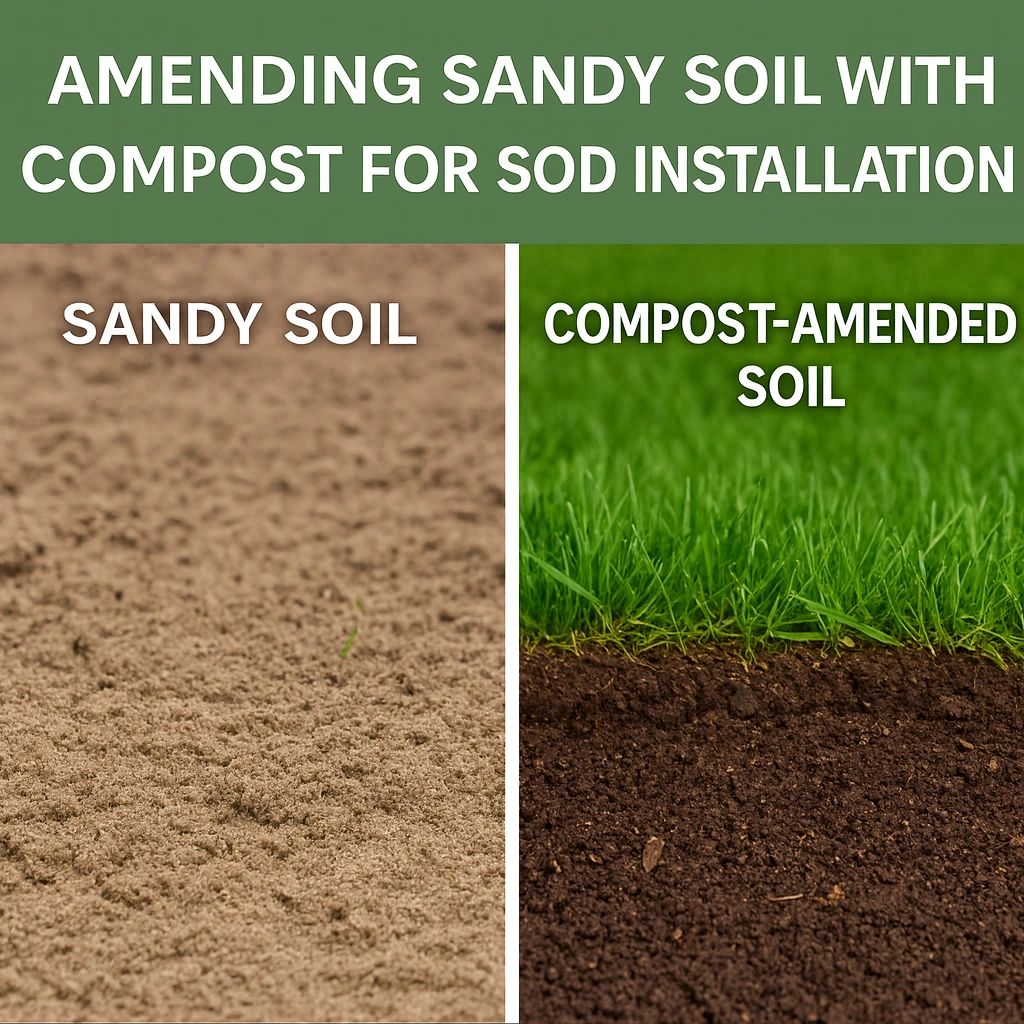
Amending Sandy Soil with Compost for Sod Installation CT, NY, MA
August 25, 2025
Best Drought-Tolerant Sod Varieties: Northeast Guide
April 30, 2026
Best Sod for Connecticut Lawns: Complete Regional Guide
April 28, 2026
Best Sod for Finger Lakes Properties: Regional Guide
April 29, 2026