Towns covered in this guide
The most consequential thing to understand about the Berkshires corridor before specifying sod is that most properties do not have irrigation systems. This is not a minor detail.
Sod in the Berkshires: An Honest Reference
The southern Berkshires corridor is a different sod market than most other parts of the Northeast, and the difference is not just geographic. The corridor's character — agricultural land use across most of the region, an environmentally-conscious culture that has been a defining feature of the area for generations, a clear divide between full-time local residents and wealthy second-home owners or transplants, mature canopy and lake density across most properties — produces a sod market with its own logic. Variety guidance that works for Westchester estates or Hamptons properties does not transfer cleanly to the Berkshires. Buyers, contractors, and landscape architects working in the corridor need reference content that reflects the actual conditions on the ground rather than generic Northeast sod information adapted for the region.
This guide covers what matters for sod installation across the southern Berkshires — Great Barrington, Stockbridge, Lenox, Lee, Sheffield, and the surrounding towns. The variety landscape and which conditions each variety actually fits. The irrigation reality across the corridor and how it shapes appropriate variety specification. The environmental ethic that runs through the corridor and what it means for sod choices. The two buyer profile patterns that drive most installations. The seasonal timing that works. And the failure modes that account for most disappointing installations across the corridor.
The Irrigation Reality Most Sod Content Ignores
The most consequential thing to understand about the Berkshires corridor before specifying sod is that most properties do not have irrigation systems. This is not a minor detail. It is the structural reality that shapes variety guidance for the entire corridor.
Drive through Great Barrington, Stockbridge, Lenox, Lee, or any of the surrounding towns and the dominant landscape character is open agricultural land — working pastures, old hay fields, family homesteads, small farms. The historic land use has been agricultural for generations, and the residential properties built across the corridor reflect that pattern. Most local properties do not have dedicated irrigation infrastructure because the agricultural and rural-residential building tradition never assumed it. Wells, spring water, and seasonal rainfall have carried the landscape for generations.
The exception is the wealthy second-home and transplant market that has expanded in the corridor over the last several decades. Manhattan owners with weekend homes in Stockbridge, Boston transplants in Lenox, retired finance professionals in Great Barrington, and similar buyers from outside the corridor have brought estate-tier landscape expectations into the area. These properties typically install full irrigation systems as part of the estate landscape build-out, and they specify sod with the assumption that reliable irrigation is in place. Tanglewood, the Mount, Naumkeag, Chesterwood, and the cultural and resort properties that anchor the corridor's tourism economy similarly maintain irrigation infrastructure consistent with their visitor-facing landscape standards.
This produces the corridor's defining sod-market split: the irrigated estate properties on one side and the non-irrigated working residential properties on the other. The variety that fits one side does not fit the other. Variety guidance that assumes irrigation across the entire corridor produces failure on roughly half the properties it is applied to, and most online sod content makes that assumption.
The Environmental Ethic Across the Corridor
The Berkshires has been culturally environmentally-conscious for generations. The corridor's history of conservation activism, agricultural preservation, land trust expansion, and environmental advocacy is older than most other parts of the Northeast and runs deeper through the local culture. The Trustees of Reservations, the Berkshire Natural Resources Council, the Housatonic Valley Association, and a long list of regional conservation organizations have shaped land use patterns across the corridor for decades. Many residents — both local and transplant — make landscape decisions through an explicit environmental lens that affects what they want from a lawn.
This matters for sod specification because the corridor's buyers more often than not care about water consumption, fertilizer use, pesticide application, pollinator habitat, and broader environmental stewardship questions in ways that buyers in other Northeast markets do not engage with as consistently. Variety guidance that ignores the environmental dimension and just pitches the showcase Kentucky bluegrass aesthetic misses the actual buyer in the Berkshires.
The varieties that align with the corridor's environmental ethic are different from the showcase-aesthetic varieties that dominate Westchester or Hamptons specifications. Tall fescue performs reliably with significantly less water than Kentucky bluegrass — its deep root system (up to 4 feet under favorable conditions) reaches moisture that Kentucky bluegrass cannot access, and it requires roughly half the irrigation input to maintain through summer. RTF carries the same drought tolerance plus self-repair through rhizomatous spread. Microclover-blend sod fixes atmospheric nitrogen into the soil through Rhizobium bacterial nodules, eliminating most of the synthetic fertilizer requirement that traditional lawns depend on, and it supports pollinator habitat through bloom periods. Fine fescue handles the heavily-canopied zones common across older Berkshires properties without supplemental irrigation.
These are the varieties that fit the corridor's actual conditions and culture. They are also the varieties that most sod content underplays in favor of Kentucky bluegrass because Kentucky bluegrass is what generic estate-market content sells.
The Variety Landscape for Berkshires Conditions
The five cool-season variety categories available across Northeast sod farms each have specific Berkshires applications. Matching variety to the property's actual irrigation infrastructure, sun exposure, intended use, and ownership priorities is the single most consequential decision in sod specification, and the corridor's distinct conditions make thoughtful variety selection more important here than in many other Northeast markets.
Tall Fescue is the practical default for most Berkshires residential properties. The deep root system handles the corridor's variable native soils — particularly the rocky hillside positions and the shallower soils common across the upper elevations — more reliably than shallow-rooted varieties do. The drought tolerance matters because most Berkshires properties do not have irrigation infrastructure. Tall fescue maintains green color through summer dry periods that would force Kentucky bluegrass into dormancy on the same site. The aesthetic is less refined than Kentucky bluegrass — the blade is coarser, the texture less uniform — but the practical performance across non-irrigated properties is meaningfully better.
The operational reality of tall fescue sod across the Northeast is that it is technically a blend. The product sold as "tall fescue sod" is approximately 90% tall fescue and 10% Kentucky bluegrass. Tall fescue is a bunch-type grass that does not produce rhizomes, and the Kentucky bluegrass component provides the rhizomatous binding that holds the sod together for harvest. The lawn performs as tall fescue (the 90% majority dictates performance), but the product is technically a blend.
The right Berkshires buyer for standard tall fescue: working family residential properties without irrigation, hillside properties with variable soil conditions, second-home properties prioritizing low-maintenance reliability, and any property where the absence of dedicated irrigation infrastructure makes drought tolerance more important than refined visual texture.
Kentucky Bluegrass is the showcase variety for the irrigated estate corner of the Berkshires market, and it performs exceptionally well in the corridor when its requirements are met. The combination of cool summer nighttime temperatures across the corridor, generally reliable rainfall through the growing season, and the matching of Kentucky bluegrass's biological preferences to Berkshires climate conditions makes the corridor one of the strongest Kentucky bluegrass markets in the Northeast — when the property has reliable irrigation. Without irrigation, Kentucky bluegrass goes dormant through Berkshires summer dry periods and thins out over time on most non-irrigated sites.
Modern Kentucky bluegrass sod typically combines multiple cultivars for genetic diversity and reliable disease resistance. The full cultivar landscape is covered in Kentucky Bluegrass: Guide to Varieties, Sod, and Turf Performance, and the breeding background of the most widely used premium cultivar is covered in Midnight Kentucky Bluegrass: Breeding, Characteristics, and Usage. The historical context for the cultivar that established the entire commercial Kentucky bluegrass sod industry is in History of Merion Kentucky Bluegrass.
The right Berkshires buyer for Kentucky bluegrass: estate properties with full irrigation infrastructure and full-sun lawn zones, second-home properties wanting showcase appearance during ownership visits, properties prioritizing the historic Berkshires aesthetic, and any property where the maintenance regime that pure Kentucky bluegrass requires is acceptable to the ownership.
RTF (Rhizomatous Tall Fescue) is the right answer for Berkshires properties that combine drought tolerance requirements with active use. RTF is the only commercially available 100% pure tall fescue sod, made possible by Barenbrug's patented breeding work over more than two decades that produced tall fescue cultivars with true rhizomatous behavior. The functional difference matters: standard tall fescue blends recover from damage only by reseeding, while RTF fills in damage automatically through underground rhizomatous spread, the same way Kentucky bluegrass does, but without losing any of the tall fescue performance characteristics.
For the Berkshires specifically, RTF is the variety that handles working family residences with active kids and dogs on properties without irrigation. The drought tolerance and the self-repair behavior together produce a lawn that survives the corridor's summer dry periods while recovering from the wear that active use creates. RTF is documented as the most dog-resistant cool-season sod available.
Bluegrass/Tall Fescue/Perennial Rye Blend is the most versatile option for Berkshires residential properties with mixed conditions. The blend combines Kentucky bluegrass's color and self-healing rhizomatous behavior, tall fescue's deep roots and drought tolerance, and perennial ryegrass's fast germination and wear tolerance. The genetic diversity protects against disease and stress in ways a single-species sod cannot. For Berkshires properties with mixed sun and shade exposure (which describes most properties given the corridor's mature canopy patterns), and for properties without irrigation that still want some Kentucky bluegrass character in the lawn, the blend produces more reliable performance than any single variety.
Microclover-blend sod has unusually strong relevance in the Berkshires because the corridor's environmental ethic and lake density both align with what microclover actually does. Microclover-blend sod combines cool-season turfgrass species with approximately 5% microclover by seed weight — a dwarf cultivar of white clover (most commonly the Pirouette and Pipolina cultivars from European breeding programs) bred for lawn compatibility through small leaf size, low growth habit, and tolerance of close mowing. The microclover component is a legume rather than a grass, which biologically distinguishes it from every other variety category. Microclover plants form root nodules containing Rhizobium bacteria that fix atmospheric nitrogen into plant-available form, providing ongoing fertility to the surrounding turfgrass without synthetic fertilizer input.
For Berkshires lakefront and pond-adjacent properties facing fertilizer restrictions within conservation buffer zones, microclover-blend sod provides a working lawn solution within the regulatory constraints. For environmentally-minded buyers across the corridor who want to reduce synthetic input and support pollinator habitat, microclover delivers on the broader stewardship priorities while still producing reasonable lawn performance. The complete guidance on when microclover is the right specification and when it is the wrong one is covered in Microclover Sod: Complete Guide for Northeast Properties.
The honest limitations matter. Microclover requires minimum 4 hours of direct sun and performs poorly in shade, which limits its application on heavily-canopied Berkshires estate properties. Microclover has lower foot traffic tolerance than turfgrass and is the wrong specification for active-family residential properties. Microclover is herbicide-incompatible — standard broadleaf weed control kills the clover component permanently — which limits its application on properties planning traditional weed management programs. Microclover blooms attract bees, which is a feature for pollinator-supporting buyers and a problem for households with bee-sting allergies. The microclover component has a finite functional lifespan of approximately 4 to 5 years before thinning and decline, after which the lawn either needs reseeding to restore the microclover content or transitions back toward functioning as a pure turfgrass lawn.
Fine Fescue addresses the heavily-shaded Berkshires property zones where the other variety categories fail. The fine fescue species — Chewings fescue, hard fescue, creeping red fescue — perform reliably under deep canopy where mature trees cast extensive shadow throughout the day. Many Berkshires estate properties have substantial lawn zones under historic specimen trees that exceed 100 years old, and fine fescue is the variety that produces functional lawn coverage in those conditions without requiring supplemental irrigation. Chewings fescue specifically handles the deepest shade conditions among the cool-season options.
Variety Zoning Across Berkshires Properties
A practical reality about Berkshires sod: most properties have varied conditions across the lawn area, and matching variety choice to actual conditions across the property — variety zoning rather than single-variety specification — produces lawns that deliver on their intended purpose more reliably than choosing one variety for the entire property.
A typical thoughtful Berkshires sod specification might use Kentucky bluegrass in the formal front lawn and main showcase zones where reliable irrigation is in place, RTF in the back lawn near outdoor living areas where active use is concentrated and irrigation may be limited, fine fescue in the shaded zones under mature canopy, microclover-blend sod in the lakefront buffer zone where fertilizer restrictions apply, and the Kentucky bluegrass/fescue/perennial rye blend in transition zones between conditions. Each variety performs in the conditions it actually fits, and the lawn delivers reliable appearance and function across the entire property.
This kind of variety zoning is what distinguishes thoughtful estate landscape work from generic sod installation. The variety choice is part of the broader landscape architecture of the property, not an afterthought specified at the bulk-material order stage.
The Two Buyer Profiles That Drive Most Berkshires Installations
The corridor's sod market splits into two distinct buyer patterns that need different variety guidance, different prep expectations, and different operational considerations.
Local working family residential properties make up the majority of the corridor's residential building stock. These properties typically feature smaller lawn areas (1,500-5,000 square feet), no irrigation infrastructure, more concentrated active use from kids and dogs, time pressure from the homeowner installation schedule, and budget priorities focused on reliable function rather than showcase aesthetics. The right variety guidance for these properties is tall fescue, the bluegrass/fescue/perennial rye blend, or RTF for properties with substantial active use. Kentucky bluegrass is the wrong specification for non-irrigated working family properties — it produces a lawn that struggles through summer dormancy and thins out over time without the irrigation infrastructure to support it.
Wealthy second-home and transplant estate properties drive the high-AOV portion of the corridor's sod market. Manhattan and Boston second-home owners, retired finance professionals from outside the corridor, and similar buyers from other markets typically build out estate landscapes with full irrigation infrastructure and specify sod with the showcase aesthetic in mind. These properties span Great Barrington's surrounding ridges, Stockbridge's historic estate inventory, Lenox's Gilded Age properties, and the lakefront estate corridors throughout the region. The right variety guidance for these properties is Kentucky bluegrass with reliable irrigation in the formal showcase zones, with shade-tolerant alternatives in canopied zones and microclover-blend sod where fertilizer restrictions apply.
The split matters because the same town can contain both buyer profiles on adjacent streets. Variety guidance that defaults to one profile and ignores the other produces failed installations on roughly half the properties in the corridor.
The Great Barrington Estate Install: A Reference Project
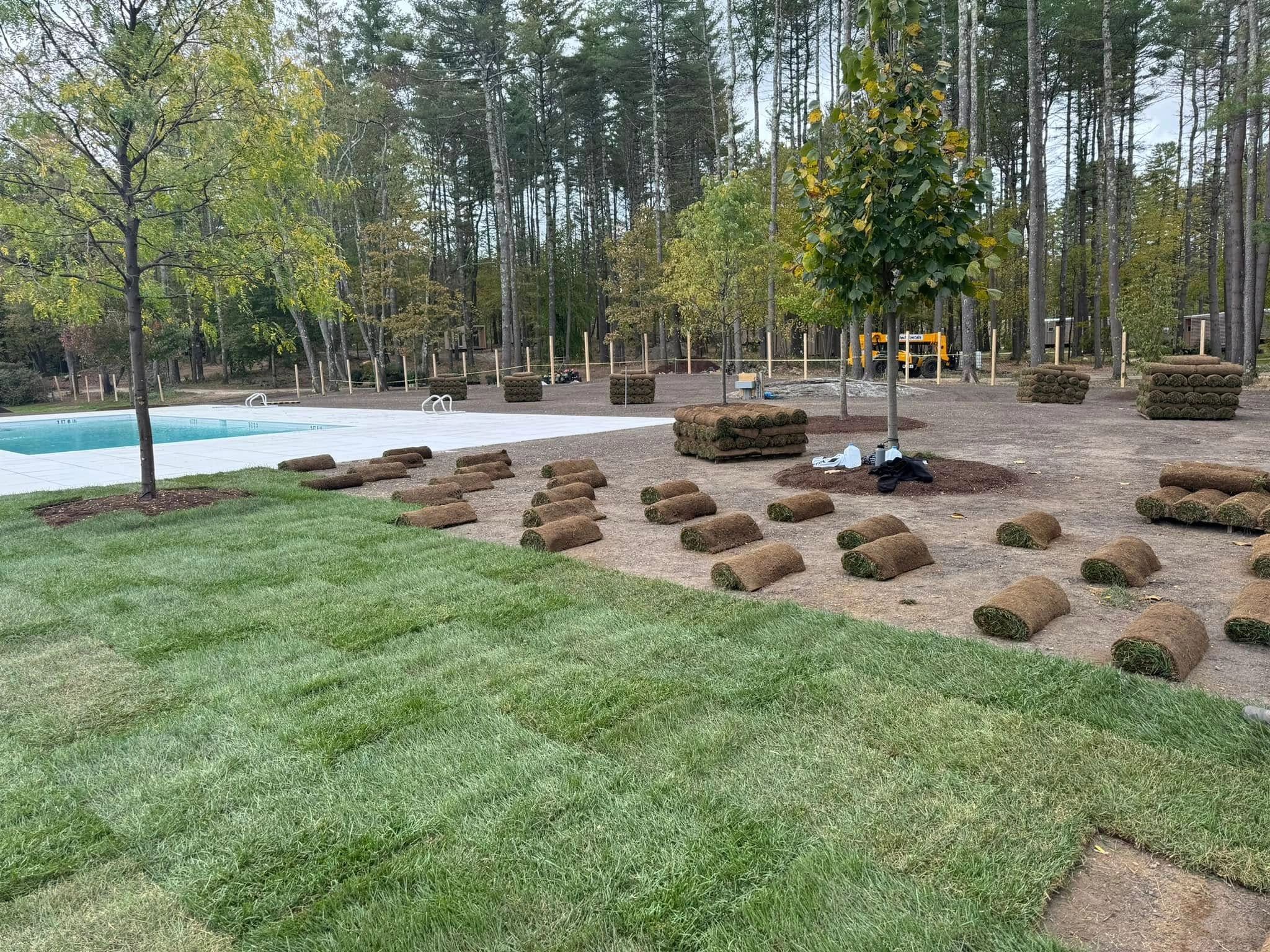
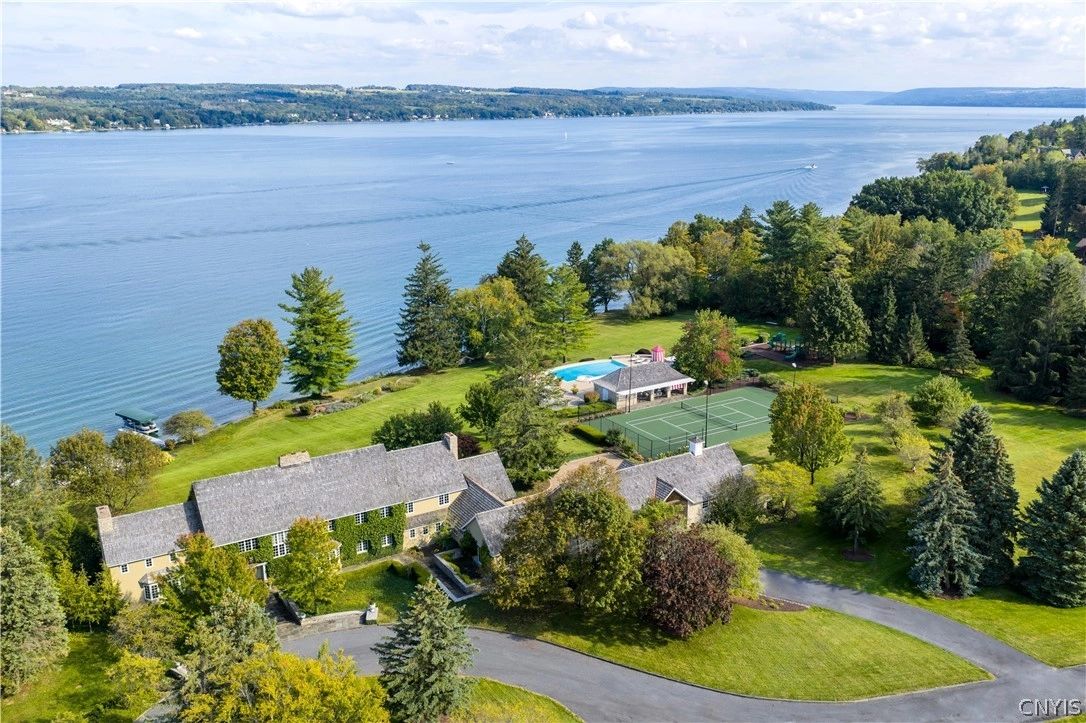
A 17,000 square foot Kentucky bluegrass installation completed in October 2025 on a Great Barrington estate property illustrates the operational reality of estate-tier Berkshires work. The property featured the typical southern Berkshires combination of mature pine canopy, a pool with surrounding hardscape and lawn, full-sun lawn zones in the formal areas, and the irrigation infrastructure that makes Kentucky bluegrass specification appropriate.
October installation timing matched the secondary peak window for Northeast cool-season sod establishment — warm soil temperatures supporting rapid root development, cool air temperatures reducing transplant stress, and the lawn entering winter dormancy with established root systems ready for vigorous spring green-up. The cool autumn temperatures across the Berkshires produce minimal heat stress on freshly installed sod, and the established irrigation infrastructure carried the lawn through the establishment period without crisis-level water management.
October Berkshires installations of this scale deliver an operational advantage that summer installations cannot match: the lawn's root system develops through fall before going dormant for winter, and by spring green-up the lawn is fully rooted and ready to deliver showcase appearance through the active growing season. This is why fall installation timing is the right call for Berkshires estate properties whenever project schedules allow — the establishment quality difference between October and July installations on irrigated estate properties is meaningful.
The Berkshires Towns: Property Notes
Great Barrington. The southern anchor of the estate corridor and the commercial center for the southern Berkshires. Properties span the full range from working family residences in town to substantial estate properties on the surrounding ridges. The mix of historic estate architecture, second-home ownership, and cultural institutions produces a buyer profile that maps cleanly onto the variety landscape based on individual property conditions.
Stockbridge. The historic center of the Berkshires estate corridor, home to the Norman Rockwell Museum, Chesterwood, the Naumkeag estate, and the Berkshire Theatre Group. Stockbridge estate properties prioritize the showcase aesthetic that defines the corridor's historic character. Kentucky bluegrass with irrigation is the dominant specification for formal lawn zones, with shade-tolerant alternatives in the heavily canopied zones common across older estate properties.
Lenox. The northern anchor of the southern estate corridor, home to Tanglewood, the Mount, and a substantial historic estate inventory dating to the Gilded Age era when Lenox served as a primary summer destination for New York and Boston elites. Lenox estate properties feature some of the most refined showcase landscapes in the Northeast, with Kentucky bluegrass specification standard for the formal front-and-center lawn zones where irrigation supports it.
Lee. The corridor extension between Lenox and Stockbridge, with a mix of estate properties, working family residences, and commercial installations. Lee properties span the full variety landscape depending on property profile. Lakefront properties around Laurel Lake and the surrounding water bodies benefit from microclover-blend sod where regulations apply.
Sheffield. The southern extension of the corridor below Great Barrington, with substantial estate properties along the Housatonic River corridor. Sheffield's agricultural character and the Housatonic Valley's flatter topography produce different soil and drainage conditions than the higher-elevation properties to the north, which can simplify sod establishment compared to hillside Berkshires installations.
The Lakes and Conservation Areas Across the Corridor
The southern Berkshires corridor contains an unusual concentration of lakes, ponds, wetlands, and conservation areas that affect sod specification on adjacent properties. Properties in conservation buffer zones, lakefront setbacks, or wetland-adjacent positions face regulatory restrictions on synthetic fertilizer use that make microclover-blend sod the structurally appropriate specification. The water bodies that affect sod work across the corridor include Lake Mansfield (Great Barrington), Lake Garfield (Monterey), Stockbridge Bowl (Stockbridge), Lake Mahkeenac (Stockbridge), Laurel Lake (Lee/Lenox), Otis Reservoir (Otis/Tolland), and Lake Buel (Monterey) among the larger water bodies, plus the Housatonic River corridor and dozens of smaller ponds and wetlands across the corridor. Properties in these zones should verify the specific regulatory restrictions before sod specification and select varieties that match the regulatory environment.
The Berkshires Climate
The Berkshires sit firmly in the cool-season turfgrass zone but with characteristics that distinguish the corridor from coastal Massachusetts and Connecticut. Elevations across the southern Berkshires range from approximately 700 feet in the valley floors to over 2,000 feet in the upper elevations of October Mountain State Forest, Beartown State Forest, and the surrounding ridgelines. This elevation gradient produces meaningful microclimate variation across the corridor.
Spring soil temperatures climb later in the Berkshires than in coastal Massachusetts, with reliable 50°F soil temperatures typically arriving in late April to early May rather than mid-April. Fall installation windows extend later in the year because the cool-season grasses thrive in the corridor's cool autumn temperatures, with productive establishment continuing into late October before frozen ground arrives. Winter dormancy is more pronounced than in southern New England — cool-season grasses across the Berkshires typically dormant from December through March, with green-up arriving 2-3 weeks later in spring than coastal areas.
Summer heat patterns favor cool-season sod establishment in the Berkshires compared to lower elevations. Daytime temperatures rarely sustain the 90+ degree heat that stresses cool-season grasses across coastal Massachusetts and Connecticut, and nighttime cooling at higher elevations allows the grass to recover from daytime heat stress more reliably. This is why the Berkshires support some of the most successful Kentucky bluegrass installations in the entire Northeast when irrigation is available — the climate matches Kentucky bluegrass's biological preferences more cleanly than coastal climates do.
Soil conditions across the corridor reflect the geological history of the region. Glacial till underlies most properties, producing variable soil profiles ranging from sandy loam in valley positions to rocky clay loam on hillside positions. Soil pH across the Berkshires runs slightly to moderately acidic in most natural conditions, frequently in the 5.0-6.0 range, which means many properties require lime adjustment before sod installation to reach the 6.0-7.0 pH range that cool-season grasses prefer. For the foundational soil considerations, see Soil pH and Sod: A Complete Guide.
What Goes Wrong on Berkshires Installations
The same general failure modes that affect Northeast sod installations affect Berkshires installations, with several specific patterns worth noting for the corridor.
Specifying Kentucky bluegrass on a non-irrigated property. This is the single most common Berkshires variety mistake. The corridor's cool climate matches Kentucky bluegrass's preferences, which leads buyers and sometimes contractors to specify Kentucky bluegrass without confirming that the property has irrigation infrastructure to support it. Without irrigation, Kentucky bluegrass goes dormant through the corridor's summer dry periods and thins out over multiple seasons. Tall fescue, the blend, or RTF would have produced a more reliable lawn on the same site. The fix is to confirm irrigation infrastructure before specifying Kentucky bluegrass and to default to drought-tolerant varieties on non-irrigated properties.
Variety mismatch on canopy conditions. Berkshires estate properties often have substantial mature canopy that creates shade conditions where Kentucky bluegrass cannot perform reliably. Specifying Kentucky bluegrass for the entire estate without accounting for the canopy zones produces lawns where the formal front-and-center performs as intended while the shaded perimeter and back zones thin out within a season. Variety zoning — Kentucky bluegrass in full-sun zones, fine fescue or shade-tolerant blends in canopied zones — produces reliable estate-wide performance.
Soil pH not tested before installation. Many Berkshires properties have moderately acidic soil from the natural geology. Cool-season grasses prefer 6.0-7.0 pH, so soil pH adjustment with lime is often required before installation. Properties that skip pH testing and lime application before sod delivery frequently see establishment failure even with otherwise appropriate management.
Microclover specified for wrong property profile. The lakefront and pond-adjacent property mix in the Berkshires creates legitimate microclover use cases where the regulatory environment makes microclover the right answer. But buyers reading sustainability marketing sometimes specify microclover for properties where the regulatory driver does not apply — heavily shaded properties where microclover cannot perform, active-family properties where microclover's foot traffic intolerance produces visible damage, properties planning traditional weed control programs where the herbicide incompatibility creates structural problems. Microclover is the right answer for specific Berkshires property profiles and the wrong answer for many others.
Late-fall installation pushed past the establishment window. Berkshires fall installations can extend later than coastal Massachusetts installations because of the corridor's productive autumn growing conditions, but the productive window still ends. Installations after late October frequently establish slowly and may not fully root before winter dormancy, with the lawn finishing establishment the following spring. For project schedules requiring November installation, the dormant-winter delivery option becomes relevant — sod can be installed on dormant grass as long as the ground is not frozen, with the lawn establishing the following spring rather than during the current season.
Inadequate prep on hillside properties. Berkshires hillside properties with significant grade changes require careful prep work to support successful sod establishment — proper grading to manage water flow, fresh topsoil to overcome shallow native soil conditions, and attention to drainage patterns that prevent water concentration in low areas. Properties that skip the proper prep on hillside installations frequently see drainage-related failure even when other factors are appropriate.
Northeast Seasonal Timing Applied to the Berkshires
Sod can be cut and delivered in the Berkshires any time the ground is not frozen — early spring through late fall and into winter in mild years across the corridor. Frozen ground is the only hard blocker for installation.
Best establishment windows in the Berkshires:
Late April through June. Cool to moderate soil temperatures, frequent rainfall, strong root development. The single best window for new lawn establishment in the Berkshires, with green-up and active growth running 1-2 weeks behind coastal Massachusetts due to elevation effects.
Early September through late October. Warm soil, cool air, strong fall root growth before winter dormancy. The Berkshires fall window often runs 1-2 weeks longer than the coastal Massachusetts window because of the corridor's productive autumn temperatures. The lawn establishes through fall and goes into winter dormancy with established root systems ready for vigorous spring green-up.
Workable with diligent watering:
July and August. Installation is possible but requires more water management than spring or fall installations. The Berkshires summer climate is more forgiving than coastal areas (cooler nighttime temperatures, less sustained heat) but still requires committed watering schedules during the establishment period. Non-irrigated properties should avoid summer installations whenever possible — the watering demands during the establishment window are difficult to meet without irrigation infrastructure.
Workable with realistic expectations:
Late October through mid-November. Late-fall installations establish slowly and may not fully root before winter dormancy. The lawn finishes establishing the following spring.
Late November through March in mild winters. Sod can be cut and installed as long as the ground is not frozen. Sod is fully dormant during this window, which actually means harvest stress on the sod itself is minimal — the grass is not actively growing, so the disruption of harvest and transplant has less metabolic impact than a summer install. The lawn will not green up or root meaningfully until spring soil temperatures return, but the sod will hold position through winter and establish in spring. This is a workable window for project timing constraints — real estate closings, construction completion, event deadlines — that do not require an immediately green lawn.
Variety Reference Guides
For deeper guidance on specific variety choices for Berkshires property conditions:
- Kentucky Bluegrass Sod and Kentucky Bluegrass: Guide to Varieties, Sod, and Turf Performance
- Tall Fescue Sod: Complete Guide and Comparison to Bluegrass
- RTF (Rhizomatous Tall Fescue) Sod: Complete Guide
- Microclover Sod: Complete Guide for Northeast Properties
- Best Sod for Shaded Yards: Fine Fescue Guide
- Chewings Fescue Complete Guide
Operational Reference
For the complete operational reference on Northeast sod ordering applicable to Berkshires installations:
Based on more than 30 years of hands-on sod, soil, and landscape experience across the Northeast.Ready To Order?
Fresh-Cut Sod Delivered
CT Sod delivers Kentucky Bluegrass, Tall Fescue & RTF sod across CT, MA, NY, NJ, RI, NH, VT & ME.
Keep Reading
Amending Sandy Soil with Compost for Sod Installation CT, NY, MA
August 25, 2025
Best Drought-Tolerant Sod Varieties: Northeast Guide
April 30, 2026
Best Sod for Connecticut Lawns: Complete Regional Guide
April 28, 2026
Best Sod for Finger Lakes Properties: Regional Guide
April 29, 2026