
This February has been a true New England winter — snow that hasn’t melted, plenty of freeze/thaw, and (as usual) more on the way. But March is right around the corner, and once the ground thaws enough to work, sod season starts fast.
Here’s the truth: installing sod in March (instead of waiting for April) is not only safe for the grass — it’s often easier on the sod, easier on you, and usually requires less water because the turf is still in a cooler, semi-dormant state.
If you’ve been thinking “is it too early?”, this post is your green light — with the few important caveats that matter in New England.
WHY MARCH SOD IS “LOWER STRESS” SOD
Sod is living turfgrass. Like any plant, it handles stress better when temperatures are mild and evaporation is low. March checks those boxes.
1. COOLER TEMPS = LESS WATER NEEDED
In April (and especially May), you can get a few warm, windy days that dry sod out quickly. In March, the sun is getting stronger, but air temps are still cool, soil temps are still rising, and the grass isn’t trying to grow at full speed yet. That means:
- less moisture loss from the blades
- less evaporation from the soil
- fewer “panic watering” days
Important note: “less water” doesn’t mean “no water.” New sod still needs to be kept consistently moist early on — but March is typically a more forgiving month to do it.
1. SEMI-DORMANT SOD HANDLES TRANSPLANTING BETTER
In early spring, cool-season grasses (like the sod used throughout New England) are coming out of winter mode. Growth is slow, and the plant isn’t pushing hard yet. That makes transplant shock lower than it is later in spring when the plant is trying to grow aggressively.
Translation: March sod is less likely to get stressed, thin, or patchy from one missed watering compared to sod installed closer to summer.
1. YOU BUY YOUR LAWN TIME BEFORE SUMMER HEAT
The biggest enemy of new sod isn’t cold — it’s heat + drought stress before roots are established. Installing earlier gives your sod more time to “knit” into the soil before the first hot stretch hits.
If you install in March and care for it properly, you’re building a deeper, stronger foundation before summer.
1. LESS DISEASE PRESSURE THAN LATE SPRING
Many turf diseases thrive when nights are warm, humidity is high, and lawns stay wet for long periods. March is typically cooler and breezier, which reduces that risk. (You still don’t want soggy, constantly soaked sod — but the overall environment is less disease-friendly than late spring.)
THE ONLY REAL QUESTION: IS THE GROUND READY?
March sod is great when the ground is workable.
You should NOT install sod on:
- frozen ground (sod can’t knit in, and you can trap air pockets)
- saturated mud (you’ll compact soil and create an uneven base)
- standing water areas (roots need oxygen — waterlogged soil suffocates them)
A simple rule that works:
If you can rake and grade the soil cleanly (without making a mess or sinking), you can usually install sod successfully.
WHAT “READY” LOOKS LIKE IN NEW ENGLAND
- Top few inches of soil are thawed and can be loosened/graded
- You can walk the area without leaving deep footprints
- You can spread/level topsoil without it turning into soup
- Water drains instead of puddling for hours
Coastal CT/RI and lower elevations often hit this window earlier than higher elevations and inland areas — but the playbook is the same.
WHAT TO EXPECT IF YOU INSTALL IN MARCH
Your sod might not look like a “June lawn” on day one — and that’s normal.
- Color can be slightly duller at first (cool temps = slower green-up)
- Rooting can be slower early on (it accelerates as soil warms)
- You may still get cold nights and frost (frost won’t kill properly installed sod)
The win is that once spring really turns on, your lawn is already in place and ready to take off.
MARCH WATERING: THE SMART WAY (NOT THE PANIC WAY)
You still need to water new sod in March — just with better judgment.
DAY 1 (INSTALL DAY)
- Water the sod the same day it’s installed.
- The goal is to wet the sod and the soil beneath it so the roots can start connecting.
DAYS 2–7 (WEEK ONE)
- Keep the sod consistently moist.
- In March, that often means shorter watering cycles and fewer total gallons than later spring.
- If it rains, adjust. Don’t overwater just because you “always water new sod every day.”
WEEKS 2–3
- Start stretching intervals a bit while watering deeper.
- You want to encourage roots to move down into the soil, not live on the surface.
THE “LIFT TEST” (BEST WAY TO KNOW IF YOU’RE DOING IT RIGHT)
Pick up a corner of a piece of sod:
- If the soil beneath is dry and dusty → you’re underwatering.
- If it’s soggy and smells funky → you’re overwatering.
- If it’s damp and cool → you’re in the sweet spot.
MARCH-SPECIFIC TIP: WATER EARLIER IN THE DAY
If temps drop below freezing at night, watering late can create surface ice. Morning to early afternoon is the safest window.
THE MARCH INSTALLATION CHECKLIST (DO THIS AND YOU WIN)
1. GET THE BASE RIGHT (THIS IS EVERYTHING)
- Remove old grass/weeds properly.
- Loosen and level the soil.
- Grade for drainage (no low puddle zones).
- Smooth the surface so the sod makes full contact.
Sod doesn’t “fix” a bad base — it just covers it.
1. INSTALL TIGHT AND STAGGER SEAMS
- Butt edges tight (no gaps)
- Don’t overlap pieces
- Stagger seams like brickwork
1. ROLL IT IF YOU CAN
A lawn roller helps press sod into the soil and eliminates air pockets — which speeds rooting and reduces dry edges.
2. STAY OFF IT BRIEFLY
In early spring the ground can be soft. Limit foot traffic until the sod starts to root and the soil firms up.
3. DON’T MOW TOO EARLY
Let it root and stand up. When you do mow:
- sharp blade
- don’t cut too short
- never remove more than 1/3 of the blade length
COMMON MARCH QUESTIONS (QUICK ANSWERS)
“WHAT IF IT SNOWS AFTER I INSTALL?”
Not a problem. Snow is basically insulation. The key is that the sod was installed correctly on workable soil and kept moist before the snow.
“WHAT IF THE SOD IS STILL ‘DORMANT’ LOOKING?”
Also normal. Sod greens up when temperatures rise and roots begin actively feeding. Dormant doesn’t mean dead.
“IS MARCH REALLY BETTER THAN APRIL?”
It can be. April can swing warm fast and dry out sod quickly — and that’s where homeowners get into trouble. March gives you more margin for error as long as the soil is workable.
“CAN I INSTALL ON FROZEN GROUND IF I REALLY WANT TO?”
Don’t. That’s where problems start. Wait until you can prep the base properly.
WHY WAIT? IF YOU’RE READY, MARCH IS A GREAT MONTH TO START
If you want a lawn that’s established before summer stress, March is one of the smartest times to install in New England — assuming the ground is thawed enough to prep and grade correctly.
If you’re planning a DIY install, start here:
Sod Installation Guide: /sod-installation-guide
If you want sod delivered by the pallet:
Sod Pallet Delivery: /sod-pallet-delivery
If you want CT Sod to handle the install:
Sod Installation (CT/MA/NY/NJ/RI): /sod-installation-ct-ma-ny
Or call CT Sod at (203) 806-4086 to talk through timing, conditions, and scheduling.
Ready To Order?
Fresh-Cut Sod Delivered
CT Sod delivers Kentucky Bluegrass, Tall Fescue & RTF sod across CT, MA, NY, NJ, RI, NH, VT & ME.
Keep Reading
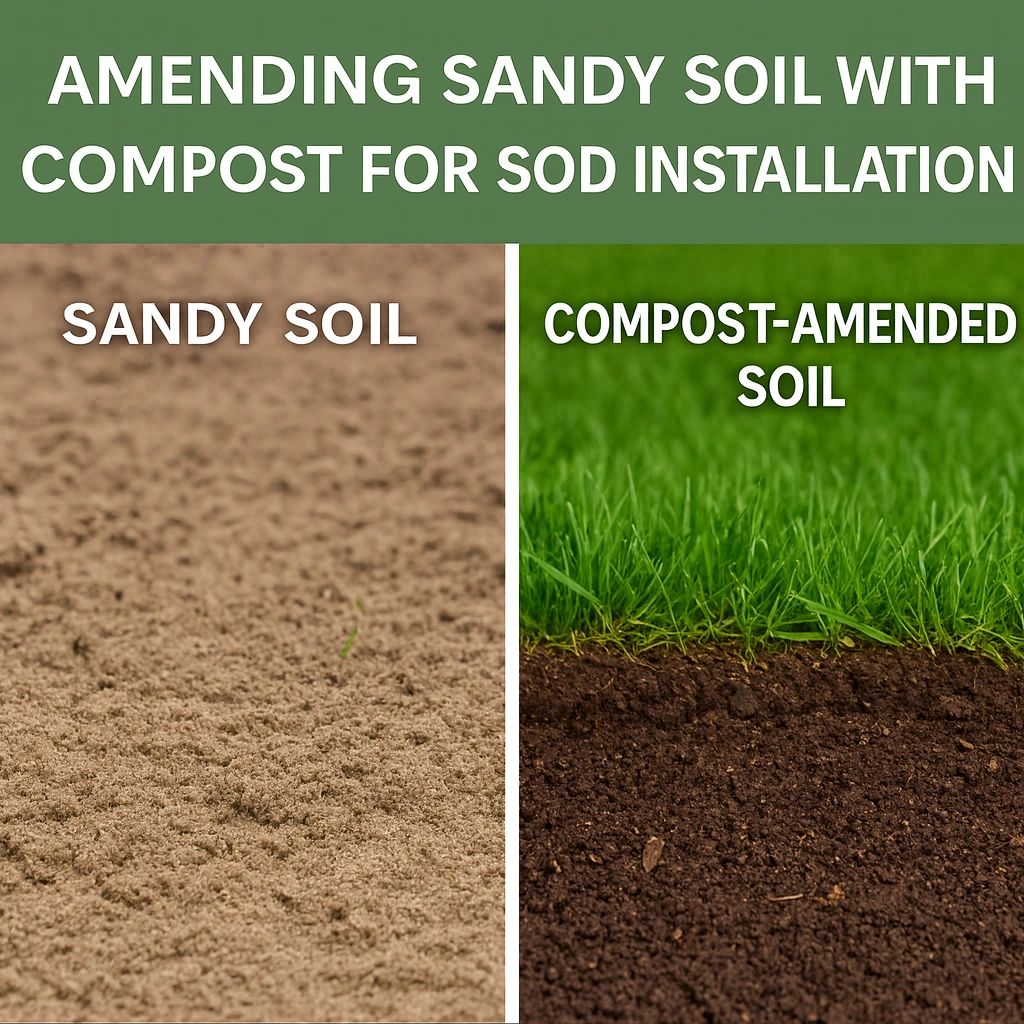
Amending Sandy Soil with Compost for Sod Installation CT, NY, MA
August 25, 2025

Best Drought-Tolerant Sod Varieties: Northeast Guide
April 30, 2026

Best Sod for Connecticut Lawns: Complete Regional Guide
April 28, 2026

Best Sod for Finger Lakes Properties: Regional Guide
April 29, 2026