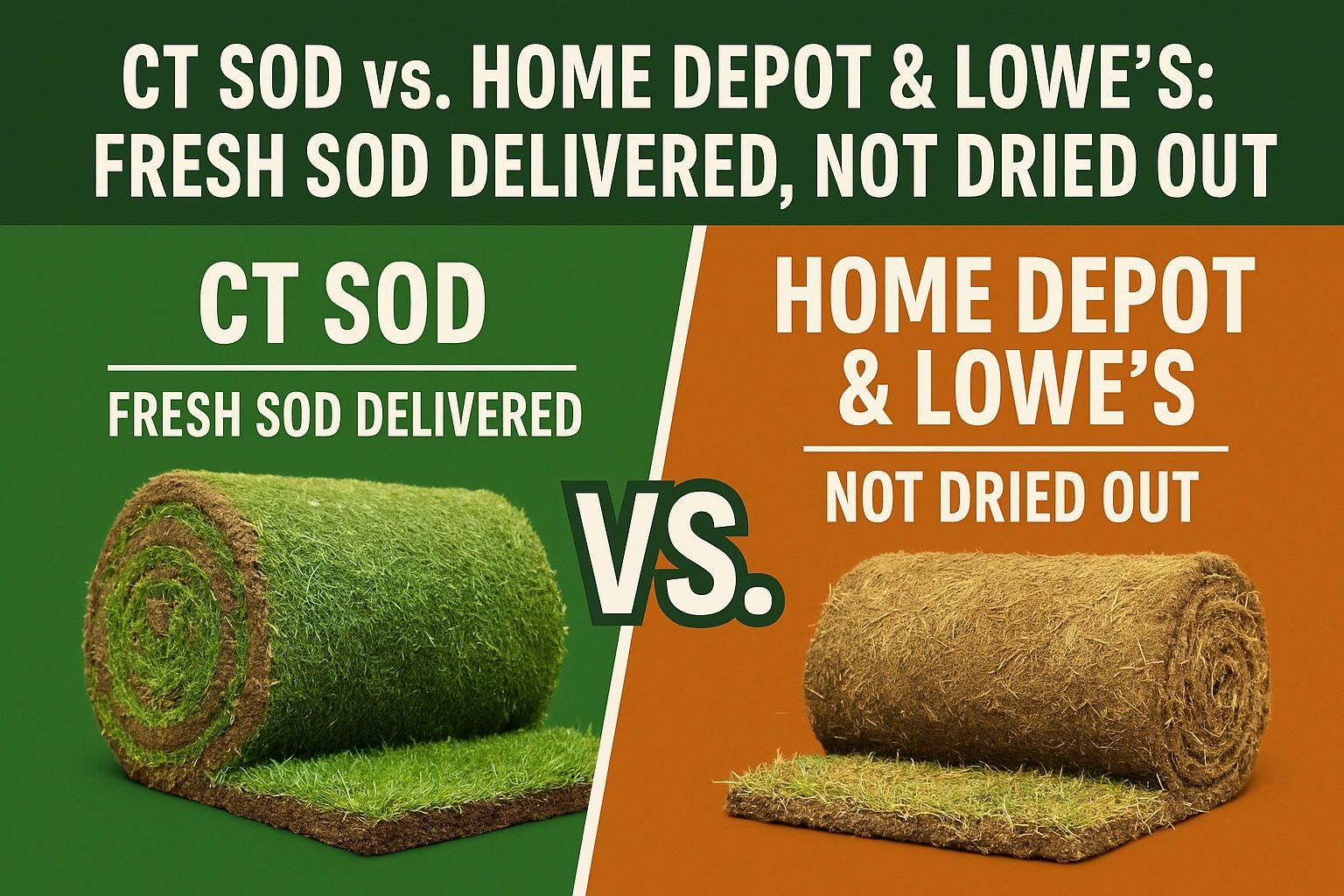
Why Fresh-Cut Sod Beats Home Depot and Lowe's Sod Every Time
The biggest variable in whether your new lawn thrives or fails isn't the grass variety, the fertilizer, or the watering schedule. It's how fresh the sod was when it went down. Sod is a living, perishable agricultural product — and the difference between sod cut yesterday and sod cut five days ago shows up in establishment rates, root development, and whether your lawn looks like a magazine photo or a patchwork of dead spots by July.
CT Sod cuts every order fresh the day of delivery. Home Depot and Lowe's sell sod that's been sitting on pallets in their parking lots, sometimes for days, under conditions that actively damage the product before you even get it home. That's not a marketing claim — it's how those supply chains actually work, and it's why landscapers, contractors, and serious homeowners across the Northeast order direct from sod growers instead of loading rolls into a Subaru at Home Depot.
Call (203) 806-4086 for a direct quote on fresh-cut sod delivery, or visit our Sod Pallet Delivery page.
What Actually Happens to Home Depot and Lowe's Sod
The sod supply chain at big-box retailers works like this:
1. A regional sod grower cuts pallets on harvest day. 1. Pallets are trucked to a retail distribution center, then to individual stores. 1. Pallets sit outside the garden center — often in direct sun on asphalt — until customers buy them. 1. Customers load rolls (or partial pallets) into personal vehicles and drive them home. 1. Rolls may sit in garages or driveways for another day or two before installation.
By the time that sod hits your lawn, it's frequently 2 to 7 days past harvest. In summer heat, that's a death sentence for a high percentage of the rolls.
Here's what's happening inside those pallets during that time:
Heat buildup from respiration. Stacked sod generates heat from living plant tissue respiring. With no airflow and direct sun exposure on asphalt, pallet core temperatures can exceed 100°F within hours. The center of the pallet cooks from the inside out, even when the outer rolls still look green.
Moisture loss. Sod arrives with a thin soil layer holding some moisture, but that reserve depletes quickly in warm, dry conditions. Roots desiccate — and dried-out roots don't recover once the sod is laid.
Loss of chlorophyll. Rolls in the middle of the stack get zero sunlight. Within 24 to 48 hours, grass blades begin yellowing as chlorophyll breaks down.
Weed and fungal contamination. Sitting in a parking lot exposes sod to weed seeds blowing in on the wind and fungal spores from damp pallets. By the time it's installed, the homeowner is laying down someone else's weed problem on their lawn.
Rolls at the bottom of the stack get crushed. Weight compression damages the root mat, and heat traps beneath upper layers accelerate the decline. The rolls look fine from the outside — the damage isn't visible until they're unrolled.
This is why sod from Home Depot and Lowe's is often yellowing, brittle, or partially dead before you even buy it. It's not a quality control failure. It's the structural reality of selling a perishable product through a retail channel that wasn't designed to move it quickly.
How CT Sod's Supply Chain Is Different
We operate on a completely different model.
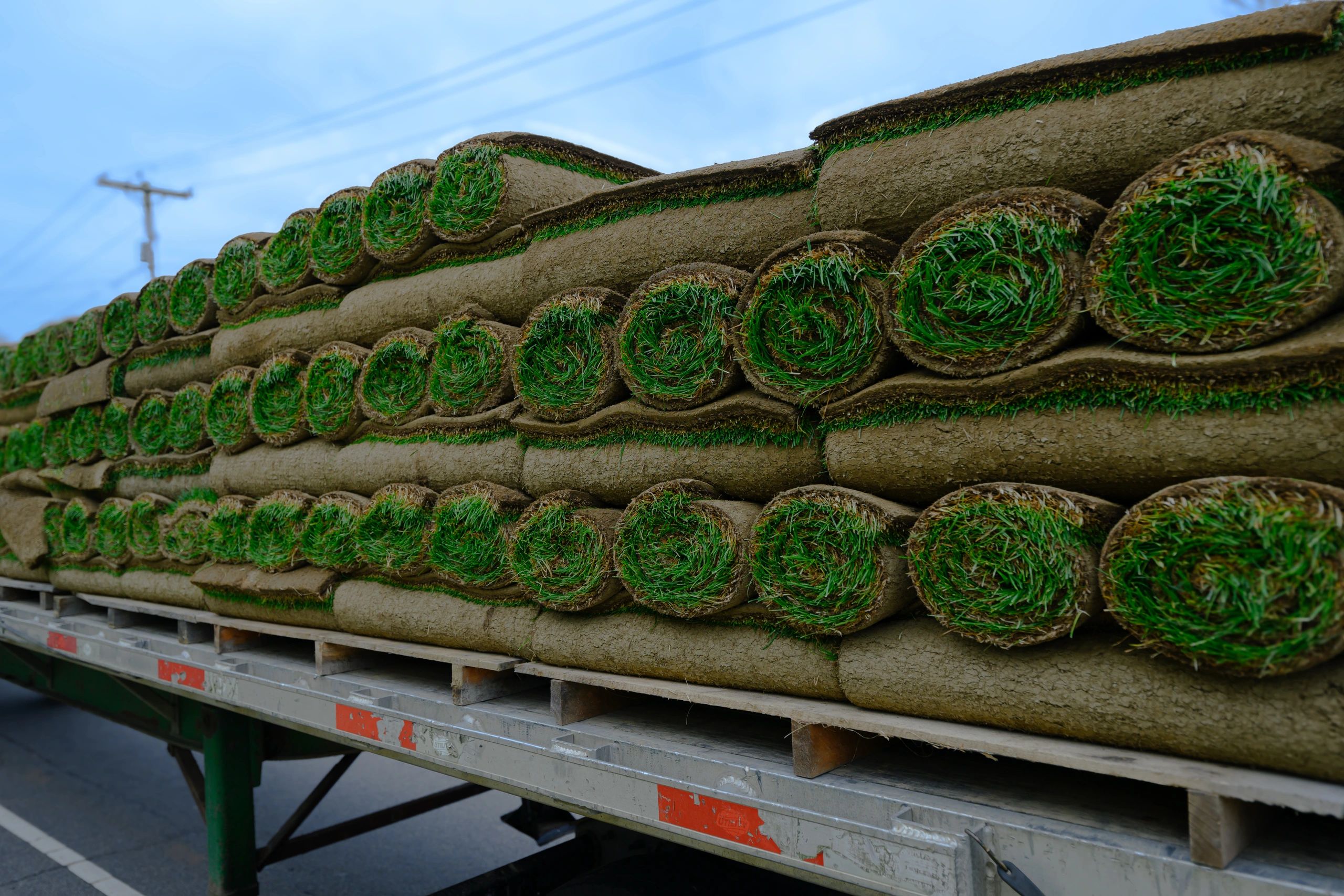
Orders are cut the day of delivery. When you place an order for a Tuesday delivery, your sod is in the ground as living turf Monday afternoon and on our truck Tuesday morning. It goes from field to your property in hours, not days.
Direct farm-to-customer delivery. There's no intermediate warehouse, no retail storage, no middleman step. Pallets come off the harvester and onto our flatbed trucks.
All-terrain forklift placement. Our trucks carry piggyback forklifts that place pallets exactly where you need them — driveway, backyard, prepped bed — so you're not dragging 20-pound rolls from a parking lot loading zone.
Same-day installation target. Because the sod arrives fresh, you have a full day to install it. No racing against decline that's already started before delivery.
The result: sod that's 12 to 24 hours past harvest when it hits your lawn, versus 2 to 7 days at a big-box retailer. That time difference is the single biggest predictor of establishment success.
For a deeper look at exactly how quickly sod degrades on a pallet and why timing matters so much, see our guide on how long sod can sit on a pallet.
The Cost Comparison Isn't What You Think
Homeowners sometimes assume Home Depot sod is cheaper because big-box stores have scale buying power. It's not.
Home Depot sells a 500 sq ft cool-season sod pallet for around $649, delivery included. That pricing includes the retail markup baked into the supply chain — from grower to distributor to store to customer.
Direct from a sod grower, pallets typically run $180 to $400 depending on grass type, grower, and region. Volume pricing kicks in at larger projects. At 4,000+ sq ft, pricing often drops to $0.66 per square foot.
Even accounting for delivery fees ($99 for CT Sod delivery across our service area), direct purchase is almost always the better deal — and you're getting sod that's fresh, not sod that's been sitting in a parking lot.
What Fresh-Cut Sod Actually Gets You
Beyond freshness itself, there are operational advantages to ordering direct:
Varieties grown for your climate. CT Sod specializes in cool-season grasses built for Northeast conditions — Kentucky bluegrass, tall fescue, fine fescue, perennial ryegrass, and custom blends. Big-box stores source from whatever regional supplier has volume available, which sometimes means sod bred for completely different climates. A bluegrass blend that thrives in the mid-Atlantic may struggle in New England winters.
Grass selection help from people who actually know sod. Order from a sod grower, and you talk to someone who installs sod every day. Order from Home Depot, and you're on your own to figure out whether bluegrass, fescue, or a blend makes sense for your property. The wrong variety on the wrong site is an expensive mistake.
Pallet placement that saves hours of labor. A piggyback forklift placing pallets at the install site eliminates 2 to 4 hours of labor compared to unloading at the curb and moving rolls by wheelbarrow. On larger projects, that's the difference between a single-day install and a weekend job.
Same-day installation possible. Because delivery windows are confirmed the day before and arrivals are scheduled in the morning, you have the full day to install. Home Depot sod often sits for another 24 to 48 hours at home before the weekend you have time to install it.
What CT Sod Delivers Across the Northeast
Fresh-cut cool-season sod across:
- Connecticut: Fairfield County, New Haven County, Hartford County, Litchfield County, the shoreline
- Massachusetts: Greater Boston, MetroWest, North Shore, South Shore, Cape Cod, Worcester area
- New York: Westchester County, Long Island, Hudson Valley
- Rhode Island: Statewide
- New Jersey: Northern and central NJ
- New Hampshire and Maine: Southern regions, seasonal scheduling
Frequently Asked Questions
How long does sod stay fresh after it's cut?
Same-day installation is ideal. In summer heat (80°F+), sod begins declining within 6 to 12 hours on the pallet. In cool spring or fall weather, 24 to 48 hours is the outside limit before meaningful quality loss. This is why direct-from-grower delivery matters — it cuts the time from harvest to installation dramatically.
Why is Home Depot and Lowe's sod often yellow or brown?
Because it sits in parking lots for days before purchase. Pallets generate heat from plant respiration, with no airflow and direct sun exposure on asphalt driving pallet core temperatures above 100°F. By the time most customers buy it, the sod is stressed or partially dying — even if the outer rolls still look acceptable.
What makes CT Sod different from big-box stores?
Every order is cut the day of delivery. Pallets go from harvester to flatbed truck to your property in hours, not days. No retail warehousing, no parking lot storage, no stacks sitting in direct sun for a week.
Do landscapers buy from big-box stores or direct?
Serious landscapers buy direct from sod growers. The freshness difference directly affects installation success, and landscapers who install sod regularly understand that buying from Home Depot is a recipe for callbacks and warranty problems.
What sod variety is best for my property?
For most Northeast lawns, Kentucky bluegrass suits full-sun irrigated properties, tall fescue handles partial shade and drought better, and bluegrass-fescue blends split the difference for variable conditions. Call (203) 806-4086 to talk through your specific site.
Can I schedule delivery and installation together?
Yes. We offer full-service installation throughout our service area. Installation is quoted separately based on site conditions and project size. Delivery-only service is also available for DIYers.
How much does fresh-cut sod cost compared to Home Depot?
Direct from a sod grower is almost always cheaper. CT Sod pallets start at $649 for 500 sq ft, matching Home Depot pricing, but our volume pricing drops the per-square-foot cost significantly at 1,200+ sq ft orders — and we're delivering fresh, not 5-day-old parking lot sod.
What's the minimum order?
One pallet (500 sq ft). Delivery fee is $99 regardless of order size.
Ready to Order Fresh Sod?
Skip the dried-out sod stacked in a Home Depot parking lot. Get farm-fresh cool-season sod cut the day of delivery.
Call (203) 806-4086 for a direct quote.
Request a quote online through our Sod Pallet Delivery page.
Reach out anytime through our Contact page to discuss your project.
Ready To Order?
Fresh-Cut Sod Delivered
CT Sod delivers Kentucky Bluegrass, Tall Fescue & RTF sod across CT, MA, NY, NJ, RI, NH, VT & ME.
Keep Reading
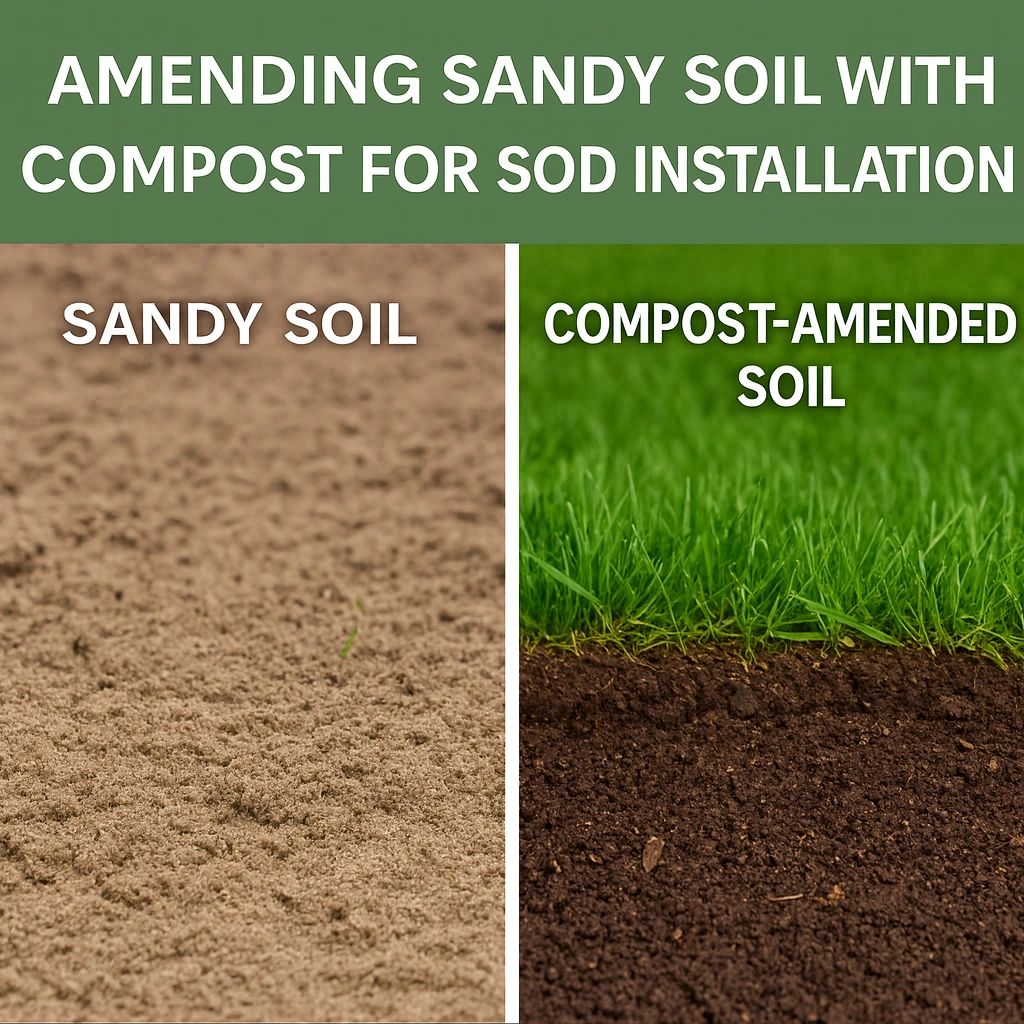
Amending Sandy Soil with Compost for Sod Installation CT, NY, MA
August 25, 2025
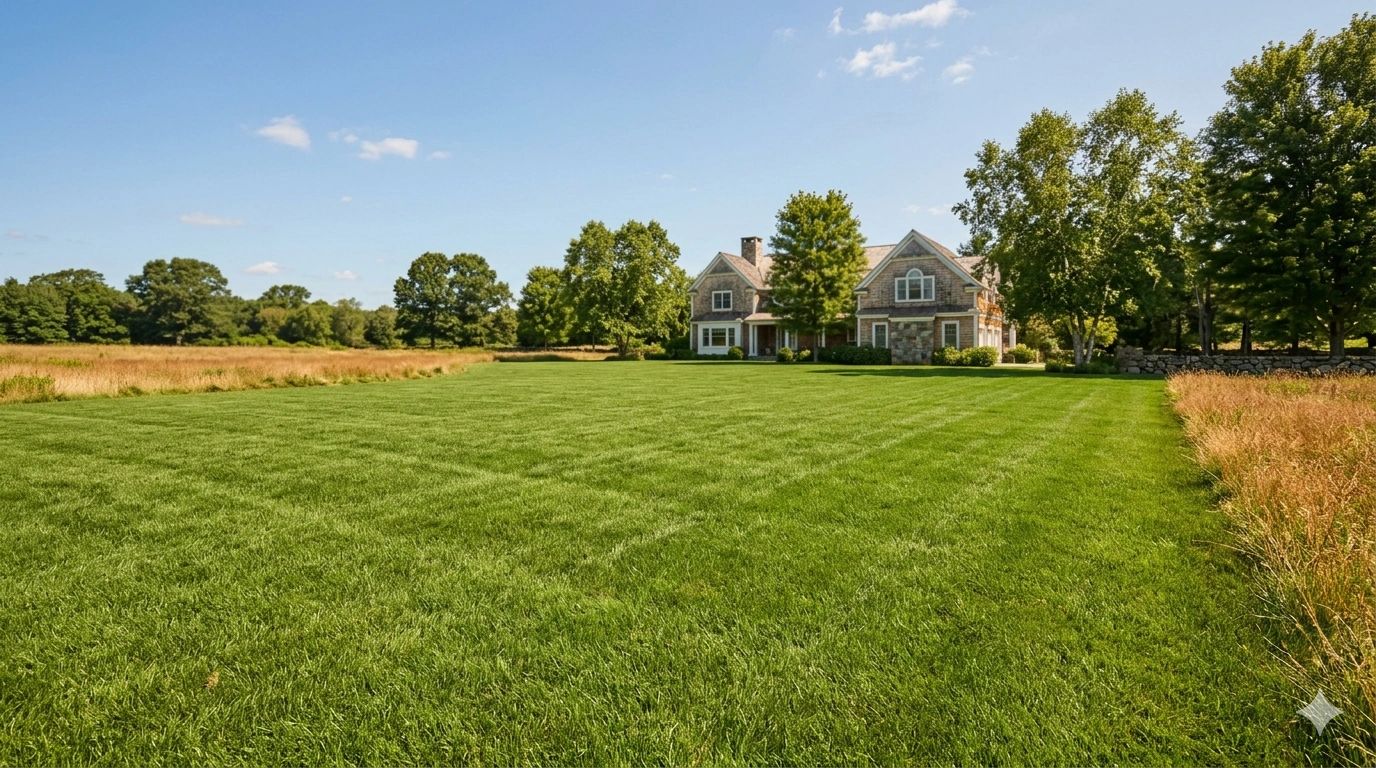
Best Drought-Tolerant Sod Varieties: Northeast Guide
April 30, 2026

Best Sod for Connecticut Lawns: Complete Regional Guide
April 28, 2026

Best Sod for Finger Lakes Properties: Regional Guide
April 29, 2026