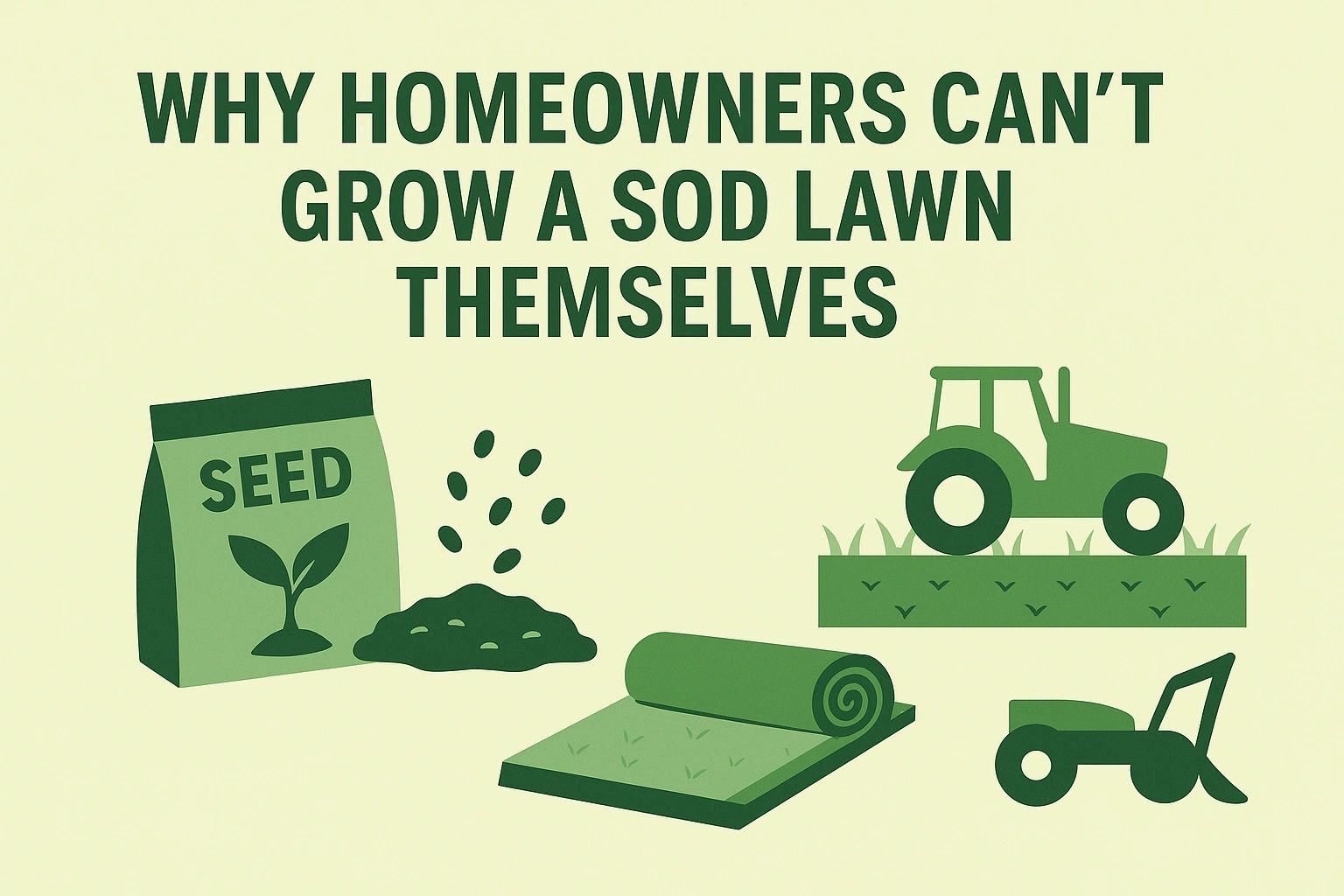
How Sod Farms Grow Premium Turf: Inside the Real Production Process
Sod is not just grass rolled up and delivered — it is the end product of a 12-to-24-month farming operation using elite cultivars selected from the National Turfgrass Evaluation Program (NTEP) database, grown on specially prepared fields, managed to commercial turf standards, and harvested with machines built specifically for the job. The dense, uniform, weed-free turf that shows up on a pallet is closer in production complexity to a corn or wheat crop than to a backyard lawn. Homeowners cannot realistically replicate it. That is the reason sod exists as a product category in the first place.
Below is what actually happens on a sod farm between seed and pallet: the cultivars used, how the fields are prepared, the daily management regimen that creates sod-grade density, the harvesting equipment, and why the result outperforms every seed-planted lawn for the first several years.
It Starts With Elite Cultivars — Not Bagged Seed
Sod farms use elite turfgrass cultivars bred specifically for sod production, selected from NTEP trial data that most homeowners have never heard of. The National Turfgrass Evaluation Program is a research consortium run through the Beltsville Agricultural Research Center and the National Turfgrass Federation that evaluates turfgrass varieties across dozens of test sites in the United States and Canada. Breeders, seed companies, and commercial sod growers use NTEP data to determine which cultivars perform best for color, density, texture, disease resistance, drought tolerance, traffic tolerance, and genetic uniformity in a given region.
The cultivars that make it onto a commercial sod farm are generally not the same varieties sold in consumer-grade grass seed mixes at big-box stores. They are selected on four criteria:
High germination rates — sod fields must emerge uniformly, with near-total germination. Inconsistent germination creates patchy fields that can't be harvested as pallet-quality sod.
Uniform growth and color — commercial sod must look identical roll-to-roll when stacked on a pallet. That requires cultivars bred for consistent texture, density, and genetic color.
Disease resistance — sod fields are grown at extremely high density, which creates ideal conditions for fungal disease. Elite cultivars are selected for resistance to leaf spot, dollar spot, brown patch, and other turf pathogens.
Root strength — sod is cut from the field and transplanted, which means the grass has to form a dense, interlocked root mat strong enough to hold together when harvested and rolled.
In the Northeast, most commercial sod is grown from Kentucky bluegrass cultivars bred for dense, lateral-spreading growth (the trait that lets Kentucky bluegrass self-repair), turf-type tall fescue cultivars with deep, heat-tolerant root systems, or a blend of the two. The specific named varieties change as breeders release newer, higher-NTEP-rated lines, which is one of the reasons sod-farm turf steadily improves decade over decade while the average homeowner's seed-planted lawn does not.
Field Prep: Sod Starts With the Soil
Sod farms prepare their fields the way a sod supplier would want the homeowner's yard prepared for a new install — except at scale and to a professional standard. Before seed ever hits the ground, sod farms till to break compaction, laser-grade or rough-grade to create a flat, harvestable surface, remove rocks and debris, and amend the soil with compost or pre-plant fertilizer based on soil test results. Some farms then cultipack the seedbed to firm the surface and improve seed-to-soil contact.
Many of the most productive sod farms in North America are located on historically rich agricultural ground — river-bottom loam, drained peat-muck soils, or sandy loam with a high water table. This matters because sod harvesting removes a half-inch or more of soil with every cut. Farms on premium ground can take that hit for years before needing to rebuild topsoil. Farms on poor ground can't.
The Planting: Seed Is Drilled in Late Summer
Most cool-season sod in the Northeast is seeded in late summer (mid-August through mid-September) using a Brillion-style seeder or similar precision drill that double-plants at controlled depth and rate. Kentucky bluegrass can take up to three weeks to germinate, which is one reason it's seeded in late summer — the window gives it time to emerge before fall temperatures drop.
Pre-emergent herbicide is applied to the seedbed to suppress weeds during germination, which dramatically reduces the weed pressure the field fights through its entire life. This is a step homeowners virtually never replicate on their own lawns, and it's one of the biggest reasons sod-farm turf looks weed-free from day one.
The 12-to-24-Month Growing Cycle
A sod field is managed intensively for 12 to 24 months before it is ready to harvest. During that window, the field is irrigated, fertilized, mowed, and treated on a schedule that would be impossible for any homeowner to match on a residential lawn:
Irrigation is run through large-scale systems — pivot irrigation, traveling guns, or buried mainline with pop-up heads — that deliver consistent moisture across dozens of acres. Sod farms located on water-rich river bottoms or drained muck ground often have exceptional groundwater access.
Fertilization is calibrated to specific growth stages. Early fertilization builds root density. Mid-cycle fertilization drives blade density and color. Pre-harvest fertilization improves the sod's ability to handle transplant stress.
Mowing happens multiple times per week at low heights once the turf matures. Frequent low mowing is the single biggest driver of the dense, carpet-like quality that defines commercial sod. It forces the grass to grow laterally instead of vertically, thickening the canopy and interlocking the root mat.
Weed control is aggressive. Pre-emergent and selective post-emergent herbicides keep fields essentially weed-free because a sod farm cannot afford to sell pallets with dandelions, crabgrass, or other weeds in them. Farms operating as agricultural businesses have access to commercial-grade herbicides that homeowners cannot buy.
Soil management is ongoing. Farms soil-test on a regular schedule, amend for pH, and adjust nutrient programs based on tissue samples and visual assessment. This is not "apply a 4-step program four times a year." It's active, measured agronomy.
The combined result after 12 to 24 months is turf that is dense enough to cut, lift, and roll without falling apart — which brings us to harvesting.
Specialized Harvesting Equipment: Why You Can't Cut Your Own Sod
Sod is harvested using machines built specifically for turf — typically the Brouwer, Trebro, or Magnum-style sod harvester. These harvesters slice beneath the root zone, cut the turf into uniform rolls or slabs of standardized dimensions, and stack them directly onto pallets for transport. The standard residential roll size in the Northeast is 2 feet by 5 feet, with fifty rolls per pallet covering 500 square feet; some farms can load up to 600 square feet on a pallet depending on availability.
Harvesters take a half-inch or so of soil along with the root mat. That soil layer is what holds the roll together during transport and gives the roots something to live off of during the first few days after installation. Without a dense, interlocked root mat — the kind that only forms after 12-to-24 months of intensive management — the sod simply falls apart when lifted.
This is why homeowners cannot realistically cut their own sod from their lawn and transplant it, even if the grass looks decent. Home-grown grass rarely has the root density needed to hold together when cut, and even if it did, there's no hand tool that produces the uniform rolls a sod harvester creates. Sod is a product of the machinery as much as the grass itself.
From Field to Pallet to Your Yard
Once harvested, sod is palletized and shipped within hours. The reason is simple: sod starts decomposing the moment it's cut. The best sod farms don't harvest until an order is placed, so the grass moves from field to pallet to delivery truck to the customer's property on the same day or the following morning. Pallets that sit for more than 24 hours in summer heat begin to break down from the inside out, which is why every reputable sod supplier insists on same-day delivery and same-day installation.
For more on delivery logistics and how to stage larger orders, see our sod pallet delivery guide.
Why Farm-Grown Sod Outperforms Seeded Lawns — Always
A homeowner who seeds a lawn is effectively attempting to duplicate a sod farm's 12-to-24-month production cycle in their own backyard, usually without the right cultivars, the professional prep, the commercial-grade herbicides, the daily mowing, the precision fertilization, or the decades of agronomic experience. The result is almost always a thinner, weedier, less uniform lawn that takes one to two growing seasons to look like anything at all.
Direct comparison:
Time to a usable lawn. Sod is a finished lawn on the day it's installed. A seeded lawn is a construction site for six to eight weeks and a thin, fragile establishment for another three to six months.
Uniformity. Sod is bred and grown for uniform color, texture, and density. Seeded lawns almost always show patchiness for the first full year as germination rates, soil variability, and microclimate differences play out.
Weed pressure. Sod arrives essentially weed-free because the field was managed to keep it that way for two years. Seeded lawns compete with weeds from day one, because bare soil is the ideal germination environment for both grass seed and the weed seeds already in the soil.
Usability. Sod can handle foot traffic within weeks of installation. A seeded lawn typically needs a full growing season before it's strong enough to walk on without damaging.
Reliability. Sod skips the fragile germination stage entirely. A single heatwave, a heavy rain during germination, or a birds-and-wind combination can wipe out weeks of seeding work and force a complete redo. Sod just gets laid and watered.
Seeded lawns can work. They are cheaper upfront. But they are slower, less uniform, weedier, and much more susceptible to failure during establishment. Sod is the finished product; seeding is the attempt.
Can You Grow Your Own Sod at Home?
Technically yes, practically no. Growing your own sod would require the right elite cultivars (not sold at consumer seed retailers), proper field prep with pre-emergent herbicide, 12 to 24 months of intensive management, daily or near-daily mowing with the right equipment, commercial-grade weed control, and — critically — a sod harvester to cut and roll the finished turf. Even experienced DIY landscapers don't attempt this. The math doesn't work out on cost, time, or quality.
The closest practical DIY option is growing small trays of sod in a greenhouse for patching work, which a few home growers do successfully for repair jobs. For full lawn installation, farm-grown sod is the only realistic route.
Frequently Asked Questions
Why can't I grow my own sod at home?
Growing commercial-grade sod requires elite turfgrass cultivars not available in consumer seed, 12 to 24 months of intensive field management, commercial herbicides homeowners can't buy, daily low mowing, precision fertilization, and a specialized sod harvester to cut the finished turf into rolls. The root mat needed to hold sod together when cut only forms under sod-farm conditions. Home-grown grass rarely develops enough root density to survive transplanting, even if you could cut it cleanly.
How long does it take to grow sod?
A sod field takes 12 to 24 months from seed to harvest, depending on grass species, climate, and management intensity. Kentucky bluegrass typically takes longer than tall fescue because it establishes more slowly and requires more time to develop the dense root mat needed for harvesting.
What's the difference between sod seed and grass seed you buy at a store?
Sod farms use elite cultivars selected from NTEP (National Turfgrass Evaluation Program) trial data for uniform color, density, disease resistance, and root strength under harvest stress. Consumer grass seed mixes at big-box stores are typically older, lower-cost varieties blended for general adaptability, not for sod-grade performance. The cultivars used in commercial sod production generally aren't available in consumer retail at all.
Why is sod more expensive than seed?
A pallet of sod represents 12 to 24 months of intensive farming on premium land — seed, fertilizer, water, pesticides, fuel, labor, equipment, and management — plus harvesting, palletizing, and time-sensitive delivery. You're buying a finished crop, not a raw input. Seed is cheap because it's the start of the process, not the end product.
How does NTEP affect the sod I buy?
NTEP — the National Turfgrass Evaluation Program — is the research consortium that evaluates turfgrass cultivars across dozens of test sites in the U.S. and Canada. Sod farms, seed companies, and breeders use NTEP data to select the cultivars they plant. High-rated NTEP cultivars drive improvements in the sod industry over time — newer, better-performing varieties replace older ones as they're validated through multi-year trials.
How long does sod take to root after installation?
Fresh sod typically develops shallow roots in the first two to three weeks after installation and deeper roots over six to eight weeks. The first two weeks are the critical window — sod must stay continuously moist. Tug on a corner after two to three weeks; if it resists and you can see white roots anchoring into the soil, the lawn has rooted.
Does sod really come weed-free?
Commercial sod is essentially weed-free at delivery because the field was managed with pre-emergent and selective herbicides for 12 to 24 months to keep it that way. Weeds can show up in the new lawn over time from windborne seeds, bird droppings, or soil already in your yard, but sod gives you a weed-free starting point that seeded lawns can't match.
Can I cut sod from my lawn and transplant it somewhere else?
Generally no. Home-grown grass rarely has the interlocked root mat that commercial sod develops over 12 to 24 months on a farm, so it falls apart when cut. Even if you could cut a clean piece, it won't transplant successfully without the root density and soil cohesion that farm sod provides. For patching small areas, small home-grown sod trays can work. For lawn-scale installation, you need farm sod.
What happens if I seed my lawn instead of installing sod?
Seeding is cheaper upfront but slower, less uniform, and much more vulnerable during establishment. A seeded lawn typically takes one to two growing seasons to reach the density and uniformity that sod delivers on day one. Seeded lawns also compete with weeds from germination onward, because bare soil is the ideal environment for both grass seed and the weed seeds already in the soil.
Bottom Line
Sod is a crop — grown from elite cultivars, managed for a year or two on prepared farmland, harvested with specialized equipment, and delivered as a finished product. Homeowners can't replicate that process in their backyards, and shouldn't try. Seeding will eventually produce a lawn, but it takes far longer, looks worse during establishment, and fights weeds from day one. When you buy sod, you're buying the end result of decades of turfgrass breeding and a year or two of intensive farming — delivered the day you need it.
Ready for a finished lawn without the two-year farming project? Call CT Sod at (203) 806-4086 for farm-cut Kentucky bluegrass and tall fescue delivered and installed across CT, MA, NY, NJ, and RI. See our Ultimate Guide to Sod in Connecticut and sod installation cost guide for more detail on pricing and installation.
Ready To Order?
Fresh-Cut Sod Delivered
CT Sod delivers Kentucky Bluegrass, Tall Fescue & RTF sod across CT, MA, NY, NJ, RI, NH, VT & ME.
Keep Reading
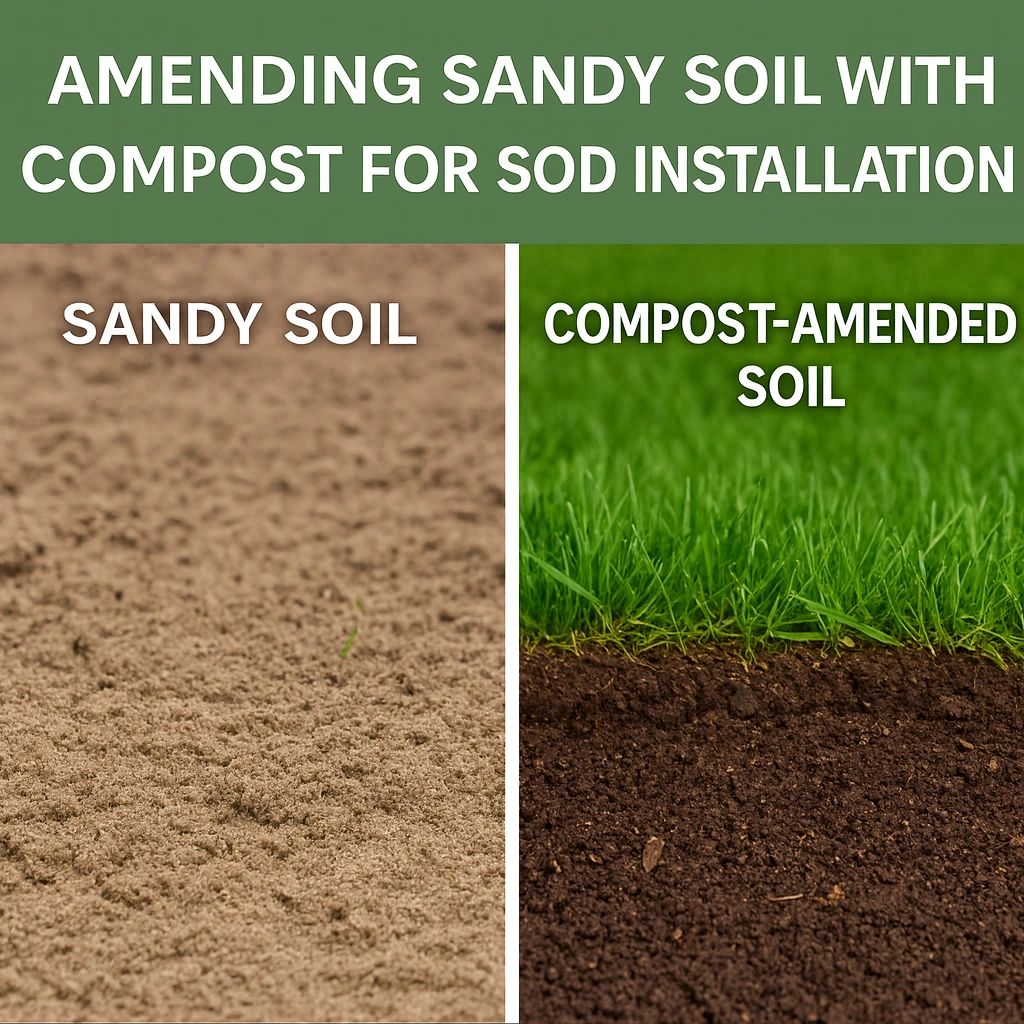
Amending Sandy Soil with Compost for Sod Installation CT, NY, MA
August 25, 2025
Best Drought-Tolerant Sod Varieties: Northeast Guide
April 30, 2026
Best Sod for Connecticut Lawns: Complete Regional Guide
April 28, 2026
Best Sod for Finger Lakes Properties: Regional Guide
April 29, 2026