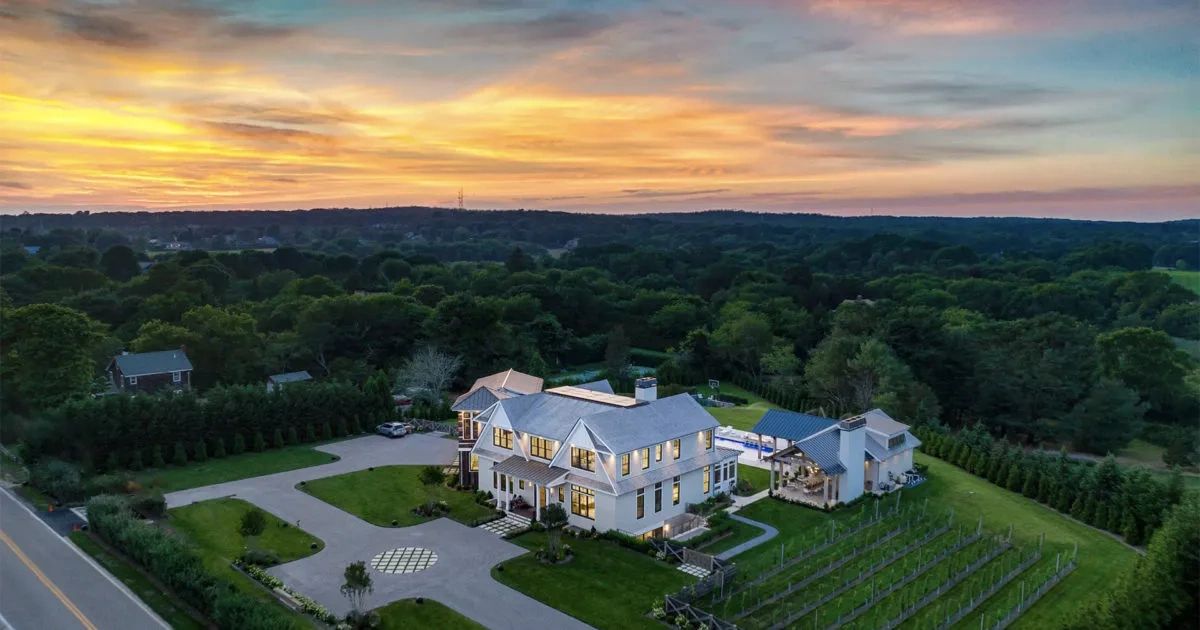
Sod Installation in the Hamptons: A Complete Guide for Estate Properties
The Hamptons sit in a category by themselves. The properties are larger, the standards are higher, and the consequences of a failed install are visible from the road. A patchy lawn at a $20 million Sagaponack oceanfront estate or a $30 million Further Lane compound isn't a recoverable cosmetic issue. It's a problem that affects the property's presentation, the owner's confidence in the trades they've hired, and in the case of spec houses and seasonal rentals, the asset's market position. The work has to be done right the first time, and the operators who do it well are a small group.
CT Sod has been installing sod across the Hamptons for years. We are sod specialists — not landscapers offering sod as one of many services, not contractors who install sod when a client asks for it. The crews that arrive at your property install sod as their primary work. The logistics, the variety selection, the timing, the handoff — every part of the process is built around producing the kind of lawn estate-grade properties demand.
This guide covers what professional sod installation looks like in the Hamptons, the towns we serve, the varieties that perform best in this market, and what differentiates a properly executed install from a competent one. If you're planning a sod installation at a Hamptons property — whether a 5,000 square foot residential lawn or a multi-acre estate project — this is what you should know going in.
The Hamptons Sod Market: What Makes It Different
Sod installation in the Hamptons isn't a more expensive version of sod installation in Westchester or Fairfield County. It's a fundamentally different operating environment, and the operators who succeed here are the ones who understand the differences and structure their work accordingly.
Property scale. The average Hamptons estate install is many times larger than the average suburban residential install. A modest Hamptons lawn project starts at 5,000 square feet. The high end runs into the hundreds of thousands of square feet across multi-acre properties with formal lawns, recreation areas, equestrian fields, and approach drives. Crews and logistics need to be sized for this work. A landscape company comfortable with 1,500 square foot residential installs isn't going to be comfortable laying 70,000 square feet of tall fescue across a Water Mill estate in a single week.
Coastal exposure. Hamptons properties face wind, salt, and dry maritime air that inland markets don't. Variety selection matters more here than in protected inland sites. Heat-tolerant deep-rooted varieties handle coastal conditions better than shallow-rooted alternatives. Establishment timing has to account for the conditions sod will face once it's down — not just the day of installation, but the prevailing weather over the following six weeks.
Soil variability. Hamptons soils range from sandy loam to nearly pure beach sand depending on proximity to the ocean and bay. High water tables are common in low-lying areas. The Long Island Pine Barrens influence reaches into parts of the East End, leaving acidic, sandy, nutrient-poor conditions in some pockets. Sod installation has to be calibrated to actual site conditions rather than assumed averages.
Aesthetic standards. Hamptons properties are often presented in editorial photography, marketing materials, or simply at scale where every detail is visible. Tight seams. Clean transitions to hardscape and beds. Uniform color and texture across long sight lines. Consistent establishment so the lawn matures evenly. These standards aren't optional in this market, and they're not achievable by crews that install sod occasionally.
Operating windows. The Hamptons summer season concentrates a substantial portion of the year's social, real estate, and rental activity into a handful of months. Properties have to be ready for Memorial Day, Fourth of July, August weekends. This compresses installation timing and elevates the cost of failure. A failed install in May isn't recoverable for that season's standards.
Privacy expectations. This is a market where discretion is part of the service. Clients value contractors who handle properties professionally, don't discuss other clients, don't post photographs of recognizable estates on social media, and treat the client relationship as confidential by default. The trades that succeed at the highest end of this market understand this without being told.
Towns We Serve in the Hamptons
Each Hamptons town has its own character, its own typical property profile, and its own installation considerations. The notes below cover what we see most often in each market.
Sagaponack
Sagaponack consistently ranks among the wealthiest zip codes in the United States, and the property profile reflects it. Oceanfront estates along Daniels Lane and the surrounding corridor. Reserve-adjacent estates inland with views across protected agricultural land. Large lot sizes, often three to ten acres or more. The lawn footprints on Sagaponack estates are typically substantial — formal front lawns, expansive back lawns running toward the ocean or reserve, recreation areas, and connecting greens.
Sagaponack soils tend toward sandy with proximity to the ocean. Coastal exposure is significant. The varieties that perform best here are deep-rooted and heat-tolerant — tall fescue and RTF (rhizomatous tall fescue) handle the conditions better than premium Kentucky bluegrass blends, which can struggle without aggressive irrigation in peak summer. Installations in Sagaponack frequently involve coordinating with irrigation contractors, landscape architects, and estate management teams. The work has to integrate cleanly with the broader property planning.
Water Mill
Water Mill sits between Southampton and Sagaponack and shares characteristics of both. Estate-scale properties dominate, particularly along Mecox Road, Halsey Lane, and the corridor approaching Mecox Bay. Many properties back onto agricultural reserve land, which gives them dramatic open vistas and lawn footprints designed to take advantage of the views. Properties in the village area run smaller but maintain estate-grade standards.
We've installed extensively in Water Mill over the years, including a 70,000 square foot tall fescue installation at Willie Degel's estate. That project is representative of the work this market produces — large continuous lawn footprints, premium variety selection, careful integration with surrounding landscape elements, and crews scaled to complete the install efficiently without compromising quality. Water Mill soils vary by exact location; coastal-influenced sites resemble Sagaponack, while inland reserve-adjacent sites can have heavier loam profiles. Variety selection follows site conditions rather than a default specification.
Bridgehampton
Bridgehampton spans a wider property profile than most Hamptons towns. Equestrian properties dominate certain corridors — Mecox Lane, Lumber Lane, the Hayground area — where lawns coexist with paddocks, riding rings, and barn complexes. Estate properties along Ocean Road and the Mecox Bay shoreline run to the upper end of the market. Village-area properties are smaller but still demand estate-grade installation standards.
Equestrian properties create their own installation considerations. Lawn areas have to integrate with horse-traffic zones, which often involves variety selection that handles the occasional excursion of a horse or dog onto formal lawn. Properties with significant horse activity around lawn margins benefit from RTF, which self-repairs from rhizomes when traffic damage occurs. Properties with formal lawn separation from animal-traffic areas can use traditional premium varieties.
Southampton
Southampton encompasses a broad range of properties from village-area homes to estate-scale residences along Meadow Lane, Gin Lane, and First Neck Lane. The estate corridor along the ocean side of Southampton represents some of the most established old-money properties in American history, with installation standards to match. Properties along Shinnecock Bay and the bay-side estate corridors run nearly as established.
Southampton soils are predominantly sandy with strong coastal influence in the estate corridors. The variety performance pattern here mirrors Sagaponack — heat-tolerant deep-rooted varieties outperform alternatives on the most exposed sites. Variety selection in Southampton frequently follows estate tradition; properties that have been maintained in tall fescue or premium bluegrass blends for decades typically continue with the same variety family for consistency. New installations on estate properties often involve consultation with longtime grounds staff who know the specific microclimates of the property.
East Hampton
East Hampton's most exclusive corridors — Further Lane, Lily Pond Lane, the Georgica Pond area — represent some of the highest-value residential real estate in the country. These properties demand installation standards consistent with their broader presentation. Lawn footprints can be substantial, with properties running multiple acres and lawns serving as the primary visual element of the landscape design.
The Further Lane corridor in particular sits close enough to the ocean that coastal exposure is a significant variable. Salt-influenced conditions, dry maritime air, and exposure during winter storms all affect variety performance. Tall fescue and RTF perform reliably across these conditions. Premium Kentucky bluegrass blends require more aggressive irrigation and more attention to summer stress management, though properties with established irrigation infrastructure can support them successfully.
Wainscott
Wainscott is small but the property values are extreme. The hamlet sits between Bridgehampton and East Hampton with direct ocean frontage along Beach Lane and Town Line Road. Properties in this market are estate-scale by default, with lawn footprints typical of the broader Hamptons estate corridor. Installation in Wainscott proceeds along the same lines as Sagaponack and East Hampton — coastal-tolerant varieties, careful timing, and integration with the broader landscape design.
Amagansett
Amagansett's estate section, north of the village, contains substantial properties along the bay corridors and approaching the East Hampton border. The market is smaller than the central Hamptons towns but the high end matches anything in the region. Installations in Amagansett often involve coordination with seasonal property schedules — owners typically want lawns established and dialed in before peak season arrives, which sets timing parameters that affect installation planning.
Sod Varieties for Hamptons Estate Lawns
The variety decision is the single largest factor in how a Hamptons lawn performs over its lifespan. The right variety for a given property depends on soil conditions, irrigation infrastructure, exposure, traffic patterns, and the aesthetic standard the property is being held to.
Tall fescue. The dominant variety for estate-scale Hamptons installations. Tall fescue produces deep root systems, handles heat and coastal exposure well, tolerates moderate drought when established, and maintains color and density through summer better than most alternatives. Premium tall fescue varieties offer fine-bladed appearances that meet estate aesthetic standards while delivering the resilience this market demands. The 70,000 square foot install at Willie Degel's Water Mill estate uses tall fescue, and the variety has performed reliably across years of use, including the estate's response to a recent sedge and Kyllinga invasion that we covered in our field guide on sedge and Kyllinga control in Hamptons lawns. Tall fescue is our default recommendation for most large Hamptons estate installations, particularly in coastal and reserve-adjacent properties.
Rhizomatous tall fescue (RTF). RTF combines tall fescue's deep-rooted resilience with a self-repairing rhizome structure that allows the grass to fill in damaged areas from below the soil surface. This makes RTF the strongest performer for properties with active dog traffic, equestrian-adjacent lawn areas, or any zone where intermittent damage is part of the property's normal use. For Hamptons properties with dogs, RTF is the right variety nearly without exception — our guide to why RTF is the most dog-resistant sod covers the specifics. RTF also performs well on traffic-heavy areas of estate properties — the lawn between the house and the pool, the path families take to the beach access, the recreational lawn where children play. Its self-repair capability means these areas stay uniform without manual repair work.
Kentucky bluegrass blends. Premium Kentucky bluegrass remains a tradition on certain Hamptons estate properties, particularly old-money Southampton estates that have maintained bluegrass lawns for decades. Bluegrass produces the deep blue-green color and fine texture that defines the traditional estate lawn aesthetic. The trade-off is significant water demand — bluegrass requires aggressive irrigation through Hamptons summers and is the variety most likely to struggle without consistent watering. Properties with established irrigation infrastructure and full-time grounds staff can maintain bluegrass beautifully. Properties with less consistent irrigation often perform better with tall fescue or RTF.
Kentucky bluegrass and tall fescue blends. A blend of premium bluegrass and tall fescue offers a middle path — the appearance and color of bluegrass on the lawn surface combined with the deeper root structure and resilience of tall fescue. These blends perform reliably on Hamptons properties with moderate irrigation infrastructure and conditions that aren't severe enough to require pure tall fescue. The blend allows for flexibility in seasonal performance: the bluegrass component dominates the visual appearance in spring and fall, while the tall fescue component carries the lawn through summer stress.
Fine fescue blends. Fine fescues — creeping red, hard fescue, chewings fescue — perform best in shaded conditions and on low-maintenance sites. They're rarely the right choice for the formal estate lawn at the front of a Hamptons property, but they have a role in shaded margins, woodland-adjacent zones, and sections of the property where the aesthetic standard allows for a more natural appearance. Fine fescue blends require less water than premium varieties and tolerate poor soil conditions better, which makes them useful for specific applications even when they aren't the headline variety on the property.
For a deeper variety comparison across the full Long Island and Hamptons market, our guide to the best sod types for Long Island and the Hamptons covers selection logic in detail, and our coastal Northeast variety guide addresses how varieties perform across the broader coastal Northeast environment.
The Installation Process: What to Expect
Estate-scale sod installation in the Hamptons follows a process that's been refined across hundreds of properties. The process matters because the difference between a well-installed lawn and a poorly installed one is largely operational — the same sod, the same property, the same timing can produce dramatically different results depending on how the install is executed.
Site assessment. Before installation, we evaluate site conditions, access, slope, soil character, drainage patterns, irrigation infrastructure, and integration with surrounding landscape elements. This assessment shapes the variety recommendation, the timing plan, and the logistics for the install itself. Estate-scale properties often involve coordination with the property's broader landscape and architectural team, which we manage as part of the assessment phase.
Variety selection. Based on site conditions, intended use, and aesthetic standards, we recommend the variety or variety blend that will perform best on the property. For most estate-scale Hamptons installations, this is tall fescue or RTF, with Kentucky bluegrass or bluegrass blends recommended on properties with the irrigation infrastructure and grounds staff to support them.
Timing. Hamptons sod installations are most successful during the spring shoulder season (April–May) and the fall window (September–October), when soil temperatures support strong establishment without the heat stress of midsummer or the dormancy approach of late fall. Summer installations are possible and we execute them regularly, but they require more careful watering management and tighter coordination with irrigation systems. Our Montauk case study on what happens when summer installations don't get watered fast enough covers the watering urgency in detail. Winter installations are sometimes feasible during mild stretches but generally not recommended for estate-scale work where establishment certainty matters.
Fresh-cut sod sourcing. The sod we install is fresh-cut and laid quickly after harvest. Fresh-cut matters more than most homeowners realize. Sod ages quickly once cut from the field — especially in summer, when sod sitting on pallets can degrade noticeably within a couple of days. Operators who source sod that's been sitting in inventory for days, or who pull from stockpiles built up during peak demand, are installing aged sod that establishes more slowly and is more vulnerable to heat stress and transplant shock. We coordinate logistics around fresh cuts, which means our installs go down with the sod in the strongest possible condition. Our sod shelf life guide covers the timeline of how sod ages and why fresh-cut installation matters.
Crew sizing and execution. Estate-scale installations require crews sized to complete the work efficiently within the day's optimal weather window. We size crews based on project scope — a 70,000 square foot install needs more hands than a 5,000 square foot install, but both need crews experienced enough to maintain seam quality, alignment, and execution standards across the full project. Estate-scale work often runs across multiple days with logistics planned to keep sod fresh and crews working uninterrupted.
Installation standards. Tight seam fitting with no overlaps or visible gaps. Clean alignment that produces uniform appearance from every angle the lawn is viewed. Proper handling of slopes, curves, and transitions to hardscape and beds. Integration with existing irrigation systems. Coordination with other trades active on the property. These standards aren't optional on estate work, and they're achieved through crews that install sod as their primary work rather than as one of many landscape services.
Watering protocol and handoff. Before our crew leaves a site, the watering plan is confirmed in detail with whoever is responsible for the property — the grounds staff, the property manager, the homeowner directly. Aftercare is technically the property's responsibility, but most failed installs are aftercare failures, and the handoff is part of doing the job right rather than part of leaving it incomplete. Hamptons summer installs in particular require active watering management during the establishment window, and the watering plan is treated as part of the deliverable rather than as a footnote.
Establishment and follow-up. New sod establishes over the first six to eight weeks under normal conditions, with full root engagement and lawn maturity continuing through the first growing season. We make ourselves available during this window to address questions, troubleshoot issues, and confirm the lawn is establishing as it should. The relationship with an estate property doesn't end at install day. The work we do is meant to last for decades, and we operate as a long-term partner rather than a one-time vendor.
What Differentiates High-End Sod Installation
Several operators in the broader landscape industry can install sod competently. What separates the work CT Sod does in the Hamptons from generally competent installation comes down to a handful of operational differences that matter cumulatively.
Sod specialization. Our crews install sod as their primary work. This sounds basic, but it's the single largest differentiator in the market. A landscape company that installs sod occasionally — between hardscape projects, planting installations, and other work — does not develop the seam-handling, alignment, and pace muscle memory that produces consistently excellent installs. The crews that arrive at your property have laid millions of square feet of sod over their careers. The work they do shows it.
Fresh-cut sod sourcing. We coordinate logistics around getting fresh-cut sod onto your property quickly. Operators who pull sod from inventory, stockpile during peak season, or source from suppliers without dialed-in harvest-to-install timing end up installing sod that's compromised before the install begins. Fresh sod establishes faster, handles heat stress better, and produces a lawn that looks right within weeks instead of months.
Estate-scale logistics. Multi-day estate installs require operational capacity that smaller operators don't have. Sod delivery coordination, crew rotation, equipment staging, irrigation coordination with other trades, sustained execution across hundreds of thousands of square feet — all of this requires logistics built for the scale of work. We've structured our operation around estate-scale capability, which means a 100,000 square foot project gets the same execution quality as a 5,000 square foot project, scaled appropriately.
Discretion. We don't discuss client properties, post identifying photographs of estates on social media, or use client names in marketing without explicit permission. The clients whose names appear in our published work — like Willie Degel's Water Mill estate — have approved those references directly. Most of our Hamptons work is done quietly for clients who value privacy, and the client relationship is treated as confidential by default. This matters in a market where the wrong contractor handling the wrong property the wrong way creates lasting damage to the client relationship.
Long-term thinking. The lawns we install are meant to last for decades. Variety selection, soil considerations, integration with irrigation, watering protocols, and handoff conversations all take into account what the lawn needs to perform across years of use rather than just establish in the first eight weeks. Estate properties hold trades to a different standard, and we operate consistent with that.
Service Areas Beyond the Core Hamptons Towns
While the towns covered above represent the core of our Hamptons work, we also install sod across the broader East End and Long Island estate market — Sag Harbor, North Haven, Shelter Island, the North Fork wineries and estate properties, and select projects in the Hamptons-adjacent corridors. The service standards are consistent across these areas, with timing and logistics adjusted for property location and access. Our Hamptons sod installation page covers our service area in detail and includes contact information for project inquiries.
Planning Your Hamptons Sod Installation
Estate-scale sod installation works best when planned several weeks in advance of the desired install date. The peak season — late spring through early summer — is also when most estate properties want lawns established, which compresses scheduling. Properties planning for Memorial Day or Fourth of July readiness should be in conversation with us by late winter or early spring. Properties planning for fall installs should be in conversation by midsummer. Late-window inquiries are sometimes accommodated, but the best results come from properties that planned the install timeline alongside the broader property planning rather than as a last-minute addition.
The conversation starts with a site visit and assessment. We evaluate the property, discuss the variety options, talk through timing and logistics, and provide a clear scope of what the install will involve. From there, the install date gets confirmed, the variety is locked in, and the project moves into execution phase.
Get in Touch
If you're planning a sod installation at a Hamptons property — Sagaponack, Water Mill, Bridgehampton, Southampton, East Hampton, Wainscott, Amagansett, or anywhere across the broader East End — call CT Sod at (203) 806-4086 to discuss your project. We'll talk through the property, the timing, the variety considerations, and what the install will involve. The conversation is direct and the work that follows is held to the standards this market demands.
Based on more than 30 years of hands-on sod, soil, and landscape experience across the Northeast.
Ready To Order?
Fresh-Cut Sod Delivered
CT Sod delivers Kentucky Bluegrass, Tall Fescue & RTF sod across CT, MA, NY, NJ, RI, NH, VT & ME.
Keep Reading
1,000 Square Foot Sod Prep and Installation in Wilton, CT
April 11, 2026
Amending Sandy Soil with Compost for Sod Installation CT, NY, MA
August 25, 2025
Best Drought-Tolerant Sod Varieties: Northeast Guide
April 30, 2026
Best Sod for Connecticut Lawns: Complete Regional Guide
April 28, 2026