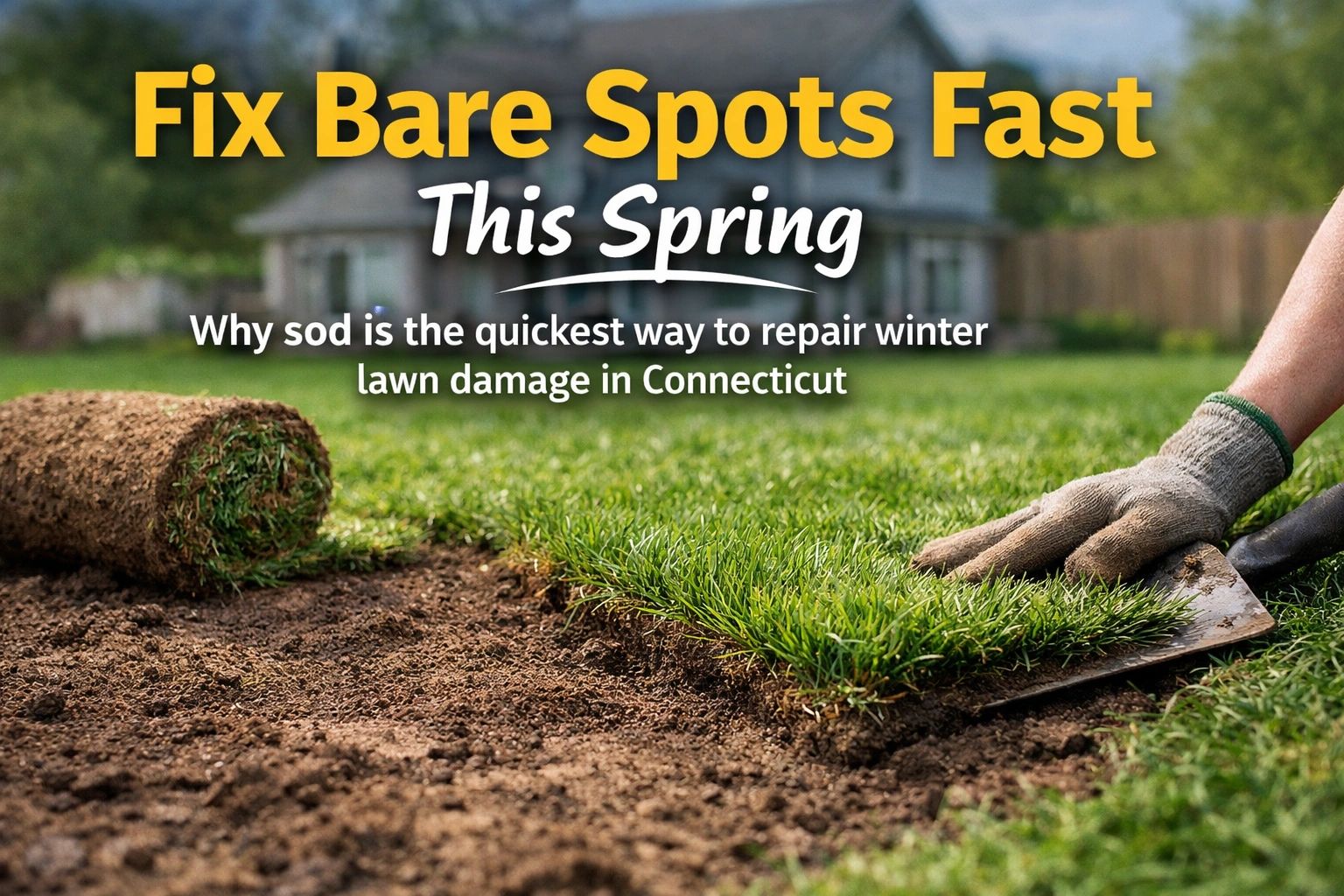
By mid-April, a lot of lawns across Connecticut and New England start showing the damage winter left behind. What looked fine from a distance in March suddenly becomes obvious once the grass begins waking up.
Bare spots. Thin areas. Muddy patches. Salt damage near the driveway. Snow mold scars. Pet spots. Worn-out traffic paths.
This is when many homeowners realize their lawn did not make it through winter nearly as well as they thought.
The good news is this: spring is one of the best times to repair winter lawn damage, and if you want fast, clean results, sod is often the better choice over seed.
Why Lawns Look Rough in April
Winter is hard on grass in Connecticut.
Snow sits on the lawn for long stretches. The ground stays cold and wet. Foot traffic, pets, shoveling, plows, and runoff all take their toll. Once temperatures rise, the damage becomes much easier to see.
Common spring lawn problems include:
- Bare patches where grass never came back
- Matted or discolored spots from snow mold
- Thin turf in shady or wet areas
- Salt burn near sidewalks, roads, and driveways
- Muddy areas where grass coverage was lost over winter
When Sod Is Better Than Seed for Spring Lawn Repair
Grass seed has its place. If your lawn is mostly healthy and just needs thickening, overseeding can make sense.
But sod is usually the better option when:
- The area is completely bare
- You want an immediate visual improvement
- Rain is causing washout or erosion
- The damaged area is on a slope
- You are tired of tracking mud into the house
- You want a finished lawn now instead of waiting weeks for seed
Sod gives you immediate coverage, helps stabilize the soil, and creates a much faster turnaround in problem areas.
Common Spring Lawn Problems Sod Can Fix
1. Bare Spots
If you have exposed soil, sod is one of the fastest and cleanest fixes. A true bare patch is not going to magically fill in overnight.
2. Snow Mold Damage
Some snow mold damage recovers with time, air, and light raking. But if the area stays dead, weak, or patchy, sod is a much faster way to restore it.
3. Salt Burn Along Driveways and Walkways
Salt and snow runoff often damage grass near pavement. These edge areas are some of the most common spring repair zones.
4. Pet Damage
If urine spots or worn areas from winter left obvious dead patches, sod is an easy way to patch them cleanly.
5. Muddy Traffic Areas
Side yards, entry paths, and backyard routes often get worn down over the winter. Sod can quickly restore coverage and reduce the mess.
Why Spring Is a Great Time to Repair with Sod
Spring is a strong time to install sod in Connecticut because the conditions are working in your favor.
Cooler temperatures, more moderate sun, and more natural moisture usually make establishment easier than it is later in summer. That means less stress on the sod and less risk than trying to repair the lawn once hot, dry weather arrives.
If you want a broader look at spring timing, read our post:
Spring Sod Installation Guide: Why April & May Are Best
/everything-sod-blog/f/spring-sod-installation-guide-why-april-may-are-best
How to Prep a Bare Spot for Sod Repair
Do not just lay sod on top of a damaged area and hope for the best. Proper prep makes a big difference.
Step 1: Remove Dead Grass and Debris
Rake out leaves, loose dead grass, and any matted material.
Step 2: Loosen the Soil
Break up compacted ground so the new roots can establish.
Step 3: Add Fresh Soil if Needed
If the area is low, rocky, or poor quality, add some fresh topsoil and smooth it out.
Step 4: Grade It Properly
The repaired area should sit flush with the surrounding lawn so it does not look sunken or raised.
Step 5: Lay the Sod Tight
Fit the pieces snugly together without gaps.
Step 6: Water Immediately
This part is critical. Fresh sod needs water right away.
For more prep tips, read:
How to Prep Your Yard for Sod This Spring
/everything-sod-blog/f/how-to-prep-your-yard-for-sod-this-spring
You can also read our full:
Sod Installation Guide
How Much Water Does Repaired Sod Need?
Fresh sod repairs need consistent moisture right away. The goal is to keep both the sod and the soil beneath it moist while the roots begin attaching.
If you repair a bare area with sod and then let it dry out, you are creating your own problem.
For a full care schedule, read:
What to Do the First 30 Days After Sod Installation
/everything-sod-blog/f/what-to-do-the-first-30-days-after-sod-installation
Should You Repair Bare Spots Now or Wait?
Most people wait too long.
They look at the lawn in April and tell themselves maybe it will recover on its own. Then suddenly it is late May or June, temperatures rise, and they are trying to repair stressed grass under worse conditions.
That is the wrong move.
If you already know a spot is bare, dead, muddy, or damaged, spring is the time to fix it.
Why Sod Repair Is the Faster, Cleaner Solution
One of the biggest advantages of sod repair is that your yard does not have to look unfinished for weeks.
Instead of waiting on seed to germinate and fill in, you get immediate green coverage. That matters for appearance, erosion control, mud reduction, and overall curb appeal.
If you are getting your property ready for outdoor season, spring gatherings, or just want the lawn looking right again, sod repair is often the fastest path.
Need Sod Delivered or Installed?
At CT Sod, we supply quality sod for homeowners and contractors throughout Connecticut, Massachusetts, Rhode Island, and parts of New York.
Whether you need to patch a few bare spots or repair a larger damaged section of lawn, spring is a smart time to get it done.
If you are not sure whether your lawn needs seed, sod, or a full reset, contact CT Sod and we can help point you in the right direction.
Read more here:
Everything Sod Blog
Ready To Order?
Fresh-Cut Sod Delivered
CT Sod delivers Kentucky Bluegrass, Tall Fescue & RTF sod across CT, MA, NY, NJ, RI, NH, VT & ME.
Keep Reading
Amending Sandy Soil with Compost for Sod Installation CT, NY, MA
August 25, 2025
April Lawn Care Tips for a Lush New England Yard
April 1, 2025

Best Drought-Tolerant Sod Varieties: Northeast Guide
April 30, 2026

Best Sod for Connecticut Lawns: Complete Regional Guide
April 28, 2026